 Housekeeper
Signature care for well-used ovens
Oven Cleaning in Battersea
Arrange oven cleaning in Battersea around the cooker you use most. Identify the cooking cavities, doors and accessories you want assessed and tell us if the hob or extractor should be discussed separately. Include how the technician can reach the kitchen if a lift, courtyard or concierge is involved.
Can I ask about only one oven on a Battersea range?
Yes. Give the model, the position of that cavity and details about any shelves or trays you want considered.
Can you use a concierge entrance?
Tell us which entrance the property requires, who can meet the technician and whether equipment can use the lift.
Decide which part of the range needs attention
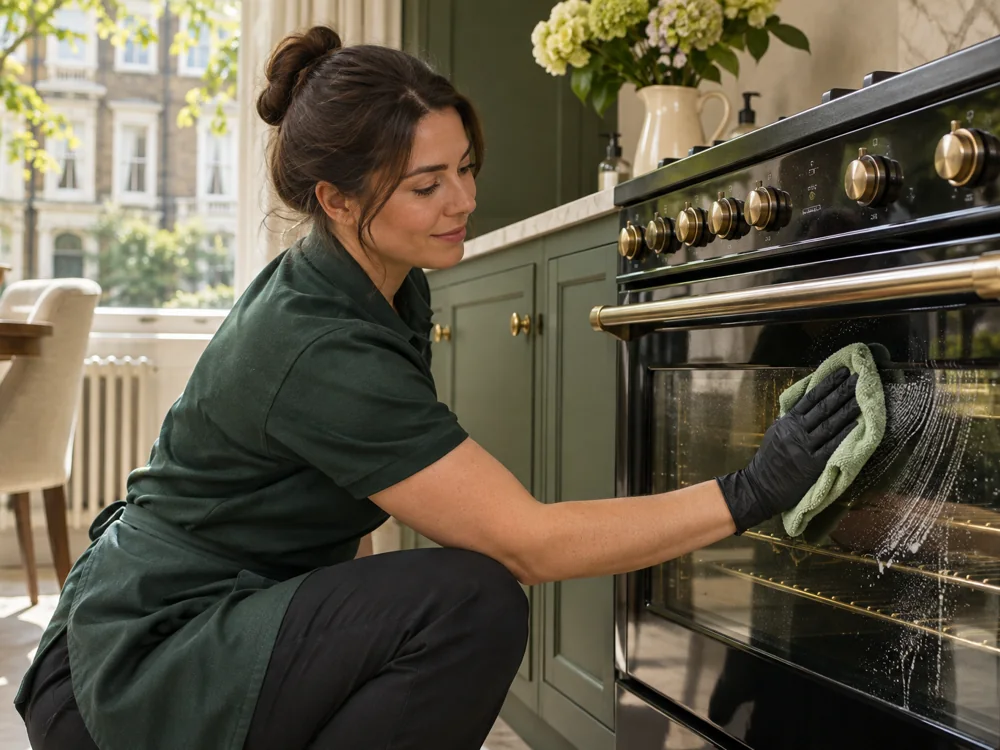
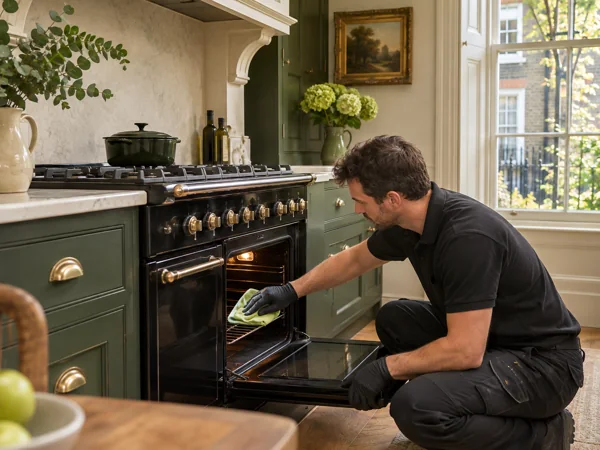
An occupied home can have one oven that handles nearly every meal and a second used only for holidays. If you have a range in that arrangement, we can discuss the main cavity on its own or talk through the other sections you would like assessed. Identify where each door is and what it opens to. On a cooker with four matching handles, the photographer should take one picture far enough back to show the hob, control panel and complete layout, then a close-up showing the affected area.
Give the make and model from the paperwork or a visible label around the cooker door. Leave the installed appliance where it is. Explain whether the oven has an independent grill, hotplate, warming drawer or second full cavity. If it is an older appliance, tell us whether any components were replaced. A new cooking tray can have a different coating from the original. Ask for a clear list of the cavities and accessories in the quote, particularly if a second person will confirm it after you send the initial photographs.
- Name the priority cavity before listing the rest.
- Identify matching fronts with an overall photo.
- Give the model and details of replaced parts.
Tell us which Battersea street door serves the kitchen
Wandsworth Council names Albert Bridge Road, Prince of Wales Drive and Queenstown Road among the ways into Battersea Park. If the park is the landmark you generally use for directions, give the actual building approach as well. A doorstep can face a street on one side of a block while its delivery entrance is round the corner. For a home overlooking the park from a long terrace, give the complete number and flat label. Those details matter when adjoining buildings share steps, porticos or similar entrance doors.
Talk to the building contact if visitors need to report to the concierge before reaching the kitchen. Give the permitted route for equipment and explain any change in level between the entrance, lift and front door. Where loading is by arrangement, explain who can confirm it and how far it is from the agreed entry. A private residential courtyard might have more than one staircase. Identify the correct stair and whether the entrance looks different from the street side so the technician can find the right door on arrival.
- Use the actual loading and visitor entrance.
- Check if a concierge has separate arrangements.
- Explain any changes in level beyond the lift.
Use the state of the removable pieces to guide the enquiry
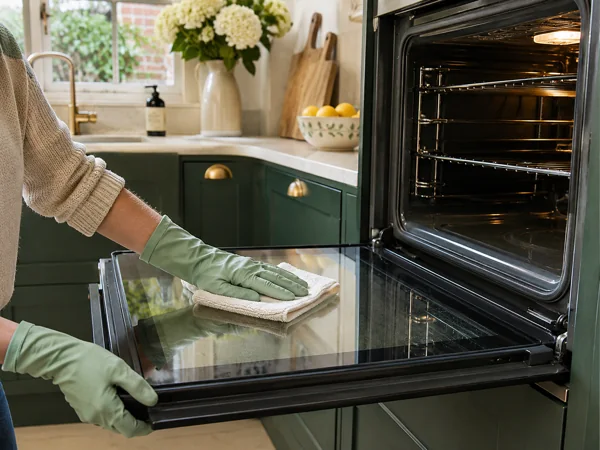
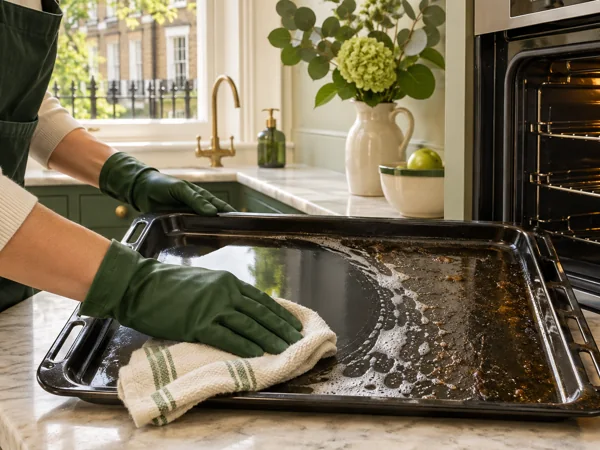
If the cooking tray and grill insert look equally greasy in photographs, describe which one sits over direct heat and whether each has a coated surface. A plain shelf with a baked deposit can be handled differently from a tray with a worn or lifted patch. The service can include removing suitable pieces and soaking compatible items in a dip tank. Parts are considered individually according to their material and condition. Show how trays and supports go together so the technician can identify which components belong with the cavity.
A telescopic rail might be built into a side shelf or fitted over a supporting grid. Leave it where it is if you are unsure how it is retained. Tell us about the point where movement becomes stiff and whether either side sits lower than the other. When extra trays are stored in the warming drawer, take them out once the oven is cool and set them with the items you would like discussed. If one piece is used in a separate model, keep it away from the range equipment so the sets remain clear.
Name the range parts in their actual order
| Part | How to describe it | What to agree |
|---|---|---|
| Main oven | Position and most used shelf | Cavity and shelf set |
| Grill | Behind its own door or in the main oven | Tray, insert and accessible surfaces |
| Warming drawer | Position and whether it is in use | Whether it belongs in the enquiry |
Mention the technical details that affect door and liner cleaning
Some range cookers have removable racks in front of a fitted liner, with the enamel frame around the opening having its own finish. Share manufacturer instructions if you have them. Include photos that show the sides as well as the floor when you have a coating concern. Any mark left by a spray or recent self-cleaning cycle can be described with when it appeared and where the product was used. This helps the technician discuss what can reasonably be considered before choosing how to approach the affected part.
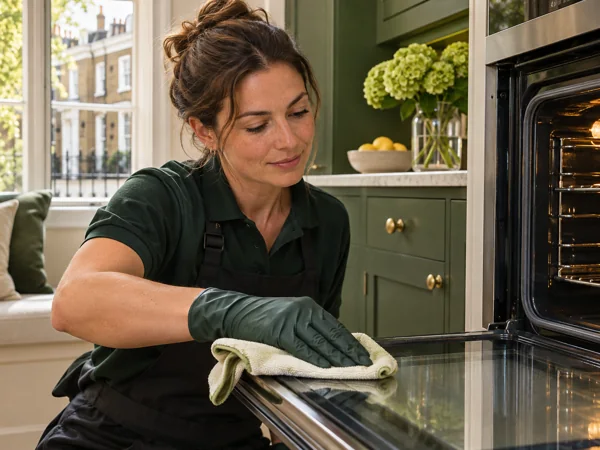
Door grease may be obvious on the surface facing the food but harder to identify around several panes. Indicate whether the patch is visible with the door open, and describe any previous replacement to the pane or handle. The technician can explain which glass surfaces can be reached once the model and its condition are known. Flag damage to a handle, seal or hinge where you already know about it. Any issue with heating or operating the controls can be described separately to an appliance specialist while you arrange cleaning around the condition.
- Send relevant guidance for specialist liners.
- Describe the visible glass, including any affected edges.
- Mention previous treatments, replacement glass or known damage.
Plan around the rest of the cooking space
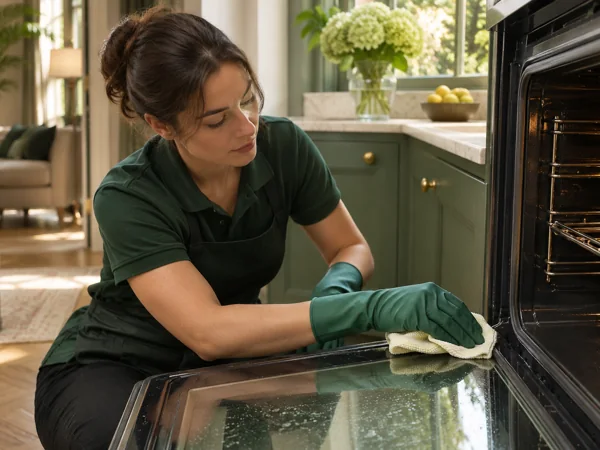
If you also want a hob cleaned, describe the type as well as its position. Explain where the controls sit, the number of supports on a gas hob and the finish of the rings on a solid plate if known. A griddle that lifts out should be identified separately. If the hob is part of the range, mention which accessories regularly move between different burners. Send a picture showing the whole top so we can discuss those items without assuming that each is included in the oven request.
An extractor over a wide range may cover more than one section of the cooker. Give its approximate width and how high the controls and filters sit above the cooking surface. Explain if the wall hood runs into ceiling cabinetry or has a decorative cover. If you know whether the filters are disposable or metal mesh, note that for the quote. Ask about the casing and the filters separately. Confirm which of those parts can be considered once their finish, height and condition have been discussed.
- List hob, griddle and extractor work separately.
- Identify filter type and position.
- Describe any large cabinetry or splashback around access.
Set the kitchen up for an open appliance door
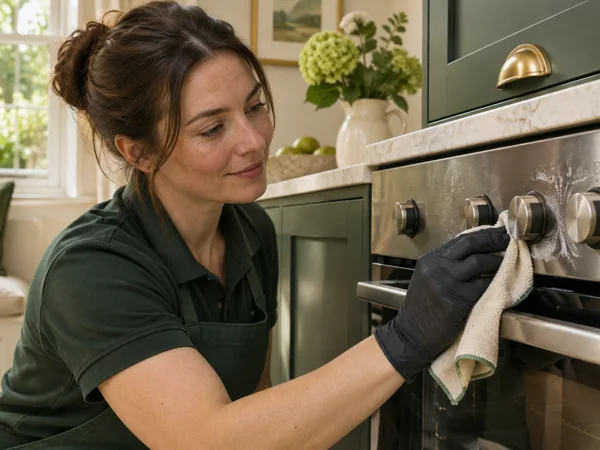
Look at the floor area where the door opens before the appointment. A butcher’s trolley or the end of a dining bench can leave little room to pass when an oven door is down. Clear space as needed and put ingredients, coffee utensils and everyday dishes away from the work surface. Leave the appliance cold and remove pans, loose foil and food. If the route to an outside door passes through the kitchen, make sure other people know when it will be in use. Keep pets and children away while parts are being handled.
Check whether somebody needs to use an appliance nearby during the visit. A microwave or separate hob may still be in the working area even when the oven is the only thing being cleaned. Tell us before the appointment how people normally get around the kitchen and discuss a suitable arrangement. If there is a preferred place for laying out accessories, agree it together. Alert us if the usual sink or electricity point is out of reach so any needs can be discussed before the technician arrives.
Compare visible finishes before agreeing treatment
| Part | Condition to mention | Practical check |
|---|---|---|
| Printed controls | Letters already lifting | External finish and treatment |
| Door surround | Previous glass replacement | Reachable panes |
| Pan support | Worn coating on the side | Suitability for separate work |
Work back from the time you need to cook again
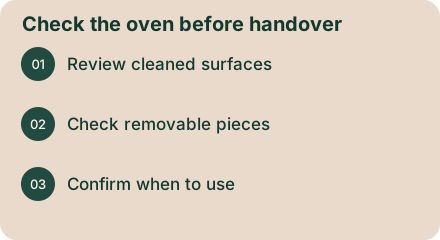
If you are going to use the range for an evening meal, tell us when you are hoping to have the kitchen available. There may be several people to update, including someone preparing food away from the oven who still needs the worktop. Give that expectation when you discuss the appointment, including which appliance you will need first. Make sure somebody can hear the handover. Ask which parts were treated and when the oven can return to use in your kitchen.
When there are several cavity doors, confirm where each shelf, tray and support belongs. If you will be out at handover, explain how the technician can pass on the information to the next person using the oven. Leave a written note where the household can find it, including any component identified as unsuitable for treatment and any instructions from the visit. If a specialist insert needs separate care in future, note the model and manufacturer guidance with the oven manual rather than relying on memory.
- Give the earliest time the range is needed again.
- Arrange who can receive the handover.
- Note the treatment or care advice for unusual parts.
Ask for a written list that matches your pictures
Send the postcode, the preferred access point and the exact range description through the enquiry. Add separate requests for parts that might otherwise be overlooked, including a loose grill insert or filters higher up above the cooker. Give the information in the order you want us to consider it. With an oven that is being readied for a new occupier, show the relevant inventory line and confirm which components the owner means when a single entry says cooker. Changes can then be identified while you discuss the quote.
Check the proposal when it is available and tell us about anything that needs to be amended before confirming a date. If a resident or agent is meeting the technician, give them the same agreed list and photos. Tell them how to reach you if the appliance or access differs from what was discussed. If other cleaning is planned, leave time for the oven to cool and for parts to be handled without other people needing to cross the same working area. Keep the agreed kitchen timings with the building instructions.
Check lift and loading arrangements
| Location | Who can confirm | Detail to send |
|---|---|---|
| Street approach | Resident or concierge | Usual unloading and door |
| Lift | Building contact | Allowed lift and floor |
| Inside the home | Person who will meet the technician | Stairs and clearance at the oven |
Get an oven cleaning quote in Battersea
Request a quote with the oven type, number of cavities and any extra appliances.
Get a QuoteOther Cleaning Services in Battersea
Local references · Wandsworth Council – Battersea Park
Battersea oven cleaning questions
Can I have both cavities priced before choosing one?
Yes. Describe each separately so you can discuss the work required for each cavity.
Should I include the warming drawer in my photos?
Show it as part of the overall range layout. Tell us whether you want it considered for cleaning.
Can a griddle be assessed with the cooker?
List it separately, describe its finish and ask whether treatment is suitable.
What if the range sits opposite a fixed island?
Tell us the working space in front of the door and give an overall photo if helpful.
How do I list matching shelves for two cavities?
Group shelves by cavity and identify any replacements or spares.
Do I need to be home to explain the cooker?
Arrange for somebody to provide entry and share the agreed appliance list and priorities with them.