 Housekeeper
Care for built-up cooking residue
Oven Cleaning in Barkingside
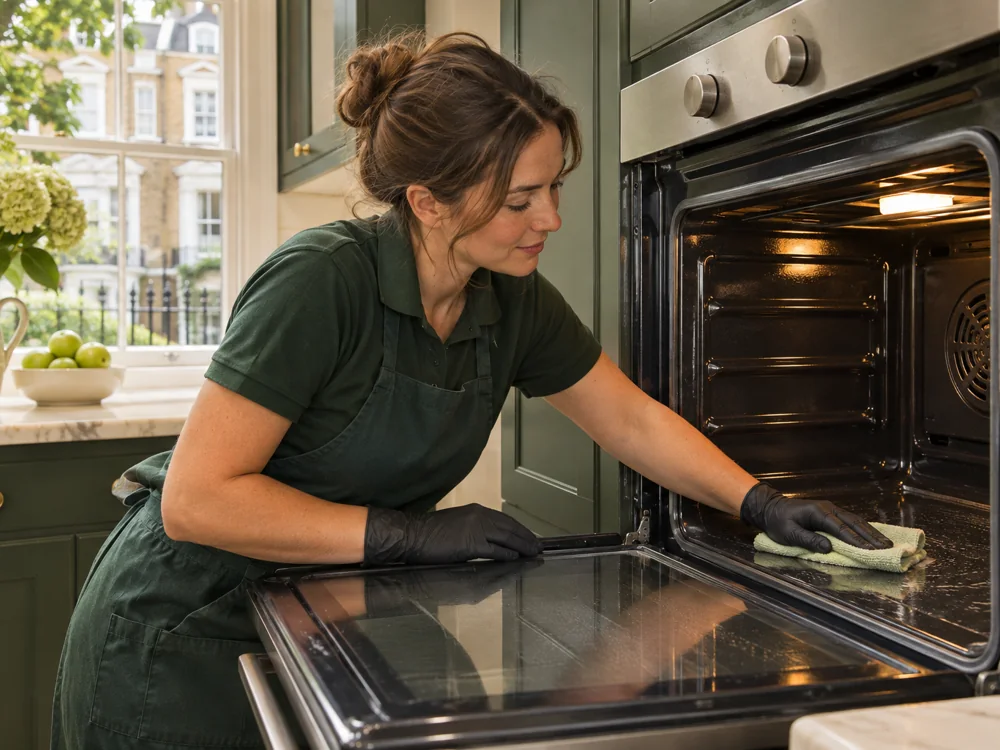
If the last roast or baking session left a mark that is difficult to reach, show us where it sits in your Barkingside oven. A position, model and picture can help us discuss the difference between a deposit on the cavity and one affecting a removable piece. Include your entrance details so we can also discuss the way into the kitchen.
What should I give for a home near Barkingside station?
Provide your full IG6 postcode, street number and the front or side door you want used.
Can I ask about an old oven spill?
Yes. Describe its position and any product or oven cycle already used on it.
Work out how far a cooking spill travelled
Look inside the oven only once it is cool. Food spilled from the front of a dish might have run to the cavity floor or into the edge next to the door. A patch from a rear shelf can sit partly behind a side rail, where it is difficult to see from the front. Name the shelf height and use the visible walls as fixed references when explaining where the deposit sits. Send a photograph that includes more than the mark if the description needs a sense of scale or location.
Where an upper grill is involved, tell us where grease appears in relation to the usual position of the pan. If you rarely use that cavity, it might have an older build-up than the oven that gets most of the cooking. Mention which areas you want considered before describing the appliance as a whole. The cleaner can inspect accessible grease and baked-on residue, then discuss the appropriate response for the surface underneath. Give any knowledge of previous cleaning treatment with the enquiry, including whether the surface changed afterwards.
- Give the cavity and location by shelf or door.
- Describe the spread of the deposit.
- Mention treatment already used on that part.
Give the model and the surfaces you recognise
If the model label is visible inside the door frame, use it to identify the oven. Otherwise, check the manual or send a front view that shows the settings and door positions. Tell us how many working compartments need attention. In a range, an additional door may be for a grill or a warming area, with its own fit and controls. Mark each part in your description instead of using the same condition report for all of them. Keep the oven in its fitted position while gathering the information.
The model may help identify panels with coatings or other care instructions. A textured side panel can finish against a smooth floor and the two surfaces may show grease differently. If you have the instructions, name the relevant material and say if the oven has an automatic cleaning programme you recently used. Report a visible chip or dull patch next to residue as a separate detail. Keep any lining that seems to be worn or loose in position so the technician can assess the area in its current condition.
Report a window concern by door and surface
Inspect the glass from the front while the oven is cool. A grease track on the inside can be visible while the door is closed. Other marks can look as if they sit behind a pane. Give the affected door and model and describe how the mark looks in each position. A picture showing the handle and door edge can locate a patch near the glass more accurately than a crop. If grease reaches the area around a seal, mention where that happens and leave the seal in place.
Describe the outside finish where the trim and controls meet the glass. For a range with several rows of knobs, name the control closest to the affected area. A worn symbol or loose fitting can be reported separately from the grease you want assessed. Mention the condition before work so the area can be recognised at the appliance. The door design, finish and condition affect which places are accessible. We can discuss the accessible glass faces and relevant exterior parts with the rest of the oven.
- Record the door and likely glass face.
- Name existing damage around the trim or settings.
- Identify the position of any visible seal issue.
Show where a spill has reached
| Area | Reference point | Useful detail |
|---|---|---|
| Flat oven base | Rear or front of lowest shelf | Size of deposit |
| Side panel | Seam or nearest runner | Lining material |
| Inner door | Lower edge or visible seal | Glass face and prior wear |
Keep original accessories available for assessment
List wire shelves, grill trays and inserts you want considered. A pan in an upper grill may have an insert that can be lifted out during cooking, so give both pieces their own names. Spare racks may be stored out of sight and should be mentioned if they belong to the same oven. Separate your household cookware before the cleaner arrives. If another person opens the property, tell them where the accessories sit and which cavity they go with. A count can be useful if you have matching ovens.
Removable items can be considered for dip-tank soaking when their condition and finish make treatment suitable. Give the type of coating where known and report a bent lip or loose handle. For a shelf on a fixed runner, explain how the shelf moves in normal use. Leave any affected support where it is if you do not usually remove it. The technician can look at it in place while assessing removable pieces. That keeps the discussion focused on the parts actually fitted to your oven.
- Give the count by cavity and piece.
- Mention coated accessories or loose fittings.
- Leave integrated rails where they usually sit.
Plan how to approach the oven at a Barkingside address
Transport for London gives the station address on Station Road in IG6. If you use that landmark to describe the area, provide the full postcode and your actual front door or gate. If a property just off the main road is reached from a service path or side street, give the route and the visible number. In divided premises, the door number or bell may be different from the flat number on the booking. Include both details and specify the person who will meet the cleaner at the first entrance.
Explain the next part of the way to the kitchen. If you choose a side passage, describe a narrow gate or step at its far end. For a through hall or upstairs flat, say if there is a turn or secondary door. Give a contact who can show the kitchen and point out items at the appliance. Mention any access or unloading arrangement you can organise. Once the appointment is agreed, share any private code or key details only with the person who needs them.
Find parts for review
| Piece | Where to locate it | What to supply |
|---|---|---|
| Wire shelf | Main oven or storage | Number and normal levels |
| Grill pan | Upper compartment | Insert and handle details |
| Fitted guide | Cavity wall | Model and usual movement |
Leave room for the appliance and loose pieces
The door opening can take up space beside a dining table or a low cupboard. Show the clearance at the front and note items that have to stay fixed. Lift away light objects on the floor where possible. If the counter near the appliance is used for other tasks, tell us which area can be made available and when. That can help when the removable pieces need to be reviewed in a small kitchen. Mention if the route to the sink passes through the space in front of the lowered oven door.
Agree a time when the appliance will be out of use and cool. Confirm who is clearing out pans, food and other personal items. If someone regularly comes through the kitchen or uses a nearby door, agree how to keep the area clear while the oven is open and its parts are handled. Arrange the same for pets and children. If a different person is meeting the cleaner, tell them which side of the kitchen they can offer for checking the accessories and whether any surface needs extra care.
Distinguish grease on another cooking appliance
If you want attention to a glass or gas hob, give the hob type and identify the affected part. A cooking zone and edge on an induction top may have different marks. For a gas top, say which support or section around a burner you want assessed. If you have a separate range griddle or splashback, identify the finish and list it as its own item. A wider picture that includes the nearby counter can help explain its place in the kitchen.
For an extractor, name the type or model and the visible finish. A deposit on an external panel is a separate concern from residue on a removable filter. If the filter material is listed in the manual, include it. Explain how the canopy sits above the hob and mention where access appears limited. You can send a picture from floor level. Keep the extra appliances on separate quote lines so you can confirm what is being discussed with the oven and what would be considered on its own.
- Give the precise cooking zone or part of the hob.
- Give known filter material and hood position.
- Review any extras independently from the oven.
Review the oven before you put it back into service
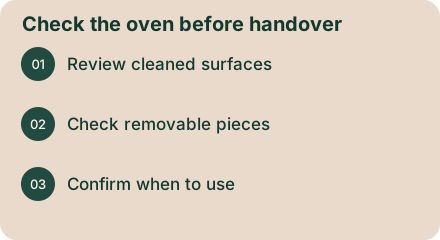
Check the cavity and accessories against the items you agreed. Use the original description to locate the main spill again. Ask which parts were taken out and what was accessible where you reported a mark. If there is a visible change to a finish, ask what was noted when the surface was assessed. Tell the person responsible for the kitchen what was covered if they were not there. Keep the list if the oven is due to be reviewed by the owner or an agent before keys change hands.
Confirm when you can use the oven again and share that with anyone who cooks in the property. Keep the model and any care instructions alongside the list of original pieces. If a second cavity or hood needs a later visit, note the part separately with its own model and position. For future enquiries, distinguish an existing surface mark already discussed from a fresh deposit in another area. That information helps somebody identify the right cavity or accessory when they see the kitchen again.
Explain the approach in Barkingside
| Point | What to write | Who confirms |
|---|---|---|
| Outside address | Full postcode and entrance | Resident |
| Gate or common hall | Route and threshold | Person opening up |
| Kitchen | Oven position and clear area | Person showing the parts |
Get an oven cleaning quote in Barkingside
Request a quote with the oven type, number of cavities and any extra appliances.
Get a QuoteOther Cleaning Services in Barkingside
Local references · Transport for London, Barkingside Underground station
Barkingside oven cleaning questions
Can I send a photo if a spill has reached the oven door edge?
Yes. Include the whole door and enough of the cavity to show where the spill stopped.
Should I name a missing shelf before asking about the clean?
Mention which piece is missing and identify the parts still present. Include only the ones you want considered.
Can I explain grease on an internal panel from the handbook?
Yes. Give the model, panel name and position of the deposit. Leave the panel where it is.
What if the station is near my home but the entrance is hard to see?
Give your full address and point out the number, label or gate a visitor should find first.
Can I ask about a scratch that is underneath a patch of grease?
Tell us where you saw the scratch and how the deposit lies around it. The accessible surface can be assessed before treatment.
Should the person with access tell me when I can cook again?
Yes. Ask them to confirm the return-to-use advice and share which oven parts or extras were included.