 Housekeeper
Mould Removal in Wimbledon
We discuss how to assess visible wall and ceiling marks in your Wimbledon property, including the finishes we can see, how the room can be reached and what you need the visit to establish. If earlier work affects that decision, we take its location and timing into account.
Plan your enquiry
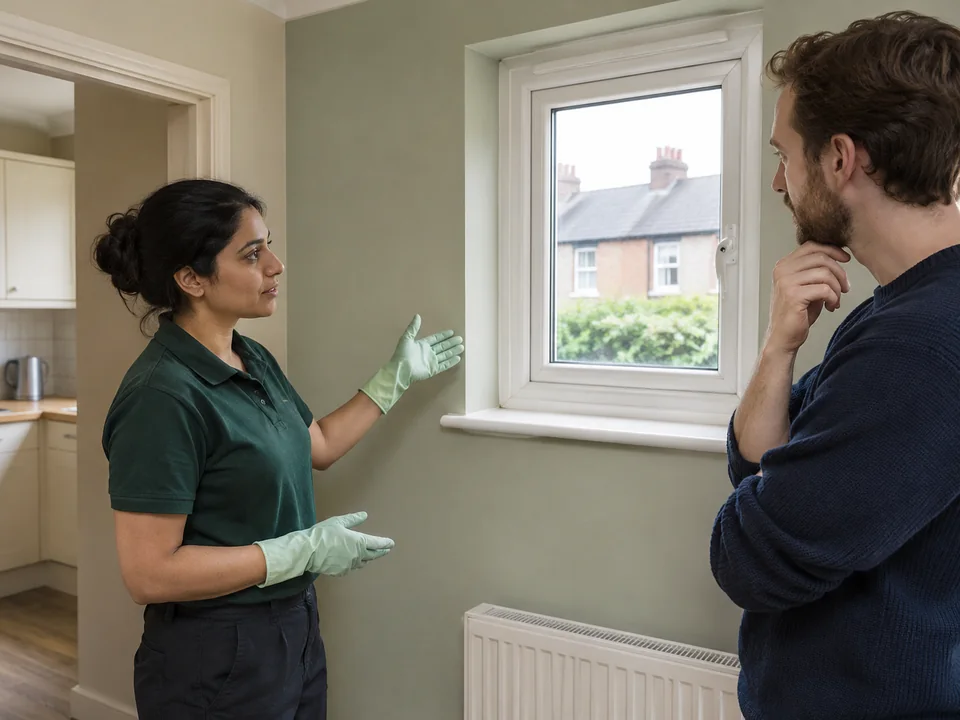
Is an SW19 postcode enough to arrange the visit?
Give the full postcode and the way in. A town centre address can include a residential entrance separate from the street frontage.
What should I have ready about a ceiling patch?
Name the room, say how high it is and explain whether anyone can access the space above.
How we plan a property assessment
We establish who can open the affected rooms and which surfaces are available for assessment. In a ceiling enquiry we consider the height and the fittings below, then record any access or property question relating to the space above. Before agreeing surface work, we discuss the visible finish, any preparation and the limits of the visit. We explain which observations belong in the handover and which points still need information or a separate property assessment.
Begin with the room where the mark first appeared, then make a second list of any other spaces affected. Use distinct labels where rooms have the same purpose, such as upstairs shower room and ground-floor cloakroom. Put the visibly affected surfaces on one side of the list and the things you want investigated on the other. The distinction helps the office discuss a visit within the areas that can actually be reached, while leaving separate property questions open where there is no evidence to answer them yet.
Tell us how the property is occupied. A household using every room, an agent preparing an empty home and an owner waiting for a repair each need different arrangements to get an assessment carried out. A building may be vacant but still have equipment, furniture or stored boxes in front of the affected area. Explain what is in place and who can make decisions about it. If a particular date depends on another job, describe the order of events so the office can discuss how the proposed visit fits between them.
- Name the affected rooms separately.
- Describe anything that restricts access to the finish.
- Give the date of any other appointment that affects the visit.
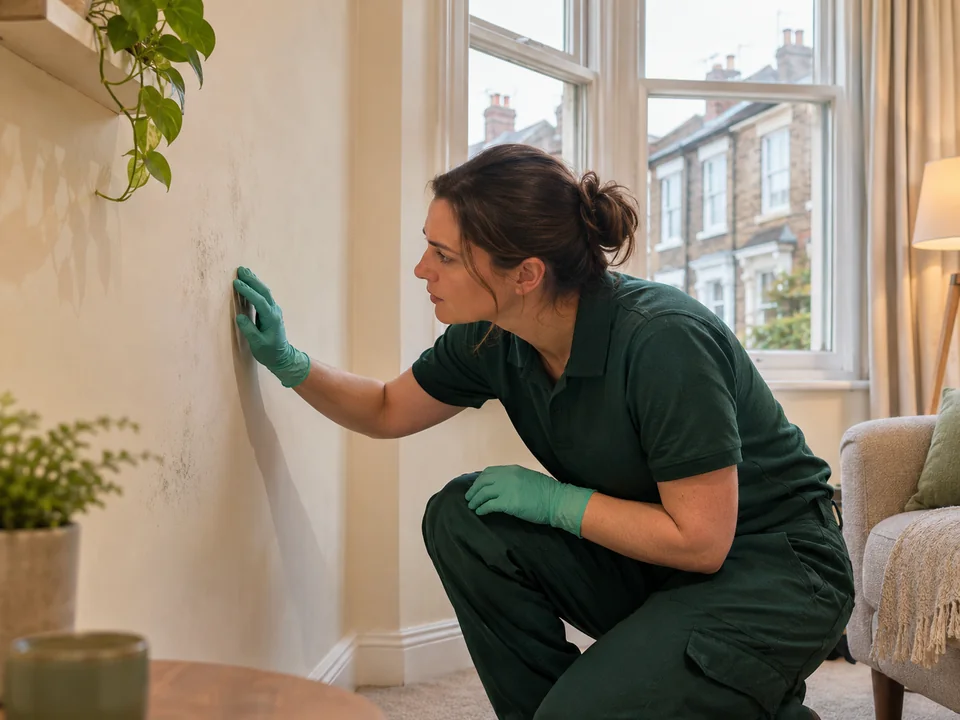
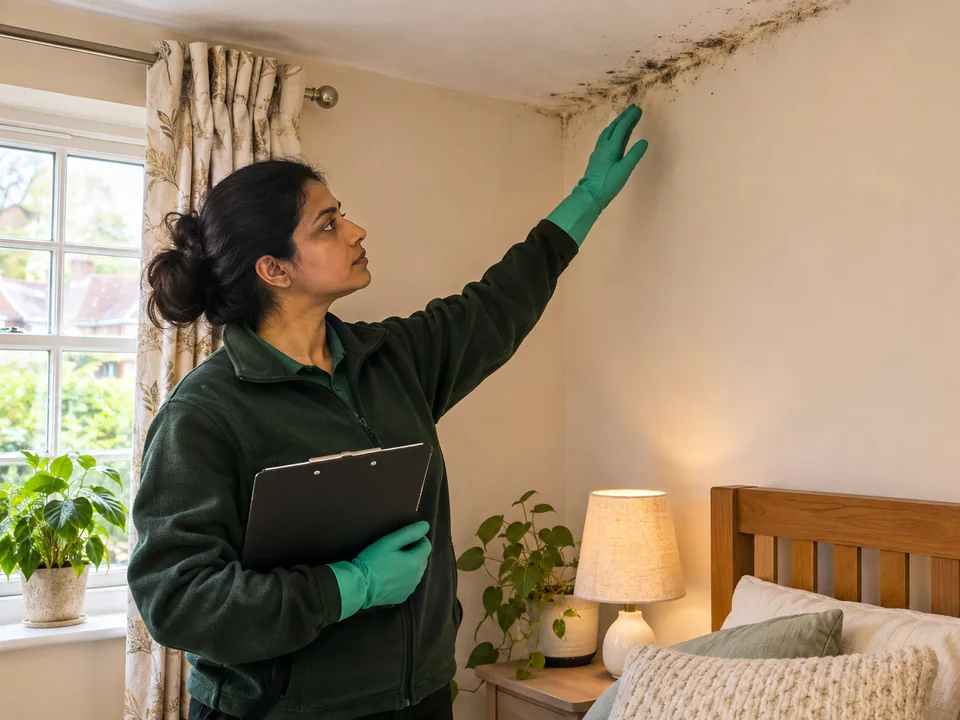
Mark the line between the ceiling and the floor above
For a ceiling enquiry, say whether the mark lies along an edge, near a fitting or in an isolated area away from the walls. A photograph with enough room around the patch to show doors, coving or fittings is easier to interpret than a tight shot alone. Describe the height and access from the floor rather than attempting to reach it. If you know what is above the affected point, state the room or roof area and explain whether it can be accessed independently. The position above is useful background even when the enquiry concerns the visible finish below.
In a converted home or block of flats, the resident who can show the ceiling may have no authority over the floor above. Explain who can speak to an upstairs resident, landlord or building manager if separate investigation becomes necessary. If a leak was reported previously, give the repair history and where the reported fault was found. Avoid combining a repair note with a later observation as though they prove a connection. Dates, room position and the surface conditions are more useful than a confident explanation that has yet to be tested.
| Information | Who may have it | Why it matters to the enquiry |
|---|---|---|
| Ceiling height and fitting position | Occupant of the affected room | Clarifies the visible surface and access |
| Room or void above | Owner or building manager | Shows where separate access might be needed |
| Previous repair reference | Person who instructed the repair | Keeps past work separate from the current proposal |
Distinguish plaster finishes, linings and trim
The visible condition of a painted wall is only one part of the picture. Tell us whether you can see bare plaster, a painted coating, paper, timber trim or a panel. Record the point where the mark meets a different material. In some homes the wall adjacent to a cupboard has a different finish behind the unit, which may not be visible without disturbing something. Leave hidden areas as they are and describe the extent you can see. The first conversation should establish what an assessment could cover and which parts might need another professional to look at separately.
Surface damage is useful information in its own right. Mention lifting paper, flaking material, swollen edging or a stained board. If the area is affected on both sides of a partition and both surfaces can be seen without moving fixtures, label the observations separately. If one side is in another dwelling or behind a fixed panel, say that access is presently unavailable. A sound proposal should be based on the surfaces known to be present and should identify any uncertainties that remain once a visit is agreed.

| Visible finish | Detail to describe | Question for the proposal |
|---|---|---|
| Painted plaster | Condition of the paint and joints | Is the surface finish suitable for the work proposed? |
| Papered wall | Loose edges or raised seams | Does it need a separate material decision first? |
| Panel or board | Condition of any visible edge | Will assessment be limited to the exposed face? |
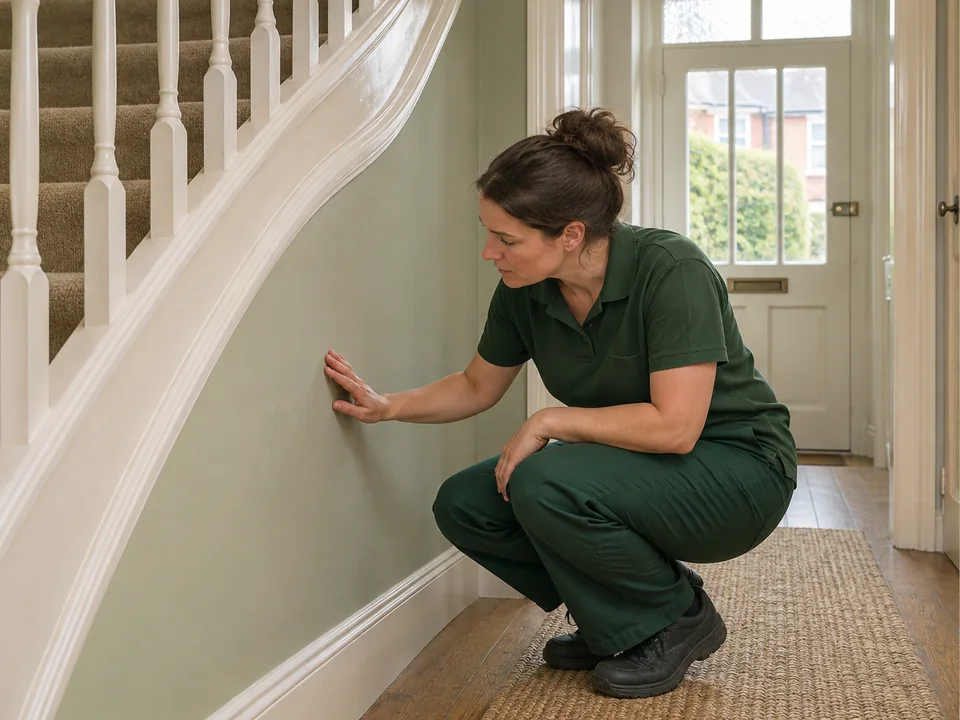
Set up access around Wimbledon town centre
Merton Council identifies Wimbledon town centre in SW19 and lists facilities there, including Hartfield Road car park. That does not establish where a visitor can stop for a particular job. Give the full address and explain any building arrangements for access, parking or unloading. In a building with separate entrances, identify the residential entrance and floor. If there is a concierge, lift booking or timed arrival arrangement, describe it when you call. Explain any additional walk between the entrance and the area where the person needs to work.
An empty property still needs a reliable handover. If keys are held by a managing agent, confirm that access is available for the date being discussed and who will receive the keys back. Say whether the approach involves steps or narrow landings, especially if the affected surface is in a loft room or stairwell. For a site with a building manager, identify the person who can answer questions about shared areas, even if the first assessment relates to one flat. These details can avoid an unnecessary second conversation while someone waits at the wrong entrance.
- Provide the individual dwelling details alongside the postcode.
- Describe any access or timing rules at the building.
- Agree who is available to hand over and receive the keys.
Use the first discussion to define the next decision
Ask what the proposed assessment can tell you about the visible condition and what it cannot establish about the structure. A resident who has only seen a mark on a wall may have a different immediate need from an owner who already has a report on a suspected defect. Share the relevant part of any previous findings and the date they were made. If a survey, repair or drying assessment is already planned, say whether the findings will be available before the appointment you are discussing.
When an affected surface and a separate property concern appear linked, identify the person coordinating the trades. This might be the owner or the building manager, but ask rather than assuming. Agree how the outcome of an assessment will be recorded so that a later trade has the relevant room details. The service overview explains the information that is useful before asking about a quote. If another visit, such as regular housekeeping, is also being considered, describe that work as a separate enquiry.
- State what you want the visit to establish.
- Mention reports that are available and those still outstanding.
- Provide a named contact for follow-up decisions.
Keep the treatment proposal, building repairs and follow-up distinct
A proposal for a visible surface should say which points are included and what should be left for a separate decision. Ask how any preparation will be agreed, which parts of the room must remain accessible and whether anything should be left undisturbed. Where a surface cannot be reached safely without additional arrangements, clarify whether an assessment or a separate visit comes first. If the office advises that further investigation is needed, it is useful to know who should receive that message and which area it concerns.
After the visit, retain a note of the areas considered, the visible condition and any recommended next action, particularly where several people are responsible for different tasks. A later change may be easier to understand when compared with an earlier description from the same position. If you need a broader clean following agreed specialist work, discuss the room priorities and timing with the office. For an empty property that is being handed back, the end of tenancy checklist can help frame the separate cleaning discussion.
| When | Agreement to make | What to record |
|---|---|---|
| Before attending | Rooms, access and decision-maker | Which surfaces can be reached |
| After assessment | Any work needing its own proposal | Materials and conditions observed |
| At handover | Who receives the outcome | Any unresolved access or property questions |
Set the timing around the condition you can observe
Describe any dates that cannot move, such as an inspection or the point when a room has to return to normal use. Then explain which decisions about the property are still outstanding. A date in the diary alone does not change what is known about a wall, ceiling or previous repair. If a room cannot be made available until a different visitor has finished, tell us when that access is expected and identify the person who can confirm it. This gives the office a more useful basis for discussing the timing.
Before you ask for a price, check that the property description distinguishes the current marks from the finish you hope to end up with. Visible-surface work, removal or replacement of a damaged material and decoration are different decisions. Where the enquiry concerns more than one finish, state your immediate priority so that the person reviewing it can identify which issue should be assessed first. If a second surface has changed since you took photographs, include a fresh note rather than silently relying on the first description.
For a property that has already been partly decorated, it is worth saying where the new finish stops. A photograph showing both the treated-looking area and the older finish can help orient the conversation. Mention whether the person who carried out the work left notes on which material was removed or covered. If the new mark appears in a different place, put that on the room list as an additional observation. This helps the office discuss an assessment without treating all the changes as one finding.
If a room is used for storage, explain how visitors can reach the wall without first emptying the entire space. Tell us if there is nowhere safe to put furniture or boxes during a visit. Ask what needs to be left in place until the relevant surface or lining has been assessed. Where the concern extends into areas you cannot show, agree how that uncertainty will be recorded before accepting a proposal.
We physically remove visible mould from suitable hard surfaces where access and preparation have been agreed. The person attending works within the exposed areas named in the proposal. If part of a ceiling cannot be reached as agreed or the surface is unsuitable, we discuss that boundary before proceeding with other agreed areas. The handover records what was cleaned and any point concerning the floor or void above that requires a separate decision.
- List any decoration or material changes since the first report.
- Identify access restrictions and the decision they affect.
Questions about arranging mould removal
Can I show the ceiling from the doorway if it is above a stair?
Yes. Describe the height and stairs from a safe position and mention whether a closer view would need separate access arrangements.
The flat above is managed by a different agent. What should I say?
Tell us who can provide access to your room. Ask the building manager who can handle any separate question about the dwelling above.
Should a repaired leak go in the same note as a new mark?
Include both observations with dates. Keep the repair record separate from any conclusion about what caused the mark.
Can the property be empty but still need an access discussion?
Yes. Explain the key arrangement, where the affected surfaces are and whether remaining items block access.
What if the wall changes from plaster to a fitted panel mid-way across the patch?
Name each material and describe the parts you can see. Any area behind the panel may need a separate decision.
Do I need to arrange decoration for the same date?
Discuss the sequence before booking. The appropriate order can depend on what the assessment establishes about the surface and property condition.
Other Cleaning Services in Wimbledon
London mould removal service, Regular housekeeping, End of tenancy cleaning