 Housekeeper
Mould Removal in Upminster
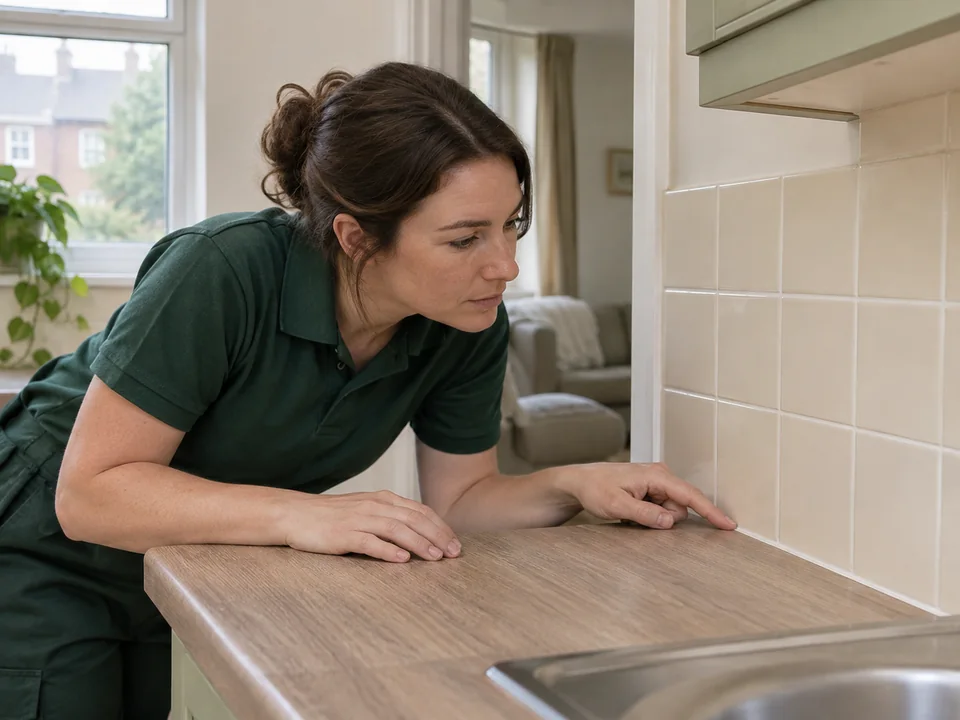
Raised steps, tiled reveals and hard lower wall finishes can each need a different assessment. If there is visible mould around a lower room or split-level area of your Upminster home, we check what is exposed and where we can stand. We agree the suitable hard faces before physically removing visible mould from them.
Can I enquire from near Upminster Park?
Yes. Include the full RM14 postcode and the entrance you use for the home.
Can you look below a tiled step?
Show us the working approach and tell us where the visible patch starts.
Inspect the mark from the step and the lower room
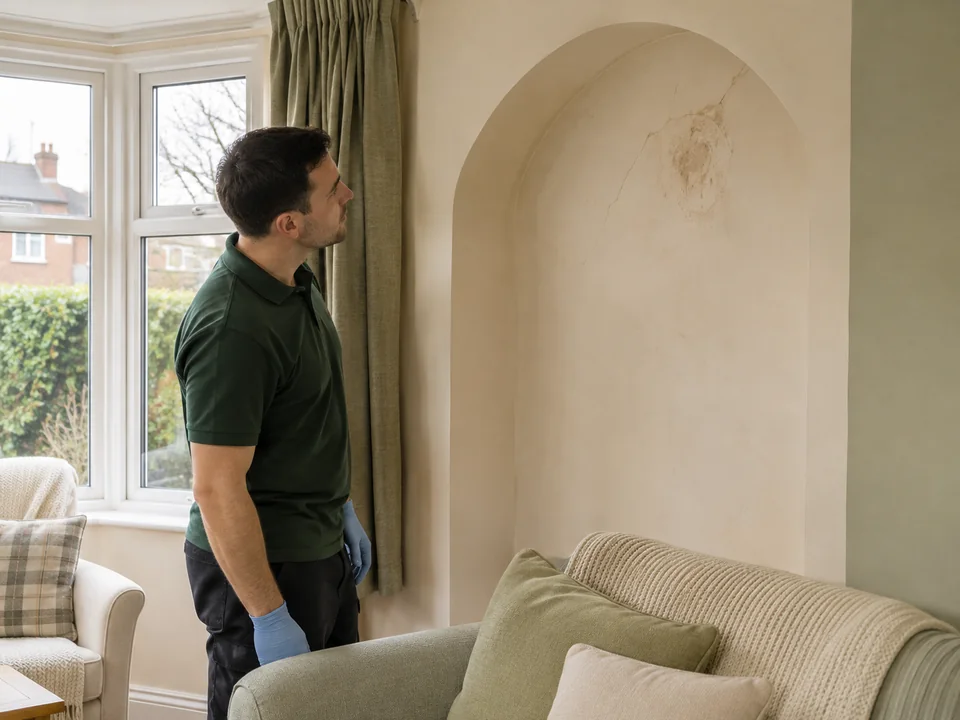
A lower floor, a split-level hall or a small step into a utility room can change where the marking appears in a photograph. Point to the level you stand on when looking at it. If the patch is on a tiled step, say whether you see it on the flat tread, the upright face or the adjoining wall. The distinction gives us an initial assessment point and helps you prepare the right area. A clear image taken at a distance is valuable if the mark is visible only when you look down from another room.
Havering Council lists entrances to Upminster Park from the Windmill Hall car park and along Corbets Tey Road, with the park address on St Mary's Lane. If this is the landmark you use to describe where you live, still give the full address and the route to your own door. When the affected surface lies below the entrance level, explain whether it is approached from indoors or through a separate exterior door. We use that description to discuss how the assessment and work can be done during the visit.
We inspect a mark beside a step from both levels if each offers a usable view. The face on the rise can look continuous with the hard return beside it even though the surfaces meet at a narrow joint. We check each material and see how much can be reached from a stable working position. After we agree the suitable hard area, we prepare the accessible side and remove visible mould. At the end we can show the cleaned section from the normal doorway and point to where the mark continued beyond the reach or across a material outside the work.
In a property with a side door into a lower room, you may see the same group of surfaces from two different angles. Describe whether the direct room entrance or the main hallway brings us closest. The inspection position needs to be practical once we are there, regardless of which view makes the clearest photograph. If another resident will show us round, give them the actual door name and the nearest fixture as well as the room label.
- Label the lower level or step by the adjoining room.
- Explain the difference between a mark on the tread and on the riser.
- Mention if the best view is from another doorway.
| Where you see the patch | Detail to give us |
|---|---|
| Tile on a step | Which face is affected and the level you stand on |
| Vertical surface inside a lower door | Whether the door changes reach when open |
| Sloped or irregular approach | Ordinary standing position near the patch |
Prepare an approach that gives us a usable position
Keep the ordinary route clear so we can see how the room is accessed. If a folding step or removable mat normally covers part of the area, tell us how it is used and leave fixtures in place. Some entrance steps also support an inward-opening door, so the whole tread cannot be blocked while a person waits on the other side. We discuss the route before beginning and check whether there is clear space on the level where the work would take place. Let us know if there is a narrow landing or a bulky item close to the top of the step.
When a lower room opens straight onto a stepped hall, we check the reach from the landing before deciding which hard face to include. A patch at the outer edge may be straightforward while the part tucked below the tread is obstructed. We assess the visible finish and prepare the side that gives us a usable approach. Visible mould is removed from the suitable section in scope. The review identifies the end of that cleaned area against the tread or the nearest change in material.
If a runner or a loose fitting sits directly beside the patch, point it out before changing its position. We can discuss what you can safely make clear in advance and how to handle a surface that remains partly obstructed on arrival. If a fitted step edge is loose or a tile rocks under normal load, tell us when you arrange the enquiry. We can review the exposed face and distinguish the damaged piece from another nearby material. Plan an accessible route without relying on the damaged part.
Think about how the lower room can be shown if someone will let us in on your behalf. Tell them which key belongs to the door and how the light is normally switched on. A clear entry is useful, but access on the actual level is what determines whether we can agree practical work near the marking. Please mention any place where the approach is too narrow to see the base of the wall comfortably.
Do not count an occasional storage platform as a usable standing position. We assess from the regular route and agree an approach that reflects the actual arrangement of the room.
- Identify the normal route and any alternate entrance.
- Leave an available time when the room will be free.
- Mention loose fittings or a change in floor level.
| Access point | What we confirm together |
|---|---|
| Narrow landing inside the door | How to keep the ordinary route clear |
| Area doubles as garden access | When the doorway can be used for work |
| Fixed step edge and loose runner | What is exposed without disturbing the fitting |
Check the exposed face where the materials meet
We look at the material and condition of the actual marked surface. A hard step edge can sit next to an unfinished wall base or a lifting strip of adhesive covering. We point out these differences and agree where we can work. A grout line and the tile beside it can have different conditions, even where they lie close together. If one part appears unstable, we assess the adjoining face on its own rather than assuming the entire junction can be treated in the same way.
We prepare the immediate work position as agreed and physically remove visible mould from suitable exposed hard surfaces. Once we have checked the step or lower wall, we explain where the work will stop, particularly if a patch continues underneath a fixed strip or through a gap into an area we cannot reach. If we see a damaged coating or a second finish during work, we pause and explain what difference it makes. We then confirm the accessible faces still suitable for cleaning.
When one mark crosses from the lower face onto the tread, we assess both parts from the stable standing position available. A cleanable patch on the vertical face can be within practical reach while an adjoining outward edge can be obstructed by a door leaf. Show us how it moves in normal use. We can also set an agreement for a separate patch on the same level if it is visible and accessible. A new area needs its own finish check before we add it.
Show us where one level gives way to the next before we begin.
- Check the exposed surfaces with us before work.
- Show an old repair where it affects the finish.
- Agree what to do if an adjacent face is a different material.
Walk through the result from the normal doorway
We review the areas worked on from a clear position agreed during the initial assessment. We can explain where we addressed visible mould, where the material is still discoloured and where reach or condition limited the job. If part of the affected area lay behind a fitting, we identify the last accessible edge rather than describing the entire step or wall as done. This gives you an account that another resident can follow even if they did not see the assessment.
After the visit, tell the person responsible for the property if you notice fresh moisture, damage or marking at the same place. Use the correct step or floor level in your description and give the date. A photograph from the same side can make it easier to review whether you are talking about the previously assessed face or another one close by. We can discuss a further enquiry when an accessible hard surface has changed or other property work has made a previously hidden part available.
At review we start on the level where the surface was worked on and show the result from the ordinary approach to the room. A line on the side of a riser may end at the hard face or carry onto a neighbouring finish. We point out the difference and describe any section outside reach by its position against the step. Where two steps look alike, we can identify the worked surface by counting the rises from the room rather than relying on a viewpoint from the hall.
If there are several consecutive steps, number them from a place the next viewer can find. For instance, use the first upright face above the lower room rather than the second step from an unspecified end. During our review we can check which face was cleaned and which mark was visible above the floor line on the adjoining surface. The way you describe that detail makes a difference if somebody later arrives through the other entrance. A brief explanation can also indicate if a low face could be reached only from a different level or needed to be left.

| Handover note | What it identifies |
|---|---|
| Tread or upright face | Specific hard surface we addressed |
| Visible edge still marked | Place to show a property contact |
| Spot has changed later | Date and corresponding viewpoint |
Questions about arranging mould removal
Can an exterior door give access to an indoor level?
Yes. Give the postal address first and explain which door is available to use.
Does a mark on the floor count as the same area as the one on the step?
Show us where the two meet. We check the condition and access of the exposed faces separately.
Should I move a fitted threshold?
Leave it in place and tell us which visible hard face you have noticed.
Can you assess the area while the room is still used for storage?
Yes, if a suitable approach and working position are available. Tell us what sits close to the marking.
What if the area is hard to see from the room itself?
Identify the ordinary doorway or landing where you can see it and tell us whether the spot can be reached.
Can you show the person with the key what was cleaned?
Yes. Tell us who will attend the review and we can use the same level and surface references with them.
Other Cleaning Services in Upminster
Our mould removal assessment and service, Ask about a separate one-off clean
Discuss your mould removal enquiry
Mould Removal Prices in Upminster
Tell us which rooms are affected, the approximate size of the visible patch and what surface it is on.
Get a Quote