 Housekeeper
Mould Removal in Ilford
We take details about affected walls, ceilings and fittings at your Ilford address, then discuss what can be assessed and prepared for surface treatment. If the condition extends behind a fixed finish or into another dwelling, we identify the boundary before agreeing the work.
Plan your enquiry
What information do you need for a High Road flat?
We ask for the complete IG1 postcode, entrance and flat number, plus any steps or sign-in needed to reach the room.
Can you assess more than one wall?
Yes. Give us the separate positions, finishes and approximate size of each visible area.
What we record before an Ilford property assessment
We ask you to identify the main concern and any other affected locations in the home. A strip of marks along the lower wall behind a free-standing unit should be recorded separately from points around a ceiling joint. We ask what the exposed finishes look like, how large the visible areas are and if any portion cannot be reached. We use that description to discuss whether the first appointment needs to be an assessment and what the person attending would need in order to see the relevant surfaces.
Our enquiry starts with information the household can give without disturbing a finish. Several photographs can help if they are labelled by room and show both the mark and its position relative to the nearest permanent feature. If a picture is from before decoration or a recent repair, give the date and label the old and current conditions clearly. If there is no safe way to take a closer photo, we ask for a description from the doorway or other accessible position instead.
We also establish who can meet the attendee and who can agree the work. These may be different contacts, particularly if the tenant can show the room but the owner receives the proposal. We ask for the available dates and any work by other trades that may change the condition or access. This helps us arrange an assessment around the property as it will be on the day rather than the layout shown in an earlier photograph.
- Give the affected surfaces as separate room entries.
- Label earlier and current photographs clearly.
- Say who can show the room and who can accept a proposal.
Reach the right dwelling from the street
Redbridge lists Ilford Town Hall on High Road in IG1. If your property is nearby, we still need the actual building and door, as well as the complete postcode. Some residential entrances are found beside the main street frontage or via a separate lobby. We ask you to identify the appropriate entrance, floor and access arrangements with the person who controls them. If an attendee needs to sign in first or wait for a lift to become available, discuss that with us before agreeing a date.
For a house with independent access to a lower or upper storey, explain which entrance serves the affected room. If someone needs to collect a key before attending, give the correct collection point and the time when both collection and return are possible. If a shared stair or entrance is part of the enquiry itself, state that separately from access to the dwelling. We confirm contact details so any variation in entry arrangements can be raised before the visit. Keep private access information for the agreed appointment channel.
Tell us if the route itself passes near an affected area. We distinguish a mark on a communal wall from one inside your dwelling and ask whether anyone is authorised to arrange access to both. If the shared area is only being mentioned for directions, there is no need to include it as part of the job. If it is a second affected location, note the relevant property contact and which location would need a separate assessment.
| Access detail | What we use in the appointment brief | Contact to confirm it |
|---|---|---|
| Dwelling entrance | Building, flat or floor and full postcode | Resident or keyholder |
| Shared passage or lift | Any notice requirements and practical route | Building manager or site contact |
| Key collection | Location and timings for collection and return | Person holding the keys |
Review the face of the wall and what adjoins it
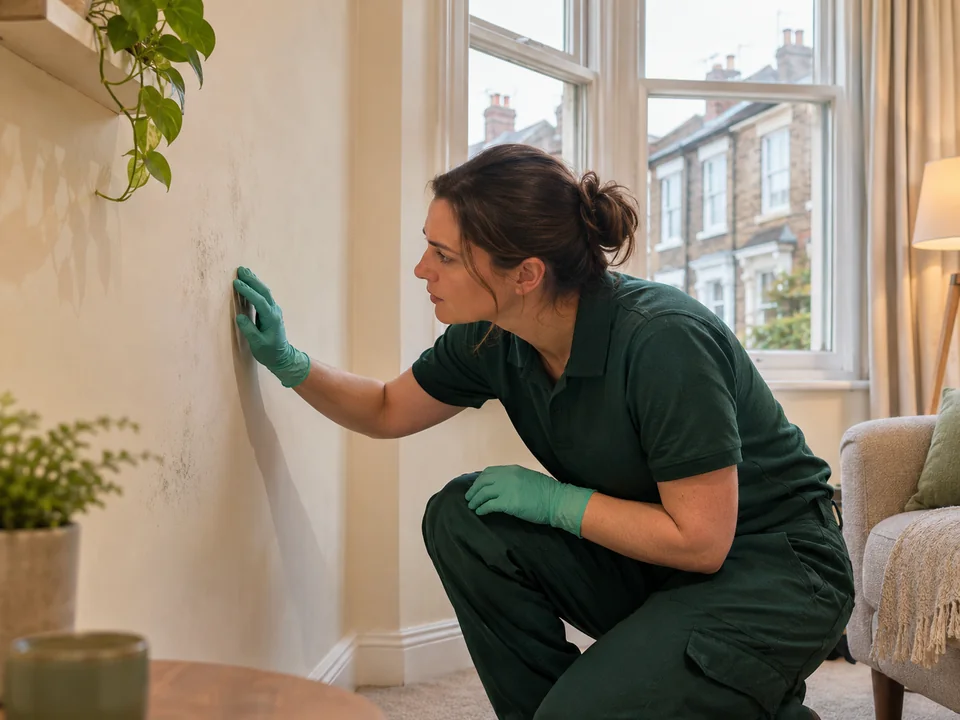
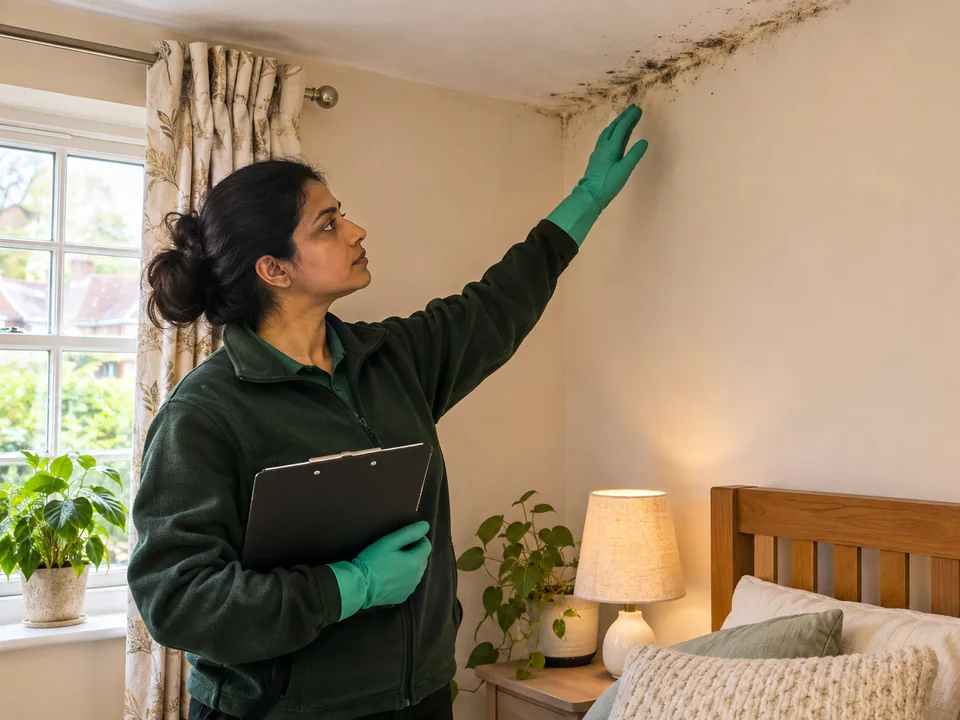
We discuss each area by its material and extent. A visible mark on a smooth hard finish can be assessed as that surface. If the mark continues onto damaged decoration, a porous lining or a concealed section, we identify the change in the enquiry. Note where paint has lifted, where a board edge can be seen and which section meets a skirting or fitted cabinet. We use those details to agree what the attendee can review and to keep surfaces that may need separate consideration out of a proposal until their condition is understood.
When the party asking for work has only reported an affected position in general terms, we ask for a visual boundary. For example, describe the wall below the bedroom window as viewed from the door and name the point where the visible mark ends. Explain whether a panel or a piece of furniture hides any part. If the wall is shared with a different room, describe what you can see from that room separately. We avoid treating a visible face as proof of the condition of the unseen material within the property.
| Wall area | Description useful to our assessment | Decision to agree |
|---|---|---|
| Exposed hard finish | Location, dimensions and condition | Can work be considered on that visible face? |
| Lifted or damaged material | Visible edges and changes in the finish | Does it need separate consideration first? |
| Area close to a fixed feature | Exposed extent and what remains behind the feature | Which boundary applies to the visit? |
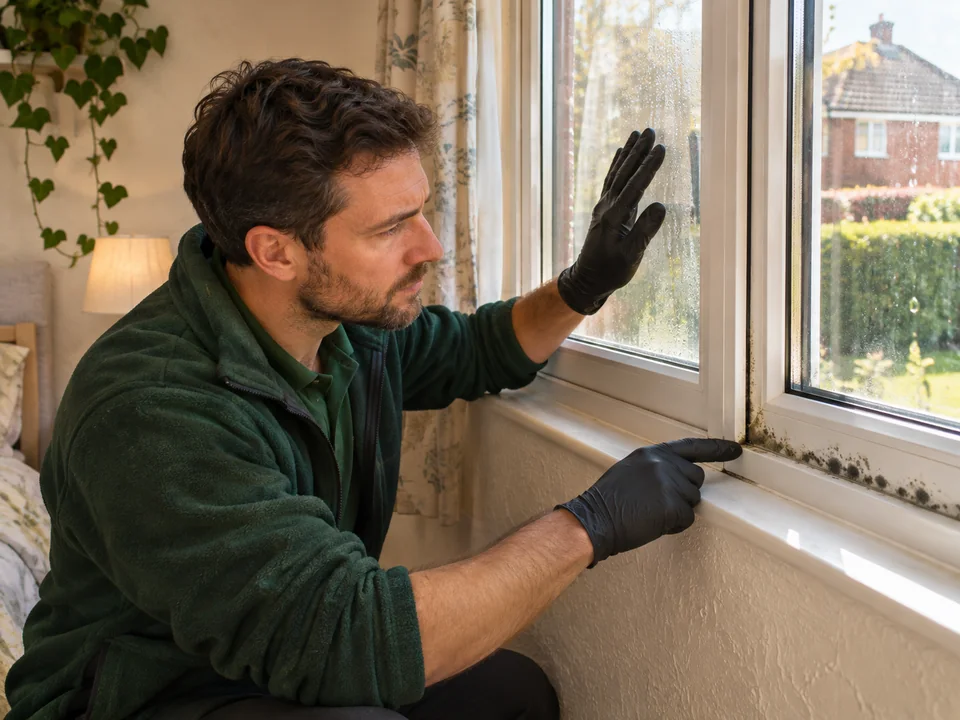
Prepare the room once we have agreed the assessment
We discuss the preparation needed once the affected room and surfaces have been identified. We ask you to describe contents or fixtures that affect access before moving anything. Where a part of the surface can only be reached once another person has completed work, we record that limit and discuss what can be assessed beforehand. If the room contains items you need to keep in use, tell us which routes or positions must remain open. We use this information to agree an arrangement with the contact who will meet the person attending.
Where the appearance has changed since the original enquiry, we ask which surface differs and when it was observed. A photograph taken from a similar point in the room can be useful to the discussion of whether the arrangement needs updating. If the visible area has moved from a wall to a neighbouring ceiling section or the room can no longer be reached in the same way, describe those details before we agree preparation. An updated room record helps us keep access and the proposed work consistent.
- Tell us how each affected finish can be reached.
- Name fixtures or contents that should remain in place.
- Report changes to the room or surfaces ahead of the agreed date.
Physically remove visible mould from suitable exposed surfaces
We physically remove visible mould from the suitable accessible hard surfaces agreed for the visit. We review the named areas before starting so the person attending and the property contact share the same understanding of what is included. If an apparent continuation of a patch is located behind a panel or a different finish is exposed, we stop to discuss that part as a separate question. Agreement for a particular finish applies to that finish and location. An adjoining material may need to be assessed before a decision can be made about what is appropriate there.
During the final review, we look at the accessible surfaces included in the agreement and explain which areas were cleaned. We identify any exposed finish needing further consideration and any concealed position that remained outside the visit. If a building professional is due to investigate a separate issue, we can distinguish the visible surface record from the work that person is being asked to consider. We discuss useful aftercare for the agreed surfaces in the context of any condition or moisture question that remains with the property contact.
When an assessment covers two finishes within one room, we can explain their boundaries using fixtures that remain in place. That helps a second person identify the relevant surfaces during the handover. If you have a property report, retain the date and location names as given so that it can be read alongside the record of the surface work. If another appointment will affect access or expose new material, tell us in advance rather than assuming that different condition is included.
| Stage | What we do | How we record the boundary |
|---|---|---|
| Before treatment | Confirm the named surfaces and agreed preparation | List conditions and areas outside the visit |
| Surface treatment | Physically remove visible mould from agreed suitable hard surfaces | Keep concealed or unsuitable material separate |
| Final review | Review cleaned surfaces with the relevant contact | Explain excluded areas and any follow-up points |
Set follow-up arrangements alongside any other visits
We ask who will retain the outcome and receive any follow-up points. Where the original concern involved more than one resident, an owner or property agent, we agree which contact will receive the room notes. If the issue extends through shared areas or into another dwelling, identify who will follow up on access or property investigation. We separate those matters from the exposed hard surfaces treated in the visit. If a similar mark is seen later, a record naming the original position and finish can help start that conversation accurately.
If you want an end of tenancy clean or a regular housekeeping visit as well, we ask for the room list and purpose of that service separately. A handback clean can have different access and checklist needs from this work. We discuss timing around any confirmed surface treatment and follow-up. Before accepting a quote, ask us to confirm which rooms and finishes are included, what needs to be available and what separate work remains outside the price. We can use an updated photo and new room details if the condition or property arrangement changes before the visit.
If a ceiling or wall has been decorated after earlier work, say which section and when. Shared records can use different names for the same room, so photograph or describe a permanent feature that lets somebody match the positions. We ask for the specific change you have noticed since the last visit. That helps us discuss whether it concerns one of the cleaned surfaces or a different area that needs an assessment of its own.
We discuss the practical order of work with the person arranging the visit. A quote can list the accessible areas separately, which is useful if the timing for one room changes. Where some work depends on information that has yet to be provided, ask us to identify the outstanding point. This makes it easier for residents, agents and owners to understand what can be arranged now and what has to be revisited when another decision is made.
- Keep a named contact for the report and any follow-up.
- Agree the sequence with anyone arranging repairs or further assessment.
- Use the same room labels when raising a related enquiry later.
Questions about arranging mould removal
How much address information do you need near Ilford High Road?
We ask for the full property address, the correct doorway and any instructions about reaching your own floor or room.
What do you need for marks above a fitted unit?
Tell us which face can be seen and what the unit prevents us from viewing. We can discuss an assessment of the exposed part.
How do you treat suitable hard surfaces?
We physically remove visible mould from the agreed accessible hard surfaces after confirming preparation, then review what was cleaned.
Do you include a lining that looks damaged at the edge?
We discuss the material separately. A surface needing its own assessment or decision is recorded separately from the agreed work.
Can someone else receive the outcome for a vacant home?
Yes. Confirm who can hand over the keys and who needs the findings or can agree further action.
Does a new mark after painting require its own description?
Yes. Tell us when the area was painted and indicate where the current mark appears relative to the earlier work.
Other Cleaning Services in Ilford
London mould removal service, Regular housekeeping, End of tenancy cleaning