 Housekeeper
Mould Removal in Greenwich
Tell us where you have found visible mould in your Greenwich property and what you want the visit to address. We consider the surfaces, access and any reported moisture history before discussing a quote. Once the work is agreed, we prepare around the affected area, clean the suitable exposed surfaces and review those areas at handover.
What address details help for a Greenwich visit?
Use the full postcode, building name and entrance. A landmark can orient us, but say which door or gate actually leads to your home.
What happens if a finish appears damaged?
We discuss that area separately. A damaged or concealed material may need assessment before surface work can be agreed.
Stage one: locate the property and define the enquiry
We begin with the address and the effect you want us to consider. In SE10, use the full postcode and the approach a visitor should take rather than relying on a nearby landmark. The Royal Borough identifies the town centre around Maritime Greenwich and parts of the West Greenwich and Greenwich Park conservation areas. Those descriptions cover different streets and building arrangements. If your home is reached through a courtyard, service door or shared passage, explain how to find it from the street. If someone needs to be present to open a gate, give the hours the access contact can attend.
Once we know the property, we ask which section of the home the enquiry concerns. A window reveal in one room, a wall in a lower-ground room and marks in a shared hall might all belong to one report, but they require different access and authorisation. Give a short list of rooms and the person who can agree entry to each part. Mark any location that is outside the home, such as an area in another flat or part of a common staircase. We discuss the rooms that are available and where another party needs to arrange a separate inspection.
Prepare a brief description of the extent and let us know if furniture, everyday use or another visit limits access to the area. A compact room can have more than one location to discuss. Identify the room, the affected surface and its position, such as the window wall by the radiator, rather than relying on the room name alone. If a damaged area has been reported already, give the reference and date. We use that to distinguish the part of the enquiry about visible surfaces from any question about the property that someone else is dealing with.
For a property with several entrances, use a short description that someone unfamiliar with the building can follow. Say which stair or lift goes to the room and whether it must be booked in advance. We ask about that route because preparation can be affected by how the work area is reached. In a house with different front and rear levels, the route a resident normally uses may be different from the approach they can offer to a visitor. Identify the route that can actually be agreed.
- Use the door the visitor should approach, not a landmark alone.
- List any shared, private or inaccessible areas separately.
- Give the name of the person who can agree access on the day.
Stage two: assess visible boundaries and different finishes
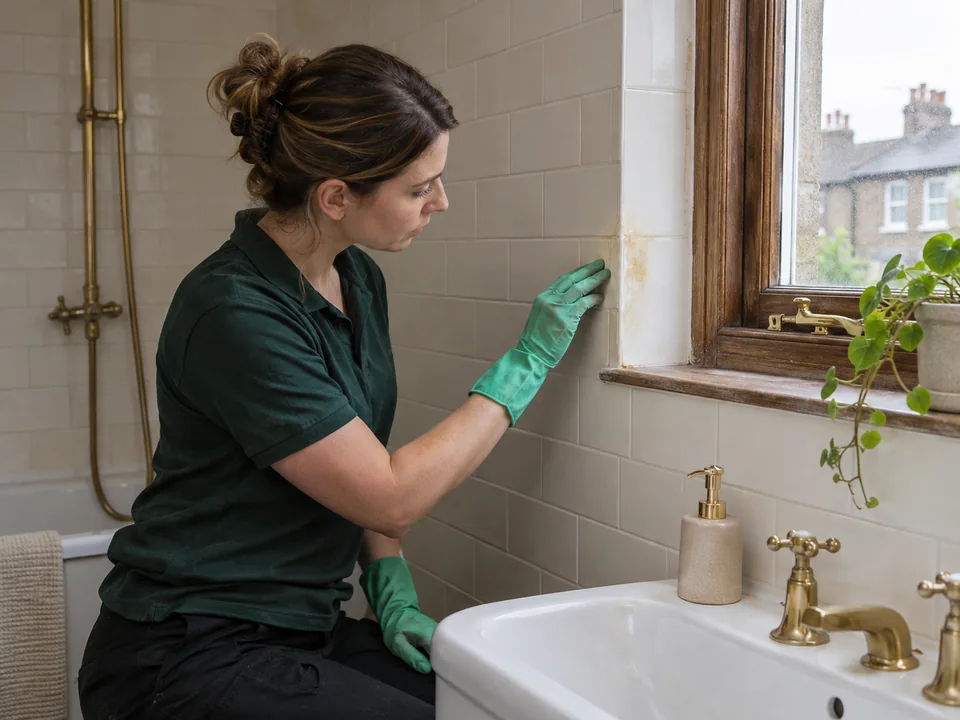
We assess the parts that can be seen and safely approached, using the room record to help identify locations and boundaries. If the affected area lies at the point where two finishes meet, we consider the visible condition on both sides. A patch can extend from a sound hard surface onto a finish that is damaged, lifting or unknown. We can discuss work on an appropriate exposed surface without treating every adjoining material as suitable for the same approach. We ask if a decorator or property professional can identify a sensitive finish when that matters to the decision.
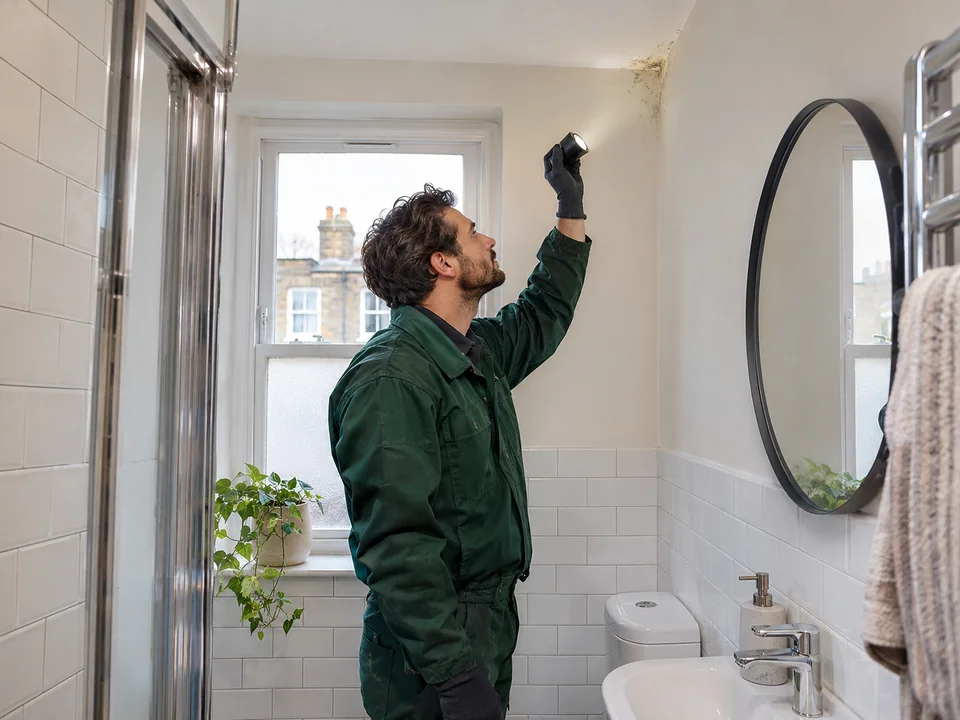
Photographs can help us understand how large an area is and what sits around it. A wider photo can show where a ceiling meets a fitted cupboard or how closely a window area sits next to a wall covering. Label the photo with the room and side of the property. If you are able to take a closer view safely, add it alongside the wider one. We may need to see the area before agreeing a treatment. A photo cannot confirm what material lies under a covering or show the condition behind a fixed unit.
Tell us when marks first appeared and share any known works that could be relevant. If a repair has already been done, give its date and whether anyone has confirmed drying. If you do not know why the problem appeared, describe what you observed. Timing may help direct a separate enquiry but cannot establish the cause on its own. When water continues to affect a room or the area recurs, we discuss whether a property specialist should review the source before a surface visit is agreed. We do not include repairs to the building in an estimate for cleaning visible areas.
We also consider where the affected surface stops relative to its surroundings. An area at the edge of a window panel can be clearly visible on one face and inaccessible at the back. That difference belongs in the assessment notes. We can discuss the exposed face when it is suitable and identify what could only be considered after a separate check. If the resident and property manager have viewed the area at different times, give the date and viewpoint for each account so we do not mistake two descriptions for separate patches.
| Area at assessment | What we consider | What may need a separate decision |
|---|---|---|
| Hard exposed finish with visible marks | Accessible limits and visible condition | Whether adjoining finishes can be included |
| Papered section or damaged finish | What can be seen without disturbing the surface | Condition beneath the finish and suitability |
| Marks with unresolved water entry | Known history and visible positions | Assessment of the source and repair arrangements |
| Concealed or high area | Access and surrounding fixtures | Whether suitable access or a separate inspection is needed |
Stage three: prepare and remove visible mould on suitable surfaces
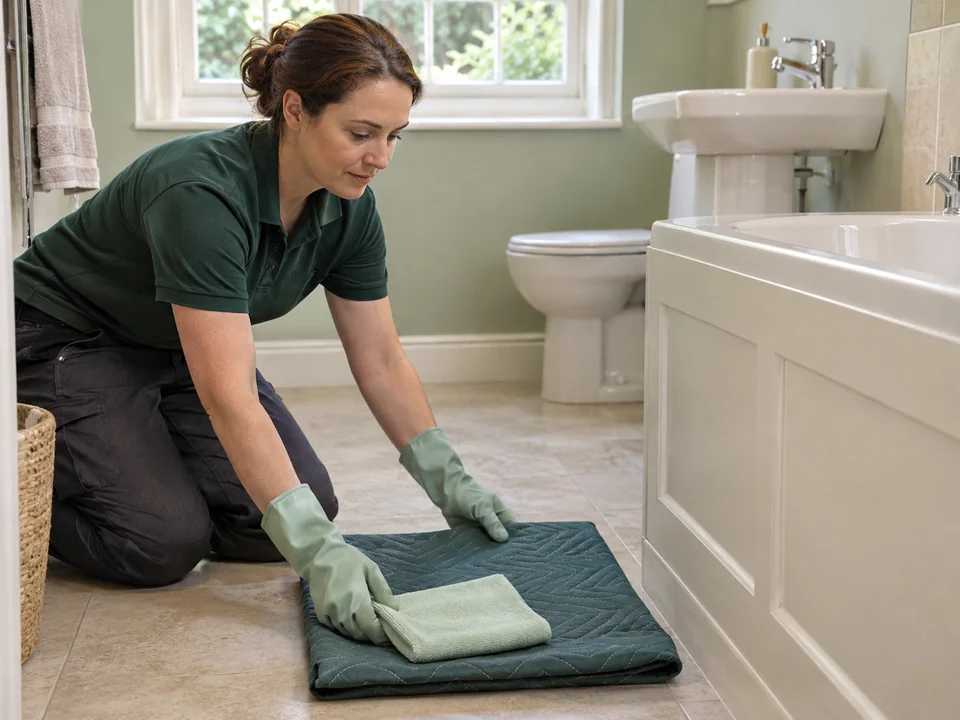
When surface work can be agreed, we identify exactly where it will take place and what preparation is needed. If the affected area is beside possessions or a sensitive finish, we discuss what should be cleared, what needs protection and what must remain in place. If a room is used throughout the day, agree an appropriate access window and tell us when the route through the home has to remain open. A hallway or a room used for work may have different access requirements from an empty bedroom. We use the agreed room list to keep preparation focused on the locations involved.
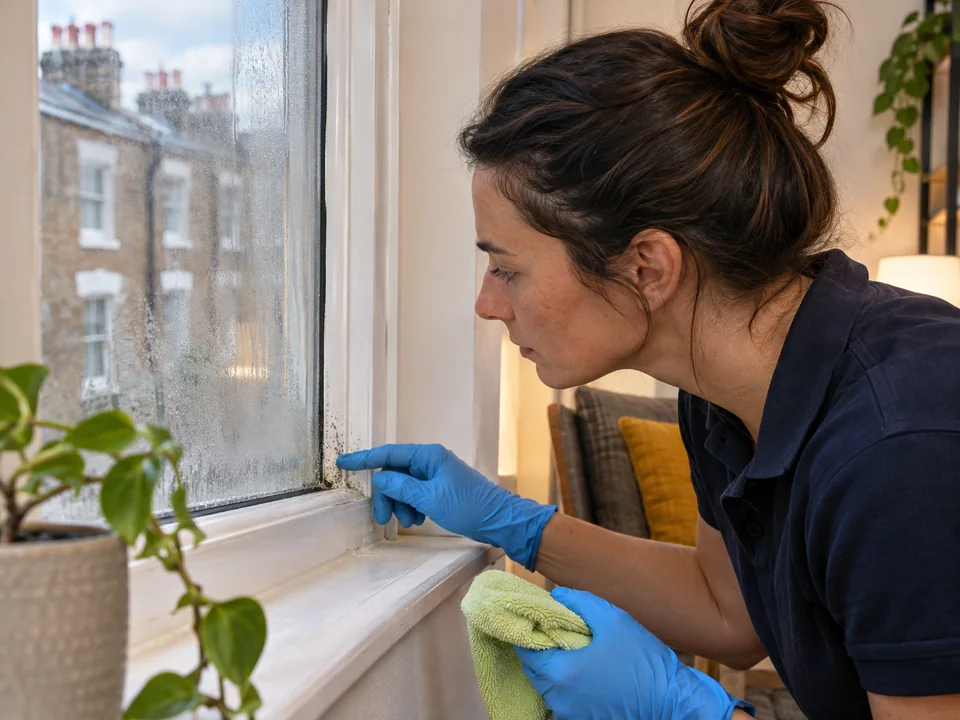
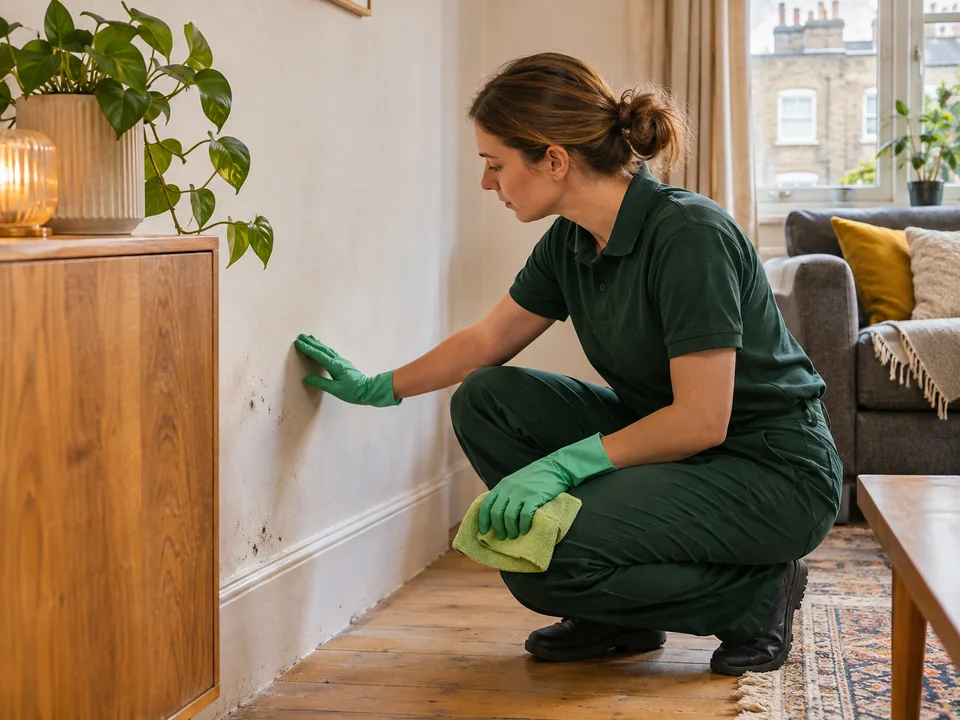
We remove visible mould from the suitable accessible hard surfaces agreed with you. If the location extends beyond the area first discussed or a surface is unsuitable when it can be viewed, we talk through the difference before considering any additional work. Where a fixture, paper covering or piece of furniture limits access, we keep the concealed section outside the agreed work until the relevant property contact decides how it should be assessed. This ensures the areas addressed can be identified during the final review.
We discuss porous or fragile materials separately when they are next to the work area. Their visible condition may warrant further assessment, advice on handling or a decision about replacement by the person responsible for the item. Leave anything fixed or damaged in place unless that person has decided otherwise. If an issue affects the proposed room preparation, tell us what has been agreed and who authorised it. We can then consider whether the suitable hard surfaces remain accessible and whether the agreed visit can still go ahead.
The preparation for a lower wall is different from preparation for a high surface above a fixed unit. Tell us what can be reached from an unobstructed approach and which parts need a separate access decision. We confirm where the visit can proceed before beginning the agreed work. If a cupboard or decoration makes one section unsuitable to approach, we keep that section distinct and discuss who should review it. The visitor should have a defined area to work in and a named contact who can answer questions if circumstances change.
- Confirm the exact surfaces included before work starts.
- Tell us what should stay undisturbed or needs protection.
- Review differences in visible extent before agreeing additional work.
| Stage | What we do | What we confirm |
|---|---|---|
| Preparation | Review access and the immediate work area | What is cleared or left in place |
| Agreed cleaning | Remove visible mould from suitable accessible hard surfaces | Which locations and finishes are included |
| Changed conditions | Discuss any area that differs from the first description | Whether another assessment or a revised proposal is needed |
Stage four: confirm pricing and review the outcome
Ask us for a quote based on the room list, the visible area and the necessary access. A quote discussion may turn on the condition and number of finishes rather than the number of rooms alone. Explain the difference between a single accessible wall or several locations where materials or routes differ. If an area still needs to be assessed, ask when a price can be agreed and what information would be needed. If another cleaning service is being considered, tell us which rooms and tasks it involves so the questions about the two visits can be kept separate.
At handover we review the agreed areas with the contact and identify any places that remained outside the work. Keep that information together with relevant photographs or property records. If an area needs further access or separate investigation, note who should receive the details. Where the condition changes or visible marks return, record the date and position and use the same room descriptions when getting back in touch. We can then discuss those changes without losing the distinction between the earlier work and a building issue that still needs attention.
If the proposed work fits between another appointment and a key return, include the relevant times in the quote discussion. Ask who may agree changes if a different finish becomes evident during assessment. We can explain what would remain excluded if that person cannot be reached. At an occupied property, confirm who will meet the visitor and who will receive the final information. An agent or owner who was absent can use the original room record to see which part of the proposal was covered.
- Keep the rooms, materials and exclusions with the quote.
- Share the outcome with the person responsible for follow-up.
- Use the same location descriptions when reporting a later change.
| Quote or handover question | Details to confirm |
|---|---|
| What has been priced? | The accessible locations, materials and agreed preparation |
| What was covered? | The agreed areas reviewed at handover |
| What is still open? | Whether access, material condition or moisture needs separate review |
Questions about arranging mould removal
Should I send the building's visitor entrance or its postal entrance?
Give the full postal address, then say which entrance should be used. Explain who can open it and which route leads to the affected room.
Will removing visible marks from an exposed trim cover the finish beside it?
We consider each finish on its own merits. If the adjoining material is damaged or unsuitable, we discuss it separately before the work is agreed.
What should I say about a room scheduled for decoration?
Give the proposed date and tell us if the material or moisture condition is still being investigated. Share the handover with the decorator so they can review what was covered.
May I add another surface if it is found when the room is checked?
We discuss its condition and suitable access before considering any change. Ask us to confirm any resulting change to the proposal or price.
Can I enquire while a lower area remains hidden by a fixed panel?
Yes. Describe the exposed section and identify the person who can arrange any separate investigation. Keep the concealed place distinct from the work on a visible surface.
What photographs help with a follow-up?
If you can take them safely, use the same viewpoint as before and mark the date and room. Tell us about any changes to repairs or access since the visit.
Other Cleaning Services in Greenwich
How cleaning quotes are discussed, Check our London service areas, Prepare the visit details