 Housekeeper
Mould Removal in Earl's Court
We start an Earl's Court mould removal enquiry with the affected area and how the property is used. Tell us where the marks are, which finish they sit on and whether access is through a shared hall, separate residential door or managed entrance. We discuss the assessment and what can be agreed before cleaning suitable exposed hard surfaces.
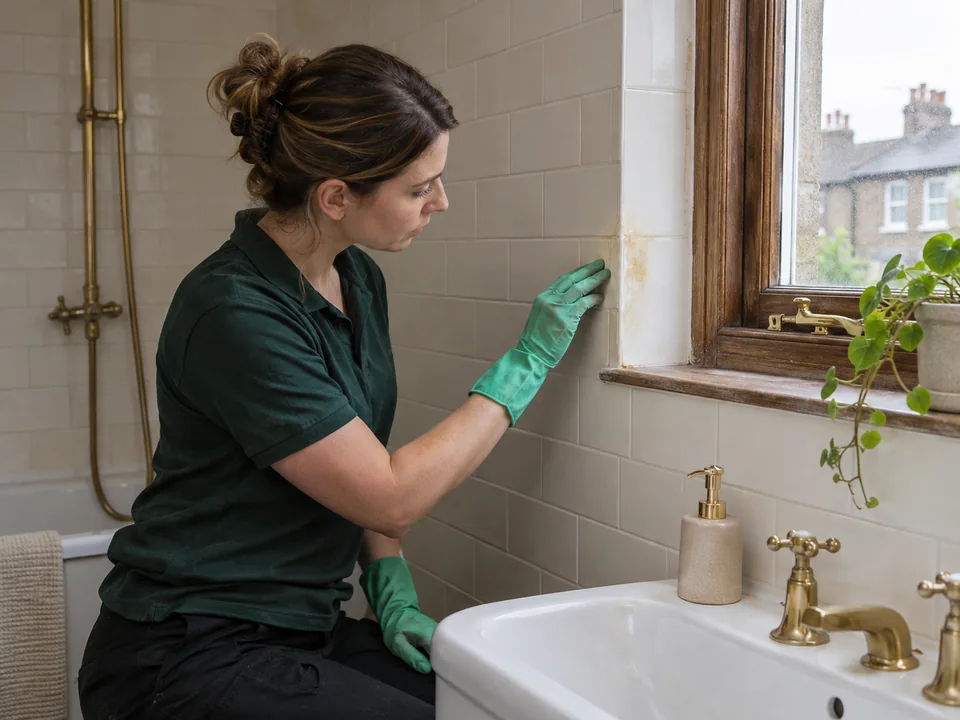
What helps with access to an SW5 conversion?
Give the full address, flat number, floor and authorised doorway. Mention steps or an entrance that differs from the postal door.
Can you review marks next to a sash window?
Give the visible position and affected finishes. We discuss the frame, surrounding wall and any unsuitable material individually.
We match the visitor instructions to the affected flat
Use the complete postcode, building and flat details when you contact us. The Royal Borough describes the Earl's Court Square conservation area as including houses and mansion blocks between Earl's Court Road, Warwick Road and Old Brompton Road. Its conservation material identifies distinct parts of SW5, including Nevern Square. A nearby station, road or square can help orient someone, but a visit needs instructions for the actual property. If the entrance sits beside another use at street level, identify which door goes to the home. Where the route is from a mews or a separate street, give the postal address as well as the arrival instructions.
Tell us how access continues after the first door. If you are using a shared staircase, say which level or landing leads to the flat and whether another key or resident is needed. A flat may be described as lower ground when approached from the main entrance even though it has a door to an external area on the other side. Explain which route a visitor is allowed to use and what lies between that route and the room. We use the information to discuss preparation and to identify access questions before an appointment is proposed.
If a landlord arranged the visit and a resident can show the affected room, we ask for a contact for each role. A keyholder may be able to open a door without being able to agree more work or talk about the finishes. The person approving the visit might need to be reached when the actual condition is discussed. Give their availability as well as the time when a resident can make the room accessible. If the affected area is in a common hall or a different flat, identify who can grant access to that location separately.
Use the same room names in the enquiry, access notes and any earlier photographs. For a building with more than one flat at a level, include the individual door or a useful position, such as the rear room beside the stair. The office can distinguish a private area from a shared section only when the labels make that relationship clear. If an area cannot be accessed, give it a separate entry and explain whether the limit comes from a locked door, another appointment or a part of the building under someone else's control.
- Give the full address and identify the authorised entrance.
- Explain which stairs and access arrangements lead to the room.
- Name each person involved in access, assessment or approval.
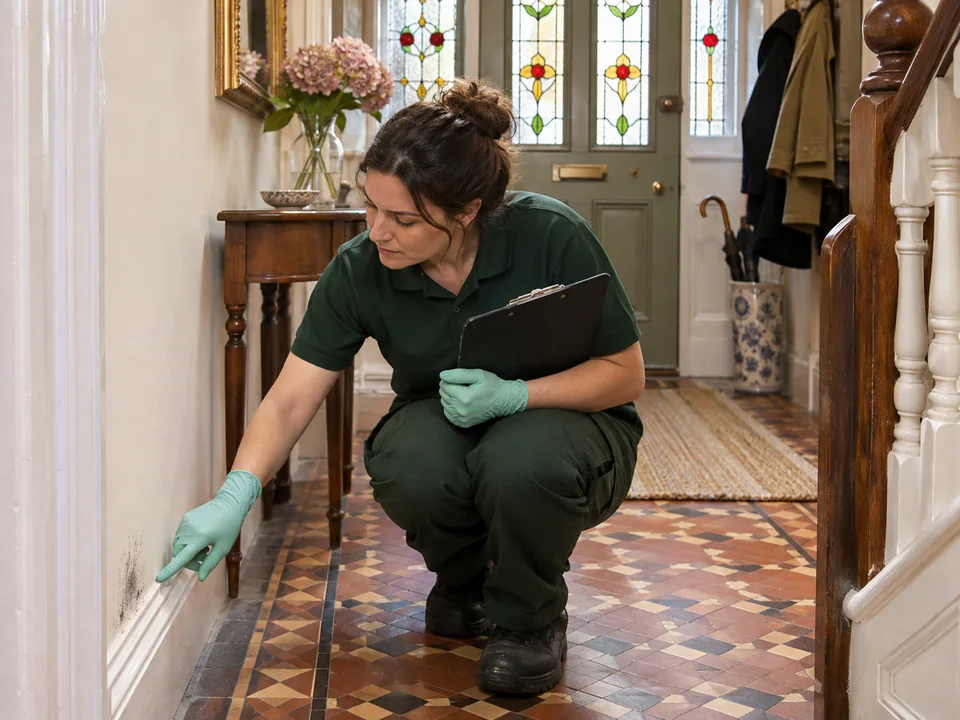

We assess the visible area around painted timber, walls and fittings
We look at the visible extent and the material it touches. The borough's appraisal for Earl's Court Square describes painted external finishes and timber sash windows among the area's building features. The finish in an individual home can vary. On the inside, give the position of marks on the frame, painted reveal or neighbouring surface. A wide room image can show where those materials meet and what blocks the approach. A closer view can show cracking or lift if it can safely be taken. We use both to discuss what can be assessed and what remains uncertain.
If a mark crosses from a suitable exposed hard surface onto paper, fabric or a damaged coating, we discuss those areas independently. The location may be the same while the material decision differs. Let us know if a decorating record or property contact can identify a sensitive finish. Keep any unknown or concealed section on its own part of the record. We explain where work may be suitable and which part would need another assessment before it could be considered. A photograph does not establish what sits under a covering or damage that lies behind a unit.
When the affected area is above a stair, a high window or a fitted piece of furniture, tell us the height and how the room is approached. We consider safe access when discussing whether the visible area can be assessed and cleaned. Leave fixtures in position and describe the view from the floor. If the marks are partly hidden behind a fitted item, show the exposed edge where possible. A person with responsibility for the property may need to decide if a concealed space can be opened for separate inspection. Confirm which location you want discussed before wider access is considered.
If an older finish was repaired or redecorated, give the date and which part of the frame, ceiling or wall was worked on. Identify what is visible now and what you only know from a previous report. We use the current description at assessment and may ask the owner or relevant professional for details of an unfamiliar finish. A quote depends on which surfaces are accessible and can be agreed, including whether an area can be dealt with individually while the adjoining material remains under review.
| Observed area | What we assess | What may need separate consideration |
|---|---|---|
| Painted window reveal and frame | Visible extent and condition of each finish | Suitability of the adjoining material |
| Mark reaches a fragile or porous finish | Which exposed areas can be safely approached | Material condition or separate handling decision |
| Visible area above stairs or a fixed unit | Height, access and room layout | Whether a safe approach can be arranged |
| Coating recently changed | Current appearance and work history | Which finish was affected before and after decoration |
We use repair information to plan the order of assessment and surface work
Tell us about any known moisture, previous work or recent repair, including who reviewed the room and when. Identify which surface was inspected and whether the person attending commented on drying or material condition. A repair record for another part of the building can be useful context, provided it is labelled by location. We discuss what can be seen and what information might need a property professional to check before cleaning is agreed. If the source is unknown or a visible area has changed after repairs, share those observations and the latest date.
Where another visit is planned, give the date and what it is intended to cover. For example, a landlord may be looking at a window while the resident wants a separate accessible wall assessed. Keep the two requests distinct. We discuss what can proceed and which room or surface would be better reviewed once another decision is available. If there is ongoing water entry, mention it while arranging the next step. A request to remove visible mould concerns the agreed surfaces. A possible defect or unstable material may need another person's assessment.
If a mark returned following earlier surface work, tell us where it became visible again and how the current finish compares with the earlier one. We use that history to consider a fresh assessment and ask what else has been done in the building since that time. If a repair or material question remains outstanding, identify who is handling it. The office can discuss the visible area without making assumptions about what caused it or promising how the surface will behave later.
- Keep repair dates with the specific room and finish involved.
- Explain which property decisions are still outstanding.
- Use the current appearance and dated photographs when describing changes.
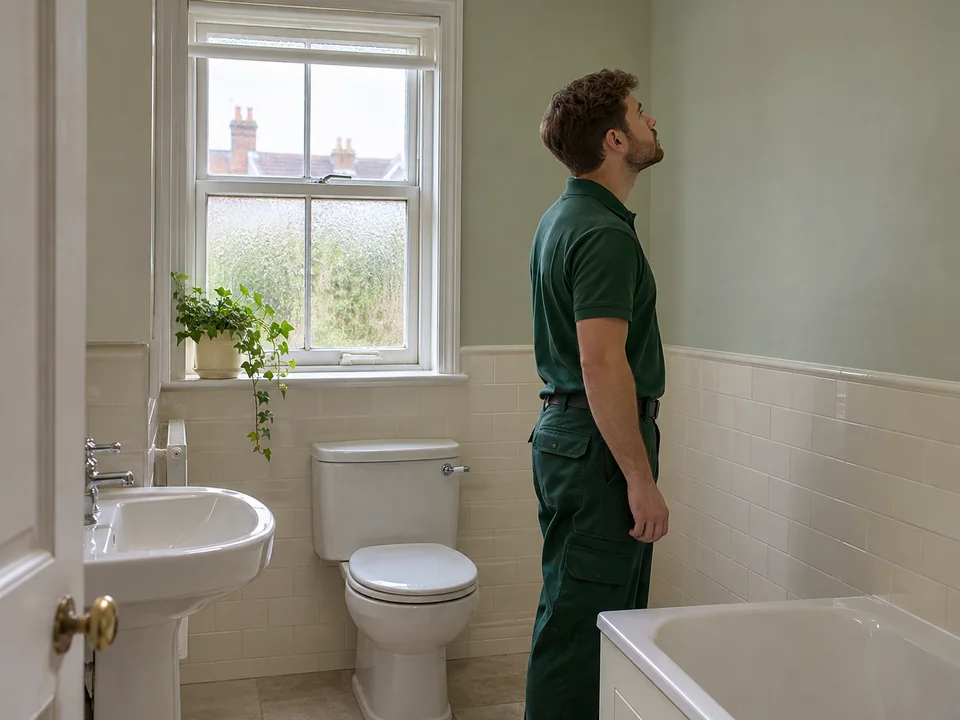
| History point | Helpful record |
|---|---|
| Relevant inspection | Date, room and which part of the property was reviewed |
| Recent repair or decoration | What changed and whether material condition was discussed |
| New or recurring marks | Exact position, date and current appearance |
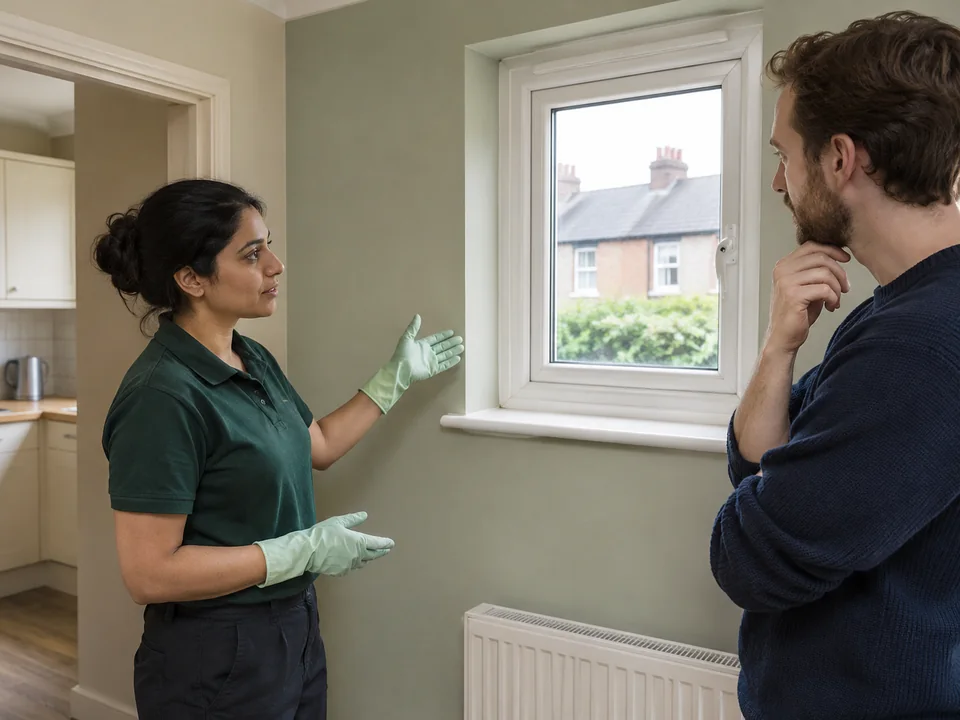
We prepare, clean and review the agreed hard surfaces
We discuss what will be prepared in the room and which belongings or adjoining finishes need to remain protected or undisturbed. A work area beside a window can have practical limits involving shutters, furniture or another occupant's access. We confirm the affected sections, their suitability and the immediate approach before we start. Where a particular area is blocked, damaged or uncertain, we explain the relevant limitation and keep it distinct in the proposal. Ask the office to confirm which items may be cleared and who can decide those arrangements.
We remove visible mould from the agreed suitable accessible hard surfaces. If the visible limits or condition differ once the area is reviewed, we discuss that before changing the work. At the final review we confirm the locations covered and any section that remained outside the agreement. This lets the resident or managing agent distinguish the work carried out from questions about access, a finish or a property defect. Agree who will receive the account if they will be away when the surface is reviewed.
To discuss a quote, provide the full postcode, locations, surface condition and available access. Tell us about timing constraints from a change of occupant, another appointment or the collection of keys. The price depends on what can be agreed for the location and materials. If you would also like ordinary cleaning for another room, give that request its own task list. We can discuss how a separate appointment fits and which information will need to be available before any visit is confirmed.
If several rooms are included, we review each using its own location notes. An area may have been visible but left out while someone decides how to handle a damaged finish. That detail stays with the room description. Keep the current information for anyone who takes over access or arranges a further inspection. If an area becomes accessible later, tell us how the room is reached now and whether the visible material has changed.
Let us know what must happen before the next booking, such as arranging building permission or receiving a repair report. That requirement can affect a future quote even when the original working area was accessible.
- Confirm the work area and protection arrangements.
- Review the specific included hard surfaces at handover.
- Identify the contact for work or checks outside the agreement.
| Visit stage | What we confirm with you |
|---|---|
| Prepare | Agreed areas, approach and items to leave protected |
| Clean | Visible mould removal on suitable accessible hard surfaces included |
| Review | Work covered and locations needing another decision |
Questions about arranging mould removal
The property is postal-addressed on one street but reached through a mews. Which details do I give?
Use the full postal address and describe the authorised visitor route separately. Include the relevant doors, level and access contact.
Can you look at an affected sash window when the adjacent paper is lifting?
Describe the frame and papered section independently. We discuss the visible hard surface and whether the adjoining material needs another assessment.
I can see part of the marks beside fitted furniture. How do we plan the work?
Give the exposed view and tell us what blocks the rest. We assess what is visible and discuss whether concealed sections require separate access.
The original photograph was taken before redecorating. Should I include it?
Yes, if relevant. Give the date and say which finish was changed. Provide a current view or description so we can discuss the area as it is now.
Does a shared hallway enter the same agreement as the flat?
List the hallway separately and identify who may give permission and approve work there. We discuss the accessible areas as separate parts of the enquiry.
What information should an absent managing agent receive?
Share the agreed room and surface list, the areas covered and any locations requiring further decisions. Keep previous repair information tied to the right locations.
Other Cleaning Services in Earl's Court
Regular housekeeping in Earl's Court, End of tenancy cleaning in Earl's Court