 Housekeeper
Mould Removal in Ealing
For an Ealing mould removal enquiry, we ask which rooms and finishes are affected, what can be reached and whether the property has already been assessed. We use that to plan the visible assessment, agree preparation and remove visible mould from suitable exposed hard surfaces. The final review distinguishes the work completed from access, material or moisture questions that need separate attention.
Plan your enquiry

What should I give for a W5 or W13 address?
Use the full postcode and the correct residential entrance. Give the flat, floor and any access arrangements for the affected room.
Can you assess two different wall finishes?
Describe both surfaces and their visible condition. We discuss suitable areas and any sections that need separate review.
Begin with the Ealing property and a room plan we can use
We ask for the complete address, entrance and room details. Ealing Council distinguishes the Ealing Broadway centre and neighbourhoods within W5 from parts of West Ealing around W13. Its Ealing Green conservation material spans both postcode districts and describes the setting around Ealing Green and Walpole Park. Those locations provide a general orientation point. To arrange a visit, give the full property address and the route to the entrance a visitor should use. If the property has a separately named block or entrance, include that detail and identify the relevant stair or lift.
Give each affected place a room label and include the floor in the description. For example, the patch may sit to the right of the front bedroom window or at the ceiling edge in a downstairs extension. We use the labels to discuss which surfaces should be assessed and to distinguish areas with different access needs. If the front and rear of the property are at different levels, explain the visitor route from the entrance you have agreed. Mention if a room will only be accessible when another person arrives.
When a property is managed, check who handles access to the home and the decisions about the proposed work. A person who can open a shared door may still need an occupier to be there for access inside. A manager may have repair information but may only be able to join the assessment by phone. Give both roles to the office. If the enquiry concerns an area outside the home, such as a shared landing or another flat, identify the property contact who can separately arrange access before we discuss including that area.
We ask which parts of the property need to stay available during a visit. If the room is normally used for work, study or another household activity, give the periods it can be made accessible. Explain if the only entry route to the affected area passes through somewhere else in use. We discuss those practical details when exploring whether several rooms can be assessed together or if a place must remain outside the proposed appointment until the necessary access is agreed.
- Supply the full postcode, authorised entrance and relevant floor.
- Label affected locations with recognisable room and surface details.
- Confirm who can open the property and who can agree a change.
How we assess walls, ceilings and adjoining materials
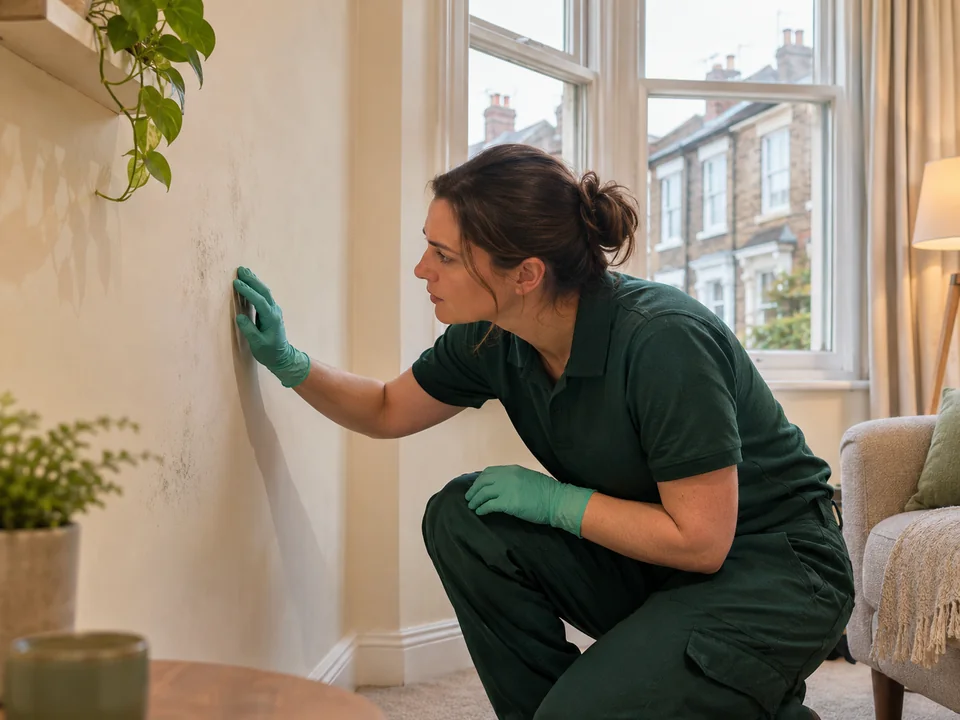
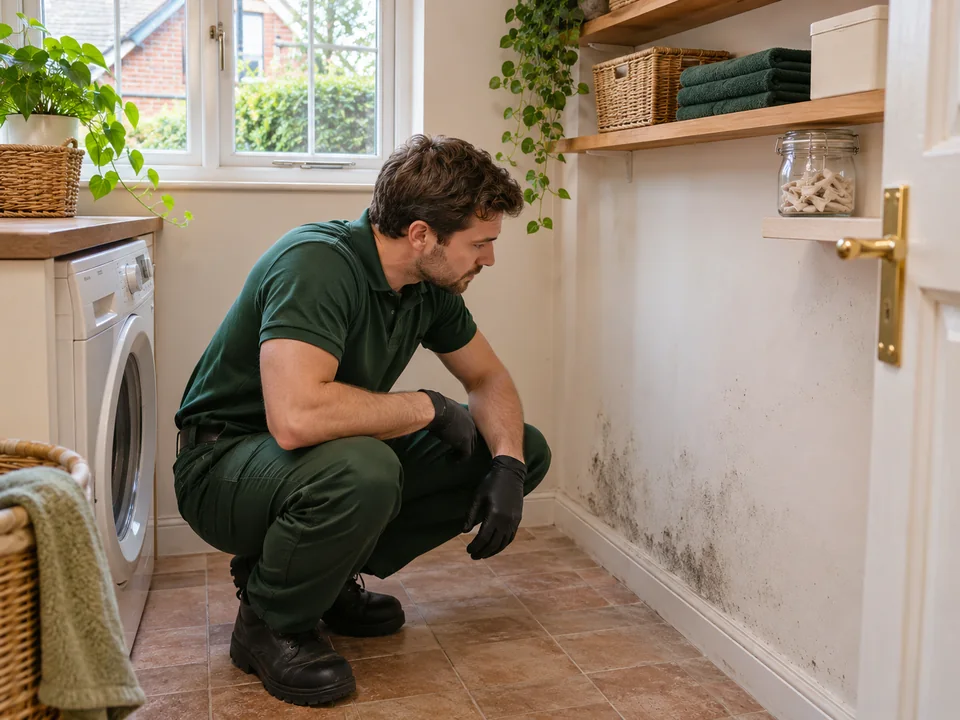
We consider the visible extent and the finish beneath the marks. A wall may look like one surface from the doorway, while a closer safe view shows a change at a painted cabinet or an older coating. Give a wider room photograph and any useful detail view you can safely take. Identify where the material changes and whether paint, paper or another finish looks damaged. We can discuss the exposed area and any part to separate from the work if the material condition is not clear. Leave fixed items in place while the visible condition is being described.
For a ceiling patch, give the height and what is directly beneath it. A clear floor may allow a different assessment from a location above a fitted unit or stairs. We consider the available approach as part of the assessment. If a photograph does not capture the route, explain what would be in the way and who can decide whether it can be moved. Keep fixtures, covers and damaged materials undisturbed. Any part that needs more access or a different assessment can be recorded separately.
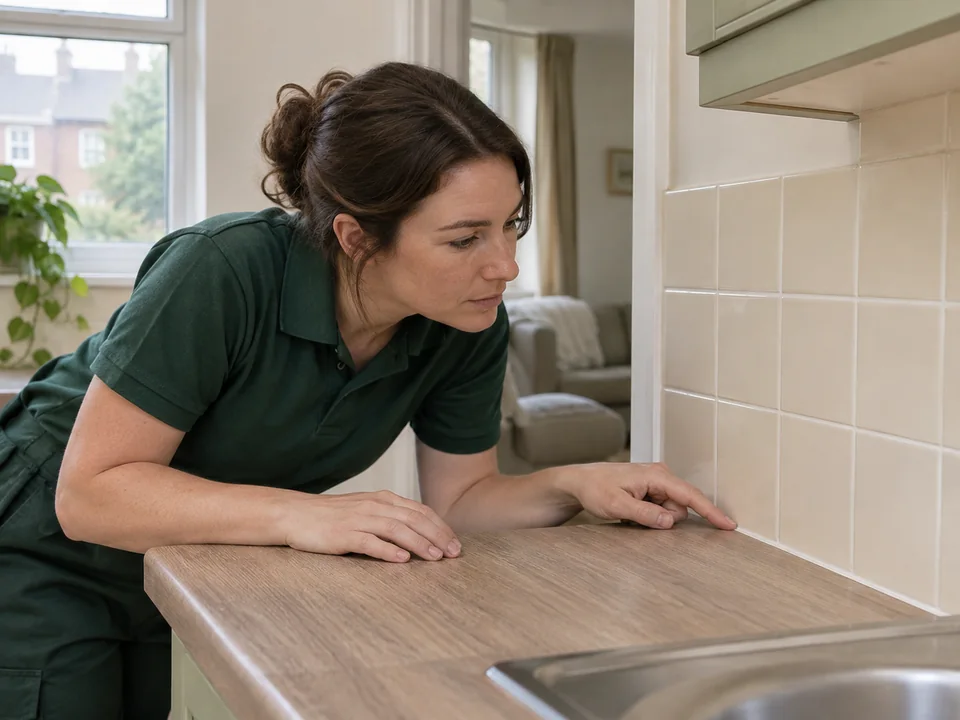
Where a visible patch sits on more than one material, we discuss each finish. If there is a sound hard surface beside a porous coating, an exposed trim and the adjoining section can require separate decisions. We identify what is suitable for the work being considered and what needs further review. If an older finish is known to need protection, tell us who can confirm what is appropriate. A quote can only reflect the areas and work agreed for the property, including any limits on what can be assessed.
If the appearance has changed since photographs were taken, date both the earlier and current views. Tell us if the surface was redecorated, a unit was installed or furniture was moved. We use that information to understand the current exposed area and distinguish it from somewhere that was more visible before. A useful record states where you stood and which part could be seen from that point. This can help our office identify whether a visit is the appropriate next step and what additional details it needs.
| Area reported | What we consider | Separate question |
|---|---|---|
| Wall next to a fitted unit | Affected boundary and condition of exposed finish | Whether a concealed section needs review |
| Ceiling above a fixture or steps | Height, floor approach and visible materials | Safe access and suitability for work |
| Paint beside a porous covering | Visible condition at the material change | How the porous part should be assessed |
| Recently redecorated area | What the finish looks like now and date of change | Whether an earlier photo still describes the same surface |
We agree preparation and carry out the suitable hard-surface work
Before cleaning, we confirm which areas are included and discuss the immediate preparation. Tell us which items should remain untouched and which surfaces or possessions need protection. If a wardrobe, panel or fitted unit blocks the route, we discuss the limits or what another person needs to arrange. We confirm the room route, available times and preparation with the person who can approve the visit. Where more than one area is included, we discuss what should be available first so the work can proceed within the agreed preparation.
We remove visible mould from the suitable accessible hard surfaces included in the agreement. We review the working boundary if the marks are more extensive than the original description or a different material is visible. If a surface appears unsuitable or further access is required, we discuss how that affects the proposal before changing the work. An adjacent porous or concealed area may require a separate material decision. If a building issue comes to light, we identify it for the appropriate property contact and keep repair questions outside the agreed cleaning.
Tell us if an earlier report, leak or inspection concerns one or more of the rooms. Give the date, position and whether anyone has checked the material after a repair. We use the history to discuss assessment and to help identify any other work that needs to happen before suitable cleaning can take place. Observations can be useful without establishing a cause. If there is an ongoing moisture concern or the same marks have returned, someone responsible for the property may need to investigate what is happening before another surface visit is agreed.
If cleaning is discussed for two different materials, confirm which part can be prepared first. A section that is exposed may be considered while an adjoining finish is still waiting for advice, provided the work and boundary can be agreed separately. Tell us which parts of the room need to be kept available and who can confirm arrangements. The assessment and preparation decide what can be included, so a change in access should be discussed before work proceeds.
- Agree what can be cleared, protected and left in place.
- Confirm precisely which exposed hard surfaces are included.
- Tell us which areas are still waiting for another assessment.
| Visit stage | What we agree and do |
|---|---|
| Preparation | Confirm the room approach, working boundary and nearby items |
| Surface cleaning | Remove visible mould from suitable accessible hard surfaces included |
| Changed findings | Discuss different materials or visible extent before changing the work |
Review the treated areas and agree who handles remaining questions
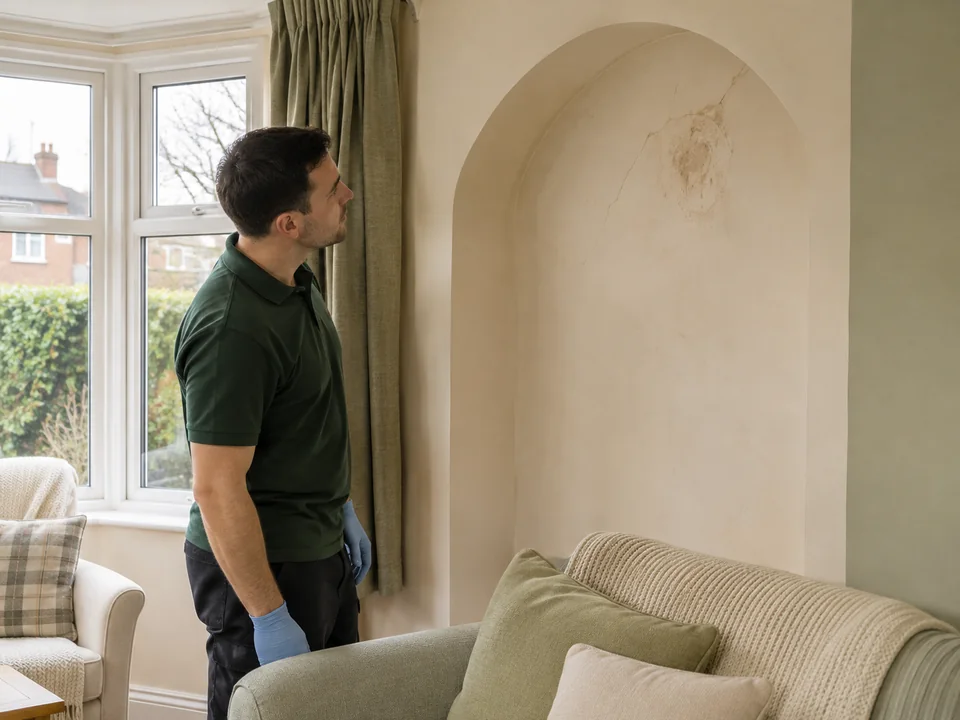
At handover, we go through each included location with the named contact. We identify the areas covered and any that stayed outside the agreement because their condition or access needed a separate decision. If the resident is not present, confirm who should receive the information and use the room descriptions from the original enquiry. Keep any separate repair references beside the relevant locations. If an affected place changes later, we can use the earlier record to discuss what is different and whether assessment of another surface or the property would help.
The quote depends on the visible areas and materials, access and the work agreed for the particular address. Give the full postcode, room list and approximate dimensions for a first discussion. Tell us if a repair visit, key collection or room use affects the dates available. If you also want to enquire about regular housekeeping, carpet cleaning or move-out cleaning for other rooms, give that work a separate list. This allows us to discuss an appropriate visit for each request and clarify what is included and what may need a further decision.
If a return visit may be needed, agree what information has to be available before you call again. For example, a manager may have to obtain a report on an adjoining material or organise access to a part of the property that could not be viewed. Keep their details with the room record. If the condition changes before that decision, note the date and place and share the new observations. We use them to discuss whether the earlier work area is affected again or a separate place is involved.
Where a property manager will receive the result, share the original room list with them before the visit. At review, ask us to identify any area that could be seen but was left for another decision. If a later appointment concerns only a different surface, keep that detail in the record so another resident or contractor does not assume that it was part of the first arrangement.
- Identify what was covered and which places remained outside the visit.
- Share unresolved access or repair questions with the named contact.
- Use the same room labels when reporting later observations.
| Review information | Who needs it |
|---|---|
| Included surfaces and areas | Named resident or person arranging the visit |
| Material or access questions | Person able to arrange further assessment |
| Repair or moisture history | Responsible property contact or relevant specialist |
Questions about arranging mould removal
Should I specify W5 or W13 when I give directions from Ealing Green?
Give the complete postcode and residential entrance first. Use nearby landmarks as additional orientation and confirm the route to the affected room.
Can you assess a ceiling patch when a wall patch in the same room is easier to reach?
We consider each location and approach separately. Give heights and describe any obstacles so we can discuss both the accessible area and any separate arrangements.
The material beside the wall has a fragile finish. How do you decide what can be included?
We review the visible area and finish and discuss suitability before agreeing the work. Tell us who can identify any special protection requirements.
Does a repair report for a neighbouring area change what you can review?
It can provide context. Give the date and location it concerns and describe what is visible in your own room without assuming the report covers it.
If a second area becomes accessible after the first assessment, can it be added?
Ask to discuss the newly available area and its condition. We confirm any change to the agreed work before including another surface.
What should go on the final room list passed to another contractor?
Include the location and material, the areas covered and those requiring a separate decision. Keep any moisture or access information associated with the relevant location.
Other Cleaning Services in Ealing
Regular housekeeping in Ealing, Carpet and upholstery cleaning in Ealing