 Housekeeper
Mould Removal in Croydon
Our Croydon mould removal enquiries start with the actual room, visible finish and building access. We check which areas can be assessed and who can authorise work, especially where a resident and a managing agent cover different decisions. Once we have agreed a suitable accessible surface, we prepare the working area, carry out the agreed clean and confirm which items the property contact needs to follow up.
Plan your enquiry
What do I provide for a CR0 property with a concierge?
Give the full postcode, flat number and instructions for reporting to reception.
Can I include a ceiling above a landing?
Yes. Say how high the ceiling is and whether the area below it is level.
Identify both the street entrance and the floor
Croydon Council places the North End Quarter between routes that include Wellesley Road and George Street. A property enquiry in central Croydon should name the entrance actually used for the visit, even if the postal address faces a different road. Give the building number or name, the full postcode and the flat or unit. If reception checks visitors in or a resident must meet them, say who will do that and where. A visitor getting to the right block is only the first part of making the affected room accessible.
A high-level room can be difficult to reach for reasons unrelated to floor number. For example, a lift may serve the floor but there may still be steps or a second door on the way to the property. If the affected section is in a stairwell, mention the position of the landing and whether there is a clear area directly beneath the marks. Tell the office about any known limits on bringing equipment through common parts.
Clarify which rooms your contact can open and whether anyone else must be present. An occupier may agree to show their room but have no authority to arrange work on a common ceiling. If the managing agent is making arrangements, ask them to confirm whose permission is needed and whether an inspection can include the shared area on the same day.
- Separate the postal address from the visitor route.
- Give the floor and room after describing the main door.
- Identify any reception or access arrangements that must be agreed.

| Point of access | Detail to provide |
|---|---|
| Arrival | Road, building, postcode and entrance |
| Visitor registration | Reception location or named contact |
| Level | Floor served by the lift and any steps beyond it |
| Affected room | Name, level, height and who can open it |
How we assess damage before surface work
We look at the finish and its condition as part of deciding what can be agreed. A sound visible wall and a changed ceiling finish have different working and assessment needs. We establish access before preparing the area and physically remove visible mould from the suitable hard surfaces agreed in the quote. At handover we clarify which surfaces were cleaned and separate any questions about damaged material or the building from the completed work.
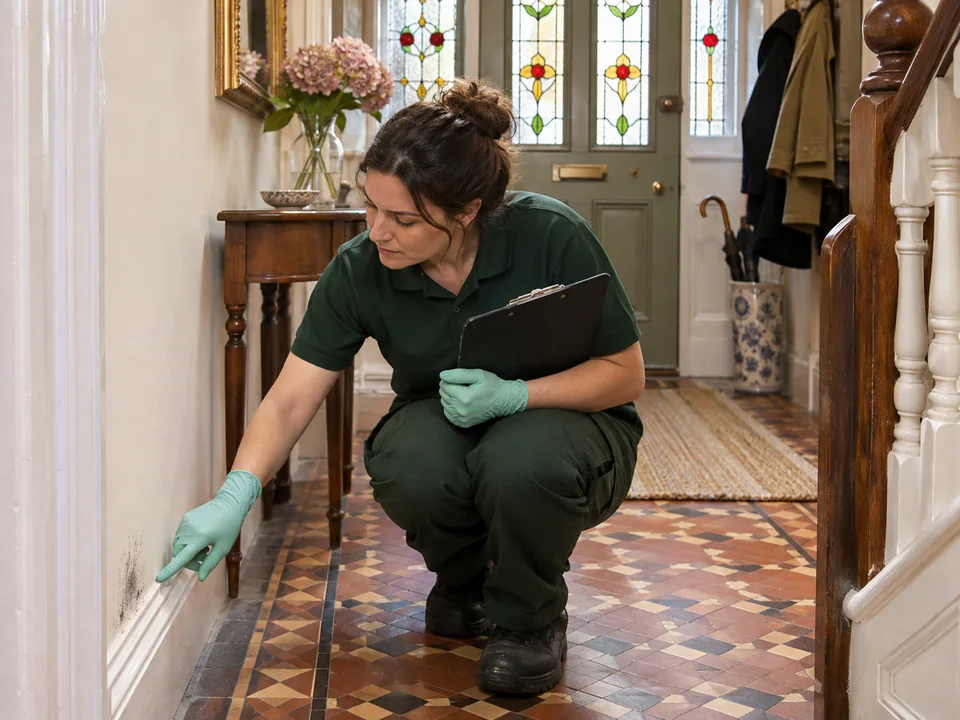
Take a wider image where the room and the affected area can both be recognised. Use a second view for details that disappear in the wider photograph, such as a change in the finish along a join. Give a simple note about the position and the approximate visible size. If the surface is too high or lies behind a fixed item, describe what can be seen from an ordinary position. The office can work with an approximate description while you find out whether more information is needed.
For a ceiling, say whether the mark runs along the edge, sits nearer the centre or crosses into a different room. Include what lies above it where you know that information. If you can see only one face of a wall, make that clear rather than estimating what the other side looks like. If a photograph was taken before a ceiling repair or a change to a fitted unit, give its date and describe what the room looks like now.
When the same surface appears in a landlord's report and a tenant's photograph, attach the same room name to both before forwarding them. This avoids confusion when the rooms look similar or when a report uses a different floor numbering convention. A clear timeline is useful even if a few dates are only approximate. Say which dates are known and where another person may hold better information.
- Label the same room consistently across records.
- Give the date of any earlier photograph or repair if known.
- Distinguish the exposed area from concealed surfaces.
Describe changes in the wall or ceiling finish separately
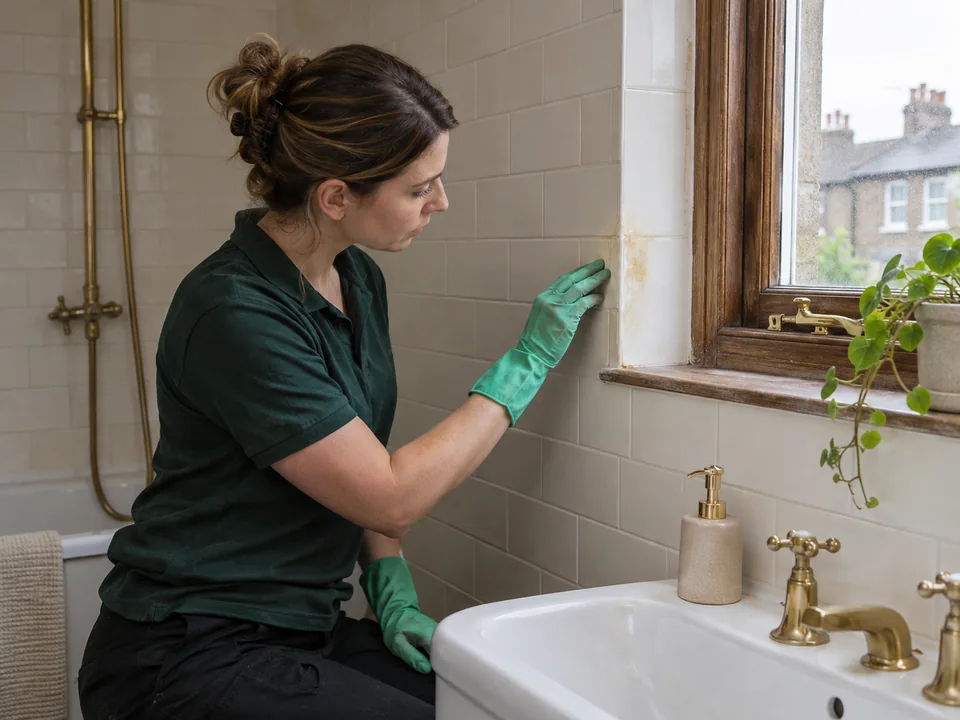
Try to identify the finish without making assumptions about what is behind it. Describe whether you can see paint, wallpaper, a board seam or another surface. Tell us if the material itself looks changed, such as a loose edge or visible unevenness. Say where the visible mark ends relative to the change in the finish. This will help the office discuss what is being asked for and whether it makes sense to consider visible treatment, assess the material or obtain a separate opinion first.
A changed ceiling finish near a former leak can raise different questions from marks on an intact painted wall. Give the approximate date of the reported leak and explain what repair, if any, is confirmed. If work above was never checked or an area is still affected by water, flag that during the enquiry. Finding a cause in the building or deciding whether damaged material needs replacement may require the responsible property professional to assess it separately.
Tell the office if you have reason to believe part of the material cannot be seen at all, for example where a fitting meets the wall or a suspended feature hides part of the ceiling. Ask what preparation is appropriate and who should arrange access to a hidden area. If different people are responsible for a fitting and the room itself, identify them before assuming one visit can cover both questions. This keeps the proposed visible work and any building investigation clearly defined.
| Details seen in the room | Additional information to give | Decision to discuss |
|---|---|---|
| Line on sound paint | Where it starts and its approximate length | Is the visible face appropriate to consider? |
| Changes to wallpaper or another covering | Which part has lifted and any repair history | Does the material need a prior assessment? |
| Ceiling marks after reported water entry | Date, known repair and condition since | Who should review any moisture question? |
| Surface hidden by a fixed item | What remains visible and who controls access | How would it be possible to view the area? |
Plan the appointment around how the property is used
An assessment in a room that is occupied throughout the day needs different arrangements from one in an empty flat. Tell the office when the room can be viewed, who needs to agree that time and whether others use the same route. Be specific about a time restriction that affects arrival or leaving the building. If there is a staff member on site only during certain hours, check that their role covers access to the property as well as the shared entrance.
If there are several affected rooms, agree how they should be referred to and who can open each of them. A resident reporting marks in the lounge might also know about a patch in a locked store but have no access to that room. Keep the additional room on the list and explain the restriction. Ask how any new item would change the planned visit if access is arranged later.
Keep other cleaning requests clear when discussing the property. If you also want an oven or carpet considered, name it as a separate item and say when it is available. An agreement to look at an affected wall has a different purpose from a general cleaning appointment. Having a list of the other work is useful, but make sure each agreed visit has the right rooms, surfaces and access details against it.
If two marks need attention at opposite ends of a property, consider whether the same person can explain both. They may have first-hand details for one room but only an image for the other. Ask them to describe what they know about the visible position and the limits of the information they have. It is worth telling the office if an area will be viewable for a short time only, for example between other appointments. This reduces the chance of agreeing a visit that overlaps a period when the relevant room cannot be reached.
For a rented property, check whether the original contact is still in a position to answer questions about access and work. A resident can explain how a space is used and when a change was noticed, while the person who arranged building repairs may have the records of earlier work. Before passing details on, ask which records are needed and who can give them. If there is an existing inspection date, explain its purpose and which information you need before that day so the office can discuss what can be arranged.
The arrangement may also need a plan for seeing the area again if the work cannot be agreed from information shared at first. Ask who would arrange that next visit and which location notes should be kept. If access is granted only to a particular room, make sure everyone involved understands how any other part would be handled. A clear arrival and room plan is useful even when the enquiry is as simple as one visible section of a wall.
- Confirm when each affected room can be reached.
- Check who can approve any change to the visit.
- Treat other cleaning and building questions as separate items.
Give the person arranging follow-up a clear record
Ask what the agreed visit covers and which questions will still need attention after it. If the enquiry starts with a visible mark but the condition is different once the room can be seen, clarify how any new work would be discussed. It is useful to record where the mark sits and what material is involved before comparing prices. A quote to consider an accessible surface does not tell you how an unseen section of the building will be assessed or who will take responsibility for that part.
After a visit or quotation discussion, keep the work description alongside the room information. In a managed building, agree who receives the record and who will handle any follow-up. If the enquiry passes from one person to another, share the dates and room labels already used. A later report of a new mark is easier to consider if the office and the property contact can distinguish it from the area that was previously discussed.
Use the booking page to prepare the visit information, then call to discuss the details. Give the full Croydon address, the affected rooms, prior repair information if available and the person who can provide access. For a move-out date, mention when belongings will be cleared and who will hold the keys. Ask what needs to be in place before the agreed appointment takes place.
| Document or note | What it should help answer |
|---|---|
| Room list | Which part of the property is being discussed? |
| Photographs and dates | What was seen and when? |
| Agreed visit description | What can be assessed, treated or reviewed separately? |
| Access and handover notes | Who can open the door and receive the outcome? |
Questions about arranging mould removal
Can the office use floor numbers from building plans rather than my postal address?
Give both if they differ. Explain the level shown on the lift or stair sign and the full address the resident uses.
How do I include an affected ceiling over a split-level landing?
Estimate the height and describe where the stairs begin and where there is a level area. Explain what can be seen from each floor.
Should I mention that the concierge cannot open the flat?
Yes. Give the reception arrangement and identify who can admit a visitor to the property. The two access steps need to be agreed separately.
What if an old report places the mark in a room that has since been renamed?
Use both room names and give a landmark such as the window or doorway. Say when the original report was made and what can be seen now.
Can several tenants send photographs for a single enquiry?
Yes. Use consistent room names and identify the date or position of each image. Confirm who will keep the complete record.
What should I prepare if a ceiling repair was arranged by someone who no longer manages the property?
Describe the repair dates and extent that you can confirm. Identify what is still unknown so the information can be considered alongside the visible condition.