 Housekeeper
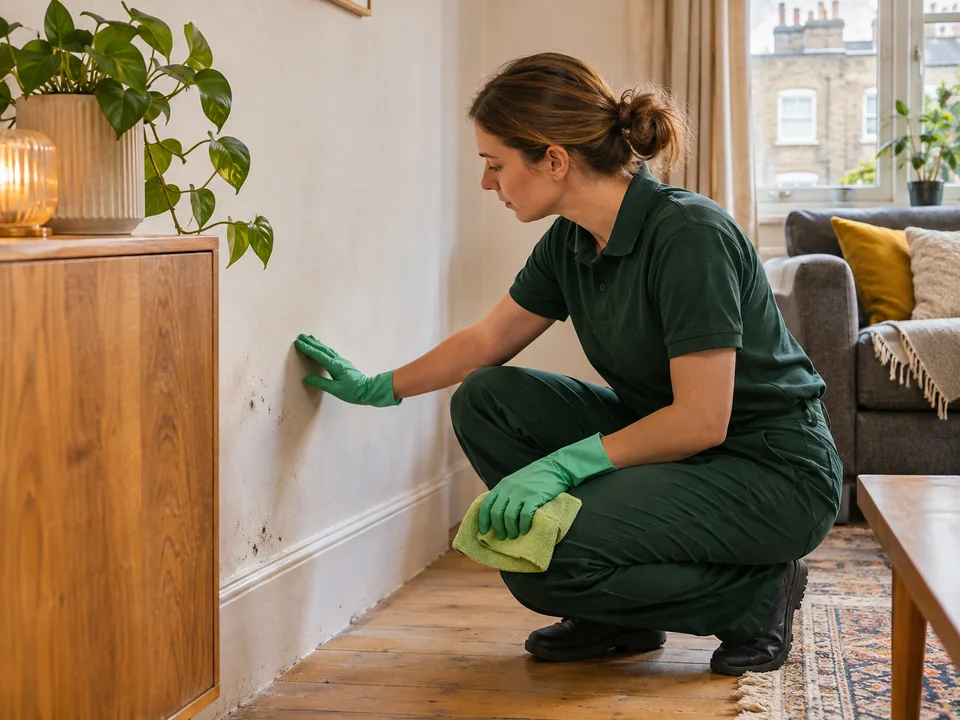
Mould Removal in Camden Town
Start a Camden Town mould enquiry by identifying the room and the way it is reached. A home above street-level premises may have an entrance that is easy to miss. Inside, a compact kitchen or bathroom can have several finishes in a small space. We can discuss what you want assessed once the office has the address, visible locations and any access limits.
My NW1 flat door is beside a shop. What should I give you?
Give the complete address and explain which entrance leads to the flat, which floor it is on and who can admit a visitor.
Should I report a shower recess separately from its ceiling?
Yes. Name the materials and explain where the marks sit on each surface.

Get the first door and the right floor into the booking notes
Use the full postcode, building number and flat details for every enquiry. Around Camden High Street and Parkway, a reference to a shopfront or other busy frontage may only explain where the building is, not how someone reaches the dwelling. Camden Council's planning material distinguishes the commercial character of those streets from neighbouring residential terraces. At an address with street-level premises, identify the separate residential door, its number and which bell is used. If the entrance is through another address or street, give both locations and explain which one the visitor should approach.
For a home in a terrace, describe the route through the building instead of assuming that a floor number is sufficient. Note whether the first door opens into a shared hallway, whether a second key is needed or a caretaker must be present, and which staircase serves the home. If the person who can open the building is different from the resident who can explain the affected places, give the office both roles. Agree how any private access instructions will be shared with the authorised contact before a visit is considered.
If several households use the same entrance, check where any signs outside your private rooms are located. A landing, communal bathroom or shared passage may need permission from a manager or landlord. Describe it separately from areas inside the home and identify the person responsible for arranging access. This is especially useful where the enquiry concerns rooms above another occupied space. A visitor may be able to see one surface but have no agreed access to the rooms that would give context to it. Set out those limits at the start.
- Send the full postcode and the distinct residential entrance.
- Give different contacts for access and room information where necessary.
- Separate communal areas from the rooms you can give access to.
Draw boundaries around bathroom surfaces
We use the first call to identify the surface and agree which part of the home can be assessed. Once the visible area, material and approach have been discussed, we can explain what work may be suitable. The person who holds the key may only be able to help with arrival. If another person needs to identify a finish or provide information about earlier work, we agree when they can be reached before proceeding.
Look at the area from the doorway or another safe place. Identify each visible location by the fixture and height, such as the painted ceiling above a basin, the tile joint beside a shower, or the seal where a screen meets the bath. A photo of the whole wall can be more useful than a close view that makes two different materials look like one. Add the approximate extent of the marks and explain what would be reached from the floor. If the section is high or directly above a fitted unit, tell us what obstructs the approach.
Give an account of the room over time. Is the mark visible throughout the day, or is there water on the area only when the room has just been used? If you know a fan was repaired or a plumbing appointment took place, mention the date and the fixture involved. Describe any change that happened afterwards rather than giving your own diagnosis. If you only moved in recently, explain what was already present and what you have observed while living there. The office can discuss the visible condition and consider whether other questions should go to the responsible property contact.
Describe the condition of the finishes around the affected place. A painted area with surface marks may call for a different discussion from plaster showing damage or a worn joint that you suspect also needs repair. If the marks continue under an edge that cannot be seen, leave it in place and describe the boundary you can observe. Give separate notes for a removable bathroom accessory or fabric item beside the patch. Ask which items can be considered with the visible surfaces and where other work, access or advice may be needed.
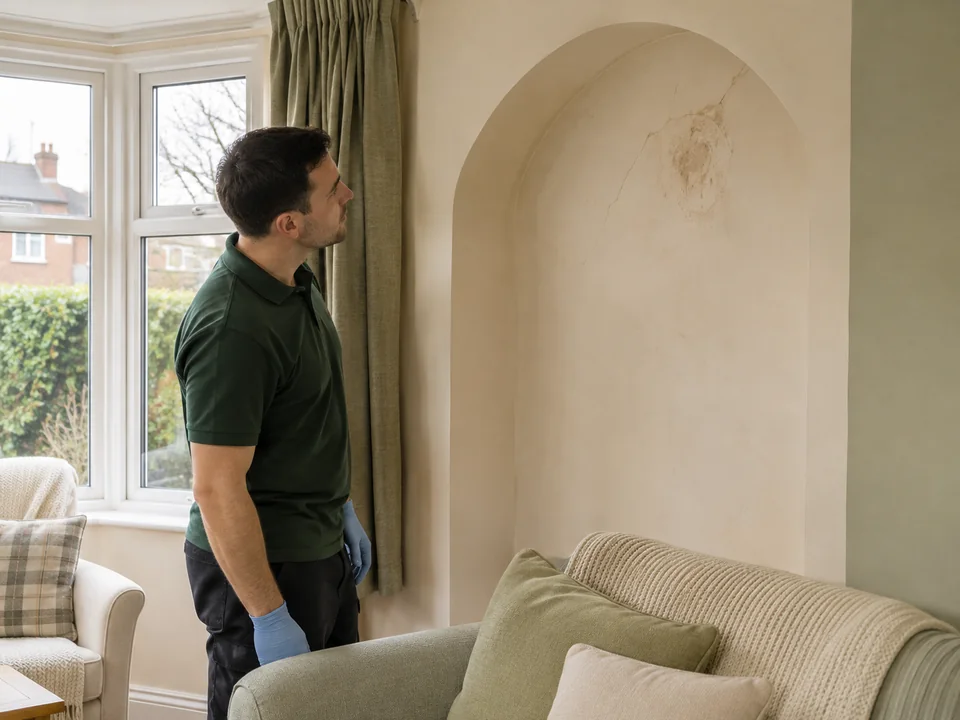
| Visible bathroom area | What to communicate | What might be decided separately |
|---|---|---|
| Mould at shower height | Materials, distance from fixture and approximate size | Condition of the joint or seal |
| Ceiling near a bathroom fitting | Floor approach, height and condition of paint | Safe access and any separate inspection |
| Marks beside a bathroom accessory | Item and surface descriptions | Whether both are suitable to assess together |
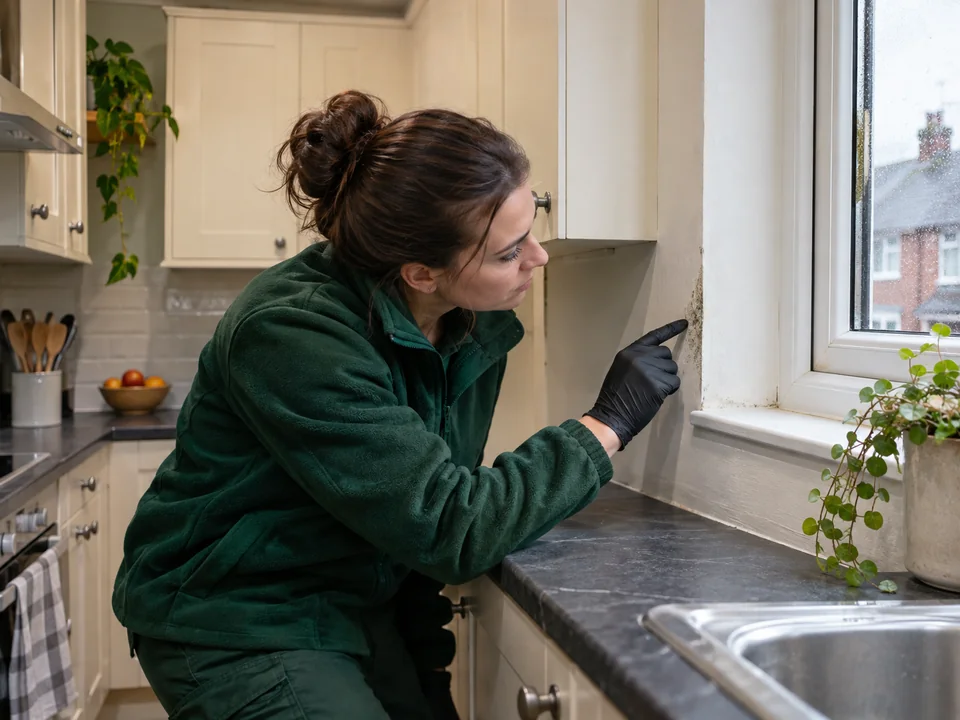
Explain which kitchen fixtures can be reached without moving them
A kitchen packed with fitted appliances can hide the boundary of an affected place. Start by locating the marks in relation to fixtures that someone else can recognise. For example, the affected face could be to the right of the sink and partly hidden by the dishwasher. Say what can be seen and whether you believe another part lies behind a fitted panel. Keep these separate. A view of the fixed furniture and safe approach can help the office understand access even if there is no useful photograph of the mark itself.
If there is a history of water around a pipe, dishwasher or sink, say who has checked it and what you have been told. A resident may find a mark on a plinth after an unrelated appliance visit. That timing is useful background without proving the appliance caused it. Mention which panels or finishes appear changed and whether any swelling, softness or lifting is visible. Leave pipes, units and appliances in place. If an area can only be reached once a fixture is disconnected or opened, ask which property contact can arrange that and who can advise on what should happen next.
When you request a visit for a working kitchen, explain how long the area can be made available. A shared home, for example, may have several people relying on the room before and after work. List any fixed obstructions near the affected parts and any belongings the resident wants left untouched. This is as relevant for a small patch as for several areas. Ask what preparation can safely be agreed before an assessment and keep that separate from anything that needs a plumber, building professional or another contractor to decide.
- Distinguish an accessible surface from a suspected concealed area.
- Record recent fixture or pipe checks without assuming a cause.
- Explain how the room can be made available during use.
Separate window observations from repairs and surface treatment
When marks are around a window, describe which side of the frame they touch and what you see on the glazing, seal and surrounding finish. Say whether the frame or coating appears damaged and whether the marks cover one window or several. If you notice moisture at a particular time, record that time and the weather or room activity you observed. Photographs that show the whole window can help distinguish between a mark on the frame, one on the adjacent wall and something you are concerned about on fabric beside it.
Let the office know if the window is behind fixed furniture, hard to open or located above a worktop or stair. Do not try to remove fittings or climb to obtain close photographs. A discussion about visible marks is distinct from a repair enquiry about a frame or surrounding material. If the window has only just been repaired and you do not know whether the surrounding area is dry, mention that uncertainty when arranging the next step. Ask whether a review of the window or affected material is needed before a surface quote can be agreed.
Give separate notes if the issue has appeared in more than one room. The bathroom may have an affected window surround while the kitchen shows marks on paint beside a fixed unit. Neither description explains what is behind a finish or whether a building source is still active. Mark any rooms awaiting inspection in the enquiry and identify who can give an update before a visit is agreed. A short record can follow the job from the person who first made the report to whoever will be present when the room is assessed.
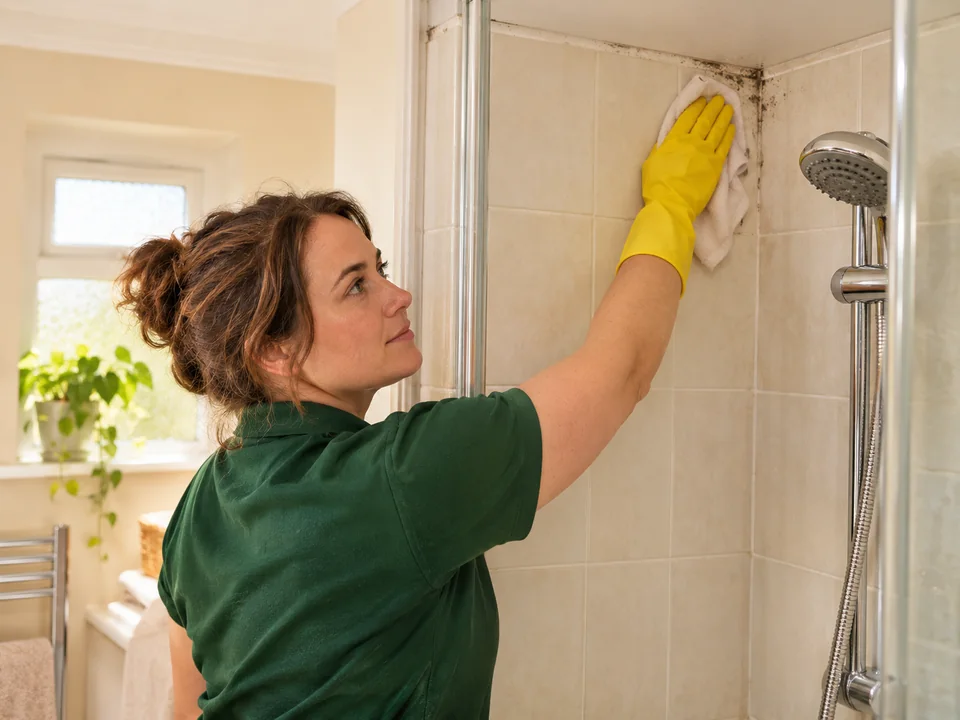
| Visible location | Record to share | Separate question |
|---|---|---|
| Frame or seal | Which edge shows the marks and any known repair date | Who can assess the condition of the fixture? |
| Window reveal | Paint or other finish and size of the affected area | Can the visible surface be reviewed independently? |
| Curtain or blind | List as a separate affected item | Does the material need specialist advice? |
Confirm the particular places under discussion before anyone travels
When preparation and surface work are agreed, we confirm which parts of the bathroom, kitchen or window surround are included. We work on those suitable exposed surfaces and keep questions about units, fittings or concealed materials separate. At the end we discuss what was covered and what remains a question for the property contact. This matters if remarks about a shared area also need to go to a landlord or building manager. We clean visible mould from the agreed hard surfaces once their suitability and the working area have been confirmed, then review the surfaces included.
Ask the office to confirm which rooms are part of the proposed visit, what it would be possible to review and whether anything needs checking first. If a landlord, tenant or building contact has given different descriptions of the same problem, share the differences as observations. Tell us who is entitled to agree a change if an adjacent surface also needs to be discussed. Separate the work you are asking about from any washing, routine cleaning or other enquiry you may also have for the property. This makes the estimate and the arrival plan easier to check.
Keep the office informed if a door arrangement or the visible extent changes between the first call and any agreed date. A new discovery could affect how an appointment is considered, especially if it relates to a locked room or fitted material. Record any relevant updates from a property professional and ask how they affect the next decision. When you receive information about an agreed visit, retain it with the room list and original photographs. If signs return, report the exact location and date so the enquiry can be reviewed with the property history.
If work is being considered along with a change of tenant or a refurbishment, check who can describe the condition before anything is moved. Take a record of the layout as it is now and indicate what will change before a visitor is expected. A photograph of a cabinet that has since been removed can still explain an earlier observation, but it should be labelled accordingly. Tell the office which current photographs show the access available to the surface today and which show a previous arrangement.
- Agree the authorised rooms and areas before setting a date.
- Discuss who can approve changes to the plan.
- Retain the updated location list and known repair history.
| Before agreeing | Confirm |
|---|---|
| Entry to the dwelling | Residential door, floor and access contact |
| Visible surfaces | Which bathroom, kitchen or window parts are included |
| Later questions | Who handles repairs, new marks or inaccessible sections |
Questions about arranging mould removal
The entrance above the shop uses its own number. Which address do I send?
Use the full property address and include a separate note on the residential door if the numbers differ. Explain which buzzer to use and who can open it.
Should I look under the bath panel before enquiring?
Leave fixed panels in place. Describe marks or changes that are visible and tell us if a property contact is already checking a concealed area.
The kitchen wall has a mark and the cupboard door has changed shape. Is that one item?
List the wall and the door separately and note any known water event. Ask what can be assessed and whether the cupboard condition needs separate review.
Can I arrange a visit to one bathroom while another stays in use?
Name the bathroom that can be accessed and give any time restrictions. Tell the office which room should remain available to the household.
A window only opens from a common landing. Can you consider its surrounding wall?
Explain which side shows the marks and who controls access to the landing. Obtain any permission required and discuss that location separately.
The tenant who noticed the patch will be away. Should I wait for them?
Ask them for a clear room description and any photographs they can safely take. Give the office a contact who can provide authorised access and discuss the affected areas.
Other Cleaning Services in Camden Town
Regular housekeeping enquiries, How guide prices work, Speak to the office