 Housekeeper
Mould Removal in Brentford
We discuss mould removal in Brentford by room and finish, with a clear arrangement for accessing the property. We use the visible condition and the limits of access to plan the appropriate assessment and agree preparation before work on suitable exposed surfaces.

Can I enquire about a flat at Brentford Lock?
Give the complete TW8 postcode, the building and flat numbers, and the entrance a visitor should use.
What should I say about a previously decorated patch?
Give the date and the boundaries of that work if you know them.
How we plan the first visit
We confirm the objective of the proposed assessment and which surfaces can be viewed without opening fittings. When the room can be reached through an agreed entrance, we establish how the person attending will meet the keyholder. We review the exposed finishes and discuss what needs to be prepared before any treatment is agreed. At handover we distinguish the surfaces covered by the agreement from work that requires a separate decision, such as a concealed area or a property fault.
An enquiry can start with several questions, but it helps to identify the decision you are trying to make first. You might want to know if a visible surface can be assessed with its fittings left in place. You may already have a report from a property professional and want to discuss a named surface after that work. Tell the office which situation applies, which finishes are visible and what needs to be agreed before you make arrangements. When a condition is partly hidden, describe the exposed edge and leave the concealed part as an open point.
Give the address, the use of the affected room and your reason for getting in touch at this stage. If somebody else raised the concern, explain what they actually saw and give their role. Where access to another room is still being arranged, say that the space is currently unavailable. It is easier to discuss an initial appointment when the room list distinguishes the places an attendee can view from the questions that depend on somebody granting further access. Ask the office what would be needed to agree the next step.
- Give the room name, purpose and approximate size of the visible area.
- Say which parts can be seen with the fittings in place.
- State the immediate decision you would like to discuss.
Plan a route from the High Street to the dwelling
Hounslow Council identifies Brentford High Street in TW8 and records Brentford Lock addresses on the street. Use the complete postcode and entrance details rather than the name of a development alone. A block can have its own arrival arrangements even when the postal street is straightforward. Give the building and flat numbers, the appropriate lobby and the floor. If a visitor needs to report to a member of building staff first, check when that person can provide access and what information they need.
For an occupied property, coordinate the building route and the time a resident can open the room. An open lobby is useful only if somebody can admit the visitor to the dwelling. Where equipment access would require a different entrance or lift, describe the rules given by the building contact. For a house or converted property, explain any side passage, narrow stair or step down to a room. With a separate key collection arrangement, include the correct collection point and allow time for the keys to be returned.
| Step in the approach | Details to give | Person who can confirm |
|---|---|---|
| Reach the property | Full address, postcode and doorway | Resident or site contact |
| Enter the room | Floor, shared passages and available access | Resident or keyholder |
| Use any service route | Entrance, lift, notice or unloading arrangement | Building management |
Compare the surface rather than the colour of the mark
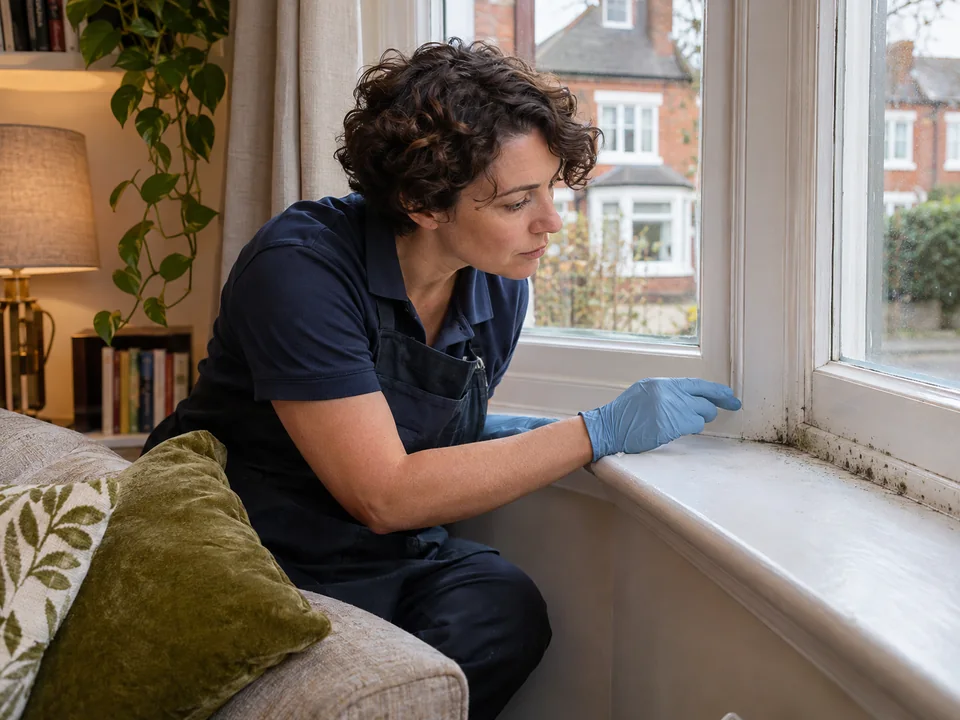
If an area extends across several materials, give those materials distinct descriptions. A painted reveal and a length of sealant may have comparable-looking spotting but are different parts of the window area. A cupboard backing, a coated shelf and an exposed wall can also meet in the same location. Photographs become easier to interpret when there is a wide view showing where the materials meet. Give an approximate size for the visible change on each one. If you do not know the material beneath a coating, describe what can be seen and state that the underlying finish is unknown.
Look for existing records on repairs or decoration if they are readily available. If a finish was altered, note the date, the known material and where the earlier work ended. Tell us which part of the area is still concealed. Avoid opening panels or moving fixed fittings to establish what is behind them. A proposal for an exposed surface should state what it covers and identify the areas that still need a decision. This helps someone receiving the later report understand which condition was available for review.
| Example finish | Information useful for assessment | Point to confirm |
|---|---|---|
| Painted reveal | Joint location and condition of coating | Which part of the finish can be examined? |
| Cupboard backing | Visible face, edges and fixed obstructions | What can be discussed without taking the unit apart? |
| Timber trim and neighbouring wall | Where each material starts and ends | Do they need separate decisions before any work? |
Agree a sequence with any other people involved
Where a suspected leak or other property issue is still being looked at, name the person arranging that work. If the affected finish will be opened, removed or repaired by another trade, say when that is expected and what access might be available afterwards. A note that describes a previous issue can aid the assessment, but it should be accompanied by your current observations. Record dates and which surface each note covers. That makes it possible to discuss the exposed finish while leaving building questions with the appropriate person.
For a managed property, identify who can discuss a concern involving several residences or shared building areas. Tell the office which rooms are inside your address, and which places would require separate consent. If a building contact will attend the visit, explain which decisions they are able to make. A resident might be able to supply photographs and access without being able to approve additional work. Agree when contact details should be passed on and who needs the result at the end.
We use the room and access information to discuss an assessment and the work that could be agreed for suitable surfaces. At the enquiry stage, we establish whether the location can be shown as it stands and ask who is able to confirm access. If a report or an earlier maintenance appointment affects that decision, we include it in the discussion. When the visible condition calls for further information, we agree what needs clarification before discussing treatment or setting the order of visits.
- State what other work is planned and which room it affects.
- Identify who can authorise any further property investigation.
- Keep previous work and current visible conditions in separate notes.
Understand the difference between an estimate and the confirmed work
When discussing price, ask which rooms, surfaces and access arrangements the proposal assumes. A photograph can locate an exposed patch but may not show every boundary of the proposed work. If a fitting is still in place or the affected area has grown, disclose that before accepting a quote. Ask whether the information is enough to consider work or whether a visit would be required to decide. If the enquiry concerns an inaccessible area as well as a visible one, ask for the distinction to be noted so you can compare proposals accurately.
Give any constraints that affect how the property can be visited. You might have limited times for the only person who holds keys, or a room might normally be occupied during the proposed period. If another service has been requested, give it its own list of rooms and tasks. An end of tenancy clean, for example, has a different brief from an assessment of identifiable marks in a single room. Discuss any later upholstery or carpet cleaning only after the relevant item and its condition are described. Separate enquiries let the office explain the assumptions behind each price.
| Price conversation | Ask what is included | Detail to record |
|---|---|---|
| Assessment | Areas that can be viewed and what questions can be addressed | Rooms, finishes and known limits |
| Work after assessment | Which suitable surfaces have been agreed | Any excluded or inaccessible area |
| Separate cleaning service | Items or rooms and expected timing | How that service fits other appointments |
Use the final discussion to make responsibility clear
When the visit is agreed, make sure the person giving access has the same room list as the person who accepted the proposal. If an area belongs to a communal space, retain the contact for that area and confirm what permission has been granted. Give the office an update if a previously concealed area becomes visible before the visit. Changes to access can alter what an attendee is able to assess, even if the inside of the affected room is otherwise the same.
After the appointment, make a short record of what could be seen and what remained open. If another professional needs to consider an area, pass on the location and surface notes rather than relying on a description such as the damp wall. It helps to know who will follow up and what information they still need. If the appearance changes, take a new photograph from the same position when possible and use the same room labels. A consistent record helps identify whether it is the original location or a different place within the room.
We discuss with you which room needs preparation and which fittings should stay in place. Before surface work is agreed, we confirm the finishes and exposed areas that are being considered. The proposed treatment applies to the suitable surfaces that have been identified and agreed. Where the condition of a porous or damaged finish needs further consideration, we establish that point separately rather than treating it as another area in the room. At the handover we distinguish the work agreed for the accessible surface from any property issue that still needs attention.
- Send the same room list to the keyholder and decision-maker.
- Record any areas that remained concealed or unavailable.
- Keep follow-up locations consistent with the original photographs.
Prepare postcode, timing and access before requesting a quote
Give your full property address and the name of someone who can show the areas. Have room notes and recent photographs ready if you can supply them easily. Mention any deadline linked to a handback, repair or resident appointment, and state which activities depend on the order being agreed. Where a repair report is still outstanding, tell us when you expect it. A short summary of what you want answered can make the initial enquiry useful even if the property needs further consideration before any work is priced.
Distinguish the contact who can discuss what was seen from the person who can agree work. This is useful if a landlord is paying, a resident will open the flat and a building manager controls a separate space. If the proposed visit needs somebody to admit an attendee through more than one door, identify how the arrangements fit together. Keep messages about prices and access with the relevant room description. Ask the office to confirm the agreed areas and any limits before setting a date for work.
We physically remove visible mould from the agreed suitable hard finishes we can reach. If the room contains a combination of tile, paint and damaged lining, we distinguish between the surfaces agreed for treatment and anything outside it. Once the visible surface work is complete, we review the accessible areas and explain any follow-up points or limits attached to that work.
Questions about arranging mould removal
Do I need to give the Brentford Lock building and flat numbers?
Yes. Include the full postcode and the appropriate entrance, particularly where several buildings share a development name.
Can I ask about a painted reveal and sealant in the same call?
Yes. Name the surfaces individually and explain which finish shows each mark so the office can discuss what should be assessed.
When should I bring up a pending visit from a maintenance contractor?
Mention it before agreeing a date. Explain whether their work may change the exposed surface or access.
What if the quote does not name the cabinet backing I reported?
Ask whether the backing is covered and tell the office if it is still fitted. Obtain clarification before accepting the proposal.
Who should hold the notes for a shared service space?
Identify the building contact responsible for access and ask how relevant observations should be passed to them.
Can an inventory clean and a visible-surface assessment share the same room list?
Use the same room names if useful, but set out the work separately so the requirements and timing are clear for each appointment.
Other Cleaning Services in Brentford
Mould removal and assessment enquiries in London, End of tenancy cleaning, Carpet and upholstery cleaning