 Housekeeper
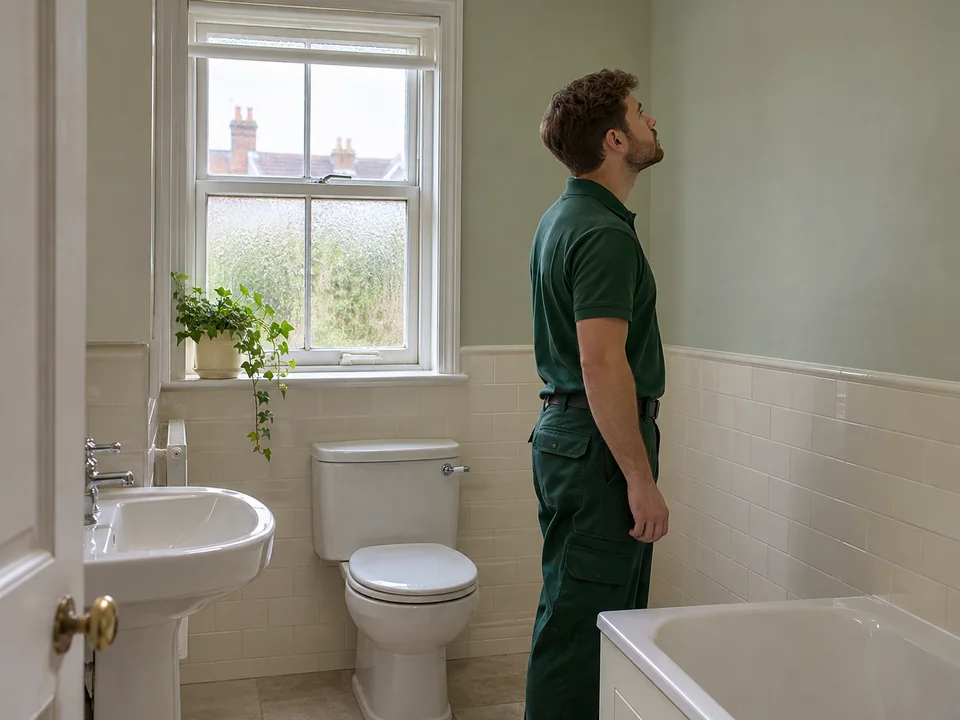
Mould Removal in Archway
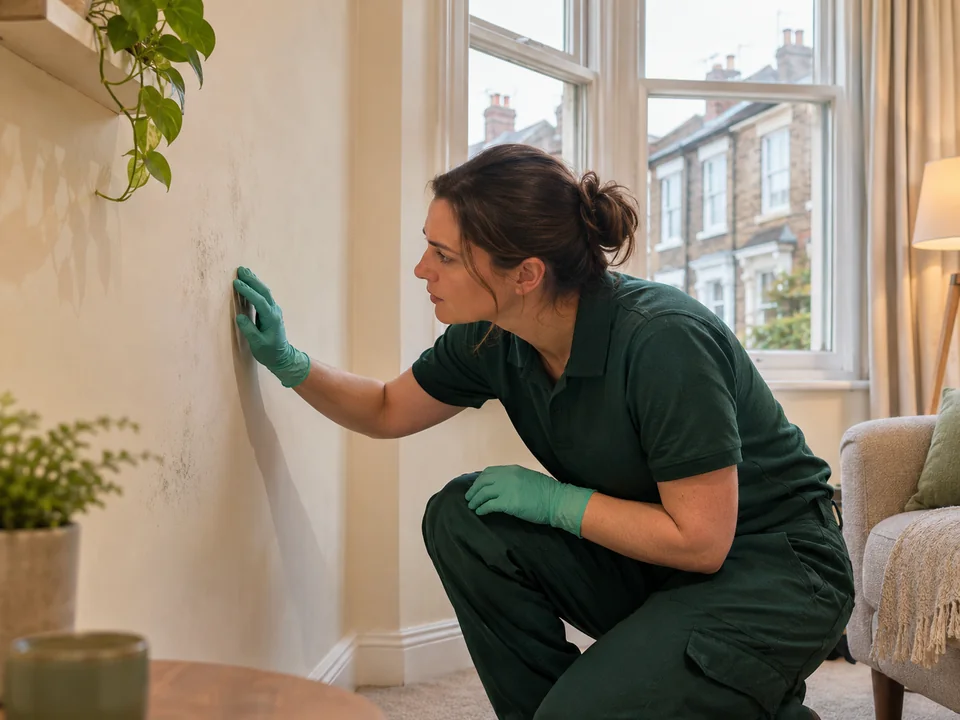
We handle Archway kitchen and bathroom mould enquiries fitting by fitting. We record the reported marks around the sink, shower or window, then discuss how to reach each surface and whether it needs to be assessed first. Once we agree suitable visible surfaces, we prepare the working area, clean the agreed sections and explain what needs attention separately.
How should I describe an Archway address off Junction Road?
Use the full N19 address and give the street used to enter the property.
Can I report two bathroom surfaces together?
Yes. List their positions and visible sizes separately.
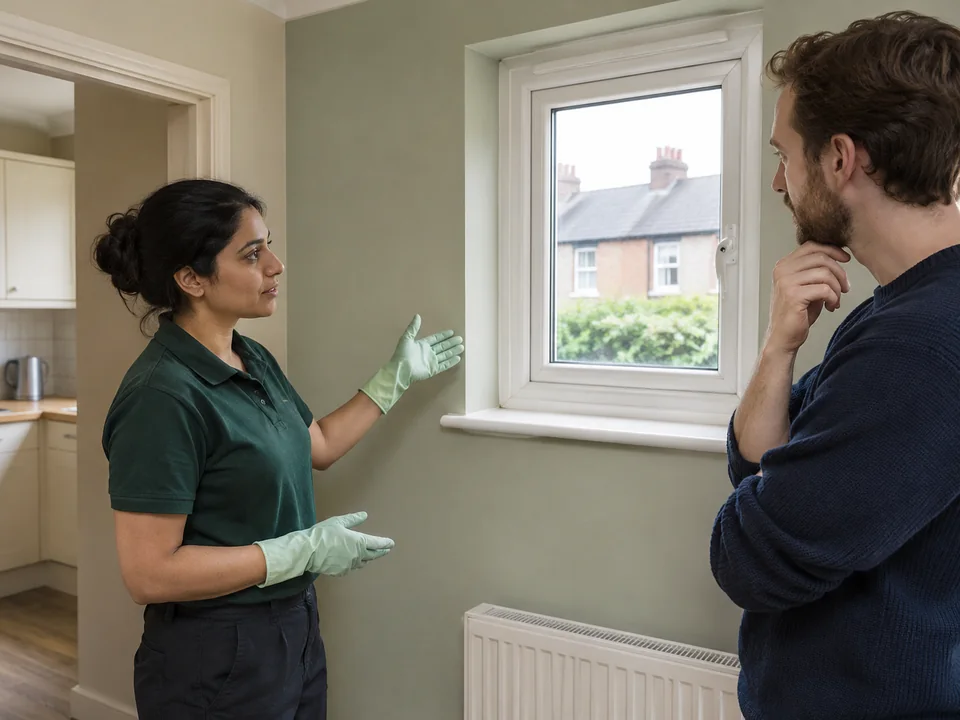
Record the edges of a mark around a bathroom fitting
A bathroom can have a tile face, a strip of sealant, a painted wall and a timber lining all within reach of the same basin or shower. Use landmarks to describe where the visible mark begins. A mark on a painted panel immediately above the basin presents a different enquiry from a line along the join of the tub and wall. Name each affected finish and say if the appearance changes where one material meets another. This gives the office enough detail to discuss which parts may need their own decision.
Where a photograph can be taken from a normal standing position, include the whole fitting in one frame and a closer view in another. Label the images if a property has more than one shower room. It can be difficult to recognise the precise room from a close view of a tiled corner. If a ceiling mark is only visible from the doorway, describe its position relative to the fitting or the doorframe and estimate the size without climbing or moving anything.
Share any relevant earlier work. If a shower screen was changed, give the approximate date and say where the marks were noticed in relation to it. Mention if there is no confirmation of what was repaired. This helps the office distinguish your request to look at the visible area from a question about a fitting that may still need attention.
- Name the fitting and the affected finish.
- Estimate the visible area from a place you can reach safely.
- Describe recent changes that may be relevant.
| Visible location | What to describe | Decision to discuss |
|---|---|---|
| Tiled wall beside a bath | Affected tiles, joins and adjacent paint | Which areas can be assessed together? |
| Paint above a shower | Height, approximate size and appearance of the finish | What access is needed to see the area? |
| Sealant or other joint | Which joint and whether any part has loosened | Does the joint need separate attention? |
How we work around bathroom fittings
We distinguish tiled faces, painted edges and joints when considering what work can be agreed. A fitting can remain in everyday use until the time arranged, subject to any preparation discussed with the office. Where the area is accessible and has been agreed for cleaning, we prepare around the fitting and physically remove visible mould from the suitable hard surfaces within the agreed boundary. We review the treated surfaces afterwards and tell the customer if anything falls to a fitting or property specialist.
For a kitchen enquiry, start with the layout rather than the overall floor size. Say if the area sits below the sink, behind a nearby movable item or in the narrow gap between the end of a cabinet and a window. A description of which compartment you can open is useful if the marks are visible only from inside a unit. Explain whether your request is about the exposed wall, the fittings or both. A visit to consider one of those surfaces should be discussed before assuming the other is included.
Mention what you know about the material. For an internal cupboard, it may help to know whether the surface looks lined, painted or unfinished, and whether the base or edge is swollen or damaged. If a unit has an electric appliance fitted into it, explain that to the office as part of the access description. A question about what is concealed by the unit may require the owner or an appropriate contractor to make arrangements before anyone can assess the area behind it.
If people need to use the sink or the kitchen doorway at a set time, explain when that happens. This is particularly relevant in homes shared by people with different hours. You can discuss whether someone can see the area without interfering with ordinary use and what should stay undisturbed while waiting. For a separate general kitchen clean, give the normal cleaning list on its own so it is clear which marks were raised as a mould enquiry.
- Identify which cupboard or section of wall you can see.
- Mention any fitting that limits access to the surface.
- Keep any general cleaning list separate.
| Kitchen position | Information that helps |
|---|---|
| Inside a cupboard | Location, visible condition and whether the cabinet opens fully |
| Beside a window | Affected surface and whether the area can be viewed from the floor |
| Behind a fitting | What is visible without disturbing it and who can approve access |
| On a ceiling | Affected area, height and whether there is a clear position underneath |
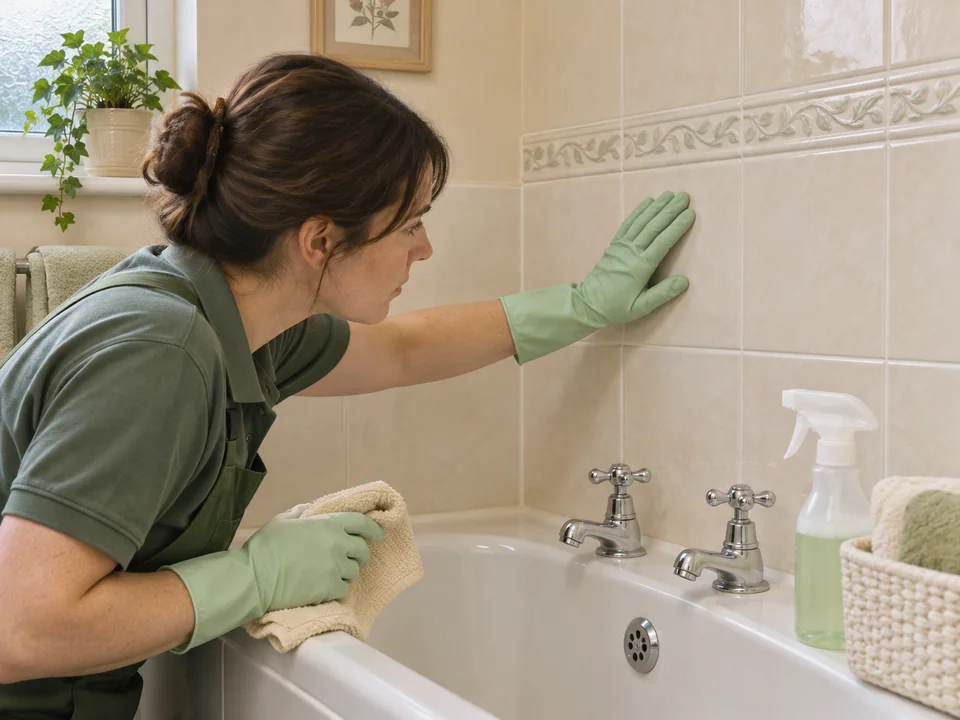
Make the window condition clear across different finishes
If marks follow the outline of an opening, identify each part. You might see an area on the sill and another on the painted sides of the opening. If only one section of a larger window is affected, describe it so someone can identify it when they arrive. Tell us whether the marks are on the glass surround, the painted surface or another finish, and mention if a blind or a radiator affects what can be reached. For photographs, include the floor or a larger fitting as a point of reference.
It is useful to know whether the finish has recently changed. Explain if the area was redecorated, if a join was replaced or if there were changes to ventilation or heating. Describe observations over time without trying to establish the cause from a single view. If signs have repeatedly returned in the same place, ask whether an assessment of moisture or the property would be appropriate before you decide about the surface. A property professional may be needed if a building issue is suspected.
If you are collecting details for an owner or managing agent, attach dates to any known changes so they can compare your report with what has already been arranged. Let them know which part of the window is inside your home and whether you can open it as usual. Clarify who should receive any further information, as the person with access to the room may not be the person who can authorise work on the window or exterior.
- Separate the sill, trim and wall in your notes.
- Say where the window sits in the room.
- Record previous decoration or repairs if known.
Confirm which entrance serves the property near the town centre
Islington Council identifies Junction Road and Holloway Road as the main shopping streets in Archway town centre. For an address on one of those roads, say whether the door for the property is on the road itself or reached by a separate entrance. A shop name can help if the office needs a landmark, but provide the full residential address and identify the correct door as well. If a buzzer labels the flat differently from the postal address, tell the office when arranging the visit.
Give the floor and room after you explain the entrance. For an above-shop flat, mention whether there is a stair shared by other residents or whether a separate key is needed at the top of it. State if the person who opens the street door also has access to the kitchen or bathroom. If access has to be coordinated through a business, discuss the times where both arrangements can work. If the date changes, revisit who can meet the visitor.
| Point in the journey | What to confirm |
|---|---|
| Street | Postal address and actual visitor entrance |
| Building | Any shared doors, stairs or lift restrictions |
| Room | Who can open the room and when |
| Handover | Who should receive the outcome or approve next steps |
Agree what is being priced and who handles any unresolved question
When a quote is discussed, ask whether it concerns an assessment or work already agreed for the visible area. Check which room, fitting and surfaces are included. Tell the office if the area you first described has changed or another room has been added, because that can affect what is discussed. If you have an earlier quote, use the same room labels when comparing them so you can see which work each one refers to. It helps to note separately any building question still waiting for an answer.
You can use the booking page to prepare details before calling. Have your full Archway address, a list of affected surfaces and any previous repair dates to hand. If you have dates in mind, say when the room will be accessible and who can approve changes to the original enquiry. Keep the agreed work description and photographs together so you can refer to the same position if you get in touch again.
After an assessment, clarify who will handle any outstanding question about a fitting, concealed material or moisture source. A household member may simply need to know that they can use the room at a certain time. A landlord may want a more precise description of what was seen and what still needs attention. Agree what will be passed on and to whom. If the finish later changes, compare the new observation with your dated notes before asking about another visit.
When you are putting several items on the enquiry, explain how they relate to each other. For instance, two marks seen near the same kitchen fitting might sit on separate surfaces, while a third mark is in the adjoining room. Use a simple label for each item and include any obvious change of material. If photographs are being sent by someone else, agree the labels so the office can put them in order. That is particularly helpful when a close view gives very little sense of the layout.
In some properties the question will be whether anyone can assess a mark behind a fitted panel. Tell us what can be seen from a normal position, if the panel is fixed and who would be involved in gaining access. If the building manager is already looking into that part of the property, ask what information is needed from the resident and when the findings may be available. A decision about an exposed surface can then be discussed with a clearer account of what remains unseen.
Keep a record of who you spoke to if different people have been asked to consider the room. For example, a resident might report where the marks are while a fitting installer provides the date of a recent change. Put both details in order and distinguish the observations from any work still to be agreed. This gives the person providing a quote a clearer basis for comparing the original enquiry with the condition of the room later.
If you inherit the enquiry from another occupier or an agent, start by checking which room was discussed. There may be more than one shower or sink in the property. Use the agreed room label and ask which surface the last discussion covered, then confirm that access is still possible. Keep any request about a different fitting as a separate item so you can confirm it deliberately.
Questions about arranging mould removal
What should I send if mould is visible only inside the cupboard below my sink?
Give the cupboard position and say whether it opens normally. Describe which surfaces you can see and mention any recent plumbing work.
Can part of a tiled alcove be discussed separately from the painted ceiling above it?
Yes. Identify the marks on each finish and give a separate estimate of their sizes. Say how the ceiling can be viewed.
Where should I describe my flat if its door is behind the shop frontage?
Give the complete postal address and identify the separate entrance, including the access street if it differs. Say who can meet the visitor.
Can I enquire about a window recess next to an appliance I cannot move?
Yes. Describe the part visible from the room and state that the appliance limits access. Ask how the affected area could be assessed.
We use a shared bathroom in shifts. When should we arrange access?
Tell the office when the room is available and who has authority to confirm that time. Include the expected use of the room when discussing the visit.
What should I tell the office if a strip around my shower has recently been replaced?
Give the date and say where the visible marks now sit relative to the replacement. Mention which parts still need a decision.