 Housekeeper
Mould Removal in Acton
When you contact us about mould removal in Acton, we ask what you want reviewed and which areas are accessible. An enquiry about one painted surface is different from a visit involving several finishes or a room that is still waiting for repairs. We confirm what can be assessed before discussing preparation and removal of visible mould from agreed suitable hard surfaces.
What do you need for an Acton W3 flat?
Give the full address, flat and floor. On a street with shops at ground level, identify the residential entrance and buzzer.
Can you work around a room that stays in use?
Tell us when it can be accessed and what must stay in place. We discuss preparation and the available work area first.
Our first question is which visit your address and room require
We ask you to identify the room and tell us what you want to happen there. Some customers want an affected surface reviewed after a repair. Others have marks in more than one room and want to understand what work can be agreed now. A third enquiry might involve a wall that is still inaccessible while a property contact checks a possible source. Give a short description for each location. This lets us discuss assessment and suitable surface work without combining places that have different conditions or access arrangements.
Acton High Street and Churchfield Road form part of the town-centre area described in Ealing Council's conservation material. The council also identifies residential development at Acton Gardens in W3. For any Acton property, give the complete postcode and its own entrance notes rather than just naming the surrounding development. If someone's front door is beside a shop unit or approached from a side street, provide the number or building name that identifies it. If the building uses a separate visitor entrance, name it and explain how to reach your part of the property once inside.
We use the first call to identify any access limits that affect the appointment. Tell us which rooms are available, what is fixed in place and if another person must be there when a room is entered. For offices dealing with keys on behalf of a property owner, confirm which address holds them and when they can be collected. Ask the resident to give a room description if the keyholder cannot do so. That gives us both the forward route into the property and someone who can discuss the affected places in more detail before work is agreed.
- Identify what you want reviewed in each room.
- Give the complete address and residential entrance separately where they differ.
- Confirm who can discuss the rooms if the keyholder cannot.
We assess the exposed area and distinguish changes in finish
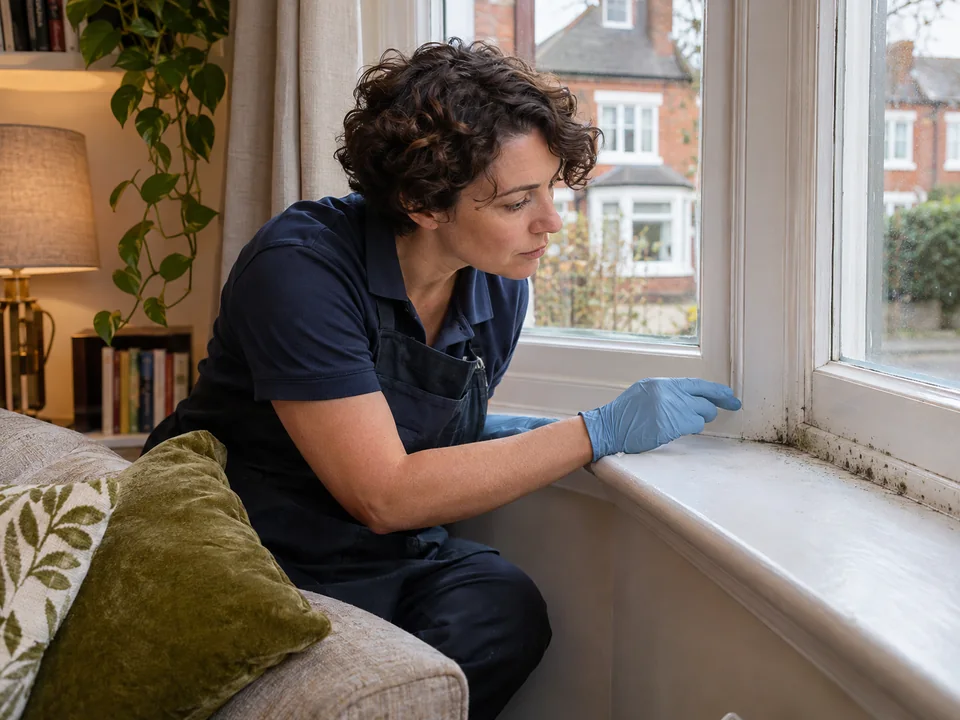
At assessment, we use the reported position and approximate size to identify the visible area. A close photo may show dark marks, but a wider view can tell us whether they are on a wall face, on a shelf edge or around a junction with a window. We consider only what can be approached safely. Tell us where a section goes behind fixed furniture or changes to another material. If the location seems to continue beyond what can be seen, we discuss how the missing part might be reviewed rather than assuming it can be included.
We consider the visible surface and its present condition. For example, a patch on a suitable sound hard surface might be considered for cleaning, while a damaged edge of paper or a porous item beside it may need another decision. We ask about lifted finishes, paint that has lost adhesion, or materials that were previously stripped or covered. Where you do not know the material, give what you can observe. If assessment would require disturbing a finish or accessing a concealed part of the building, we identify that separately and discuss who can review it.
On a ceiling, the approach can be a separate question from the visible material. Tell us if the patch sits above a stair, worktop or another fixed feature and how high it is from the standing area. Do not move furniture or climb just to obtain a close view. We can discuss whether an area can be assessed with the access available, and whether a separate arrangement is needed before agreeing work. For several locations in the same room, give individual notes so it is clear what can be reached and which finishes are affected.
Where two surfaces look similar, identify any difference you can see at the edge of the patch. A painted wall and a painted fitted panel may look alike in a photo without being the same material. We discuss what the surface appears to be and where a check is still needed. Give the room location and a description of the join rather than trying to test or lift the coating to establish what lies beneath it.
| Area reported | What we assess | What could need another decision |
|---|---|---|
| A wall face beside a window | Visible boundary and the point the finish changes | Suitability of the adjoining finish |
| A patch above a fixed feature | Height and safe approach from the room | Any access arrangements needed before work |
| Marks beside a porous item | The exposed area and the item's visible condition | Separate assessment of the item |
| Section behind a unit | Visible edge and existing access | Concealed material or fixtures |
We confirm preparation and remove visible mould in the agreed area
When a suitable exposed surface is included, we discuss the preparation needed around it. We agree what should be cleared, what must stay in place and which nearby surfaces or belongings need consideration. If work is to take place in an occupied room, tell us when the space can be made available and whether a shared route needs to remain open. We confirm the work area before starting. If a fixed item limits what can be reached, we discuss the boundary and what may require a separate decision.
The agreed task is to remove visible mould from the suitable accessible hard surfaces we identified. We keep the work within the locations discussed. If the actual extent differs from the first description, or if a section has a different or damaged finish, we discuss whether it can be included before proceeding with a change. We can consider an accessible hard surface independently from a porous material nearby. Work on the exposed area does not reveal the condition of what is behind it or address a separate defect in the building.
Sometimes the first area reported is visible only after something has moved. Tell us whether a photograph predates a change to the layout, who made the change and whether the same area can still be reached. We use the newer view to discuss preparation and the older view as part of the history. If another person has to remove or alter something fixed to provide access, identify that person and the timing. We do not assume somebody attending for surface cleaning can alter a fixture or a finished part of the property.
We agree the sequence when more than one area can be considered. It may be sensible to discuss a clear, exposed wall first if a different room has to remain in use or is waiting for a key. The sequence affects preparation and may determine what can be addressed together. If access changes, we check the revised room list with you instead of moving to another location without agreeing the work there.
- Confirm the exact locations and finishes before cleaning starts.
- Agree what should be cleared, protected or left in place.
- Discuss any new area before changing the agreed work.
| Point in the visit | What we agree with you |
|---|---|
| Preparation | Access, protection and the limits of the work area |
| Surface work | Which suitable exposed surfaces are included |
| Change found on view | Whether another area can be considered or needs to wait |
We keep repair information alongside the work record
Tell us about any reported leak or property assessment and give the date. Record which room a contractor saw and what they said, rather than using a repair reference that may cover a different place. If water is still affecting the room or marks keep appearing, discuss investigation with the relevant property contact. We can consider what is visible and explain whether a cleaning proposal can make sense while another issue is unresolved. An assessment of the source and repairs belong with the person responsible for the property or a suitable specialist.
If you arrange access before another contractor is due, explain what you want from each appointment. For example, a cleaning enquiry might concern a visible area in an unaffected part of the building while a separate room is waiting for access to an adjoining property. The visit record should identify which locations were reviewed and what stayed outside the agreed work. This is especially useful if the resident, keyholder and person responsible for building decisions are all different. Ask who will receive the information they need for the next step.
| Record to retain | Why we ask for it |
|---|---|
| Date and area of earlier repair | Keeps the history tied to the correct room |
| Current room and finish notes | Shows which locations can be assessed now |
| Name of the responsible contact | Identifies who can arrange a separate building review |
We review the agreed area before handover
At the end of agreed work, we review which surfaces were covered and discuss any exclusions or follow-up points. If a second surface was outside the work because its finish was damaged or access was unavailable, we identify that separately. Pass the record to anyone taking over responsibility for the property and retain the earlier description so any later observation can be tied to a place. If signs return, tell us the date, the location and what has changed since the visit. That helps the office discuss whether the next step is a new assessment or a different property enquiry.
For a quote discussion, have the postcode, room list, materials, approximate area and relevant history ready. Ask which locations and preparation are included and when a price can be confirmed. If you need to agree a work window around another appointment or a key return, give those times at the start. You can also make a separate enquiry about ordinary cleaning for other rooms. We discuss those tasks on their own list so the terms of the mould visit remain clear.
If the person who raised the concern will not be there, make sure someone else can identify the areas by the same names used in the enquiry. Ask us to distinguish the parts considered from any that were hidden or left for an independent review. A new occupant or property manager may need those distinctions when arranging the next visit. Keep separate references for the cleaning enquiry and for a building inspection so neither is taken as confirmation that the other work took place.
- Review the included locations with the named contact.
- Keep any unresolved building questions separate in the handover.
- Give us a dated room description if the visible condition changes.
Questions about arranging mould removal
Can a W3 visitor use the rear door if the front is beside a shop?
Tell us which entrance is authorised and how the visitor should find it. Give the full postal address and a separate arrival note.
A tall cabinet is fixed next to the visible area. Can you price behind it from a photo?
We can discuss the exposed condition. A concealed area may need separate assessment and suitable access before it can be considered.
The wall and skirting have marks on both finishes. Should I send two enquiries?
One enquiry can describe both. List the surfaces independently so we can discuss their visible condition and suitability separately.
Can you plan around a resident using the room before and after work?
Give the available times and access limitations before an arrangement is agreed. We discuss where work can take place and what needs to remain in use.
Another contractor says the leak is fixed. What else is useful?
Give the date, the location of the reported repair and what is now visible. Mention if anyone checked drying or if another review is outstanding.
Do I need to make all decisions before an assessment?
Identify who can agree access and who can make decisions after assessment. Tell us what remains unknown so the visit can be discussed on that basis.
Other Cleaning Services in Acton
Read the cleaning price guide, Discuss ordinary cleaning separately, Prepare a property enquiry