 Housekeeper
Assessment for carpets with wear or marks
Carpet Cleaning in Wandsworth
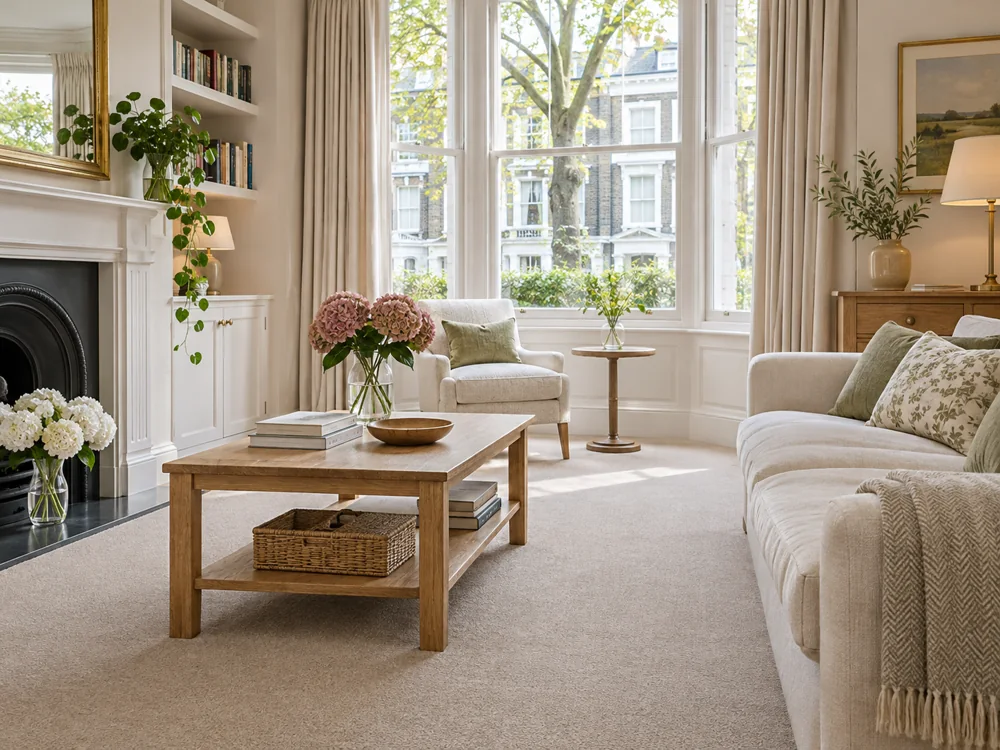
Ask about carpet cleaning in Wandsworth for the fitted areas that matter to you, from a flat’s entrance passage to a runner and separate upstairs landing. Give the full SW18 postcode and explain which private rooms and stairs are involved. If the address has more than one way in or a building manager controls access, let us know at the start.
What should I send for a flat near Wandsworth Town station?
National Rail lists the station on York Road. Include your own full postcode, the entrance to use, and any steps between the lift and flat.
Can I include the landing outside my flat?
Check with the person responsible for the shared area first. List the common landing separately from your private fitted carpet.
Start with the way in from the street
National Rail gives York Road as the address of Wandsworth Town station. You can use it as a landmark when describing where in SW18 you live; put the actual street, number, building name and full postcode in the enquiry. An address near the station can still have a front door that is approached from an entirely different street. If the connection between the two is hard to see from outside, explain which turn leads to your entrance and where a cleaner should meet you.
Walk from the entrance to the carpet and look for any part that cannot be negotiated in one straight movement. A deep step behind a gate, a door that stays only partly open or a narrow turn between two flights is useful to mention. In a flat with a lift, say whether it serves your floor directly or whether there are still treads up from the lift lobby. Check any conditions on unloading with the person responsible for the building ahead of time. A doorway photo can show the position of steps and obstructions without including door codes.
- Building and entrance name
- Lift level and steps beyond it
- Any unloading arrangements
Draw the boundary between your carpet and the common hall
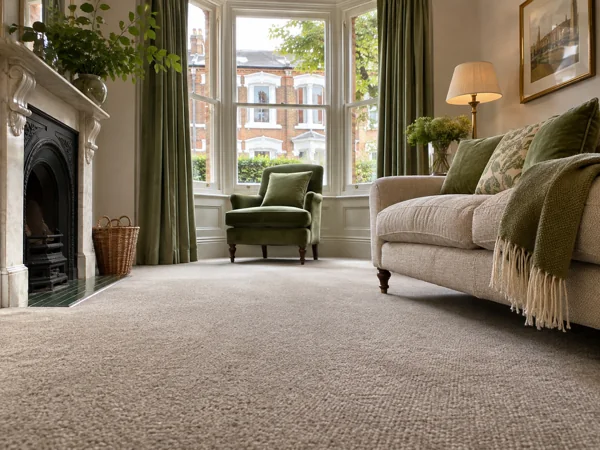
In a building where several households enter through one door, the carpet outside the flat may sit under a different arrangement from the carpet inside. Start your list at the private threshold and identify the point where it ends. If you want a shared landing or staircase considered as well, ask the responsible person first. They can check whether there is already an arrangement for that textile, who can give instructions, and how neighbours would keep a clear route through the building.
Inside the flat, keep each fitted area on its own line. A little recess by the cylinder cupboard can be easy to overlook until it turns out to contain the patch you care most about. A shallow step down to a bedroom also changes which surfaces are involved: there may be carpet on the nosing or the vertical face as well as across the floor. Take a wider photo if the boundary looks ambiguous. Where a metal strip holds down the edge, say whether it feels secure and leave it in place.
Send measurements that show where the pile continues
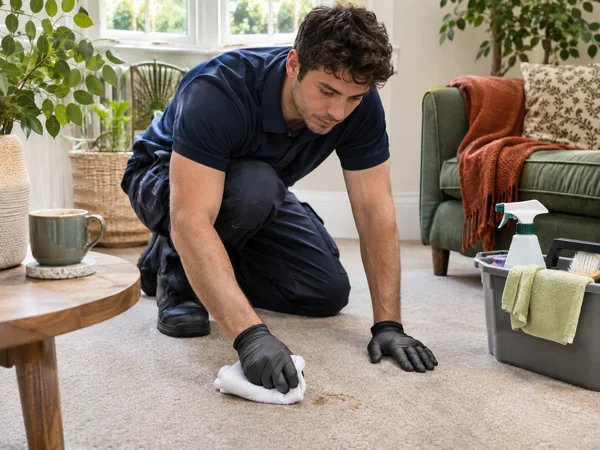
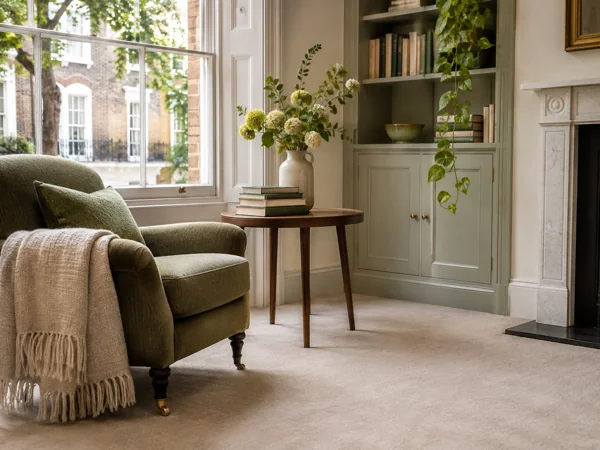
Give approximate length and width for the main rectangle in each room, and separate numbers for a bay, passage or alcove. An open doorway by itself does not tell us whether you have one continuous fitting or two carpets. Use a sketch to show where textile runs under a wide opening, round a corner or into a dressing area. Put a rough mark by any part that is obscured when furniture is in its usual place, especially if that is the spot you are asking about.
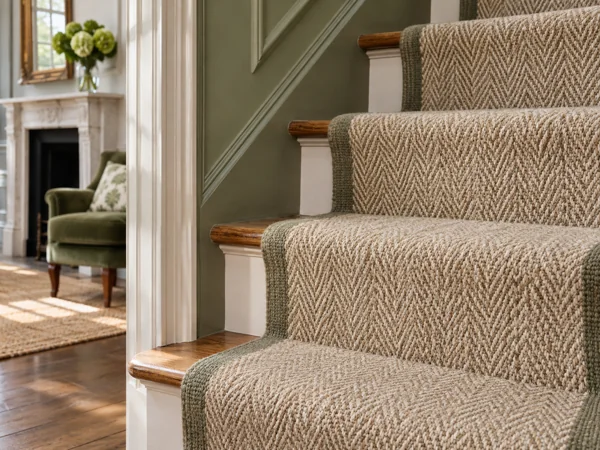
For stairs, count the treads on each private flight and flag the ones that taper as they turn. Say if carpet also covers the upright faces. A runner with exposed edges can be very different to assess from a carpet made to fit right against the string; there is no need to handle the stair rods or pull up an edge to find out. If there is a separate piece on the landing, measure that as its own item even if it has the same pattern.
- Measure recesses on their own
- Count tapered treads as well
- Show where one fitting meets another
Measure the fitting
| Area | What helps |
|---|---|
| Joined reception rooms | Mark the opening and where the carpet changes. |
| Bay | Add the recess dimensions to the main rectangle. |
| Stair turn | Give the number of tapered treads. |
Use the existing floor records to describe the material
If you still have a fitter's invoice, look for the maker, range and care guidance. A remnant with a label or an old sample card might carry material information even when the receipt has gone. Describe whether the textile you see in the photo is level loop, cut pile or made with a mix of textures if you can do so confidently. A material name is a clue; two carpets sold under similar descriptions may have different backing, join positions or earlier treatments.
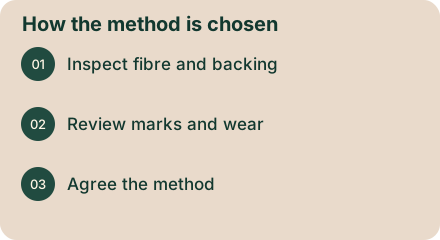
An appropriate cleaning approach depends on what the fitted carpet can tolerate. Fibre, dye stability, adhesive, existing wear and the condition of the backing all inform the decision. A compatible carpet might be assessed for extraction, while a material that responds poorly to moisture needs a different discussion. Give details of bubbling or edges that sit up, and tell us about any recent flooring work. If a seam is more visible by the window after the sun reaches it, use indirect daylight for the photo and identify the seam on your sketch.
Compare the route people take with the mark you want treated
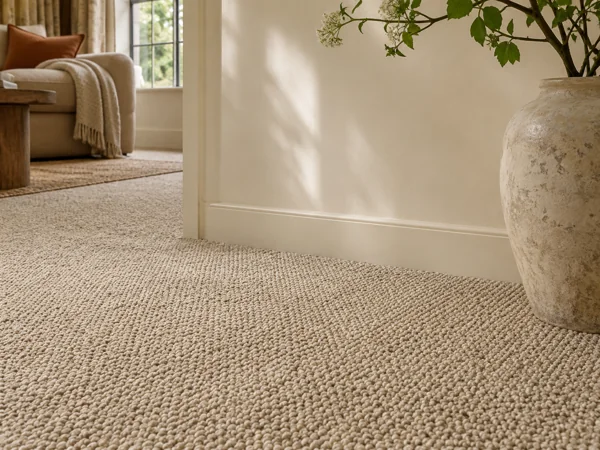
If the pathway is grey on the side leading straight from the door to the kitchen, and another patch sits alone by a plant pot, make them two entries. A walking lane can have soil, flattened tufts or wear. An isolated patch may be connected with a spill or water that escaped repeatedly from a saucer. Include the date you first saw the mark and the last time the carpet was cleaned. Lay nothing across the mark while taking a photo so the edges remain visible.
Say what has already been applied and what happened afterwards. A spot may get paler when damp and return when it dries, or the colour of the actual pile may have changed after contact with a household product. A photo alongside an unaffected part of the same carpet can help show that difference. If a sour smell becomes stronger after the room is closed, say so as well. Where moisture has reached below the surface, a conversation about what can be addressed at carpet level is useful before arranging the work.
- Describe the pathway separately
- Name any product already applied
- Flag lingering moisture or smells
Keep a useful route after you clear the floor
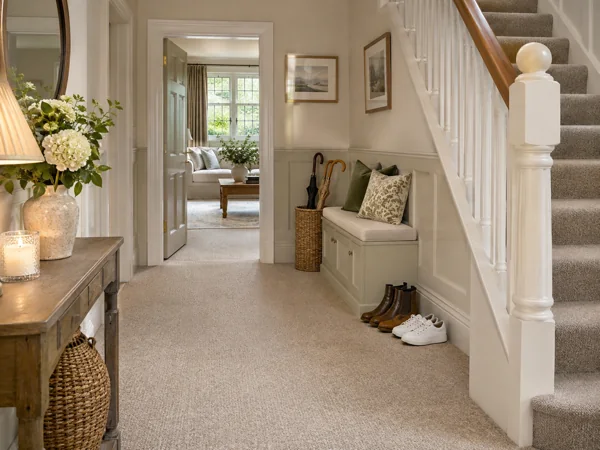
Decide what needs to stay accessible while the carpet is being worked on. A flat sometimes has only one route between the room with the windows and the hall with the front door. If you put the dining chairs in that hall while the sitting room is cleared, there may be nowhere to leave them without blocking the way out. Choose a hard floor or an unaffected room for small items and leave enough clearance for the door to open to its usual position.
Plan around whatever is hard to move. A tall bookcase is normally a different proposition from an empty wastepaper basket, and things fixed to a wall can restrict where their base can be reached. Put cables, spare shoes and bags somewhere they can stay until the carpet is ready. Explain which furnishing remains in the room and whether it sits over the mark. If a rug can be lifted safely, put it in a separate area and say if you also want that textile assessed. Send the label information separately.
Record the condition
| Observation | Extra detail |
|---|---|
| Dull walking line | Photo showing the door and where the route leads. |
| Mark near a plant | Any history of water reaching the carpet. |
| Light seam | Show the seam against the surrounding pile. |
Explain the hours when people need the stairs or bedroom
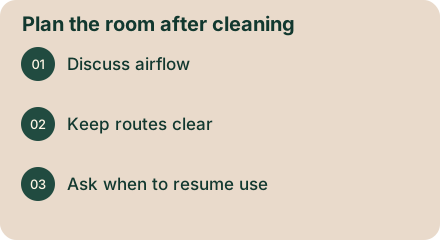
Where the household needs to cross a carpeted passage for almost every trip inside the flat, the choice of what is cleaned and in what order matters. Tell us if a family member will arrive after school, if somebody works shifts and sleeps in the daytime, or if there is no other route to the bathroom. This can be discussed alongside the method and drying guidance so plans for getting around the home account for the actual fitting. Leave the passage clear and keep essentials in a room you can reach.
Mention windows that barely open or that you cannot safely leave open. Temperature, ventilation, fibre and the method all affect drying, so agree the guidance for this property before promising that another person can use the space at a set hour. If you are handing over keys, build time between carpet work and any visit that involves walking through every room. Follow the direction you receive about putting back furnishings and rugs; a heavy mat laid back too soon can slow the passage of air over that area.
Write an enquiry someone else could follow
Imagine the person opening the flat will be a partner or agent who has never been shown the marks. Give them an accurate room list and highlight what you want discussed first. Add photos with enough context to identify each area from the doorway. If the top concern is a route between two bedroom doors, label it by those doors. If you also want a sofa or two rugs assessed, identify the upholstery or loose items separately so the discussion can account for their dimensions, material and condition.
For a checkout, write down the date that large furniture leaves, when the inventory takes place, and who can confirm the work requested on the day. Share any written instructions from an agent as early as possible. A stain might have been on the inventory when you moved in, and that record can help you explain the history without guessing. Send the postcode, entrance route and carpet list together. When timings are limited, say which parts would matter most if separate visits or an adjustment to the room list need to be considered.
Wandsworth flat access
| Arrangement | Confirm |
|---|---|
| Entrance on side street | Name the door and the street used to reach it. |
| Lift stops below private door | Count the intervening steps. |
| Shared landing | Ask who can authorise work there. |
Get a carpet cleaning quote in Wandsworth
Request a quote with the carpeted rooms, stairs and any loose items listed separately.
Get a QuoteOther Cleaning Services in Wandsworth
Local references · National Rail · Wandsworth Town
Wandsworth carpet cleaning questions
Do I have to move a bookcase?
Tell us where it stands and whether it covers a part you want assessed. Agree any movement in advance.
Is the turn on the stair included in the count?
Count every tread on the flight, then identify the tapered steps. Put the landing on its own line.
What if I know only the brand of the spot remover?
Give the brand and describe the bottle or product as best you can. Mention when it was used and what happened to the mark.
Can I send an older inventory photo?
Yes, if it shows the earlier condition. Add a current picture from a similar angle so both can be compared.
Do I need to give the balcony access details?
Mention any balcony door that could support ventilation, or any reason you need to keep it closed.
What if my tenancy ends on moving day?
Share the moving, inspection and key return times. The required drying and access arrangements can then be discussed.