 Housekeeper
Inspection, preparation and extraction
Carpet Cleaning in King's Cross
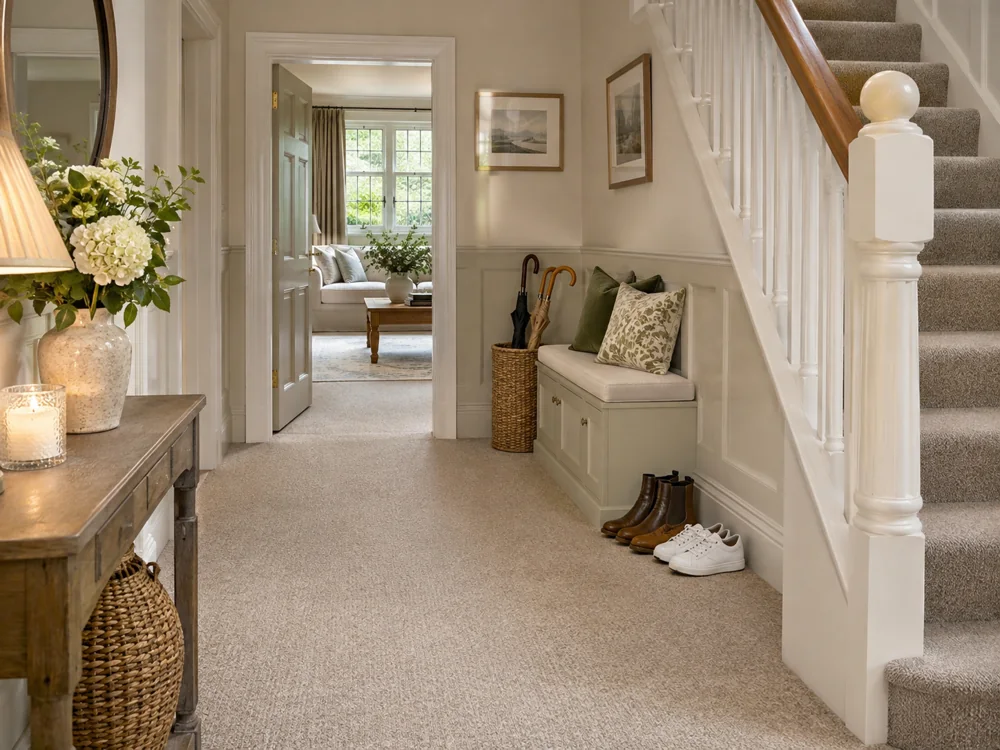
A King's Cross carpet cleaning enquiry can cover a fitted sitting room, a bedroom or a long hall that links several occupied rooms. Describe the surface, the condition you can see and how equipment would reach it. We can discuss suitable treatment, access to the property and a realistic window for drying before you agree what should be included.
Which address should I give near King's Cross stations?
Use the full residential address and building entrance. If your block requires a separate arrival door or lift, include the details.
Can I keep using another room while the carpet dries?
Often you can plan for that. Flag the route you need to keep clear when you request the quote.
Find the private entrance from street level
Transport for London lists King’s Cross St Pancras as an Underground station. A map pin set near the station can cover a large public arrival area. Give the full residential address, the side of the building people should approach, and the exact label on the entrance. Mention a recessed door, a shared courtyard or a second lobby if these make the difference between arriving at the right flat and facing a locked door. A picture of the public-facing entrance can help where the building number is easy to miss.
A route that works for somebody on foot may be too awkward for hoses and equipment to pass a private door, or may have a tight turn immediately after the lift. If the building manager has instructed contractors to use a particular lift, find out which floor it reaches and how a booking is made. Where a host must meet visitors, agree a phone contact for delays and wait until instructions are confirmed before assuming entry from the street is possible.
- Give the residential building name and exact door.
- Flag any loading or lift rules agreed with the building.
- Nominate a contact who can release each secured door.
Work out which flooring the enquiry includes
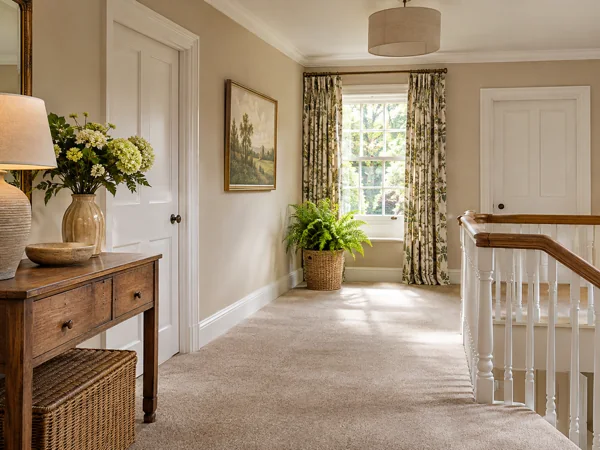
A single hall may contain a fitted wool blend, a loose runner over stone, and a strip of entrance mat fixed inside the threshold. List each item and say where one starts and the next ends. If a runner continues around a turn into another room, take one photograph along the pile and one that shows the underside or care label if you can see it safely. Describe the edging and any repair you already know about. An estimate based on one rectangle can leave out a strip you use every day or include a mat that needs different handling.
Take the same approach where a flat opens from carpet straight onto timber. There may be no metal trim at the join, or a door that swings over the carpet and limits access. Note any piece that is already lifting, and identify gripper edges or steps that are hard to see. Say which flooring the resident uses with a walking aid or trolley so it stays practical to arrange the clean and then return the route to use.
Show unknown marks in ordinary light
Start with a wider photo so the position of a mark makes sense, then move close enough for the pile and outline to show. Near a window, take one image looking towards the glass and one looking back into the room. A patch may look dark from one angle and pale from the other, so both views give better context than a single close image. Explain when it first appeared, what the area is used for and anything you tried on it. Say if the spot is damp or if the stain returns after the surface dries.
A narrow dark line beside a sideboard or along a skirting board has a different history from a fresh spill across a doorway. If the affected place is below a plant stand, near patio doors, or under a removable protector, identify that detail. Tell us about colour change that seems to follow sunlight, and point out any fibre that catches when you vacuum. The assessment can then consider the condition and colour response before discussing a treatment. Removal of every mark cannot be assumed from photographs.
- Show a wide view and a close view.
- List any previous stain products or household treatments.
- Point out changing colour, loose yarn or dampness.
Label each surface for the quote
| Where | What to report |
|---|---|
| Fitted bedrooms | Include alcoves and the portion under moveable furniture that you want reached. |
| Loose runner | Photograph the border, backing and care label if accessible. |
| Entrance mat | Say whether it is recessed, fixed or removable. |
Plan how to deal with desks and plugged-in kit
When a table also serves as an office, the easiest decision may be to leave the main desk in place and agree access around its legs. Check if the chair and a removable mat can be put away and say where the trailing cables sit. If you have a docking station under the desk, leave it to the resident to unplug and move. Photos taken from the doorway can be more informative than a list of heavy objects because they show where a cleaner can work and which way the technician would approach.
Do the same review for shelves, TV wiring and bedside chargers. Remove items you want to protect, but choose a storage spot outside the planned work area. A hallway piled with baskets or piles of books will make it harder to reach a room farther along. If a resident still has to work during the visit, agree whether they can move to another room with a power socket and a route clear of equipment. Show which cupboards or drawers must stay accessible while the carpet dries.
Choose treatment after the pile has been checked
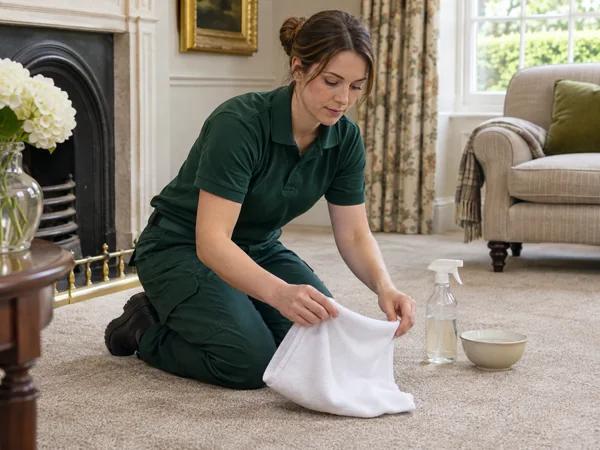
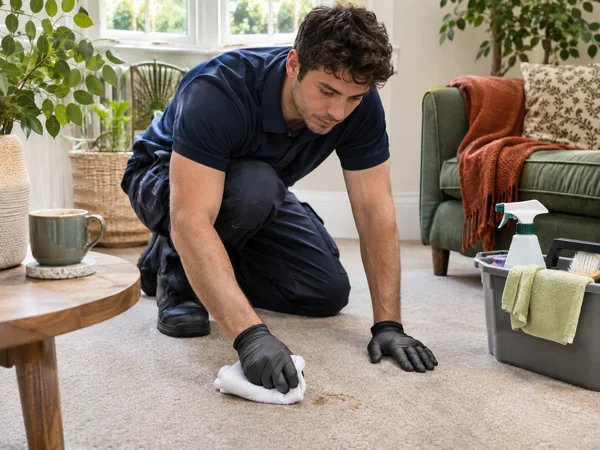
A useful first check looks at the carpet, its backing where visible, the condition of the edges and the kind of soiling involved. Even the two halves of a large room may behave differently if one is worn by a doorway and the other was protected by a sofa. Photos and paperwork can help identify the material, but the onsite check guides the decision. Ask what the proposed treatment involves, whether testing is appropriate first and which areas will need extra care because of a repair, a weak edge or an unknown dye.
Water-based extraction may be appropriate for suitable carpets and conditions. A lower-moisture option or specialist assessment may be discussed if the fibres, colour response or construction raise concerns. The method used on a hard-wearing fitted hall should not be assumed suitable for an adjoining decorative carpet with an old repair. Explain what is most important to you. For example, you may want a smaller safe treatment around a known spill, or prefer to settle the condition of an expensive runner before deciding on the rest of the enquiry.
- Share labels or purchase information if available.
- Show any fading, seams or known repair.
- Ask which treatment is proposed for each surface.
Decide what can be moved safely
| Item | Decision before the visit |
|---|---|
| Desk chair and mat | Move to a dry surface if the route remains clear. |
| Computer and cables | Have the resident disconnect and relocate only the equipment they want moved. |
| Heavy shelving | Describe the accessible edges and leave room to approach them. |
Allow for a real drying route through the flat
Draw the route from the entrance to the kitchen or bathroom if the fitted hall serves both. If there is a long stretch of carpet and you have to use it to reach every room, agree which areas to clean and in what order before the visit. If an adjoining bedroom has another exit, mention it and confirm the resident is allowed to use it. Identify a dry room where somebody can wait, and make sure they can reach any medication, work kit, pet supplies or other items that they will need during the session.
Drying varies with the carpet, the agreed treatment and the conditions in the room. A sunny window does not tell you how much air can move through a fitted corridor, and a flow of air allowed by the building can matter more than the place where light falls. Explain if the windows open only partway or if they must stay shut. Ask which ventilation is appropriate and have somebody tell occupants when it is sensible to walk through or place items back.
Protect the shared areas during arrival and departure
Ask what the property allows before assuming the landing can be used to set equipment down, even for a short time. A connecting passage may also serve as a fire route and needs to stay clear. Tell us if the building uses soft wall coverings, a fragile door surround or a sharply angled staircase where a change of approach matters. Find out if a protective covering is required in shared areas or if an agreed entrance reduces the turns involved. Share the instructions with the people actually arranging access on the day.
A flat resident and the person who manages a block might have different information about lift times or doors. Resolve discrepancies with management while there is enough time to change plans. If the property has an allocated place for temporary unloading, say how to reach it and what sign or address a driver should follow. Provide the arrangements as directions to the home without relying on directions to the station, particularly if there is a different exit for residents on the other side.
- Check where any temporary unloading is permitted.
- Ask who confirms the lift access.
- Make a note of narrow corners or doors that need special care.
Agree the estimate against the rooms you actually use
Send room dimensions where you can, or give a photo that shows the open area and the main furniture. Explain if there is a long hallway, a landing or a carpeted alcove omitted from the room count. Split loose items from the fitted carpet list and say which stains you want discussed first. Ask for the quote to identify special items and access assumptions as well as the main cleaning work. If part of the carpet under a bed cannot be reached, agree how that is reflected in what will be done.
Before the visit, confirm who will be on site, who can approve changes and how to contact them if the condition differs from the original description. Mention any timetable changes after the estimate, especially if they affect an agreed lift or the time available for the carpet to dry. Where more than one tenant is involved, give both people the same room list and arrange who will be responsible for ventilation afterwards. When another visit is planned for any flooring, avoid booking a delivery or furniture assembly over the same rooms while they are drying.
Keep a usable route while rooms dry
| Route | What to agree |
|---|---|
| Front door to kitchen | Keep a dry way to reach food, water and essentials. |
| Hall to desk | Have a clear route to a separate work space if needed. |
| Bedroom door | Set a plan for bedtime and check before covering the pile. |
Get a carpet cleaning quote in King's Cross
Request a quote with the carpeted rooms, stairs and any loose items listed separately.
Get a QuoteOther Cleaning Services in King's Cross
Local references · Transport for London: King's Cross St Pancras Underground station
King's Cross carpet cleaning questions
Can a runner and fitted hallway be quoted together?
Send details of both so the quote can identify each item and its possible treatment.
What should I say if the station entrance is easier to find?
Give the actual residential street, door label and approach for equipment.
Should I move my desk before carpet cleaning?
Tell us what can be moved safely and discuss cleaning accessible carpet around heavier items.
What if the windows do not open far?
Mention the restriction and ask how to plan ventilation and drying around it.
Can you tell what caused a spot from a photo?
A photo provides context. Tell us when it appeared and what was used on it so it can be assessed.
Does an access reservation mean the carpet will be dry before it ends?
The reservation is for entry or departure. Drying varies with the carpet, method and room conditions.