 Housekeeper
Practical carpet care for lived-in homes
Carpet Cleaning in Fitzrovia
Arrange the fitted parts of your Fitzrovia property as a list of rooms, landings and narrow sections. A cleaner working around furniture or accessing a flat above other premises needs the actual entrance and a clear route to the carpet. We can discuss those details and the surface condition before you decide on a quote.
Can I enquire for a W1T or W1W flat above street level?
Yes. Give the complete postcode and explain how equipment can reach the private door.
How should I list marks with different histories?
Put each one beside its room and describe the substance or previous cleaning where known.
Identify the correct residential entrance near Charlotte Street
Westminster's town-centre material describes the Charlotte Street part of Fitzrovia as mixed-use, with pedestrian links between its streets. A premises name may be useful in directions, but someone who sees the commercial frontage can still miss a residential side door. Give the full property postcode and the name or number on the approved entrance. If the approach involves a passage, tell us where it begins, which door comes next and where to ring. Note any signs with different address numbers after entering the building.
Talk through how professional equipment can be brought in, including the point where unloading is possible and any lift rules. A route you know well can have an awkward bend or step that matters to a visitor. If a keyholder must meet the technician at a gate, agree which end of the route they will be at. For a service door that opens within certain hours, give that information before the date is discussed. Do not assume a short walk from a known junction gives adequate equipment access.
- Give the physical entrance address as well as the postcode.
- Explain the route after the first door has opened.
- Confirm the agreed unloading position and any lift restriction.
Fitzrovia fitted areas and their boundaries
| Area | Measure the accessible part | Flag |
|---|---|---|
| Carpet around a desk | Open strip and central floor | Fixed cable or furniture |
| Entrance below a stair | Open surface past threshold | Tight turn |
| Private landing | Dimensions to adjoining doorway | Material change |
Describe the usable carpet around beds, desks and storage
Give rough measurements for each fitted area you want considered. A room can have a narrow fitted space between shelves, a larger open carpet near the door and part hidden under a large desk. Describe the divisions and say which parts actually matter. If furniture will stay in place, show what remains open in a broad photograph. Include small recesses only where you want them treated, especially if something like a fixed cabinet or pipework means one side will be hard to reach.
Tell us when a room is used for work or another activity, and which furniture can be moved or left. A heavy table that stays where it is may define a straightforward working boundary. A lightweight chair can be moved in advance, but consider where you can put it without blocking the entrance or covering another carpet. If the room order changes when somebody arrives, let the technician know before work starts. Give them a practical way to reach the parts you want rather than relying on the listed dimensions alone.
Give available fitting notes without moving the carpet edges
Look for a product label, installer record or sample if you have one. Tell the technician which specific floor or corner it describes. A replaced stretch beside the door may use a different material or backing from the main room. Show where the join is visible, but do not lift a fitted edge to inspect it. If a repair moves underfoot or the threshold stands higher than it did before, include that observation with the pictures. It can help decide the limits of the work.
The technician can consider the visible fibre, seams, accessible backing, colour stability and current condition. Report a previous leak or ongoing dampness separately from marks caused by daily use. If the carpet appears to have changed shape, tell us what you know about the timing and possible reason. A floor that can be inspected safely and one needing further assessment may have to be considered independently. Clarify which rooms are priorities so each condition is weighed with the work you actually want done.
- Match every supplied label to its carpet.
- Show repairs without trying to detach the surface.
- Mention dampness or other underlying issues separately.
Agree the method and the boundaries after assessment
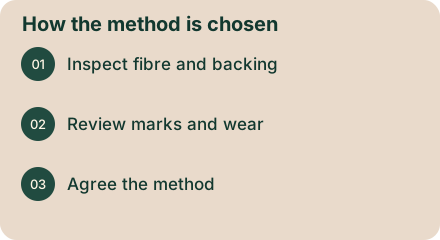
A water-based extraction process can be considered for a suitable fitted carpet. Professional equipment applies and recovers cleaning solution, and drying follows treatment. How the fibre is made and fitted, visible condition and colour stability all help determine if this method is appropriate. An apparently similar carpet in another room might need a different decision. If the maker limits moisture or an area has an uncertain seam, ask about lower-moisture or specialist assessment.
It helps to tell the technician which part you most want cleaned if the wider proposal relies on sorting out a carpet question. Ask them to describe where a chosen process will stop, especially where a room opens to another material or a section has been patched. You can then check that the agreed accessible areas fit your use of the home. Think about where equipment may need to stand and how to reach the carpet without moving fixed furniture or closing a room you have said you need.
Specific marks for inspection
| Observation | Describe | Consideration |
|---|---|---|
| Line around a chair mat | How long it covered the area | Pile and shade change |
| Patch at older join | Movement and product history | Reachable boundary |
| Odour after drying | Timing and likely cause | Possible deeper affected area |
Separate a spill near a desk from changes due to everyday use
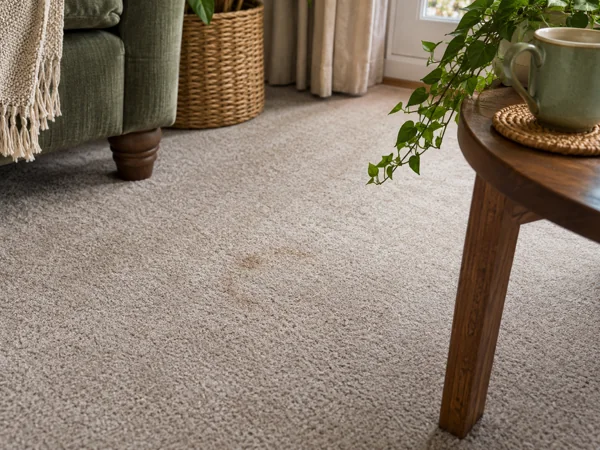
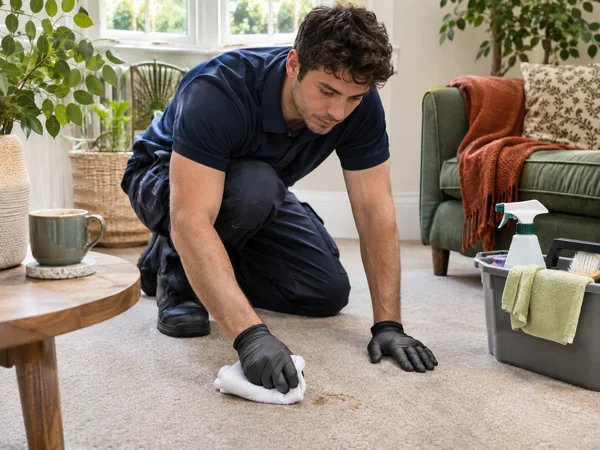
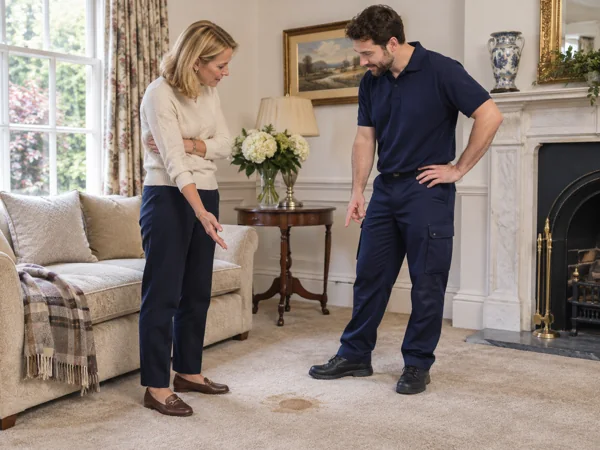
A dark shape near a chair could relate to foot traffic, pressure from castors or an earlier spill. A fitted mat can affect how much of the carpet has been exposed. Give the location and describe how its appearance differs from other parts of the same floor. A broad photo with the surrounding furniture and a closer one of the affected fibres can both be useful. If the shade changes when you look across the room from the other side, mention that to the technician.
For a known stain, give the rough date, substance and any product or machine previously used. Say if a mark appeared again after drying or an odour becomes noticeable when the room is closed. The technician can use that history to distinguish some possible causes. A patch may lie below the surface or involve a change in fibre colour that cleaning cannot reverse. Avoid adding another product before the visit, especially if you do not know what was used earlier.
- Give a position such as under the desk edge or beside the doorway.
- Describe the sequence and result of previous treatments.
- Identify a recurring smell or damp feeling separately.
Prepare furniture and retain a turning space for equipment
Discuss which furniture you can safely move before the visit and what should stay. A room with a fitted desk may have open edges on two sides and no access behind it. Show the usable parts and tell us about cables, power sockets or delicate items near the floor. Keep the route to the room clear, including any area where the technician has to turn. A top landing can be important for access even if you want carpet work only inside the room.
If your work list includes a staircase, count the fitted treads and measure landings separately. Include an image of any turn, rod or edge fitting and report evidence of a loose runner. Bare stairs that a technician must use to reach the carpet should go in access notes. Common stairs are separate from private work and need permission before treatment is considered. This distinction is especially useful if there is more than one household sharing a landing or if the flat has an internal change of level. If the landing doubles as an entrance where deliveries wait, make sure anyone arriving knows where they can put a package without blocking the tread or walking across the fitted carpet during treatment.
Access and work around occupation
| Planning point | Detail to give | What to agree |
|---|---|---|
| Side door behind other premises | Visible bell or address | Permitted entry |
| Desk needed later | Hour and route to room | Drying and room use |
| Rug beside fitted carpet | Dimensions and care advice | Separate textile assessment |
Arrange room use around drying and furniture return
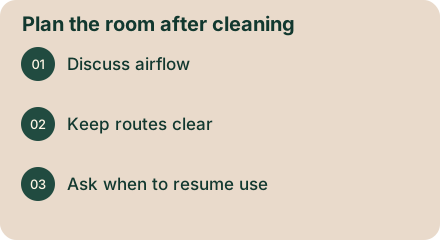
Tell us what has to happen once the carpet has been treated. A fitted study may need to open for work, or a small hall could be the only route to another occupied room. Think about a different path and discuss it before treatment. Explain any windows you cannot open or doors you have to close. Ask the technician about ventilation and keeping shoes, pets and items off the treated area while it dries.
Drying varies with material, technique, airflow and conditions. The treatment period and the time until a room is ready for use are distinct. If you intend to put a desk chair or other furniture back, ask when it can return. A person who is not there at the end of the visit should receive the aftercare advice, including the route that remains available. For a fixed schedule, give the time you need the room and discuss what the appointment can realistically cover.
Give the office a Fitzrovia quote list with any access dependencies
Enter your postcode in the form to prepare the property type, fitted room list, stairs and optional items. Add dimensions, condition notes and the authorised route to the work area. A loose rug or seat needs its own description and measurements rather than being counted as part of the floor. If the focus is an unusual mark, identify the room and note what is expected from the rest of the visit. That lets the office distinguish the items and discuss their suitability separately.
Confirm price, coverage and timing directly with the office before organising access or other commitments. If the entry changes or furniture will stay when you expected it to move, share the update. Give a keyholder both the route and the itemised description if they will meet the technician. They should know what needs to be treated, what to leave alone and who can agree an adjustment if inspection reveals a concern. Keep the plan for aftercare with the room notes so the next person to arrive understands it.
Get a carpet cleaning quote in Fitzrovia
Request a quote with the carpeted rooms, stairs and any loose items listed separately.
Get a QuoteOther Cleaning Services in Fitzrovia
Local references · Westminster Council, Charlotte Street and Fitzrovia town centre health check
Fitzrovia carpet cleaning questions
Can I include a narrow carpet strip between fixed units?
Yes. Give the width and where the technician can reach it. A photo shows doors, ledges and other limits.
How can I explain a Fitzrovia flat entrance separate from the main frontage?
Give the complete postcode and state the street, door number or sign and any turn after the first opening.
Can a chair mat outline be treated as a spill?
Tell us when the mat was removed and whether any spill is known. The technician can discuss changes due to shade and wear separately.
What if a carpeted route has to reopen during my workday?
Tell us when it is needed and whether there is another way through. Discuss drying and the sequence with the technician rather than assuming a fixed time.
Should a shared landing go on the same work list?
Keep it separate from private carpets and make sure permission to arrange the work has been granted.
Will the floor's colour after drying be exactly as it was when fitted?
Wear or past treatment can change the material. The technician can inspect it and explain what may be different even after soil is removed.