 Housekeeper
Plan the equipment route before arrival
Carpet Cleaning in Bayswater
In Bayswater, start a carpet cleaning enquiry with the entrance you actually use and the floor space that can be reached. Two rooms on one level can make a different booking from a reception room followed by an internal flight to a bedroom. Tell us how the property is laid out before you decide which parts to include.
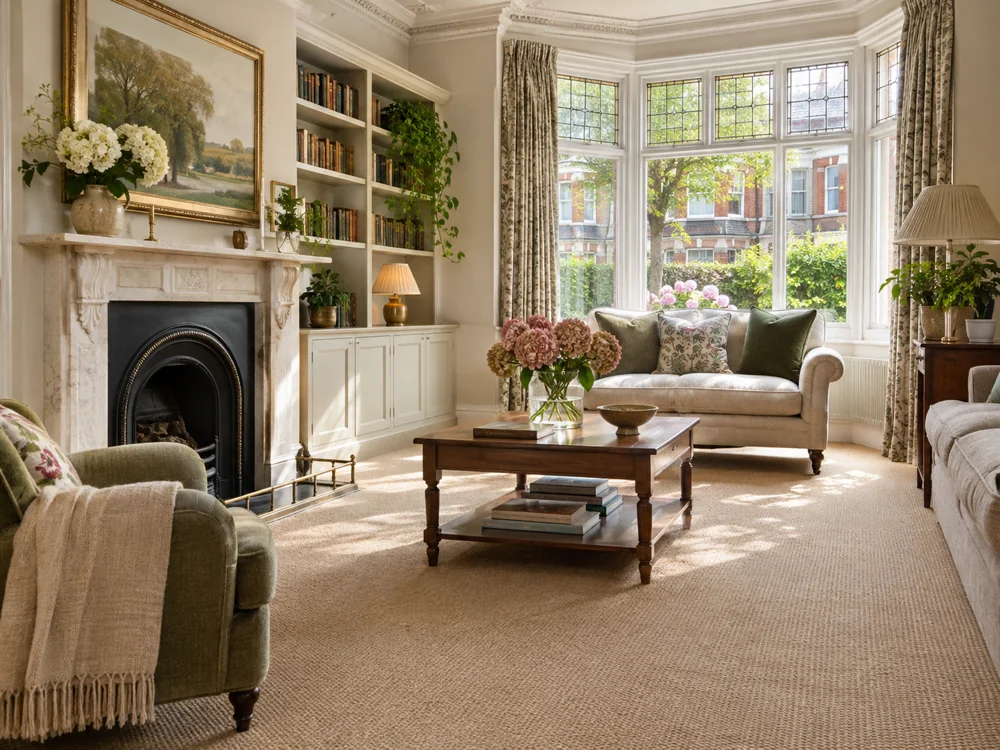
Can I ask about one fitted room in Bayswater?
Yes. Send the complete W2 postcode, approximate open measurements and the floor or stairs needed to reach the room.
Can I request carpets and a sofa together?
List them separately with their dimensions and any fabric or care information.
Describe the actual rooms rather than the flat as a whole
Start with the place where the carpet first appears indoors and identify how far it runs. A long apartment might have a reception area, a short study and a carpeted step between them, even where the flooring looks consistent. A lower-ground room can have a recess under a radiator or a small level change at a doorway. Add any section you want considered to the room list, give the approximate open floor measurements and identify carpet that remains under furniture.
If the property is furnished for a tenant or guest, tell us which items are likely to stay. You may want the central working area cleaned while a bulky wardrobe, floor-standing shelf or dining table stays in position. Give measurements of that open area and note inaccessible parts. Where one room has no alternative route, explain when the occupant will need to cross it. A room list that explains furniture, access and use will support a more useful quote discussion than a room count alone.
- Put any internal treads on a separate line from the fitted rooms.
- Name recesses you want included around a door.
- Explain which furniture is expected to remain in position.

Give the usable W2 approach beyond Queensway
Westminster Council identifies Queensway, Westbourne Grove and Porchester Road in its Bayswater town-centre work. If your directions use one of those streets, end them at the private entrance rather than the nearest business or general frontage. Give the complete property postcode and the label a visitor should use. Where a flat opens from around the side or below street level, describe the turn and a recognisable feature by the door. Include the level after entering if more than one household shares the entrance.
For equipment, mention any heavy gates, steps, narrow turns or lift restrictions. Tell us where unloading has been agreed and who can open a second door. If a flat shares the postal number with a business, give the residential approach and bell separately. The way you normally walk in with a key may differ from the equipment route allowed by the person managing the property. Confirm any necessary permission before committing to a time and provide the instructions to a keyholder as well as the office.
Bayswater fitted floor descriptions
| Area | Useful detail | Working consideration |
|---|---|---|
| Lower-ground bedroom | Approximate open width and length | Recess under a radiator |
| Room beside fitted units | Visible carpet edges | Furniture stays in position |
| Internal stair | Count and shape of treads | Access to upper room |
Use inspection to identify layers and previous work
Tell us if you have a care label, spare sample or landlord's record for the fitted carpet. Send only the relevant material information and explain which part of the property it describes. A refitted room with a similar weave may have a different backing from the carpet outside it. If a joint has been repaired or a border is visible around a patched area, photograph it where it sits. Do not lift a secured edge to check the underside before the technician arrives.
The technician can assess the visible fibre, backing where accessible, seams and condition. Point out a loose strip under the door, a wrinkle or a change in colour beside a repair. If a stain is near an existing leak or you notice moisture beneath the carpet, raise that as a separate issue. It may have to be understood before considering treatment. Where the textile reacts differently from what was expected, ask which other parts can still be considered and what information is required for the area the technician cannot treat.
- Keep material notes specific to the room they belong to.
- Show old patches with the surrounding carpet in view.
- Mention whether a previous leak is resolved or still needs investigation.
Discuss water-based extraction and other possibilities after assessment
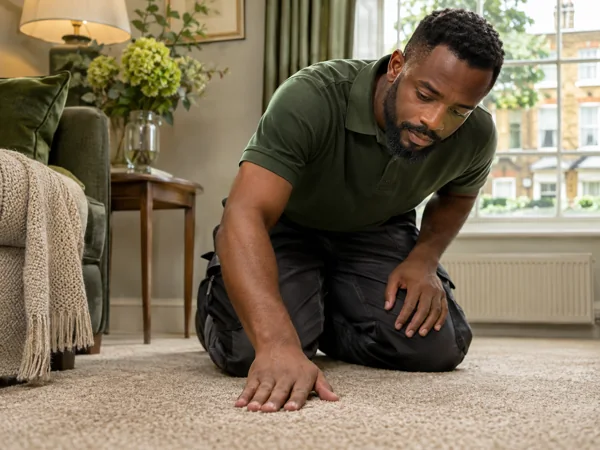
On a suitable carpet, extraction equipment applies and recovers cleaning solution, leaving the fibre to dry afterwards. The main decision is whether the textile, its construction and present condition are suitable for that water-based work. A room photo can show the layout but may not establish colour stability or how the flooring is fixed. If the material has a care restriction or there is uncertain moisture sensitivity, the technician can discuss lower-moisture or specialist assessment rather than presuming that extraction is the answer.
One room can need another decision from its neighbour, even when the two floors appear continuous in photographs. Ask how a vulnerable join limits the work or what might change if a fibre label is found. Where a concern cannot be resolved at the visit, tell us which area you want considered independently and which can stay out of the treatment plan. This is useful if a property needs to reopen soon, or if the main priority is an accessible section that avoids an uncertain material.
Give the story behind a mark in a furnished room
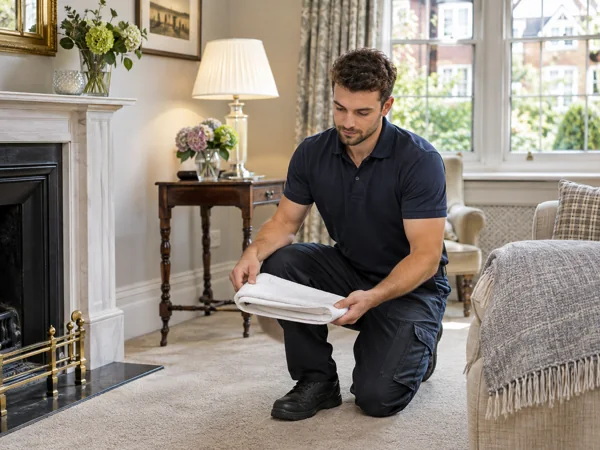
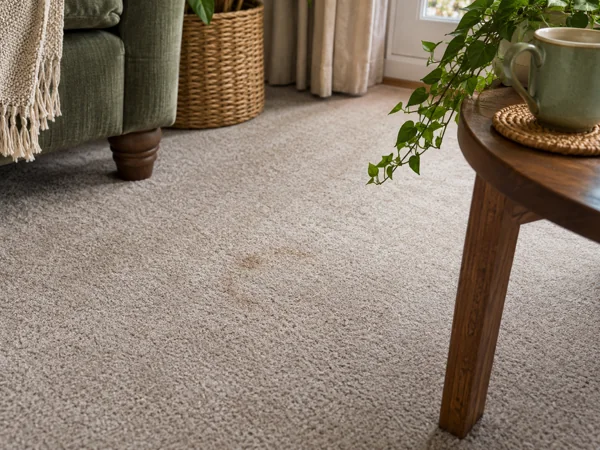
If a mark was already present when you took the property, describe what you noticed rather than assigning a cause. A dark patch in the usual walking route might include both soil and compressed pile. A pale shape beneath furniture may be where that part of the carpet has had different exposure. Show the mark in the context of the room and mention the direction from which it looks most obvious. This helps the technician distinguish some surface soil from changes that may remain after cleaning.
Tell us the age of known spills and any product or machine already used. A mark that seemed to fade while damp and returned after drying can point to an issue beyond what the surface photo shows. Report smell or suspected dampness as well as colour. If a liquid may have reached the backing, say so. Avoid applying another product before the visit so the technician can assess the existing condition. Ask what level of improvement might be realistic rather than assuming every visible difference is a stain that can be removed.
- Label older marks and known incidents separately.
- Include the earlier product or equipment if known.
- Photograph contrast with a less-used part in ordinary light.
Fibre, condition and previous work
| Observation | What to describe | Assessment point |
|---|---|---|
| Patch surrounded by a seam | Boundaries of earlier work | Potential construction change |
| Mark visible after drying | Cause and prior product | Depth or residue |
| Loosened edge at door | Movement and nearby surface | Working limits |
Keep turns free without shifting fixed furniture
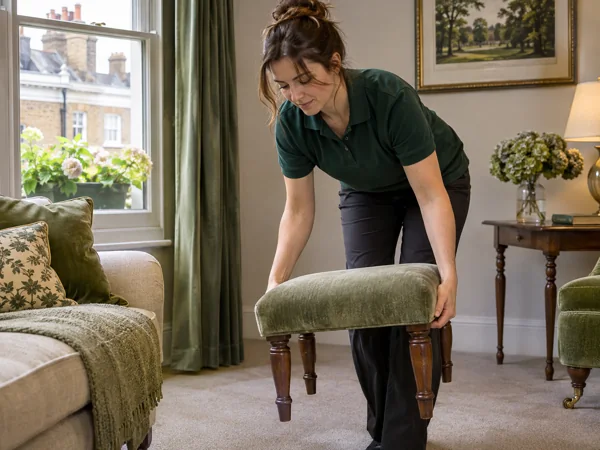
A hall between the outer door and the flat is often its hardest turning point. Put small pieces somewhere they do not block the approach or cover carpet in another room. If you are asking for work around a fixed unit, tell us where its lowest edge is and which sides are reachable. For a heavy bed or fitted cupboard, it is more practical to agree the open carpet area than to assume everything must move. Show any loose trim or cabling hidden behind a piece you plan to clear.
On a stair run, count the treads, identify any turning tread and measure the flat landing separately. Give us the exact surface you want considered and report any rods or raised edges. If there is a communal flight to gain access, keep that in your arrival notes rather than including it as carpet to clean unless you have permission for the extra work. The route and the treatment count are both useful but solve different problems.
Plan how a furnished flat can be used during drying
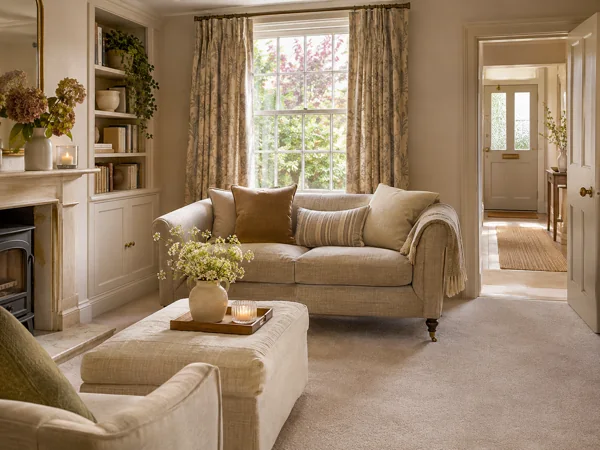
Drying depends on the fibre, technique, ventilation and room conditions. In a lower-ground flat, there may be little through airflow or a window that cannot safely stay open. Give those details before you agree the treatment. Ask the technician how to manage the space and when normal traffic can resume on that carpet. It may help to use a second room or route while a principal hallway or living area is temporarily out of use.
If a guest, tenant or cleaner arrives after the appointment, share the actual aftercare instructions with them. Do not base a fixed handover on the time the technician expects to leave. Ask when furniture can be put back and what the person responsible for the property should check first. Report a planned delivery or evening use during the quote discussion, especially if it depends on crossing a fitted entrance hall. The treatment order can then be discussed in relation to the room's next use. If a key safe can only be accessed from one entrance, make sure the person handling the handover can use that route without crossing the treated floor.
Prepare the Bayswater quote for the person who will open the door
Collect the property type, full postcode, carpeted rooms, steps and optional items with the form. Give rough dimensions, the material notes you have and anything unusual about moving through the property. If you want a sofa, mattress or rug considered, add a separate line and include its own measurements or item count. A fitted bedroom carpet and a loose runner in the same area can have different care needs and should not be described as one surface.
Confirm the quote, access and availability directly with the office. If a managing agent or neighbour will meet the technician, share the room order and entrance instructions with them. Check that they know which furnishings stay in place and whom to call if inspection makes the initially requested process unsuitable. Update the enquiry if access changes or a new mark appears when you move an item. Keeping the details current helps the technician discuss the requested work with whoever is present.
W2 booking and aftercare
| Access or timing | Give the office | Discuss |
|---|---|---|
| Private address above retail | Separate entrance and bell | Equipment route |
| Shared lift | Permission and served level | Reach the flat |
| Guest later the same day | Arrival time and floor they need | Drying and usable rooms |
Get a carpet cleaning quote in Bayswater
Request a quote with the carpeted rooms, stairs and any loose items listed separately.
Get a QuoteOther Cleaning Services in Bayswater
Local references · Westminster Council, Bayswater retail strategy
Bayswater carpet cleaning questions
Do I need the main street address if my Bayswater flat has a side approach?
Give both the full postal address and the authorised physical route, along with the label on the private door.
Can two adjoining carpeted rooms have different treatments?
Yes, if their materials or condition differ. Tell us what you know and let the technician assess each before deciding.
Does an old pale furniture outline need stain treatment?
It may relate to different exposure or pile wear. Photograph the outline and surrounding floor so the technician can consider the cause.
Can a short internal stair be added to a Bayswater bedroom quote?
List the treads, any landing and the runner or fitted edges separately, with a photo of the turn if there is one.
Should a guest use a treated landing as soon as they arrive?
Ask the technician for timing and plan another route where possible. Drying depends on material, method and conditions.
Can a building concierge hand over the keys for the appointment?
Discuss your building's procedure with the office and give the concierge the agreed entrance, floor and contact details.