 Housekeeper
Mould Removal in Alexandra Palace
If there is visible mould above a window seat, on a hard landing finish or alongside a tall opening near Alexandra Palace, show us where you can see it from. We assess the working position and the finish before agreeing the accessible hard faces. We then physically remove visible mould from the suitable areas.
Do you take enquiries near Alexandra Palace Way?
Yes. Give the complete home address and the residential entrance.
Can you check a raised landing face?
Tell us which floor level you stand on and where the marking begins.
Describe where the mark is high and where access is low
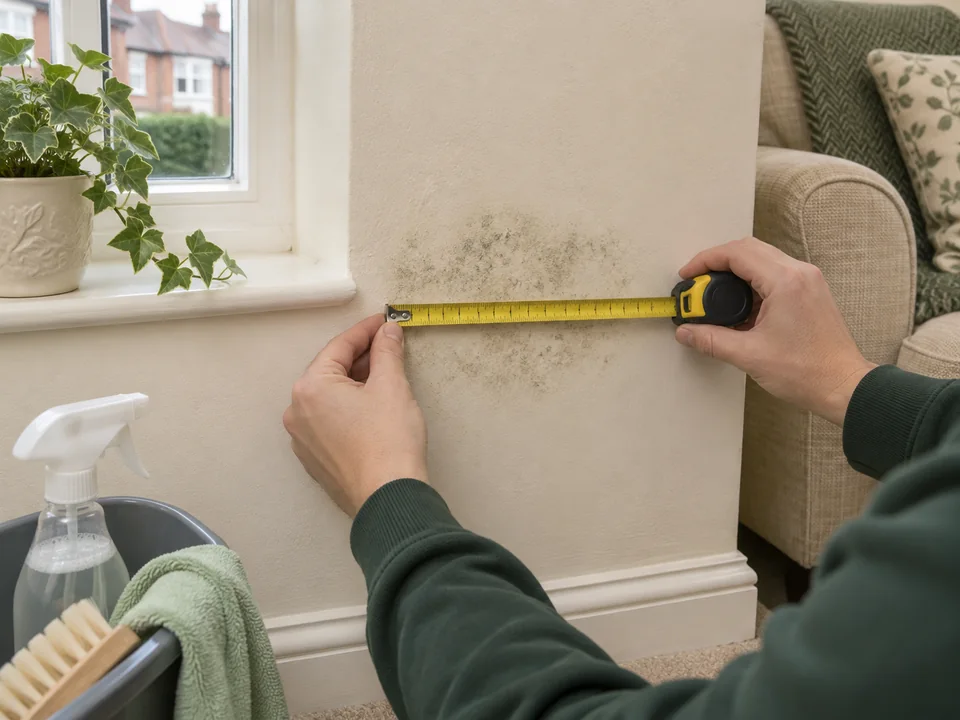
A mark can look close when seen from a large window or an opposite landing. Its working position may be different. Tell us where your feet are when you see the patch and whether there is another level alongside the face. If the surface sits above a deep sill, give us its height from the normal floor and the depth of the ledge if those are easy to describe. A broad image from the doorway lets us see the layout, while a closer one from the ordinary position can locate the affected material.
Haringey's public planning register lists Alexandra Palace on Alexandra Palace Way in N22. If you describe your home by reference to the Palace or park, include the residential number, complete postcode and correct entrance. Tell us whether we come into the home at the same level as the affected face or via an internal stair. If a gate or second door opens onto a building at a different level, identify the normal way you give visitors access. That route helps us discuss how to see the marked surface when we arrive.
A tall opening can include a lower panel, an overhead section and a reveal in the surrounding finish. If you see marks in more than one of these, give the positions separately. A long window can get described as a single area in the enquiry even though different sides can be reached from different places. We assess the points you can show us from a normal route. If the mark is seen from an opposite corridor, tell us which way leads to the room that actually contains the face.
For a landing patch, identify the nearest door or turn and say if the straight view is from the stairs or from the landing itself. This can change the likely boundary of the work. If someone else will show us round, make sure they know the precise height and side.
You can sketch the position in a short message when the layout is difficult to capture. Say what the face is directly over and what sits nearest on either side. For a top section, separate the vertical distance from the distance across any sill. Mention if the photograph was taken from a second room, where a closer view looks possible but the surface is not actually in reach. We assess the height and clear position against the face itself before we agree the work. A diagram can help us get to the right place on a split floor.
- Describe the last ordinary position with clear access.
- Give a wide picture showing the level and fixed features.
- Separate a patch at the lower edge from anything above it.

| Visible location | Detail for assessment |
|---|---|
| High return above a deep sill | Relative height and depth from normal floor |
| Hard face across a landing | Which room or level provides direct access |
| Upper and lower parts of one opening | Which sections show mould and which can be reached |
Use the ordinary approach instead of stretching around a fixing
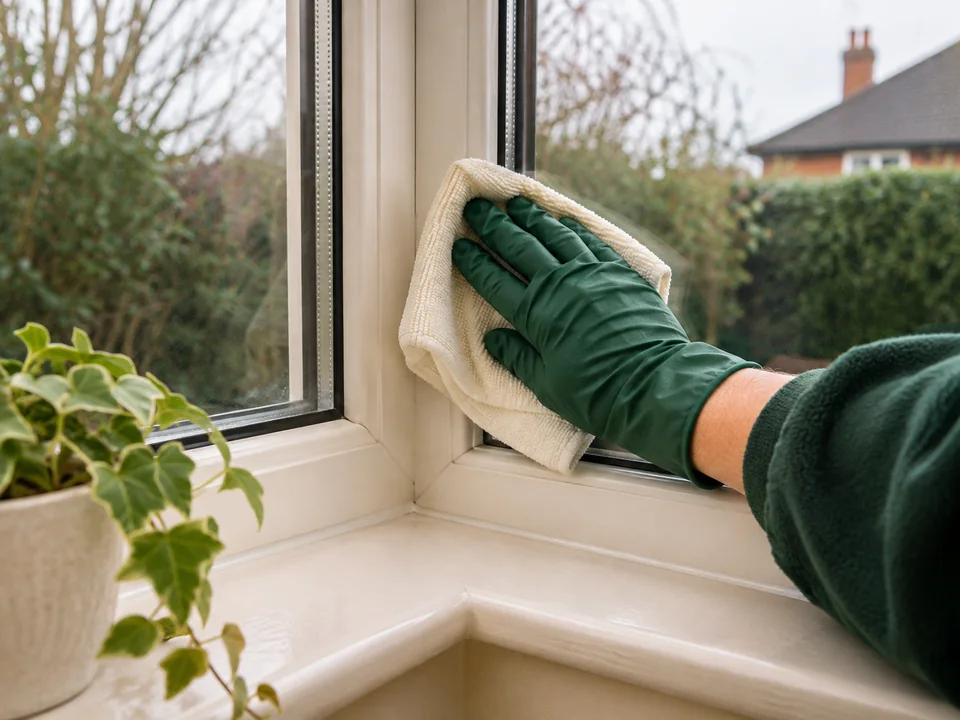
Point out the nearest floor area from which the mark can be inspected. A step, narrow landing or built-in seat can stop a person from standing directly in front of the surface. We look at that position before agreeing any hard face. Leave the route clear where loose items can be safely moved. Fixed handrails, window seats and similar fittings stay in their ordinary positions. If a landing is the only way to a bedroom, tell us when it can be clear enough to inspect the exposed finishes.
Where another part of the room provides a better view, show us the approach to it too. We may be able to distinguish the surface from a position farther back and then judge the work from the available position nearer to it. We use the normal floor and door positions when deciding where we can work. Tell us if a piece of furniture or a screen near the wall normally sits in a different arrangement from the one shown in your picture. We can assess what can be reached without relying on anything unstable or fixed for support.
Give us the time when other people can work or wait in another part of the home. A landing can get busier around school, deliveries or a tenant returning, and we need a period to check the actual face and prepare any agreed suitable position. If the area cannot stay free, we can discuss whether another room should be checked first. Let us know which doors can normally remain open and which should be kept usable throughout the visit.
If a flat has two physical levels linked by only a few steps, provide enough context to show which side we can approach. A short rise can be significant if it leaves no usable place below the patch. We check the available working position with you and say how that affects the assessment.
If one flight of steps approaches the affected area but another serves the rest of the home, tell us which route people will use while we are there. We can ask about the everyday layout without changing how doors and fixed fittings work. A clear approach also gives us space to go through the work boundary with the person responsible. If they normally visit from another level, explain how the affected surface is reached from that point or name the route we should use to meet them.
- Tell us if a stair or corridor must stay in use.
- Provide the ordinary approach from the room entrance.
- Mention a fixed ledge or screen close to the surface.
| Practical limit | What we check |
|---|---|
| Deep sill in front of the face | Reach from the regular floor position |
| Single route across the landing | Time and room for ordinary access |
| Window seat fixed beneath the patch | Exposed hard faces reachable without standing on it |
Separate what we can see from what we can clean
We assess the marked finish and the point where it meets an adjoining piece. A hard ledge can have a coated top and an unprotected or damaged underside. Identify any condition issue you already know about. We explain which parts are suitable and where access or a different finish limits the work. A patch visible above the edge need not have the same outcome as one we can approach directly. If only the exposed lower face can be cleaned, we can agree that section with you before starting.
We prepare the immediate area as agreed and physically remove visible mould from the suitable exposed hard faces we can reach. We keep the work within the boundaries confirmed in the assessment. If we find that a mark continues behind a fixed fitting, we stop where the ordinary access ends. If the condition changes across a material join, we assess the new face individually before deciding whether any of it can be included. We will explain the limits with reference to the nearest feature you can see, such as a frame corner or the lower side of the opening.
Some hard faces can be reached more easily from one end than the other. At the start, confirm which visible section is the main concern in case one end has less reach. We may find that a section which appeared nearby in the photograph is directly above a fixed obstruction. We can assess the exposed hard face first and discuss where the remaining bit becomes inaccessible. Tell us who can confirm any adjustment when we identify such a difference.
- Confirm the priority area in front of the actual surface.
- Show where the finish changes near the visible mark.
- Agree the boundary if ordinary reach stops partway across.
Review the result from the level named in the enquiry
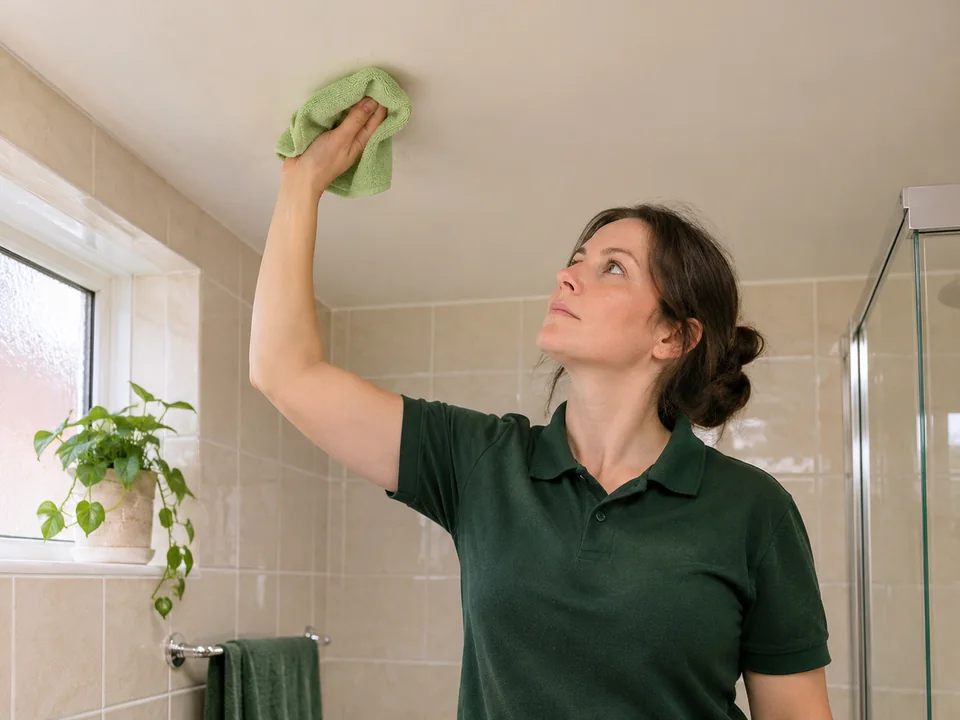
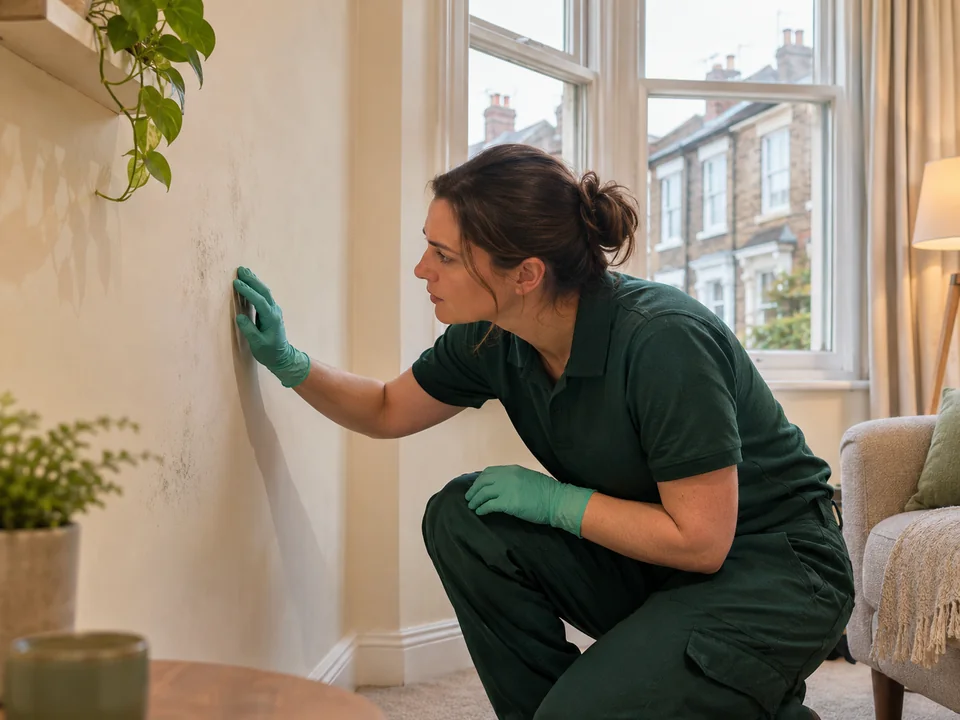
After the work we review the agreed faces and point out what we could address. We explain any remaining colour change or damaged finish and where an inaccessible section needed to be left. Ask us to show the position from the approach you named in the original enquiry. This helps where someone notices a mark from the steps and another person commonly views it from a landing. The same surface reference can be passed on to the person responsible for the property.
If new marking or moisture becomes visible later, note the date and level. Take a context photo from a normal position with the nearest door or fixed part in the view. That can help a responsible contact assess where it is without confusing it with another part of a tall opening. If a separate appointment changes normal access or makes an additional hard face available, tell us that before requesting another assessment. We can then discuss the exposed condition and the new working position.
For an owner handing the room back to an occupant, it may be easier to review the lower section and the higher area in the same sequence used when we arrived. Keep the name of the floor and face in the message. If a higher section was visible from another room but needed to be left, give that context so an observer does not assume that viewing it established suitable access.
At the review, we can show how an obstruction or change in level affected the nearest practical working point.
| What to pass on | Reference to keep |
|---|---|
| Hard face cleaned | Floor level and limits of the treated section |
| Adjacent high area excluded | Position relative to the opening or fixed ledge |
| Progress after a separate property change | Date and current view from an ordinary position |
Questions about arranging mould removal
Does being able to see a high patch mean it can be cleaned?
We check the available working position and reach in addition to the condition of the exposed hard face.
Can I send a photo taken from the other side of a landing?
Yes. Tell us where you stood and send another view showing the normal approach if possible.
What if the ledge beneath it has a damaged corner?
Point it out when you enquire. We assess the relevant face and decide where suitable work can end.
Can someone else use the landing during assessment?
Tell us when the route is needed and we can discuss when the inspection position can be clear.
Do you need the Palace address as a reference?
We need your residential address and postcode. The landmark can help you explain which part of the area you mean.
Can you explain which height or end you worked on?
Yes. We can identify the hard face and the last point reached during the review.
Other Cleaning Services in Alexandra Palace
Mould removal service and assessment, Arrange a separate one-off cleaning visit
Discuss your mould removal enquiry
Mould Removal Prices in Alexandra Palace
Tell us which rooms are affected, the approximate size of the visible patch and what surface it is on.
Get a Quote