 Housekeeper
Mould Removal in Gospel Oak
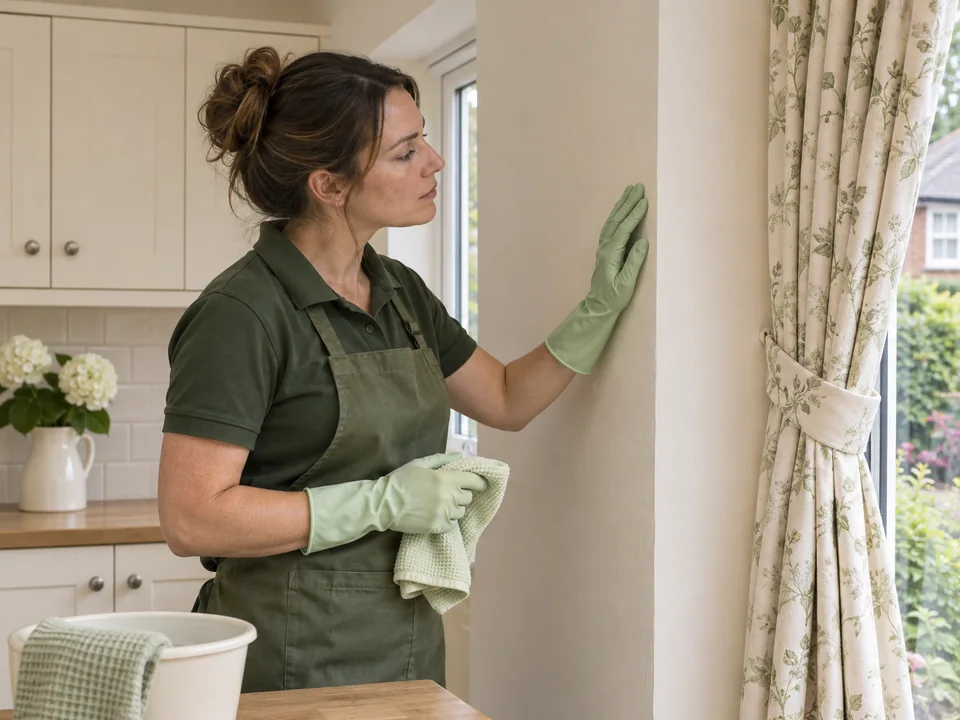
For Gospel Oak mould removal, we assess the visible area and identify whether the finish and working reach allow us to clean it. We agree and prepare the position, physically remove visible mould from suitable accessible hard surfaces and explain the result.
Can I enquire about an NW5 flat with shared entry?
Yes. Give the full postcode, residential door and person who can take us to the room.
Can you look at a mark at the back of a sill?
We assess the accessible material and tell you how far we can reach.
Match the exterior address to the room we need to see
Camden Council's Gospel Oak and Haverstock Community Vision covers the area in a joint planning document. A resident may use Gospel Oak as the familiar area name, but we still ask for the full property address and the actual managed entrance, stair or door that serves the room. Tell us who can open that route and whether the person will be able to walk us to the affected surface. Where two entrances serve the same building, use the one that can be opened for this appointment.
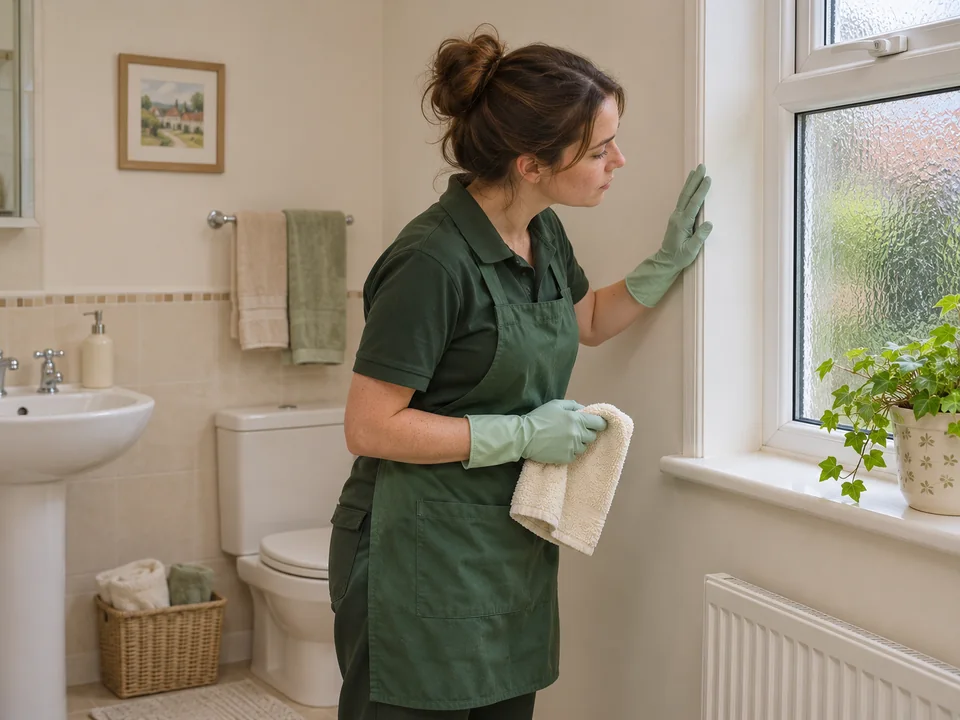
For an affected area along the base of a window or next to a low fitting, give the room and an identifiable point you can find again. Say whether the mark continues into a recess or behind something the resident keeps in place. We ask what you can see without moving furniture or removing fitted pieces. A visible edge helps us discuss which part is likely to be accessible and whether to allow time to consider another surface in the same room.
A photograph from ordinary working height can show which fitting or part of the room you mean. If you share a close image, use the same room name on the wider view and say when it was taken. A close image of a frame can be helpful without showing which frame it is. We use the wider view to orient the assessment and confirm how the current area looks when the room is open.
If an estate or block uses separate entry controls for different floors, tell us which one the person meeting us can open. Some people can grant entry to a shared landing but have no access to an individual room. Others can show us the room but cannot agree added work. Tell us who fills each role so we can use the correct entrance and speak to the correct person if we see a change from the booking description.
- Give the exact entrance and floor.
- Use a fixed fitting to identify the visible mark.
- Name the person who can show us the room.
| Information | Purpose |
|---|---|
| Entrance and level | We can reach the correct room. |
| Nearest feature | We identify the specific finish. |
| Resident or property contact | We agree access and the proposed work. |
Assess the material and working position at each visible mark
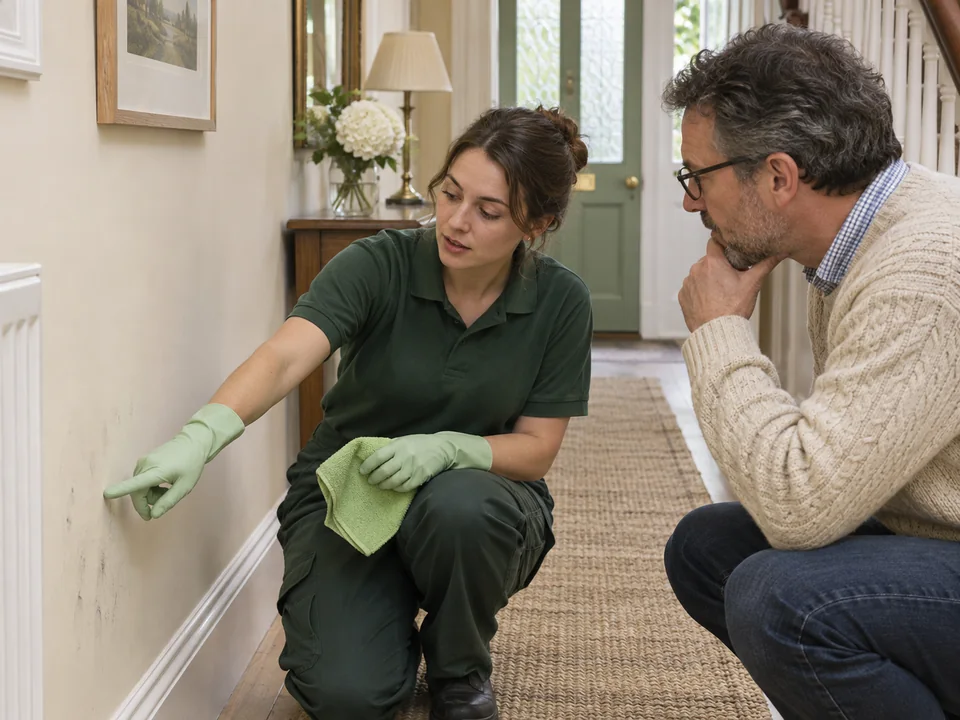
We assess the finish we can actually see. A hard frame may meet an exposed sill and then a different treatment on the wall. We look at those points individually and check where an exposed hard section remains suitable and accessible. If a change in material coincides with a visible change in condition, we include that observation in the discussion so you can see which part of the position would be cleaned and which still needs a decision.
The space available on the floor can alter working reach even where the mark is in full view. A window position may be approached from directly in front, or only from one side because a piece of furniture must remain in place. Show us the available standing position and the angle you used to see the mark. We use that information for the practical assessment and explain where the exposed condition and the workable access differ.
In a cupboard recess, the exposed side may be visible through the door without showing another mark near a pipe cover. We assess whether both positions are exposed and whether we can approach them safely. If a fixed fitting or closed panel obscures part of the finish, we describe the boundary of the visible area. That allows the property contact to consider whether they need someone to examine the concealed position separately.
Tell us whether the affected finish has changed since the enquiry. Something might have been moved or the visible mark may now continue across a nearby edge. We use the condition we see at assessment and ask who can agree any change to the work. In a room with several similar openings, identify the current one using the side of a door, a room corner or another piece that is fixed.
| Position | What we assess |
|---|---|
| Frame, sill and wall | Visible differences in material and condition. |
| Narrow approach | Where the working reach is available. |
| Cupboard recess | What remains exposed beyond the door. |
Prepare the exposed surface and confirm what can be left in place
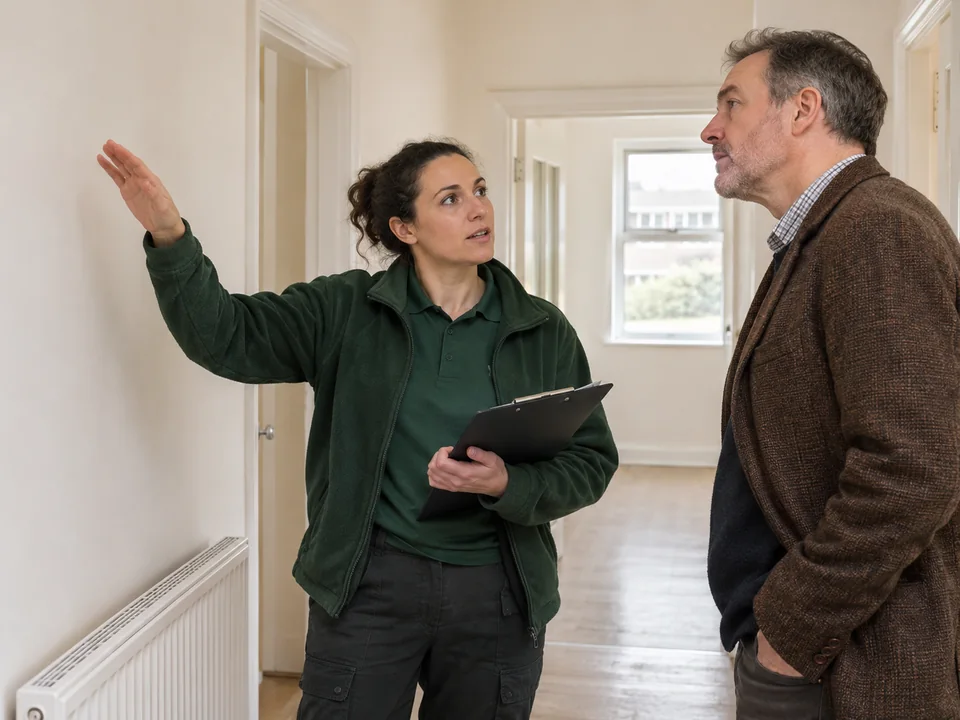
Once we know what is suitable and what we can reach, we agree the specific part to clean and discuss preparation. A table or household belongings may occupy the working position even when the hard surface itself is clear. Confirm which belongings the resident can move and where they can set them down. If the way through the room is shared with other people, agree how they will avoid that position while we work.
A fitted item needs a different decision from everyday objects. We ask the resident to point out which pieces must stay in place before preparing the area. If a rigid trim, a cover or a built-in cupboard keeps us from reaching a narrow strip, we explain the end of the available portion. We check any additional finish revealed by moving an agreed item before we decide whether it belongs in the visit.
When two rooms are involved, agree which room will be ready first. Someone may be able to clear a sitting room approach immediately while the other resident needs time before opening a second room. We check the order with the person providing access. If they are leaving, ask who can answer a question about the working area or about a second visible finish before additional work is discussed.
If the windowsill can be reached only from the end nearest the entrance, ask the resident to keep that end free when clearing the room. Items moved from the sill can otherwise narrow the same approach needed for work. We confirm the working position before we start and identify any part that remains out of reach after preparation.
- Agree where to put cleared belongings.
- Identify fitted pieces that must stay in place.
- Confirm who can make any other room available.
Carry out and check the agreed visible surface cleaning
We physically remove visible mould from suitable accessible hard surfaces once the condition and reach have been assessed and the position has been prepared. The work follows the part we agreed, including the end nearest a change of material or a fixed item. If there is a sound hard face beside an area of visibly deteriorated finish, we can explain where the agreement ends and point to the remaining area during the review.
As work takes place we keep the boundary tied to something you can recognise in the room. A vertical join or the inside edge of a frame may be more useful than a general direction such as beside the window. If the accessible part stops at a fixed recess, we tell you where. If the mark continues into another exposed finish, we identify it and consider that position separately rather than treating the whole run as one material.
At the final check we look across the area and confirm the work completed. If two similar hard fittings were assessed and only one was suitable, we identify which one was cleaned by the fixed point agreed earlier. The review also identifies any part outside the cleaning, including an adjacent area that visibly needs attention. That gives a person who was not present a specific place to look when deciding what to do next.
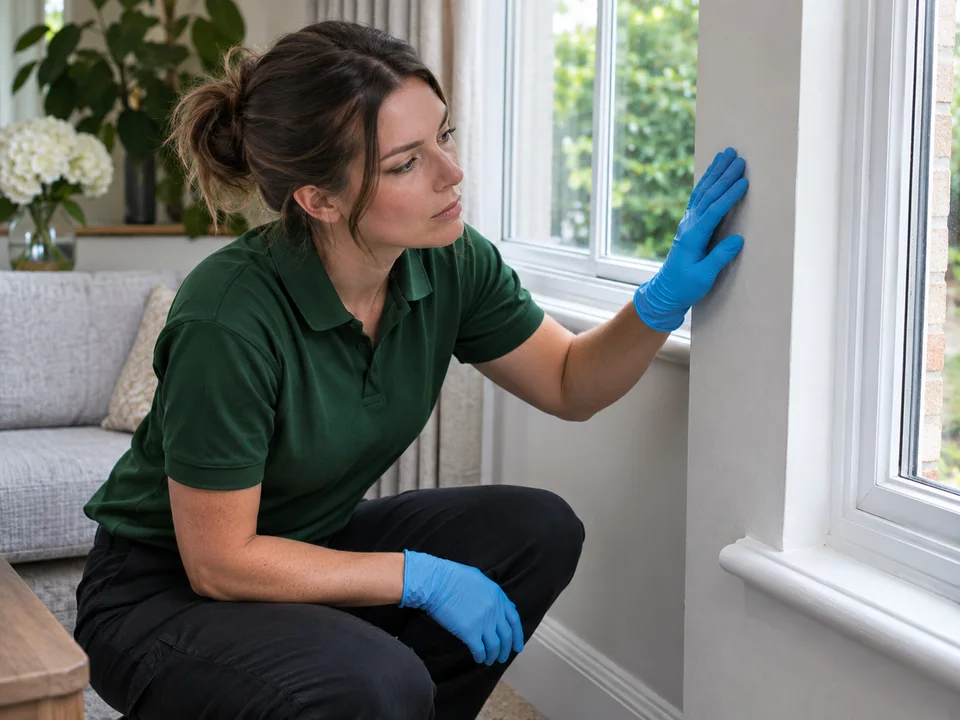
| Handover point | What we identify |
|---|---|
| Worked surface | The hard exposed area we agreed to clean. |
| Boundary | The fixed point or material change where work ended. |
| Visible finding | A separate location for the property contact. |
Describe the cleaned section to the person taking the handover
We hand the room back by describing where we worked and what we can see around it. Tell us who wants to review each position. The person meeting us may be a resident or representative, while a manager elsewhere may need the result. We connect the work to the room and exact finish so both can refer to the same area, even if only one was present during the assessment.
If an issue in the property is being considered elsewhere, tell us which floor or feature it concerns and who is dealing with it. We tell you what was visible and where surface cleaning took place. Action on potential water ingress, a recurring problem or a damaged part of the room is a separate matter for the person responsible. They can refer to the position named at handover if it falls beside the area they need to investigate.
Tell us when you need the keys or room returned and whether the person receiving them also needs the result. If access to the shared entry changes later in the day, let us know what must happen before it closes. Confirm who will still be available for the final check and whether a different person will receive the keys. We discuss the order of those steps before starting the agreed cleaning.
To start an enquiry in Gospel Oak, give us the full address, room name and surface, and mention what prevents you reaching the whole area. We use this to discuss how to assess the visible finish and who can approve the work. For ordinary cleaning of other rooms, make a separate list of tasks and give the timings for access, so we can use the appropriate booking arrangement for each.
- Agree who should review the work.
- Mention any existing enquiry about the same position.
- Confirm a deadline for the return of access or keys.
Questions about arranging mould removal
What if my block has more than one stair?
Tell us which door and stair serve the affected room and name the person meeting us.
Can a resident show you a mark that is visible only from one side?
Yes. We check what can be seen from that position and whether there is enough room to work there.
Will you assess a sill and wall separately?
Yes. We look at the exposed materials and the condition of each before agreeing the work.
Can one room be cleared while the other is assessed?
Explain when each can be available. We can discuss the most practical order.
Can an estate manager ask for the result if they cannot attend?
Yes. Give us the contact and identify who can show us the area during the visit.
What happens if the patch continues behind a fixed cover?
We identify the visible end and explain where the cover limits the agreed work.
Other Cleaning Services in Gospel Oak
Enquire with your Gospel Oak address, Discuss regular housekeeping separately
Discuss your mould removal enquiry
Mould Removal Prices in Gospel Oak
Tell us which rooms are affected, the approximate size of the visible patch and what surface it is on.
Get a Quote