 Housekeeper
Mould Removal in Tottenham
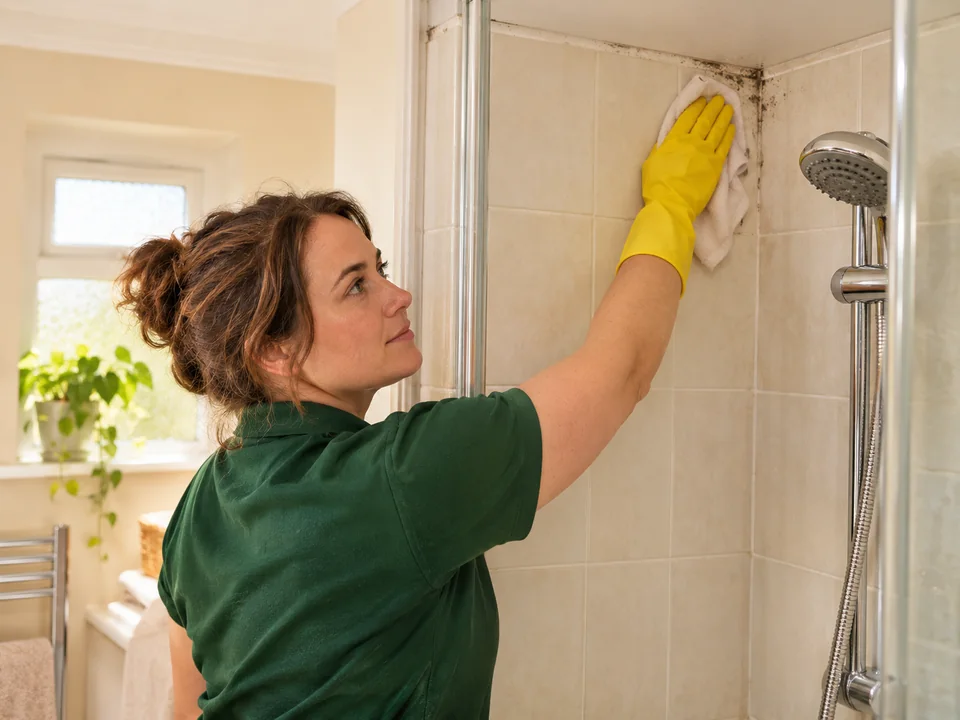
If there is visible mould along a hallway skirting, near the front door or on an accessible hard face elsewhere in your Tottenham home, tell us which part you can see and how the area is used. We check the material and access before agreeing to physically remove visible mould from suitable exposed hard surfaces.
Can I enquire from near Bruce Castle Park?
Yes. Give the full N17 postcode and the house or flat number.
Is an inside porch included automatically?
Tell us which face is affected so we can inspect it and agree where to work.
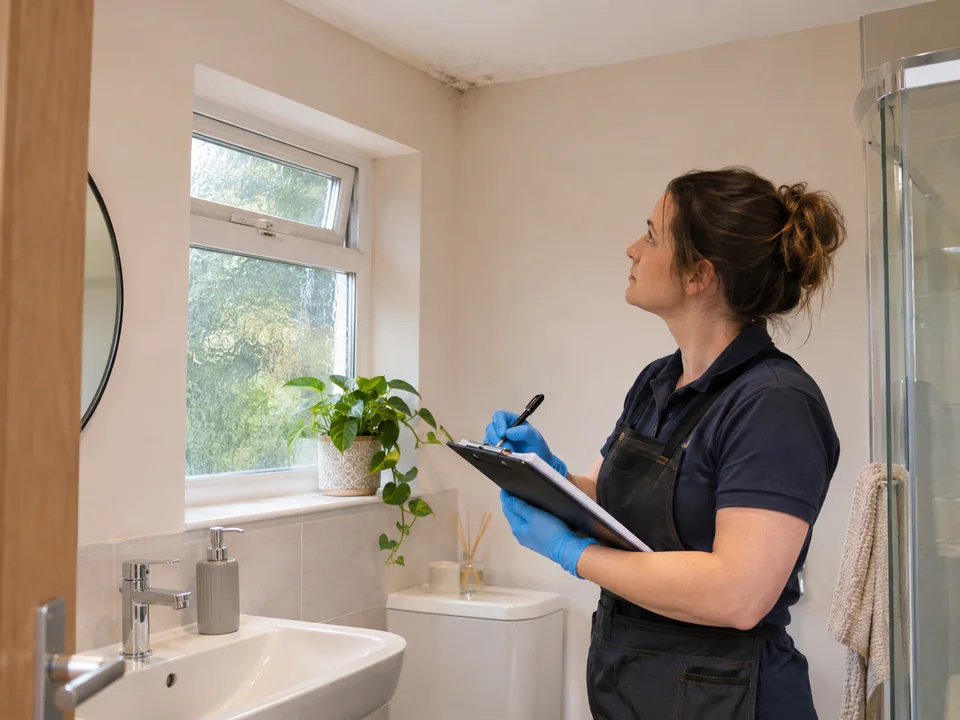
Check the lower wall with the front door open and closed
At a front door we check which hard faces become visible when the door is open and which remain visible when it is closed. A mark can run along an exposed skirting face then disappear behind the frame or below a fitting. We inspect those junctions as separate parts and agree the accessible hard surface we can clean. Once the working position is prepared, we physically remove visible mould from the agreed area. We return to the doorway at handover and show where the work ended, using the fixed edge of the frame or skirting as the reference.
Haringey's published planning documents identify Bruce Castle Park near the Bruce Castle Conservation Area and note adjacent Peabody Cottages. If you live near this part of Tottenham, tell us the residential door rather than using the park or a wider street junction to identify the property. A home may face one street while visitors normally walk round to another side. Provide the house or flat number and the preferred route from the street. If a porch or corridor is shared, tell us who has the authority to give access to the area where you have seen the marks.
We look at whether the floor space beside the door lets us reach the affected face while leaving the installation in place. At a narrow entrance the return near the threshold may be visible but hard to reach past an open door. We assess the usable angle and prepare the part that can actually be worked on. At review we point out the area cleaned and identify the joint where the mark continued beyond reach. If a stain is visible on a different finish above the skirting, we check that finish separately before agreeing whether any work is suitable there.
If the first sign was visible only after an item was moved, give its usual position as well as its current one. A shoe bench set just inside the doorway may leave a useful gap on one side while blocking approach on the other. We can look at the exposed area when you show us around and explain how much free space we need to work. Leave fixed fittings where they are and tell us if any belongings are too heavy to move safely.
If you have a doorbell camera or intercom, tell us where to wait for someone to answer. Arrangements for admitting visitors are particularly useful when we will look at a surface either side of more than one door. Keep the normal route available so we can see how the entrance works.
- Give the genuine entrance and name the door nearest the mark.
- Say if a fixed mat covers part of the floor or threshold.
- Mention usual arrival times if the route is shared.
| Entrance detail | What it helps us check |
|---|---|
| Second door inside a porch | Which leaf blocks the visible face |
| One shared corridor | Who can authorise access and when |
| Fixed mat well | Whether an affected lip can be reached |
Look at the lower edge and the finish above it as separate areas
At an entrance the end of a skirting board may meet plaster, a painted casing or a hard threshold runner. We stand where you first saw the patch and look at the materials individually. Tell us if part of the finish has been replaced, patched or painted over. The visible condition may differ across the join. We check whether a hard face is sound enough to be worked on and whether it remains accessible with the door used normally. A view taken straight down at the floor can help distinguish between the top of the skirting and the base of the wall.
When a wall has a narrow ledge above the floor, we may need to look at the vertical face and the top edge individually. One area may be obstructed by cable housing or a small doorstop. We explain how close we can get with those fittings in place and where we would need to stop. Show us the position of any already loose piece rather than removing it for the visit. We can identify where its condition affects the work and discuss the neighbouring face independently if it has visible mould.
In some homes it is easier to talk through the entrance from the hall, even if the marking is on the side facing the porch. We can look from both viewpoints and establish where the door works normally. Where the lower surface is hidden by a draught strip or hinge, we can agree an ordinary working boundary. If you have been unable to see a marking except at a certain angle, point out where to stand. This makes it easier to identify the actual spot rather than cleaning an adjacent edge which happened to be more visible in your picture.
- Name the exposed material separately from its fitting.
- Show the height and width of the affected part.
- Point out where a damaged area begins.

| Visible part | Assessment point |
|---|---|
| Lower painted casing | Condition of the finish and reach around the door |
| Step riser and floor meeting it | Different hard faces and their common edge |
| Exposed skirting beside cable housing | Last accessible point with the housing fixed |
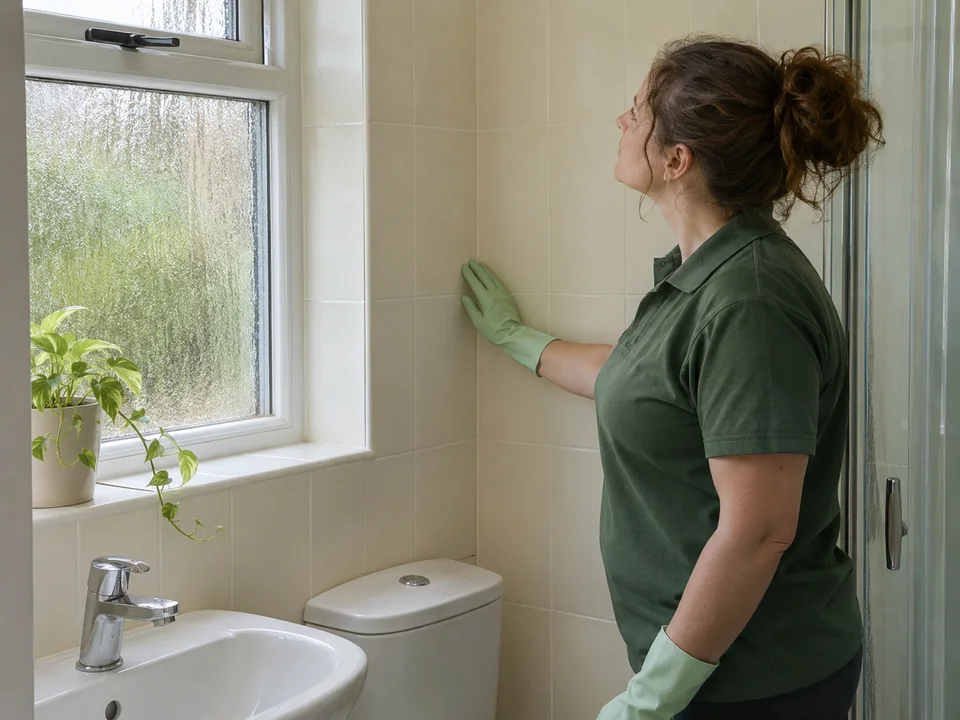
Prepare the position and address the agreed patches
Before work we confirm the eligible faces with you and agree how we will use the space. If the door must stay usable as an exit, we take that into account when deciding how to approach the patch. We prepare the immediate area as agreed and physically remove the visible mould from the suitable exposed hard surfaces. This can cover a limited strip beside the door where the finish looks suitable and can be reached. If a second mark is on a damaged wall lining next to it, we discuss that face independently. It may need separate attention before it can be considered for cleaning.
A long run of skirting can contain short lengths of different age and finish, particularly around an altered doorway. We check the part you asked us about before beginning and watch for a change in condition where the mould mark crosses an edge. If an old join opens or a soft area becomes visible, we stop where the sound surface ends and explain why. Agree who we can speak to about a practical change if the person making the booking will be out. It is easier to show a narrow boundary at the property than to describe its position afterwards.
If the entrance opens into a stair landing, tell us which way you prefer to come to the work area to see the assessment. We can talk through the figures for access in practical terms, such as how far the door can open and where the ordinary standing surface begins. For a patch beyond a turn, an extra image from the farther end is useful. We use the assessment to decide on the accessible position, then keep the work within the area you have agreed.
- Check the boundaries before we start.
- Tell us who can confirm a change on the day.
- Let us know if another resident needs the nearest door at a set time.
Use the doorway as a reference during the final review
When the work is finished, we show you where we addressed the visible mould and where a hard face had to be left. We can describe the result relative to the hinge, threshold or nearest edge of the frame, so you can direct someone else to the same spot. Remaining discolouration may be visible in a different way when the door is open. Look from the angle you used in the first photo with us if there is enough space. If we identified a condition issue next to an area we worked on, we point to its position separately.
An entrance opens onto different conditions at different times of the day. If you notice fresh marking or moisture later, record the date and whether you saw it on the inside face, the outer face or a surface immediately beside the doorway. This is useful when contacting the person responsible for the property. If a fitting was already loose or the adjoining finish was damaged, include that observation. We can discuss an enquiry for another accessible patch or reassess the original area if its condition changes.
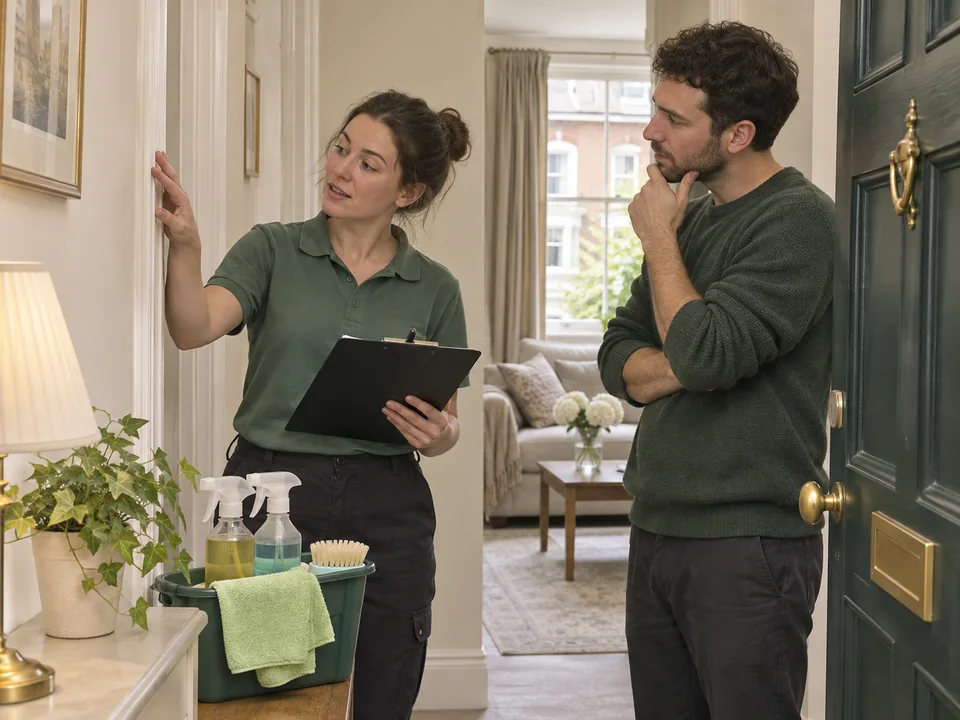
At handover we look along the base of the wall again with the door in the position used during cleaning. We show which exposed hard lengths were treated and where the surface changed into a join, frame or covering. If the visible mark extends under a fitted item, we point out the last reachable part. This gives the resident a clear location to check, even if shoes or coats are later returned to the entrance.
Where the visit was arranged after a previous inspection, keep the inspector's location note with your new description. It may use the exterior elevation while your photo was taken from inside. We can check together that both refer to the same opening. A resident taking over the handover should know which view to use, especially if the next report needs to distinguish two small patches which appear close in a wide photograph.
| Handover point | Useful reference |
|---|---|
| Worked-on strip | Door position and nearest fitting |
| Part left owing to access | Edge where clear working space ended |
| Condition concern | Name the surface and any joint beside it |
Questions about arranging mould removal
What if the front door always swings over the affected spot?
Tell us which position usually exposes it. We assess how the face can be reached with the door operating normally.
Can you remove an entrance mat set into the floor?
Tell us whether it lifts as part of normal use. We first consider the faces already exposed and discuss any additional access.
Can I ask about an entry beyond the address shown on a delivery app?
Send the actual postal address and give the residential approach you use for visitors.
Can a neighbour provide access to the shared porch?
Confirm who is authorised to allow the work and who can show us the faces in question.
Does a skirting cover count as part of the same surface?
Show us the cover and any joins. We check the visible finish and condition of each part.
Will I know where to take a follow-up picture?
During the handover we can point out the face and nearest fitting so you can return to the same view.
Other Cleaning Services in Tottenham
Mould removal service details, Arrange recurring household cleaning
Discuss your mould removal enquiry
Mould Removal Prices in Tottenham
Tell us which rooms are affected, the approximate size of the visible patch and what surface it is on.
Get a Quote