 Housekeeper
Mould Removal in Palmers Green
We take the address, room and exposed material when you enquire about mould removal in Palmers Green. If belongings, an earlier repair or a fitted feature conceal part of the affected area, we discuss the visible boundary before agreeing work.
Plan your enquiry
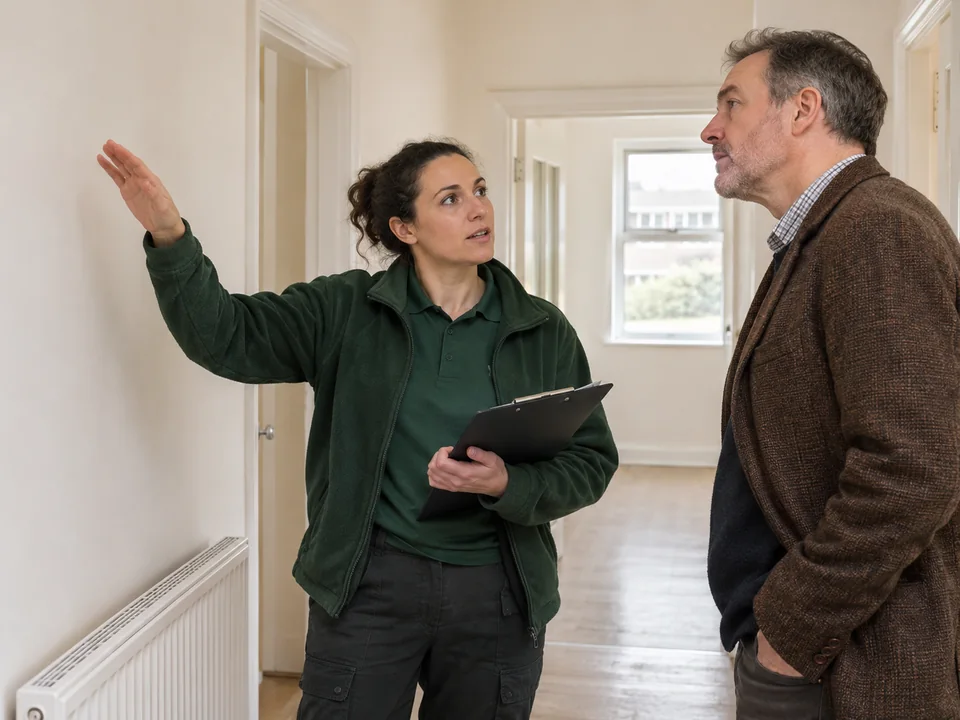
Which address details help near Broomfield Lane?
Supply the full N13 postcode and the door that leads to the room. Add the dwelling number and any steps.
Can you consider a wall after furniture has been moved?
Tell us what is newly exposed and which finish remains covered.
Inspect the exposed wall along the old furniture line
When a unit is moved, the part of the wall exposed behind it can look different from the rest of the room. We examine the affected position in the space that is now available, looking at the face near the floor and following the mark to the height where it stops or meets a seam. If a suitable hard surface is reachable, we agree which part to clean and prepare enough room to do the work. At handover, we show the result against features that will still be visible once the furniture is returned.
We check each edge of the former furniture position separately. A mark on a hard lower panel can call for a different decision from the paint or paper above it. We look at the condition of both materials, then agree which accessible face can be cleaned. We can work on the suitable hard section up to the join. At the end we show you the join and identify any marked face that needs separate attention before the arrangement of the room changes again.
Identify who will be available to show us the room. Where the original information comes from a different resident or property contact, share the position and finish labels ahead of the visit. This helps us check the proposed assessment against the actual room and circumstances.
Tell us if just one edge of the former furniture line is affected rather than the full area it covered. Use the height of a skirting, a shelf or another fixed point to describe the location. A sketch of the wall can help if the picture does not show the whole surface. We use the record to check which area can actually be viewed at the assessment and whether you can show the surrounding finish.
- State which area has become visible and what still conceals the rest.
- Label current and earlier photos with date and room.
- Name the person who can provide access and explain the layout.
Set the route for an N13 property visit
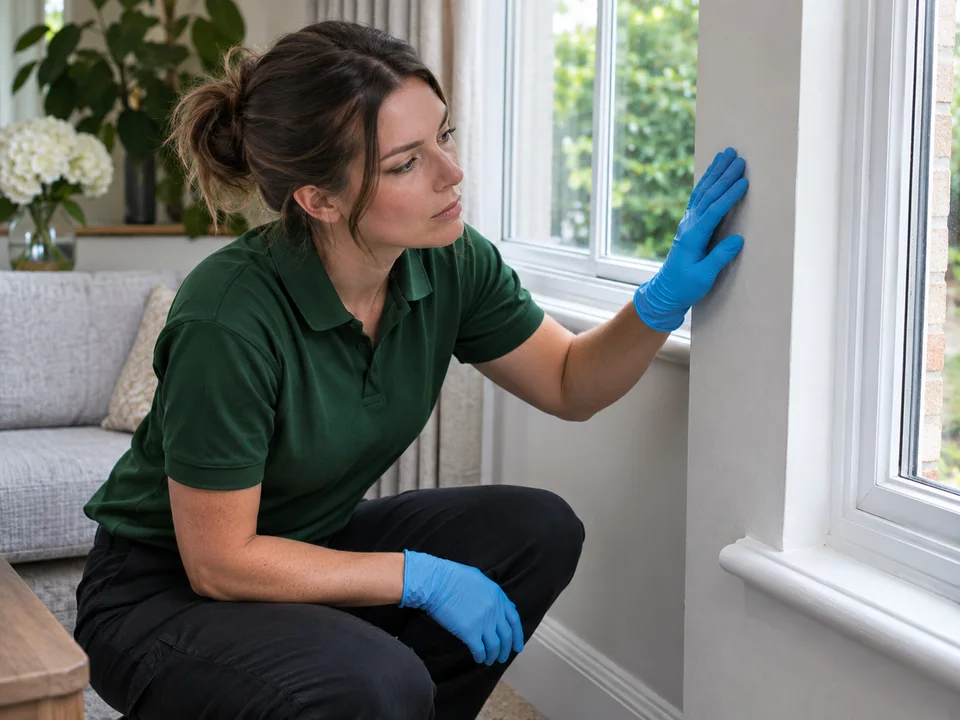
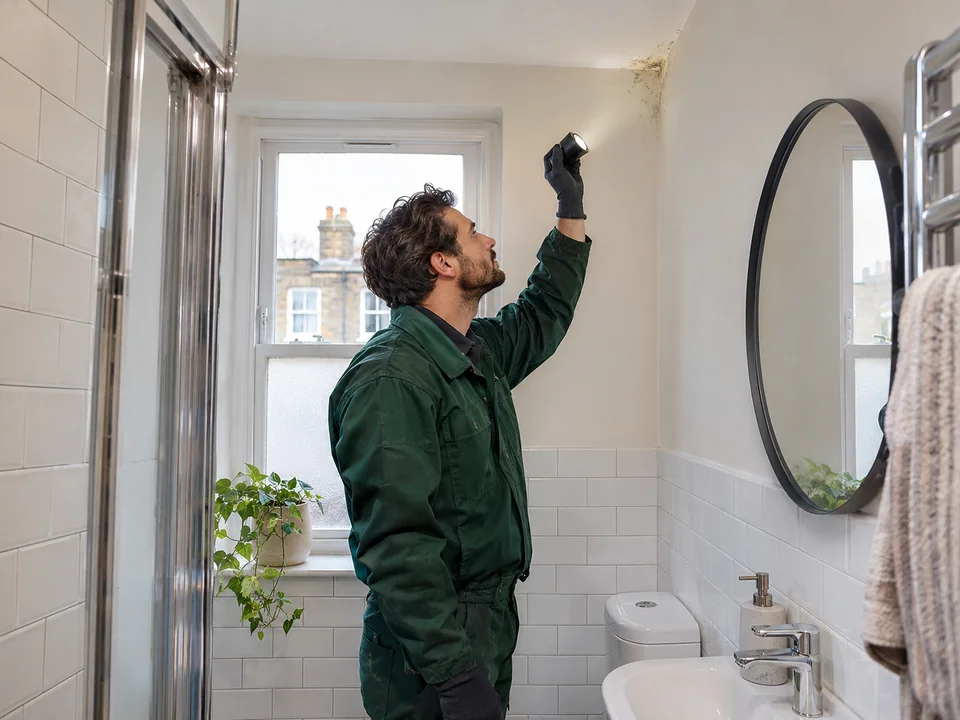
Enfield Council lists the Palmers Green Library on Broomfield Lane in N13. If your property is nearby, give us the full address, door and dwelling number. A reference to Broomfield Lane or a local landmark does not necessarily identify the approach. If the entrance to the relevant room is through a lower level or along the side of the house, let us know how that approach can be provided. A shared entrance or separate landing can need its own contact even when an occupant can open the flat.
When the wall is opened up for the visit, we check whether there is enough space to work along its full exposed length. A corner can still be difficult to reach even though the centre is clear. We prepare the accessible space and remove visible mould from the agreed suitable hard faces. We then point out which section we reached and any remaining edge near an item that stayed in place.
| Access detail | What we ask for | What it establishes |
|---|---|---|
| Address | Complete N13 postcode and dwelling number | Correct property |
| Door and route | Entrance, stairs and approach to room | Permission and practical access |
| Keyholder | Name, timing and return arrangements | Who can make the room available |
Assess material changes across the exposed wall
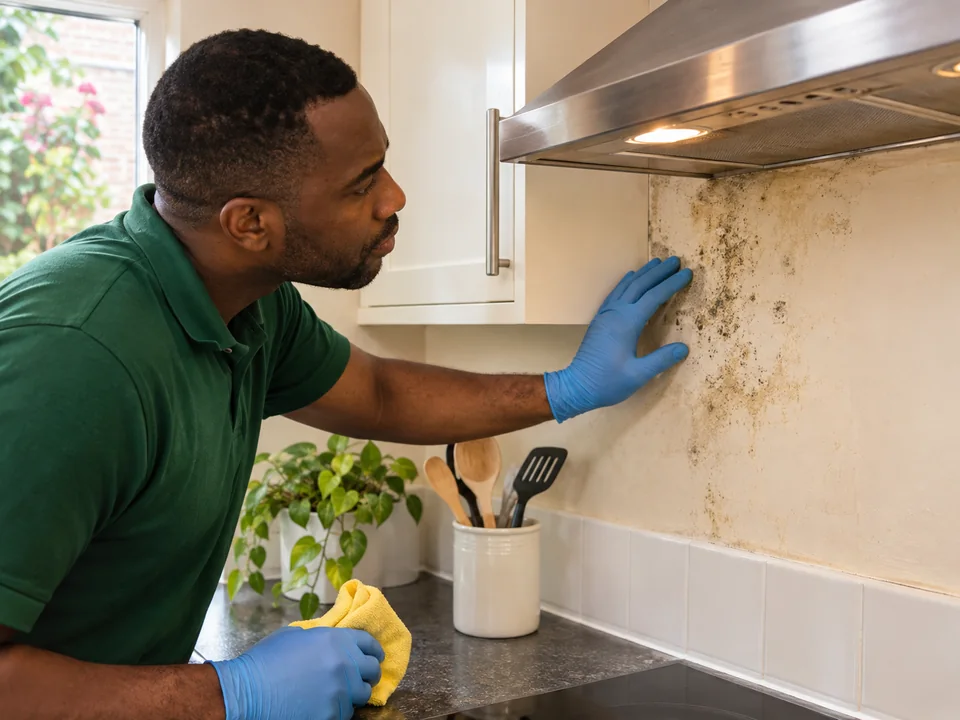
We assess the visible finish and the extent of the reported position. Where a wall shows a hard surface beside an older coating or lining, describe both and where they meet. If part of the finish appears raised, damaged or porous, we identify it separately. A piece of furniture might have concealed several materials that look alike from a distance. Tell us what can actually be seen rather than assuming the whole wall can be treated in the same way. We consider the exposed position and identify any material or access issue that needs another decision.
If a nearby area has been painted or repaired, record when that happened and where the previous work ended. We review the present marks alongside relevant records. If the current visible area extends beyond an earlier repair, give both locations without assuming that repair explains everything observed. A separate property decision can remain open while a suitable hard finish is considered. We discuss the material, visible condition and boundary of what an assessment can establish before agreeing treatment.
The exposed wall could have a differently painted section where an earlier fitting stood. If a second finish was revealed, describe its appearance and the point where it meets the rest of the wall. We can discuss which part is a suitable hard face and which part should be left for further consideration. Where an earlier alteration is known, give the date and location without assuming that it determined the current condition.
| Visible feature | What we review | Decision for the proposed visit |
|---|---|---|
| Newly exposed hard face | Material, accessible size and present condition | Whether visible surface work can be agreed |
| Damaged or porous section | Position of the affected finish and visible edges | Any separate assessment before treatment |
| Portion still concealed | Which part can be seen and what blocks it | Information or access needed for a later decision |
Agree preparation around furniture and use of the room
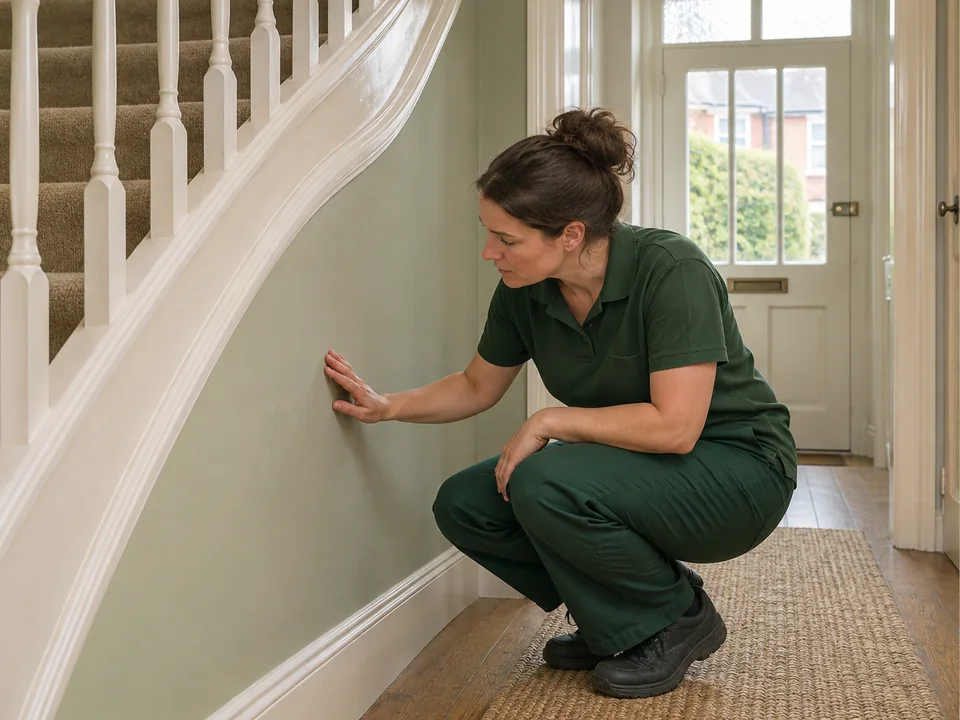
We ask what must remain in place and how an attendee can reach the named surface. If a wardrobe or fitted unit stays where it is, discuss which part of the wall is accessible around it. If a free-standing object is to be moved before the appointment, confirm who can do that and what area it will expose. Where the route to the affected part stays in use by other residents, explain the room and timing constraints. We discuss practical preparation after the visible surfaces and type of visit have been considered.
Tell us if a separate appointment will alter access or the finish. A room can look different after furniture is replaced or another trade opens part of a fitted area. We discuss the proposed conditions in advance, so the person attending does not discover that the named surface cannot be reached after all. Agree a contact who can answer questions about what stays in place. We identify any preparation that depends on that person and record what can be done under the access arrangements available.
If the room will be rearranged only for a short period, confirm when the wall will be reachable and which person will be present. We can discuss room preparation that fits the available access. If something has to go back before the visit, tell us which part of the finish becomes concealed again. We keep the original photograph as background rather than relying on it as evidence of what we can reach on the day.
- Explain which items stay fixed and which can be moved with permission.
- Tell us how much of the wall will be exposed at the agreed time.
- Confirm the contact for any changes in preparation.
Clean the agreed hard finish and review the accessible area
We check the named hard surfaces and agreed preparation when the room is made available. We physically remove visible mould from suitable accessible hard surfaces included in the work. If the mark continues onto a different material or behind an object, we discuss that as a separate point before changing the agreed work. We focus on the position and finish assessed as suitable. We keep any concealed or unsuitable area outside the treatment so the property contact can distinguish it from the work on the exposed hard face.
After cleaning we review the accessible work. We identify the finishes treated and explain whether any area remains unavailable or needs further consideration. We discuss aftercare for the cleaned surfaces and clarify any separate property concern for the responsible contact. A handover that names the finish and boundary is especially useful when furniture will return to the same place. Keep those room labels and the original measurements so that a later observation can be compared with the area that was actually treated.
We note the treated area in relation to the available room layout. Where a piece of furniture is due to be returned to its earlier position, the named boundary matters because it may not be visible after that point. In the handover we distinguish the hard face we cleaned from the adjoining positions that had a different finish or were not agreed for work. We can give practical aftercare information for the treated surface and direct separate property questions to the responsible contact.
| Stage | What we do | Handover record |
|---|---|---|
| Preparation | Confirm the room and suitable accessible finishes | Named areas and limits |
| Cleaning | Physically remove visible mould from agreed hard surfaces | Position and finish treated |
| Review | Check the work and discuss aftercare | Excluded area and any separate question or contact |
Discuss the price and the plan for returning the room to use
We discuss the price against the named room, visible condition and access. Ask which surfaces are included and whether the appointment is an assessment or agreed work. If you receive a proposal before an area is exposed, tell us when you expect that access to change. We can discuss what can be arranged under the present conditions and which point should be reviewed later. Let us know if the person who can accept the price will not attend, then confirm who may show the surfaces and receive the outcome.
If you are planning a regular housekeeping visit or a separate carpet or upholstery clean, give those areas and items their own descriptions. Tell us when each room will be available and whether another appointment affects access. We discuss those cleaning tasks independently from the work on the agreed hard surfaces. If you are preparing a room for use after other work, note the target date so we can consider the sequence. Keep records of the surface assessment and the additional cleaning arrangements separate so the person meeting us knows which tasks belong to each visit.
- Confirm what the quote covers and which area needs a separate decision.
- Provide an independent list for any later carpet or housekeeping work.
- Confirm the contacts for access, acceptance and handover.
Questions about arranging mould removal
Is the library near Broomfield Lane enough of an address reference?
It can help orient the enquiry, but give the exact N13 dwelling address and entrance for the visit.
What do you need if a wardrobe has just been moved?
Tell us which wall or part of it is newly exposed, what finish is visible and whether the wardrobe will be in the same place at the visit.
Can you assess a wall with both a hard face and a damaged lining?
We consider the exposed finishes separately and discuss what is suitable for cleaning before agreeing work.
What cleaning do you carry out on the accessible finish?
We physically remove visible mould from the suitable hard surfaces agreed for the visit and review those areas afterwards.
Who should agree preparation if I cannot move anything myself?
Identify who controls the room or belongings. We discuss what remains in place and confirm what access can be arranged.
What should I keep from the review if furniture is going back?
Keep the named room, finish and boundary of the treated area. Record any adjoining or concealed part that still needs its own decision.
Other Cleaning Services in Palmers Green
London mould removal enquiries, Regular housekeeping, Carpet and upholstery cleaning
Discuss your mould removal enquiry
Mould Removal Prices in Palmers Green
Tell us which rooms are affected, the approximate size of the visible patch and what surface it is on.
Get a Quote