 Housekeeper
Mould Removal in Holland Park
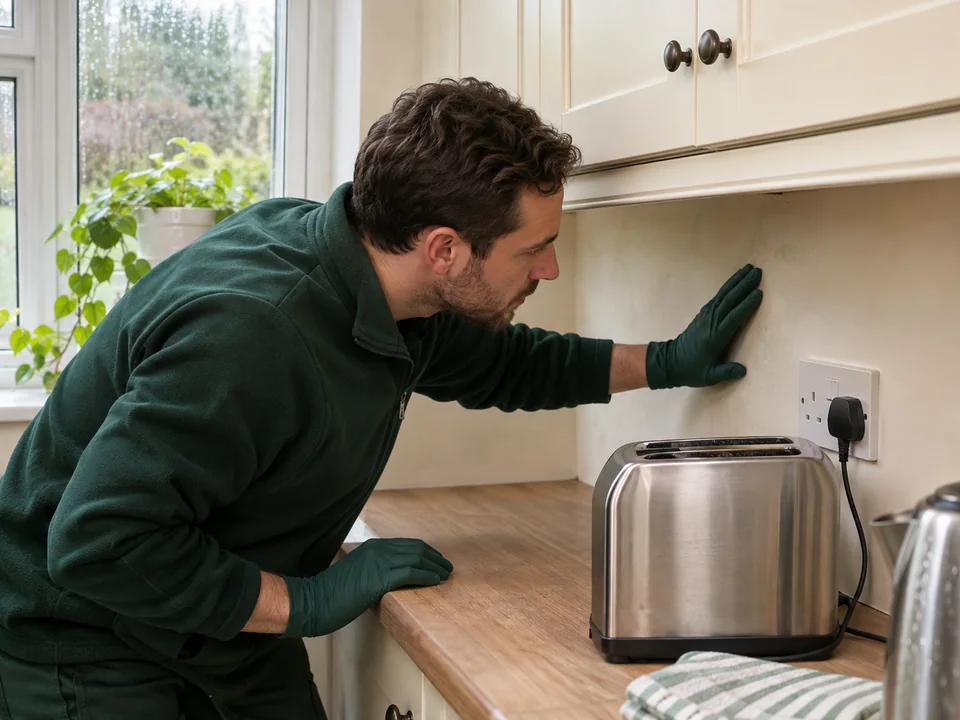
A plaster return beside a tall window and a sound tiled wall need different decisions even when the marks look similar. When you ask about mould removal in Holland Park, we start with the finish, the access and how the affected area has changed. We use that information to discuss an assessment and the visible surfaces that may be suitable for cleaning.
What should I give you for a W11 or W14 enquiry?
Send the full postcode, floor and entry details. A room photo helps show the height and access.
Do tall ceilings change the visit?
They can. We discuss safe reach and obstructions before agreeing an area for cleaning.
Getting the right property and the right room
Start your enquiry with the full postal address, including the flat number and the entrance you use. The Royal Borough's Holland Park conservation appraisal documents several forms of housing, including villas and mansion flats. We do not infer your room arrangement from the street. A side entrance in a subdivided house and a shared entrance in a block give us different access information. If a property has more than one route in, tell us which is available for the visit and whether a porter, agent or occupier will meet us.
We ask for the room, affected surface and a rough description of where the mark sits. A wide photograph from floor level often helps us understand what has to be reached. Add a closer picture if you can take it without climbing or disturbing the finish. For example, a patch over the lower part of a window looks different from one running along a tall ceiling return when seen within the room. We ask how recently you noticed it, if it has come back and if building work or a leak preceded it.
If you are enquiring for someone else, tell us who can describe what they saw and who can agree any proposed work. A managing agent may know when a contractor attended while the occupier knows when the wall last appeared dry. We ask for both parts if they affect the visit. Give us one contact to confirm the appointment and another only if access is handled separately.
- Give the full postcode and the entrance available for the visit.
- Name the room, finish and approximate position of each mark.
- Say who can discuss the history and agree the work.
What we look at before agreeing cleaning
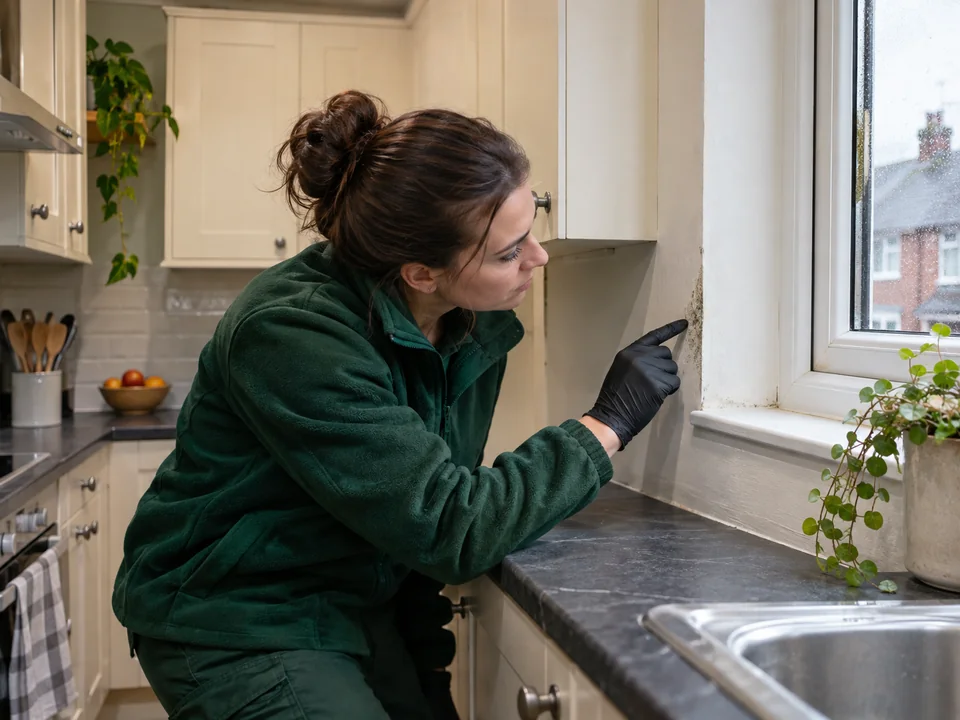
On an agreed assessment visit we look at the visible affected area and distinguish the different surfaces next to it. A hard painted finish, the edge of patterned wallpaper and a loose section of plaster are separate decisions. We look for obvious damage to what can be seen and ask if there is a continuing moisture concern. Our assessment for cleaning is concerned with what can be reached and what appears suitable to clean. If the condition suggests another specialist needs to look at the property before that decision, we explain why at this point.
Rooms with more than one mark can be easier to describe by height and orientation. If one mark is below a window and another appears higher near the ceiling, we deal with them as two locations. We note whether furniture, a deep sill or a fixed blind limits access. We tell you which exposed areas can be included and where the condition or access needs to be clarified. That way a quote for one part of the room is not mistaken for an assessment of the whole structure.
A new mark in a recently decorated room may prompt a different conversation from staining that has been present for some time. If a previous contractor has looked at the room, tell us which part they could access and what they said remained to be checked. We can use that information to discuss the proposed cleaning without relying on a photograph as a diagnosis of the material behind a wall.
| Visible area | What we confirm | Possible effect on the visit |
|---|---|---|
| Painted wall beside a sash | Accessible section and condition of finish | Agree the exposed hard surface only |
| Enclosed window recess | Whether trim or fittings prevent access | Review limits before quoting |
| High ceiling return | Safe reach and where work would take place | Assessment may be needed before any cleaning |
Agreeing preparation in occupied and shared properties
Once we know what is being considered, we agree how to prepare the areas we can reach. In an occupied room that may mean arranging a time for the area to be clear and agreeing which loose items can be moved. If furniture is heavy or fitted, we do not assume it can be shifted for the clean. Tell us about curtains, fragile objects and anything that needs to remain in place. We discuss which part of the room is available so you can plan around it without moving items that are unrelated to the work.
For flats reached through a managed entrance, our preparation conversation also includes how to get to the room. Tell us if someone needs to sign in, if there is a designated entrance, and what the property contact expects in communal areas. A common hallway is not automatically part of a flat enquiry. If it is also affected, identify it separately and let us know who can authorise the work there. We confirm where the proposed cleaning starts and ends before any work is agreed.
If you have two affected rooms but can only arrange access to one on the same day, explain the restriction up front. We can discuss whether to assess the second one from the information you can provide or leave it for another appointment. We want the person receiving the visit to know the plan, including any access arrangement that needs to be kept free while we are in the property.
- Agree what can be moved and identify anything fitted or fragile.
- Confirm whether the rooms can be accessed at the same time.
- Check who can authorise work in a shared area.
Cleaning the included hard surfaces
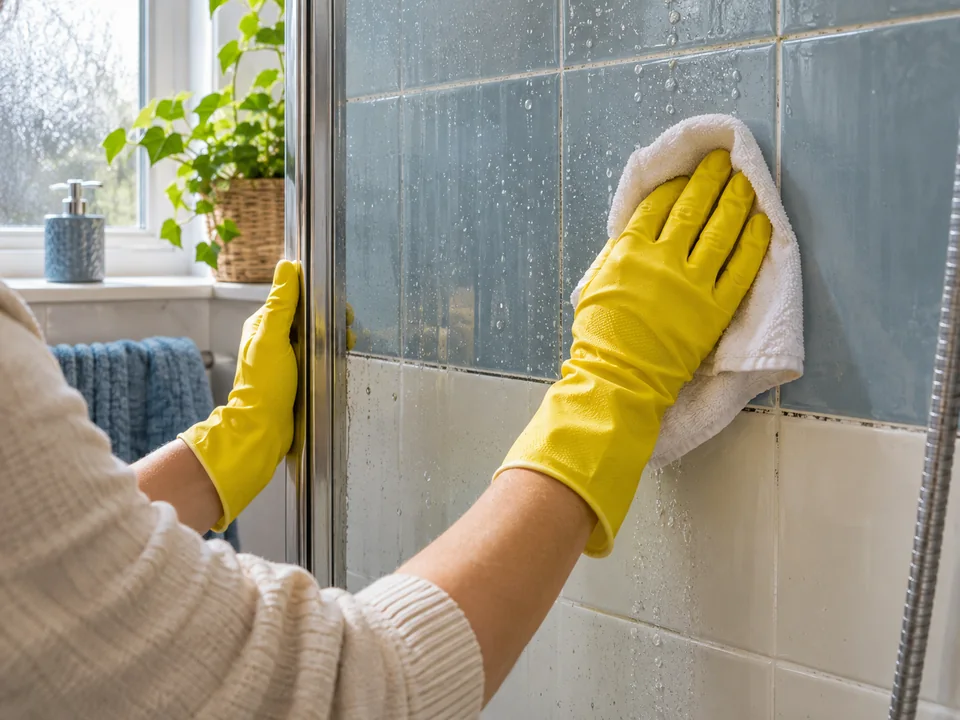
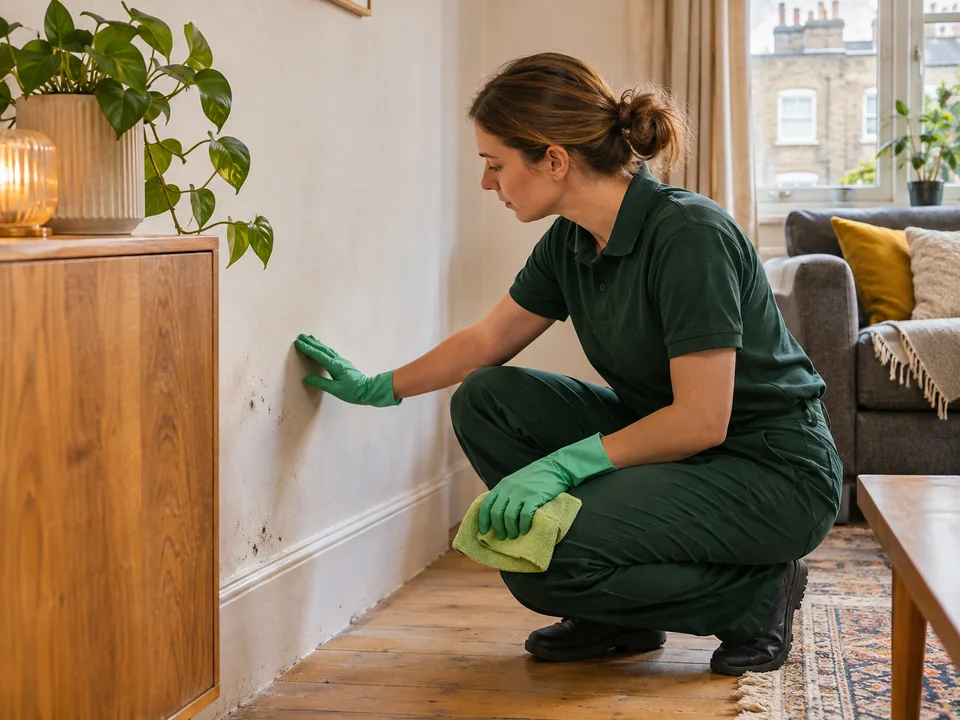
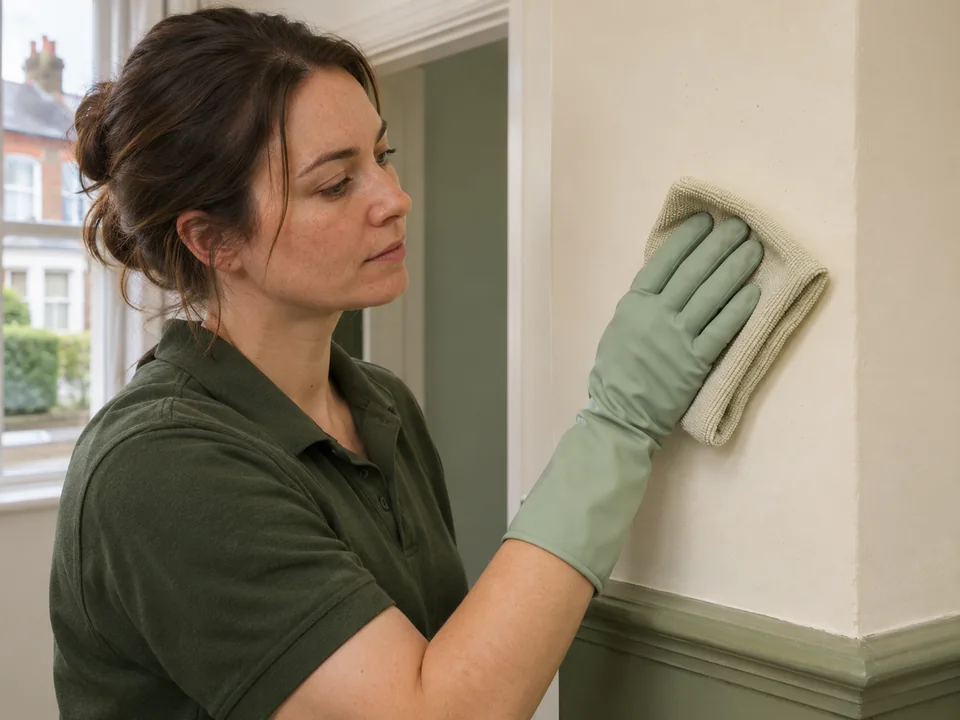
After the assessment and preparation have been agreed, we remove visible mould from the suitable accessible hard surfaces included in the visit. We approach the work according to the finish and the limits we discussed. An accessible hard wall section can be dealt with separately from a loose painted edge or an adjacent porous covering. If the surface appears different when we have a clearer view, we review what can sensibly be done before going further. We keep work on the visible finish separate from any question about concealed material.
We explain where the result depends on the condition of the finish. Removing visible growth does not always return an affected surface to an even colour or undo damage to the material. If something cannot be cleaned as agreed because the plaster is soft, a finish is lifting or part of the affected area cannot be reached, we identify that during the review. The next decision may be an assessment by the property contact rather than further cleaning. We can still explain what was completed on the surfaces that were suitable.
Where the enquiry covers a wall and an adjacent item, we do not treat the two as one surface. Put that distinction into the original description if a window curtain, floor covering or nearby upholstered piece is affected. The focus here is the agreed visible mould on accessible suitable hard surfaces. Discussing other work separately helps you keep any additional quote clear and makes it easier to tell which conditions need attention after our visit.
| Visit stage | Our work | What we record in the handover |
|---|---|---|
| Initial check | Review the visible area and accessible finish | Which parts could be considered |
| Agreed cleaning | Remove visible mould on suitable hard surfaces | Which surfaces were cleaned |
| Review | Discuss remaining marks or access limits | Whether a property assessment is advisable |
The handover and the next property decision
At the end of the agreed visit, we review the included areas with the occupier or nominated contact. We explain what was cleaned and point out areas left undisturbed because of access or surface condition. If someone else needs to decide on repairs or investigate moisture, we keep that recommendation separate from the cleaning outcome. An existing leak, repeatedly damp wall or a concern behind a fitting deserves an appropriate property assessment. Surface cleaning does not resolve why moisture is present.
If the owner will receive the update rather than attend, agree how the key is returned and who needs the room-by-room information. Where a maintenance visit is already planned, the distinction between an intact area that was cleaned and a damaged area left for assessment helps everyone understand the order of work. Ask for any separate appointments to be discussed on their own terms so you know which work each person is due to carry out.
If the finish is part of a decorative feature, let us know who can make decisions about it before we start. We can describe the accessible surface and what cleaning was possible. We leave decisions about redecoration or replacement with the person responsible for the property. For a painted return beside joinery, record the two parts separately if the next person needs to assess the condition of the wood or the wall.
- Choose who should receive the handover.
- Keep unresolved moisture or structural concerns with the property contact.
- Arrange key return before the visit if nobody will be at home.
Requesting a quote for the areas you want assessed
For a Holland Park quote, give the affected surfaces, their approximate size and the access available. Mention a preferred date and any time the rooms cannot be used for an assessment. We may be able to discuss the likely next step from pictures and your description, or we may need to see the affected room before confirming cleaning. We agree what is included and explain any separately priced work before the visit is confirmed.
If your enquiry combines mould-affected surfaces with routine housekeeping, keep the task lists separate. For example, a cleaner can discuss your normal routine for accessible fixtures while the mould enquiry covers a specific wall or window return requiring assessment. If you need an oven cleaned as well, give the appliance details when you ask about that separate service. We can then discuss how to arrange each piece of work without confusing what is covered by the mould removal quote.
| Information for your quote | Useful detail |
|---|---|
| Access | Floor, entrance, keys and any height or reach concerns |
| Affected finish | Visible surface, material condition and approximate size |
| Work to discuss separately | Repairs, further assessment or additional cleaning visits |
Questions about arranging mould removal
Can you look at a mark inside a deep window recess?
Tell us what part is exposed and whether curtains, a blind or a deep sill limit access. We discuss the safe working position before including the surface.
Can my porter give access to the building?
Tell us the entrance and the building arrangements. Also confirm who opens the flat and who can agree any change to the work.
What if there is wallpaper immediately next to the painted area?
We consider the two finishes separately. We confirm the accessible hard surface and explain if the adjacent covering needs a different assessment.
Should I include a photograph of the whole tall wall?
Yes, a picture from floor level can help us judge the location and access. Add a closer view only if it can be taken without climbing or disturbing anything.
Can you include a shared landing during the same appointment?
Identify the landing separately and ask the property contact who can authorise work there. It can then be discussed alongside your flat enquiry.
What if a maintenance contractor is already due to look at moisture?
Tell us which area they plan to inspect. We can discuss how assessment and any suitable surface cleaning fit around the work already arranged.
Other Cleaning Services in Holland Park
Regular housekeeping in Holland Park, Oven cleaning in Holland Park