 Housekeeper
Mould Removal in Becontree
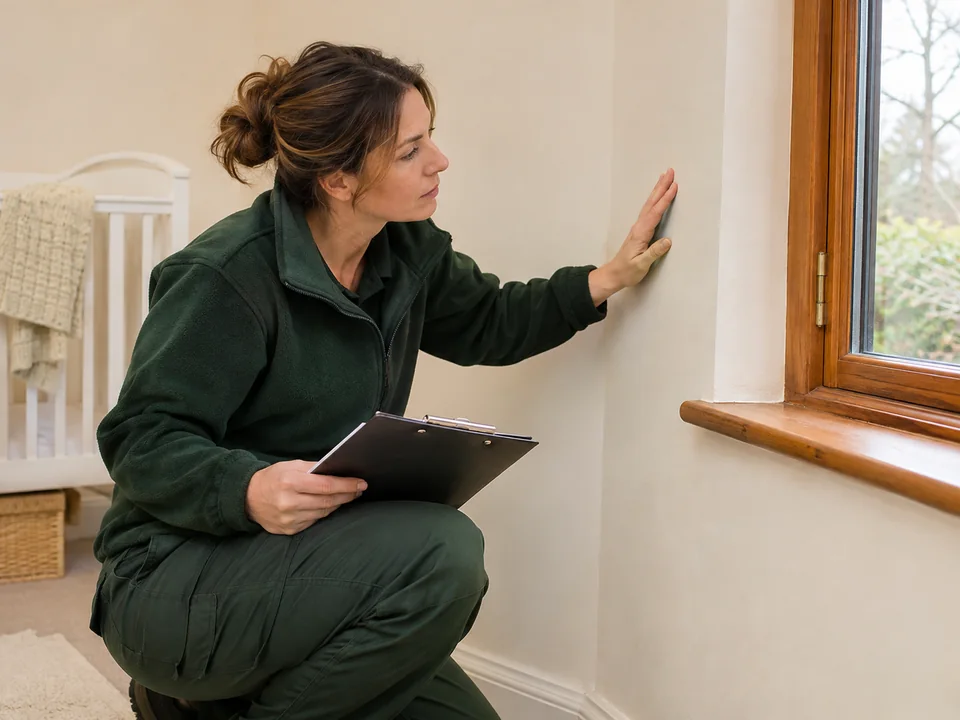
We organise a Becontree mould removal visit around the actual house or flat, the rooms affected and the finishes you want assessed. We look at the accessible areas before agreeing work. Once the working position is prepared, we physically remove visible mould from suitable hard surfaces included in the agreement, review the work and explain any next step that needs a different assessment.
Is RM8 or RM9 enough to arrange a Becontree visit?
Use the full postcode and tell us where to enter the property.
Can I discuss walls on two floors?
Yes. We check the finish, size and reach for each area separately.
Establish the route to a Becontree house or flat
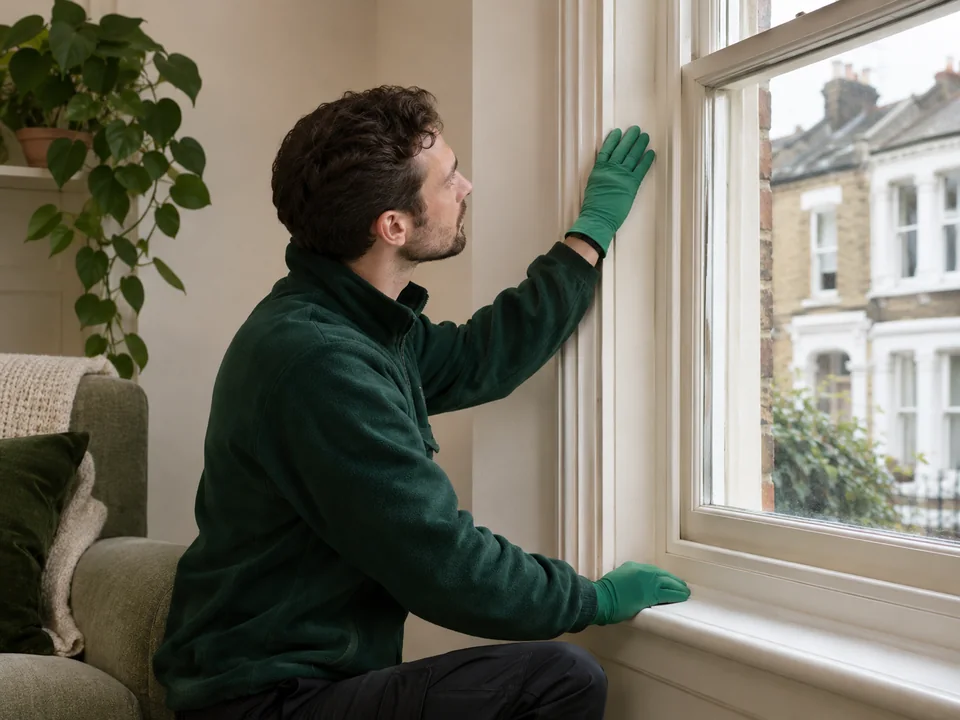
Barking and Dagenham Council's local plan treats the Becontree Estate and Dagenham Heathway within one policy area, while the council's Valence Park information gives Becontree Avenue as its address and Parsloes Park information names Parsloes Avenue and Gale Street. Those landmarks can help place the enquiry. We still use the full postcode, building or house number and the entrance you will open. If the property has a rear or side route, tell us which door is meant to be used and where someone will meet us.
We ask what the route is like after entering. If the affected area is upstairs, below the level of the entrance or around the corner from a shared hall, explain what leads to it. A visible ceiling patch may sit above stairs rather than above a level floor. Tell us where it can be seen and whether a separate person has to make that position available. We use those details to discuss how the affected finish can be assessed.
If the visit is going through a landlord or another representative, we confirm who can open the property. If the room is used by someone else, give the times when they can make it available and let them know which location we are being asked to see. We keep the surface label with the entrance details so whoever meets us can confirm the same affected position.
- We record the address and the entrance you will make available.
- We check how to reach the relevant floor and surface.
- We identify the contact who can show the room.
| Access point | What we check |
|---|---|
| Outside the property | Full address, visitor entrance and keyholder |
| Route to the surface | Which floor, rooms and doors are involved |
| Position for assessment | What can be seen and reached without further access |
| Approval | Who can agree changes if the position differs |
Take the visible location and the condition of the finish
We ask for the room, position on the wall or ceiling and the approximate size of the visible mould. If the marks sit near a window or next to furniture, tell us which side is affected. When more than one finish is involved, describe the difference and say where the marks cross the join. We collect those details so we can explain whether there is enough information to discuss the work or whether an assessment of the accessible area should come first.
If photos are available, we ask for one wide view that identifies the location and one closer view that shows the visible condition where it is safe to take it. We use the wider shot to understand how to approach the surface rather than judging a whole room from a close image. If a section sits behind a fixture or you cannot reach a position to photograph it, tell us what can be seen. We can then discuss which part has to be considered separately.
Tell us if the area was reported before or if there has been a change to the room. We ask about the present visible condition and any confirmed dates for work that affected it. We record the known history alongside the room information. That allows us to discuss visible work while identifying anything that still needs to be addressed by the person responsible for the building.
- We identify each affected surface and estimate of visible area.
- We consider which parts can be seen or assessed.
- We record previous changes relevant to the position.
Agree suitable accessible faces before preparation
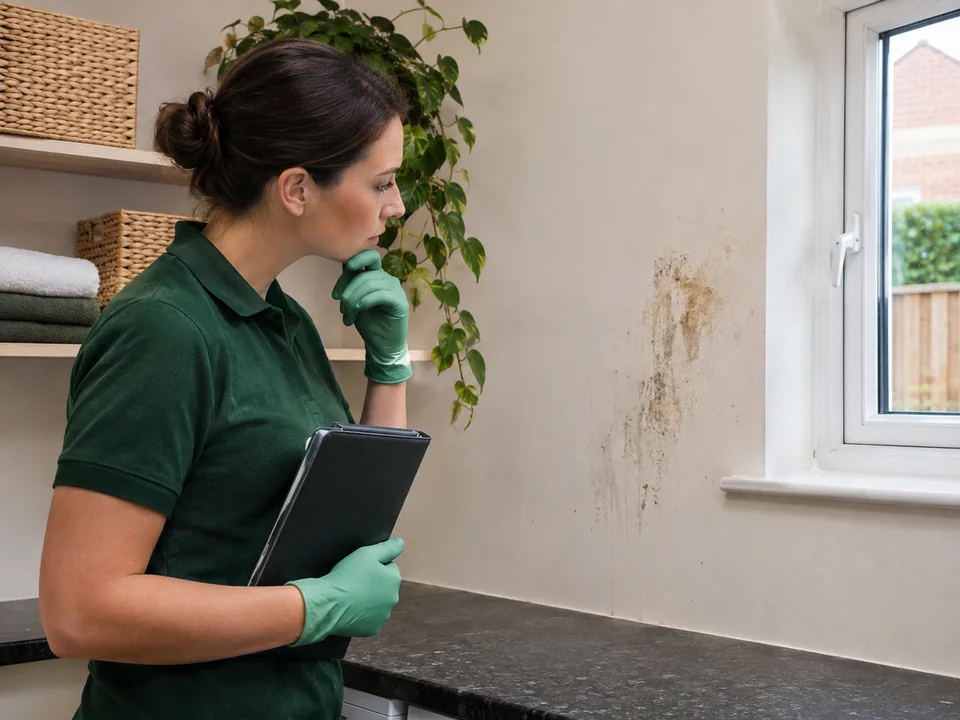
At the property we assess what is visible and accessible. We consider the condition of the finish and identify where the material changes. A sound hard face beside a damaged or loose covering can need a different decision from the covering itself. We agree which visible hard areas can be cleaned and explain where a separate assessment is needed. This prevents ambiguity if the marks extend across more than one type of surface in the same place.
We check the available working position before committing to the work. A high face, one beyond furniture or one in a room that cannot remain available may limit what can be agreed. We review the way to the area and discuss whether anything has changed since the quote was first considered. If an extra position is visible, we discuss it with the person who can approve it before preparing the room.
Where an underlying property question remains open, we explain what details may need to reach the responsible contact. We identify the affected finish and position that we can see. Investigation of concealed material or an unresolved cause of moisture is considered separately from the visible clean. We can state which part of the enquiry remains for another assessment.
| What can be seen | Our assessment | Possible agreement |
|---|---|---|
| Sound hard surface | Visible extent, condition and reach | Which accessible section can be cleaned |
| Different or damaged adjoining finish | Where it begins and whether it can be seen | If another decision is needed before work |
| Blocked area beside a fitting | What remains available without moving it | Whether a separate arrangement is required |
| High or awkward position | Where there is a usable working location | Which places can safely be included |
Prepare around the agreed area and physically remove visible mould
After we agree which suitable surfaces are included, we prepare the immediate position. We clarify which items can stay where they are and how to reach the area for the duration of the work. If an adjoining route is needed by a resident at a specific time, we discuss that before starting. We confirm the boundary around the actual finish and mark so it is clear which parts have been agreed.
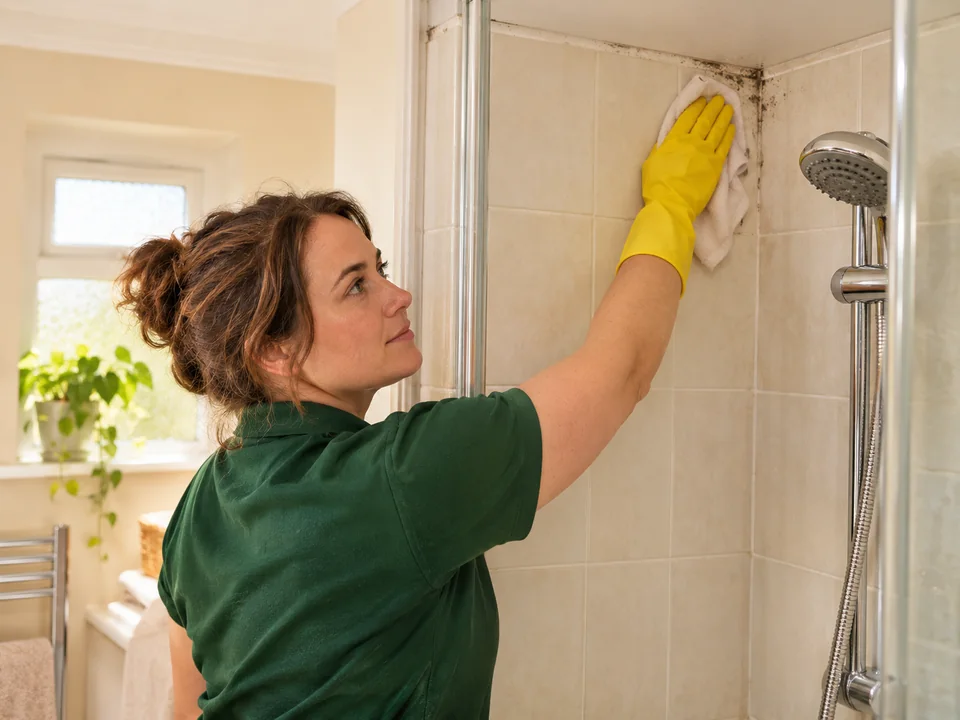
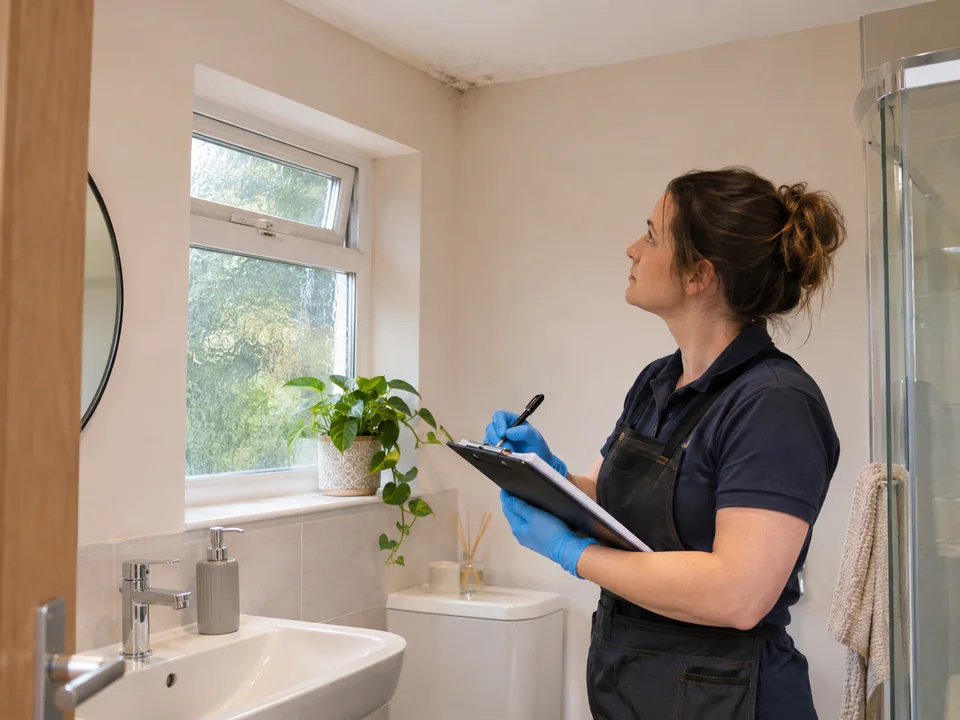
We physically remove visible mould from the suitable accessible hard surfaces included in the visit. We keep to the areas agreed in advance and review the visible result afterwards. If part of the finish differs or a section has become inaccessible, we identify the difference and discuss what needs to be decided. We confirm any change to the work with the authorised contact before including a different finish or location.
Once the agreed areas are cleaned, we use the work description to distinguish each cleaned face from adjoining material. This is useful in a home that needs several items considered, because surfaces next to each other may have different work limits. We identify anything additional that remains an enquiry and explain what preparation or assessment would need to happen before it is considered.
- We prepare the working position after confirming what is suitable.
- We physically remove visible mould from the accessible hard faces agreed.
- We review the work and confirm any surface that remained outside it.
Hand the result back to the occupier or property contact
We review the areas cleaned with the customer or their contact. Tell us who should receive the outcome if the person who made the original call cannot be there. We identify which surfaces were included, which places could not be reached and what remains a separate question. By describing the work in the same room terms used at the outset, we make it easier for another person to identify the area afterwards.
If another assessment is pending, keep any known repair records or photographs with the room and surface description. We explain where our visible work ended and identify the material or place still needing another decision. If a new patch is reported later, say where it has appeared and how it differs from the area already treated. We can discuss the latest description and who now manages access.
Use the booking page to prepare your full Becontree address, affected rooms and access details before you call. If you are also asking about routine cleaning, give that work list separately and tell us when each room can be made available. The office can discuss the arrangements and what should be confirmed before you agree either visit.
| Handover detail | What we confirm |
|---|---|
| Cleaned surface | The actual room location and finish included |
| Limits | Anything outside the agreed work |
| Property question | What still needs another assessment or responsible person |
| Other service | What needs to be agreed separately |
Tell us about changes before a date is finalised
If an additional room is now available or the position of a fixture has changed, tell the office before the appointment is confirmed. We check whether the newly visible area can be assessed and who can authorise a change. A revised room list can help people who will be present on the day identify which hard surfaces were originally agreed and which need further discussion.
When part of a room has been cleared by someone else before we arrive, we consider the newly visible material independently. Tell us what moved and which part of the original surface is still accessible. We check the condition and view before deciding whether the newly exposed face can be considered. If there is still an obstruction, we confirm which position the visit can cover and which area needs further arrangements.
If a new person is arranging access, we check that they can show the same room and agree the timing. A keyholder may be able to open the front door without control over another locked space. We establish which other rooms can be made available and discuss the outcome that should go back to the person arranging the work. Give the keyholder the surface description so they can find the area you reported.
For a separate cleaning appointment, we keep a distinct list of the areas being considered and explain if timing needs to change. A room that cannot be accessed for one visit may be made available later, but the office needs to know who can open it and what the new timing affects. We confirm these details against the agreed area before preparing the surface.
If a room was recently redecorated, preserve the distinction between a mark on the present visible finish and an earlier record of the old one. We ask which photographs describe each stage. At handover we refer to the present surface and explain any additional decision that the customer needs to discuss with a property contact.
That makes the work easier to identify afterwards.
Questions about arranging mould removal
What helps you find a house near Parsloes Avenue if its entrance is on another route?
Give the full address and identify the visitor entrance separately. Tell us who will open the correct door.
Can you consider an area at one end of a high stair wall?
Describe the height and where there is a clear position to see the area. We check the available access before agreeing work.
What if two residents have visible marks in separate rooms?
We record the surfaces separately and check how both rooms can be made available. Confirm which contact will approve work.
Can I ask about a surface beside a loose finish?
We assess what is visible and consider the finishes individually. We agree suitable hard faces for cleaning and explain any separate material decision.
Do you pass on what you found if the landlord did not attend?
Tell us who needs the outcome. At handover we explain which agreed surfaces were cleaned and identify any further questions about the property.
Can I discuss routine cleaning if the affected room is going to be unavailable?
Yes. Explain which rooms are available and your ordinary cleaning priorities. We discuss the two requests and their access arrangements separately.