 Housekeeper
Mould Removal in Kennington
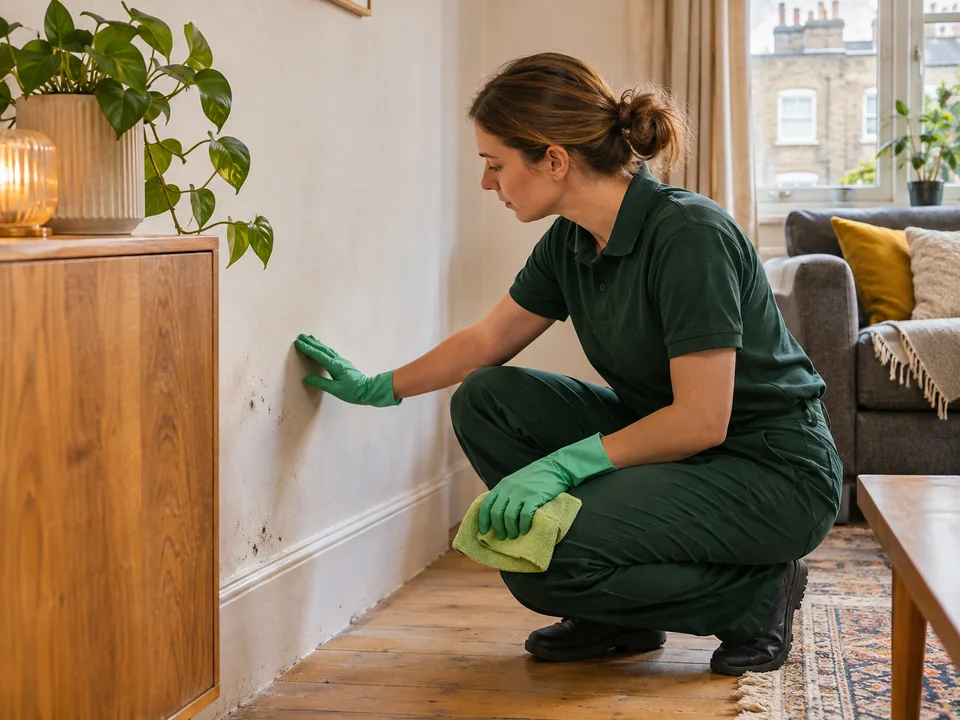
We look at the exposed surface and its condition before agreeing mould removal work in your Kennington home. Tell us about the room, the finish you want us to assess and anything that limits safe access to the area.
Can I ask about an SE11 lower-ground flat?
Send the full address and tell us which steps or door reach the flat. Include the room with the visible marks.
Can we discuss a painted window surround?
Yes. Tell us if the finish looks intact, loose or swollen.
From the entrance to the visible patch
When you get in touch, give the full postcode and identify the room rather than asking for a general property treatment. We use that information to discuss entry and the visible work with you. A front sitting room with mould on a narrow window ledge is different from a lower-ground shower room with marks on the wall beside a fixed fitting. Tell us where you can see the marks, how the room is approached and whether there is enough space to stand near the affected part.
Lambeth Council describes the Kennington conservation area as including terraces developed from the late eighteenth century onwards as well as the Duchy of Cornwall Estate, laid out in the 1910s. If you live in a divided terrace, say whether the address is served by its own lower-ground entrance or by a shared hall. A door beside the front steps can lead to a different dwelling. Explain which bell, gate or set of stairs the booking contact has agreed to use, along with the actual postal address.
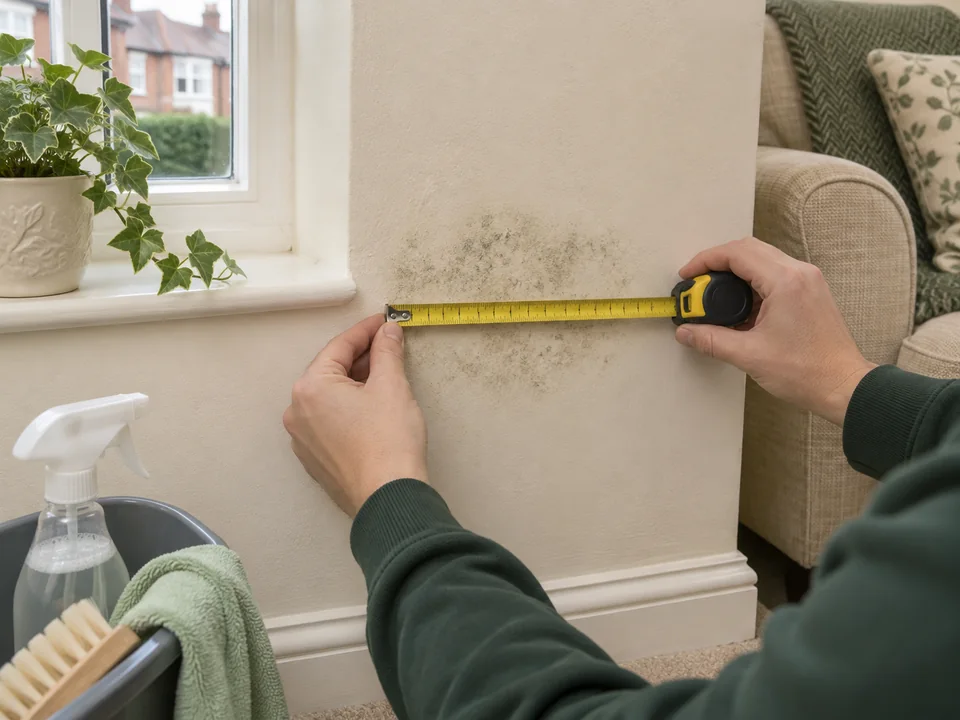
In the first enquiry, describe the position and size in relation to a recognisable fitting. The left wall face above the bath gives us more to go on than a dark corner. If you can take photographs from where you normally stand, include enough around the mark to show what is fixed beside it. Tell us if a wardrobe or a closed service hatch hides the rest. We plan around the exposed part you can describe and check what we can see at the property.
A house with two similarly arranged rooms can lead to confusion when the person who made the booking is absent. Give the room a name that is easy for someone else to use. For example, distinguish the ground-floor cloakroom by the entrance from a shower room near the kitchen. If each room has a marked window, describe which window and which part of the frame. This lets us pull the right information together before considering an individual quote.
| Detail to share | How to identify it |
|---|---|
| Entrance | Separate lower door or bell label |
| Room | Level and nearby feature |
| Patch | Visible face and closest fitting |
Prepare the work area around the original fittings
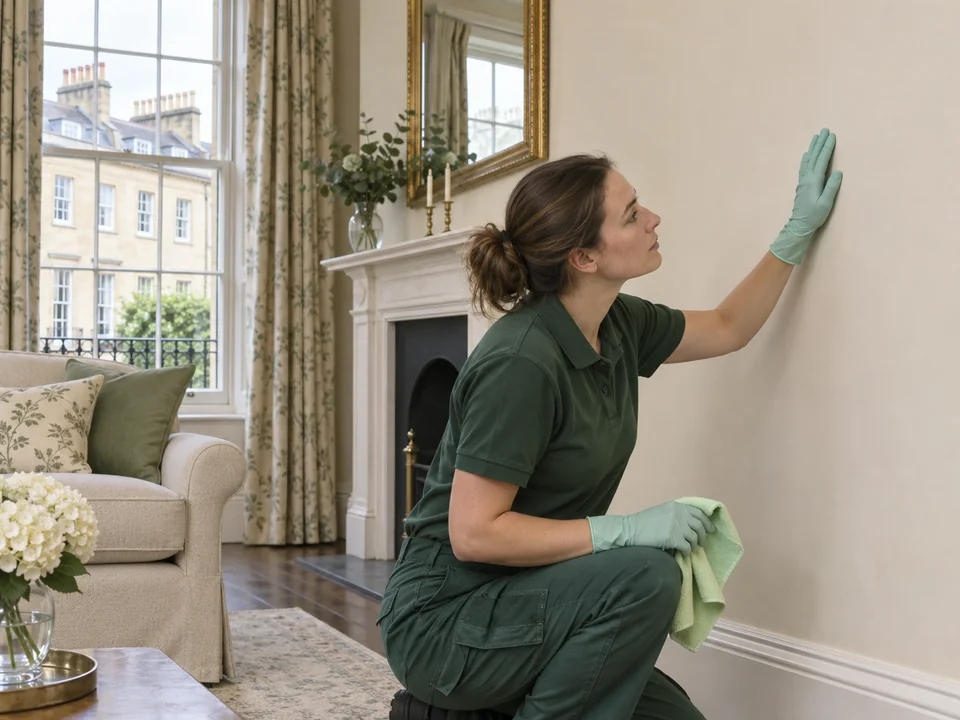
We discuss what the household can set aside and which items need to stay put. Books and small ornaments can be put safely away from a bay ledge before we look at it. A fireplace surround, radiator or built-in bookcase stays in place while we decide whether the facing and adjacent trim can be reached. If a large piece of furniture blocks part of the approach, tell us how close it sits to the affected area before you try to move anything.
An area under a window can be difficult to approach even after the sill is clear. There may be a fixed shutter box on one side or a seat below the inner ledge. Photos can help, but we check the floor space and the position of fixed objects on arrival. We also ask if there are any surface-care directions for painted timber, an unfamiliar tile finish or other material you would like us to consider. Please tell us about any earlier repairs you know of.
If the room is in active use, we discuss when it will be free and whether anyone else needs to pass through. A lower-ground hallway may connect to a second flat or lead to a garden shared by several residents. Let the person opening the door know which path we expect to take. For an en-suite, confirm how the bedroom can be reached and where items should remain while we work around the chosen area. Agreeing these simple details gives us a clearer place to start.
- Set aside loose objects near the agreed surface.
- Show us original fittings or delicate finishes beside the mark.
- Confirm the route to the room with the person granting entry.
Assess what is exposed and whether it is suitable
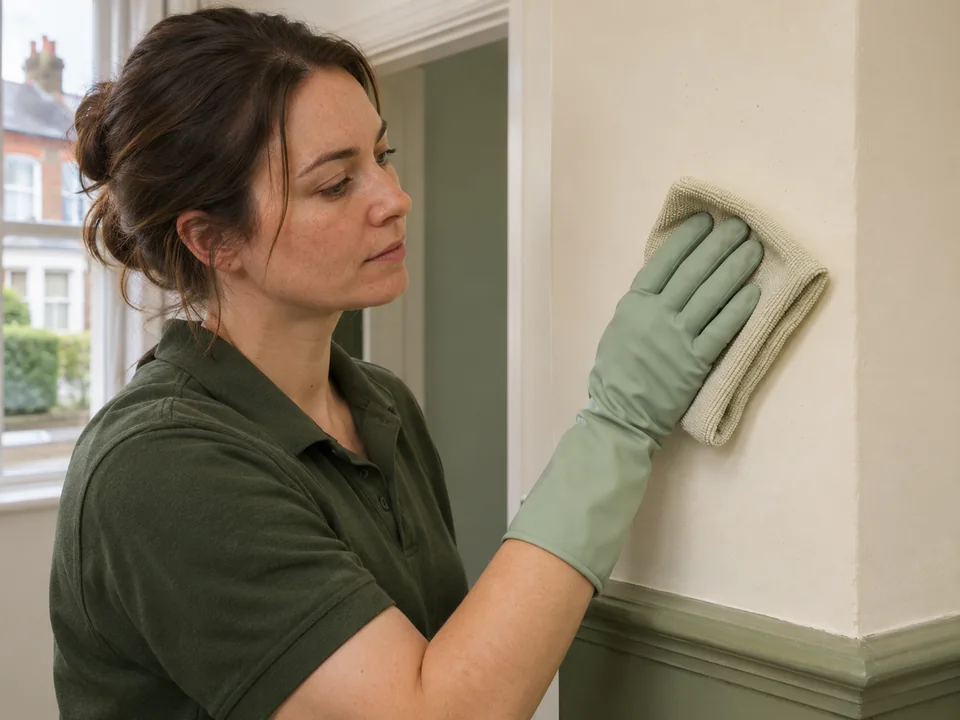
We look at the visible surface, the condition of its finish and its relationship with the rest of the room. At a window, an intact hard sill may meet a painted reveal that has lifted along the lower edge. The two surfaces may look much the same in a photograph but behave differently when inspected from nearby. The exposed hard face is considered on its own. We explain why a patch at the adjoining broken edge may need a different conversation.
In a bathroom, the affected line may appear to run continuously between the screen, seal and tiles. We assess the accessible portions rather than treating all three materials as a single area. Show us any mark that has spread from one face to another since you first described it. We look at the condition of the edge and discuss which of the exposed stable surfaces are suitable. If we see damaged material or standing moisture, we bring that into the discussion before agreeing the work.
Please also say if the same spot has previously been cleaned or redecorated. Where a mark recurs below a window opening or follows a damaged line, that history helps us explain what we can see. We can review the outside of the accessible material and its visible condition. Someone investigating an underlying moisture route needs to be able to inspect the property in a different way. If you rent, arrange that discussion with the landlord or managing agent.
| Visible feature | What we agree at assessment |
|---|---|
| Cleanable hard ledge | How much of its exposed face is accessible |
| Flexible shower edge | The likely result and condition of the join |
| Lifting finish | What needs to be left and reported |

Remove visible mould from the agreed hard surfaces
We clean visible mould from the stable, suitable hard faces we have agreed with you. In a sitting room that might mean the accessible inside edge of a sill where the condition allows. In the bathroom it could mean a section of hard wall tiles at the edge of a shower. We work within the exposed section and keep the limits of each distinct surface in view. This lets you tell what the visit was intended to achieve and review it with us afterwards.
Sometimes the extent becomes clearer once the room is prepared. If moving a set of boxes exposes the full width of a stable ledge, we can discuss cleaning that added area with you. If the new view shows a damaged board, we explain that difference before making any change. Tell us in advance whether the person meeting us can approve adjustments, particularly where an owner has arranged work for an occupied flat. We can check the agreed boundaries with that person before starting.
A mark can cross from an accessible surface into a tight corner under a fitted panel. If that happens, we identify the limit of our view and reach and show you what we can treat from that side. This is useful in a lower-ground room with built-in storage around the opening or a shower with a fixed screen. There may also be staining within the material that remains visible at the end. We discuss that possibility when we assess the affected finish.
- Confirm the visible boundaries before work begins.
- Tell us how to seek approval for another surface.
- Ask about a lasting stain where the finish is already discoloured.
Review the result with the right person
We revisit the surfaces we agreed and point out what was cleaned and where the work stopped. If a tile face was accessible and the join behind a rail was not, we identify each for you. If stained or damaged material is still visible, we explain its location in relation to the cleaned area. That detail makes it easier to refer back to the original description and discuss any inspection that may be needed separately. You can also ask us to show you another affected location during the handover.
When contacting the person responsible for the property, give the name of the room and the precise face or corner you observed. Tell them if the concern appeared before a recent repair or if it has come back after several weeks. At handover, we can clarify which exposed part the cleaning covered so the owner, tenant or property manager can decide what to follow up. Let us know beforehand if that conversation needs to happen with someone other than the person opening the door.
Ask for a quote once you can describe the number of affected areas and any restrictions on access. A narrower reach inside a bay, an unobstructed tiled wall and a hard splashback behind a standing appliance all need different preparation. Tell us whether there is a date by which someone wants to see the room, then explain who can be at the address and which door we should use. We can use those details in discussing the right visit.
If you arranged the work ahead of a property inspection, say what the inspector is due to see. We can identify the surfaces included in the visit when discussing the outcome, and explain any visible limitation that still matters. For a bathroom shared by two households, confirm who should be in that conversation and who will get the final word about arranging further building checks. A clear handover can prevent different occupants from giving conflicting descriptions of the same spot.
- Arrange who will attend the final review.
- Use the room name and nearest fitting in any follow-up.
- Tell us about access constraints before asking for a quote.
| Final review | What we can identify |
|---|---|
| Agreed hard face | The exposed section cleaned |
| Tight edge | Where a fitting restricted reach |
| Follow-up point | The position of any visible area left over |
Questions about arranging mould removal
Could you assess a sill inside original shutters?
Tell us whether the shutters can open and stay in place without being removed. We assess the exposed sill and what can be reached around the fittings.
Can I include two window surrounds with different paint finishes?
Yes, describe them separately. We review the condition of each one and agree which accessible parts can be cleaned.
How should I describe a patch next to a fireplace?
Identify where it is on the exposed face or adjacent wall, what material you can see and whether the edge has loosened or softened.
What if the hall bell does not work?
Give the address and arrange an alternative way to meet the cleaner or reach the person providing access.
Can another resident receive the handover?
Yes, if you arrange it with us in advance. Give us their name and confirm which areas they will be able to review with us.
Does a dark line at a damaged coating need another inspection?
It can. We explain the condition we can see and the accessible surfaces we agreed. Ask your property contact who can assess the damaged area.
Other Cleaning Services in Kennington
Regular housekeeping in Kennington, End of tenancy cleaning in Kennington