 Housekeeper
Mould Removal in Bethnal Green
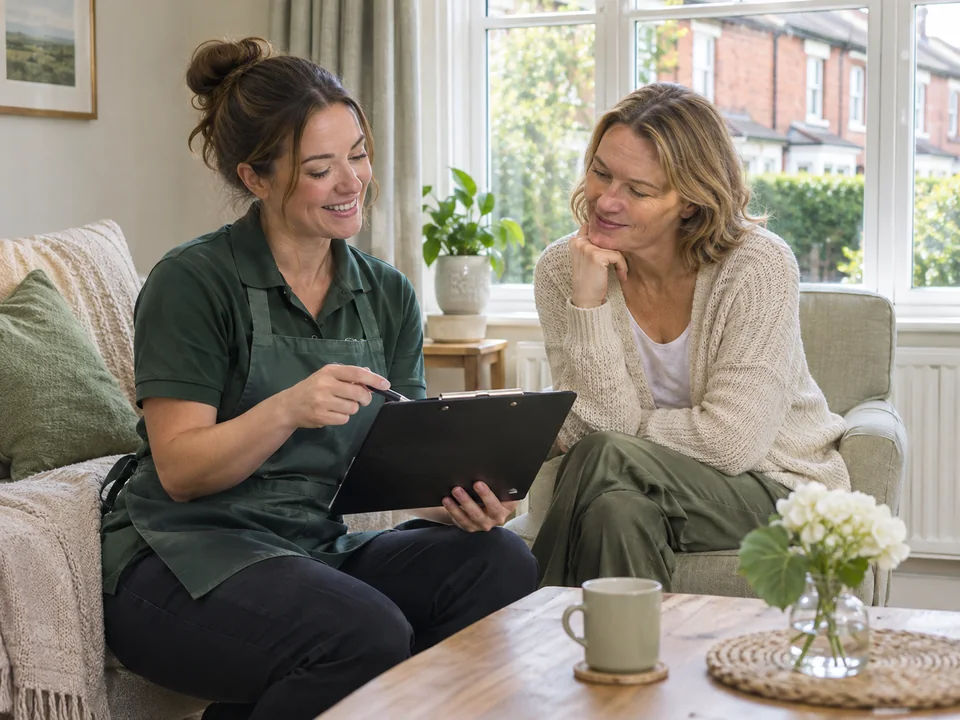
We start a Bethnal Green mould removal enquiry with the rooms you want us to consider and what is visible in each. We ask about the exposed finishes, the route into the home and any repairs already reported. Once suitable hard surfaces and preparation are agreed, we remove visible mould from the areas included and review the work with you.
What address details should I give in E2?
Give the full postcode, building name, flat and floor. Tell us which door leads to the home and who can open it.
Can you consider a wall near a shared landing?
Describe the visible places and tell us who can give access. We discuss the private and communal areas separately.
We identify the right E2 address and the reported rooms
We ask for the complete property address, the visitor entrance and the route to the affected place. Tower Hamlets lists Bethnal Green Gardens on Cambridge Heath Road in E2. Its conservation appraisal identifies the junction with Roman Road and Bethnal Green Road as an important point in the area. These can help you describe where a home is generally located. For a visit, give the precise door or block name, flat number and floor. Where a gate or courtyard is approached from another street, describe the route a visitor is authorised to use.
If the area lies in a property with shared entry, say how we reach the correct rooms from the entrance. A door that admits a visitor to one stair or lift may still leave access to the flat undecided. Confirm which resident, caretaker or property contact can meet us and when. If the area you want discussed is beside a communal landing, identify which side is inside the flat and which area needs separate permission. We use those details to establish what can be assessed, including which other locations belong with a building manager or another resident.
Tell us which rooms are in use and when they are available. A visitor may be able to assess the front room first while an adjoining room is waiting for a key or agreement from another occupant. Give each location a description that follows the route into the property, including floor level and a fixed reference in the room. The person who reported the marks may not be present. Arrange who can show the affected finishes and who can make a decision if the visible work differs from what was described.
If your building team handles visitor access but you need someone else to discuss work, give the roles separately. Confirm the arrival point using the building information and agree which way someone can reach the affected rooms. If a route requires passage through a space in use by another resident, state when it can be made available. We use the route, working area and authorised contact together. This helps us discuss an appointment in which the rooms will actually be accessible.
- Name the full address and the authorised door to use.
- List the rooms and what is reachable from the visitor route.
- Give separate contacts if permission and property decisions are handled by different people.
We assess the exposed marks and condition of each adjoining finish
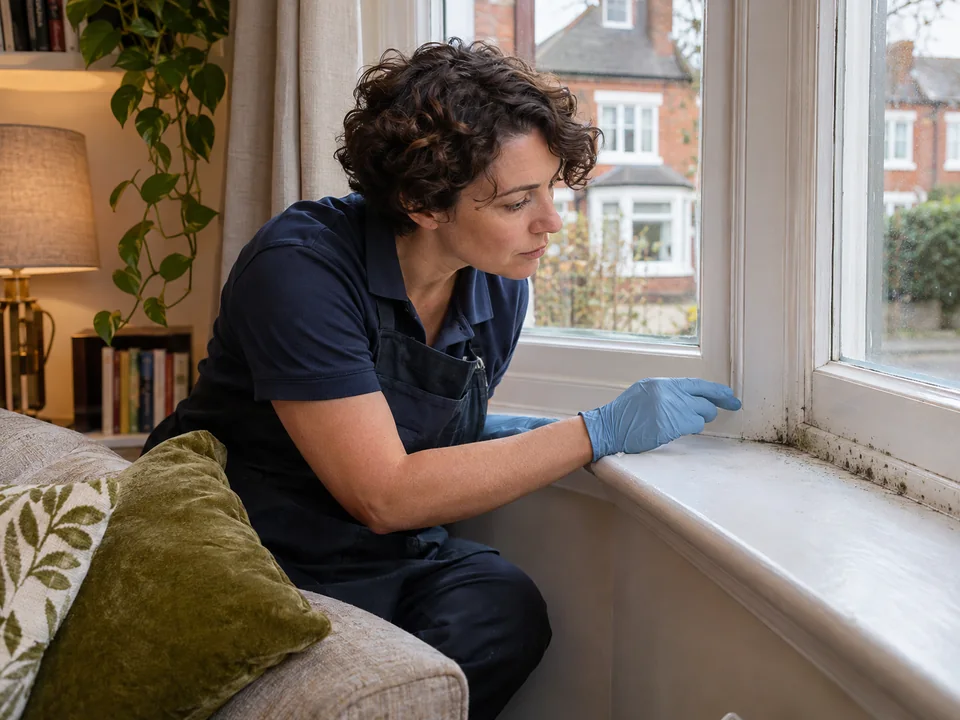
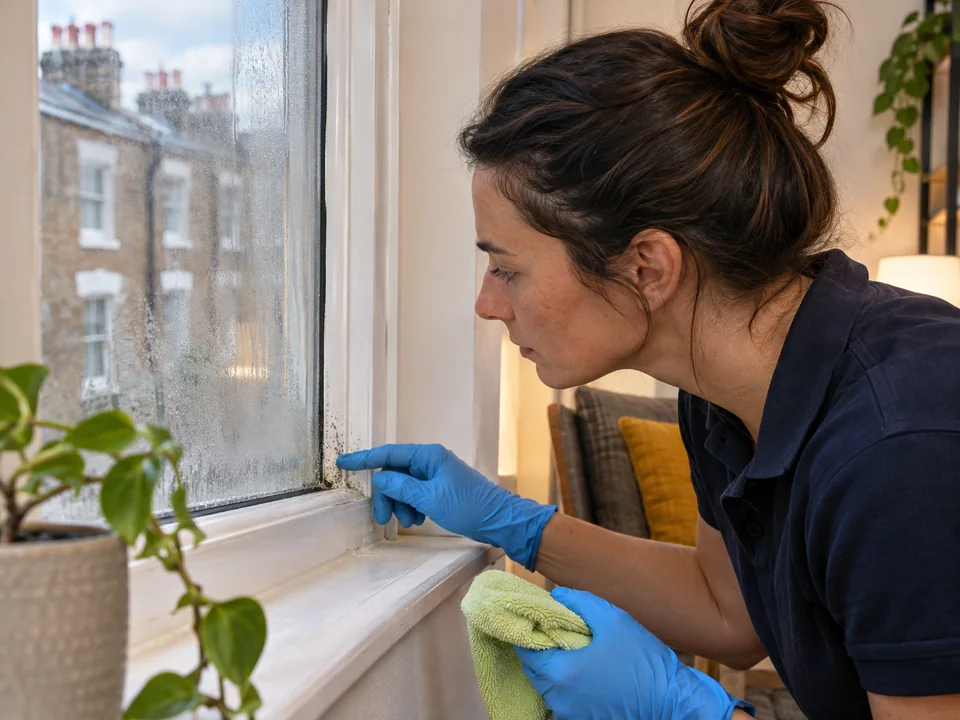
Start with the location and approximate extent. Tell us if the marks sit on a hard surface by a window, on painted material higher on a wall, or at a point where different finishes meet. A photo that shows the room can reveal whether the area reaches the corner or touches a fitted item. Include detail photographs only when they can safely be taken. We consider the visible boundary and whether the finish appears sound. If the marks reach an adjacent material, describe it as a separate area so we can discuss its visible condition.
A mark beside a window can sit on the surrounding paint and also on a frame or seal. We discuss each exposed surface and consider whether it is suitable for cleaning. If it has flaked, lifted or been covered, say where you can see that condition and whether you know the previous finish. A photograph may show an edge that has changed without confirming what lies beneath it. We can discuss the exposed area and explain what would require a separate material or property assessment. Leave fixed and damaged parts undisturbed while the visible sections are reviewed.
When there is a hard surface beside a porous covering or stored item, tell us what you are asking to have considered. A painted section on the wall and a fabric item next to it need distinct details. We discuss what can safely be accessed and whether anyone else needs to advise on how to handle the item. If a part of the affected place is behind a fixed shelf or panel, describe the edge that is visible. We identify any concealed section separately and explain which access or material questions must be settled before it can be considered.
Give high locations their own approach details. We ask about what sits under a patch at ceiling level and where someone could stand to review it safely. A stair, fitted cupboard or large object can change the assessment even when the marks cover a small area. Tell us which parts of the room are clear and what should remain where it is. If a location requires another access arrangement, we discuss it before adding it to the work area.
| Visible condition | What we assess | Further decision if required |
|---|---|---|
| Visible marks on a hard finish | Accessible position, affected extent and adjoining materials | Suitability of all surfaces touched |
| Lifted finish or porous material nearby | Visible condition and the boundary that can be seen | Further material assessment or handling |
| Obstruction or high patch | Available approach and room layout | Authorised access before work is agreed |
| Mark at a window junction | The frame, surrounding finish and seal as separate surfaces | Any fixture or moisture issue requiring separate attention |
We agree preparation and remove visible mould from included surfaces
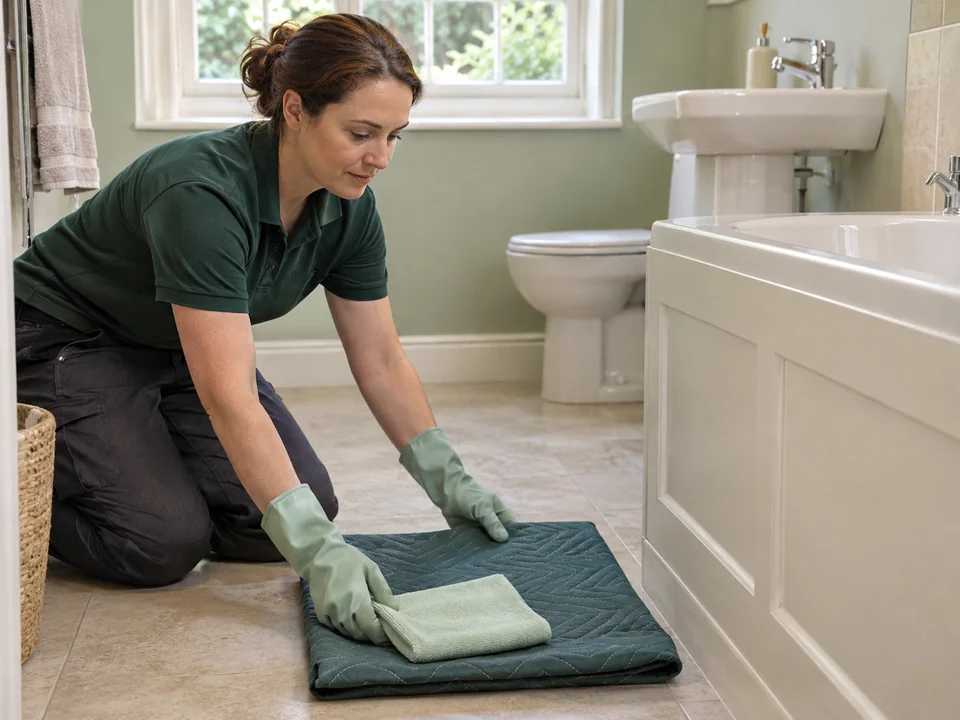
We confirm which suitable exposed surfaces are included and discuss preparation. Tell us which belongings need protection, what can be cleared and what must remain in place. If the work area is near a shared route or within a room that needs to remain available, explain the practical limits while we discuss timing. We identify the immediate working area before starting. Where a fixed item means part of the surface cannot be reached, we explain what we can consider and which section stays outside the work until more information or access is available.
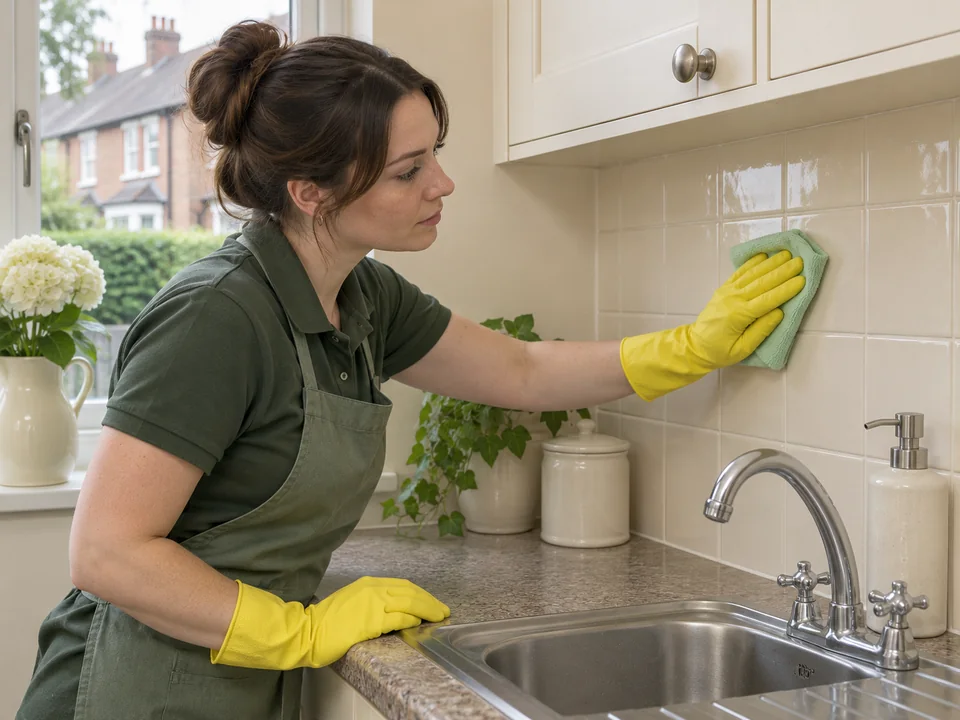
We remove visible mould from the agreed suitable accessible hard surfaces. If the extent or condition differs when the area is viewed, we discuss it with the authorised contact before changing the work. We distinguish work on a hard surface from a decision about adjoining porous material or the cause of a moisture problem. Tell us what you know about any report of water ingress or repair, including the date and location. If the source or condition of the property is unresolved, we discuss whether someone responsible for it should arrange a separate investigation.
If several rooms are included, we check the order with the person giving access. A suitable area may be available in one room while another room still needs preparation or a finish needs to be checked. We do not assume that every place in the initial report can be addressed. We discuss the locations and materials that can be considered at the visit and identify any restrictions where the agreed arrangement might need updating. Let us know what has changed if a room is no longer clear or a repair appointment affects when it can be entered.
Tell us how the affected area can be made ready if a second person needs to handle belongings. We can discuss an accessible section first and explain what preparation has to be arranged for anything else. If clearing a route reveals a new material or mark, record it as an observation with the relevant room location. We review which part of the surface can be included before changing the work agreed for the visit.
- Agree what is cleared or stays in place before work.
- Confirm the suitable surfaces and where the work ends.
- Discuss a changed material or access route before including anything extra.
| Stage in the visit | What we confirm |
|---|---|
| Preparation | Room access, boundaries and any items to protect |
| Cleaning | Suitability and inclusion of the accessible hard surfaces |
| Review of changed conditions | Whether a different boundary or other specialist decision is needed |
We review the included locations and help record separate follow-up
At handover, we review which surfaces were covered and any parts left outside the arrangement. If a shared landing, concealed place or damaged finish was excluded, identify the contact who can review that matter. Give that contact the relevant location and any nearby material information. Where the person who requested work was not present, agree who receives the outcome and use the same room labels from the enquiry. Keep the earlier photographs and any reports related to the property so the dates and observations can be compared if signs return.
An individual quote depends on the surface, access and agreed details for the address. Give the complete postcode, approximate extent, visible finishes and any booking restrictions. If the mark returned following earlier work, say which location was previously addressed and what is currently visible. We can discuss whether a fresh assessment or separate property review is appropriate. If you also want another cleaning service for unaffected rooms, tell us which tasks should be considered separately and whether there are timing requirements around a checkout or repair.
If an adjacent part of the building was mentioned but could not be accessed, note which person will take the enquiry forward. An occupier can share the observations inside the flat while a manager checks a common section. The final review should make it clear which material was cleaned and where the work boundary stopped. Record the reference used by the property contact beside the correct location so it is available if someone returns to assess that area.
Where the property is about to change hands, ask who can be contacted after keys are returned. Give the intended dates before arranging a visit. If an area still needs a separate decision, we explain that it remains open and discuss which details the next contact should receive. An incoming occupier will then have enough information to explain the room history without relying on a photograph taken before access arrangements or the condition changed.
- Review the areas covered with the named contact.
- Keep another assessment and building repair points separate.
- Give us a dated room description when visible conditions change.
| Handover point | What to retain |
|---|---|
| Included work | Visible surfaces and locations in the agreed area |
| Area awaiting another decision | Relevant address, room and person responsible for access or review |
| Later report | Date, location and what has changed |
Questions about arranging mould removal
Our home is close to Bethnal Green Gardens. Is the block name enough?
Give the full postcode, address and flat number. Add the block name and authorised entrance so we know which property to discuss.
Can I report a shared landing while offering entry only to my rooms?
Yes. Describe the private rooms and common area separately. Identify the person who can authorise access to the landing.
A mark sits across the window seal and painted wall. How will it be assessed?
We consider the visible area and condition of each finish. Give a wider view if you can safely take it and describe any earlier fixture work.
Can I use a photograph that shows the patch before furniture covered it?
Yes. Date it and describe what is visible now. Tell us who can decide whether additional access to that location is possible.
A repair was reported for a nearby flat. Should I include that information?
Give the date and location the report concerns. We consider your visible surface and keep the other property report as context.
What happens if a second finish appears unsuitable during assessment?
We discuss the new condition and what would need separate review. We agree any change before extending the work beyond the suitable hard surfaces already included.
Other Cleaning Services in Bethnal Green
Regular housekeeping in Bethnal Green, End of tenancy cleaning in Bethnal Green