 Housekeeper
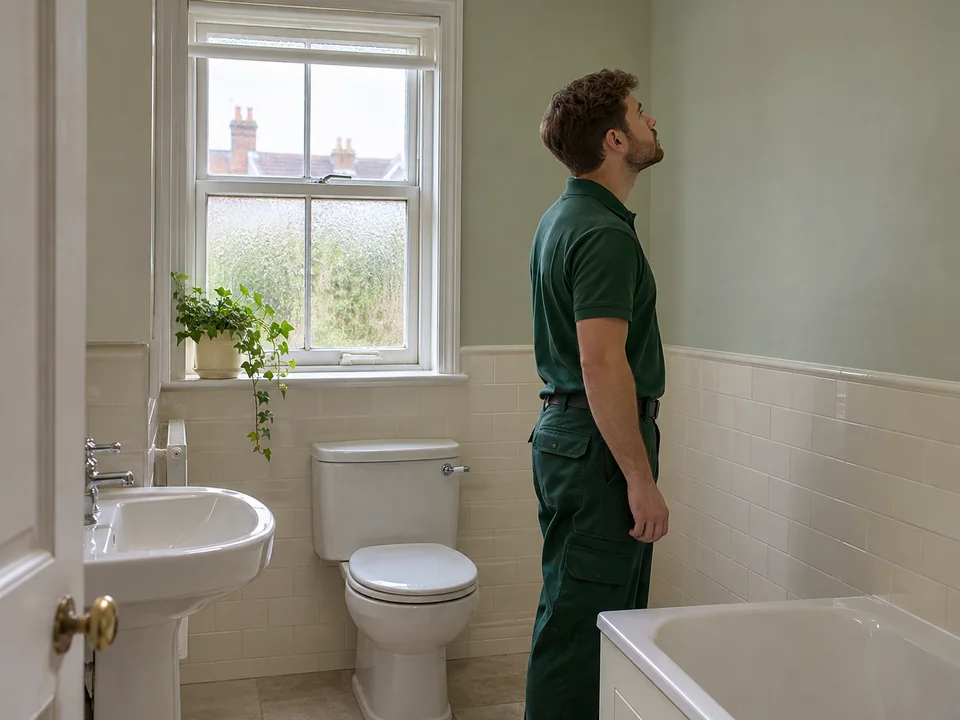
Mould Removal in Barnsbury
When you contact us about mould removal in Barnsbury, we start with the actual room, finish and access available. We review the extent of the visible marks, agree preparation and physically remove visible mould from suitable accessible hard surfaces included in the visit. At handover we explain the result and identify any separate question about damaged materials, moisture or a shared part of the building.
How should I give an address near Barnsbury Square?
We use the full N1 address plus the door and floor serving your property.
Can a shared hall be assessed with my room?
We check the responsible contact and whether both areas can be made available.
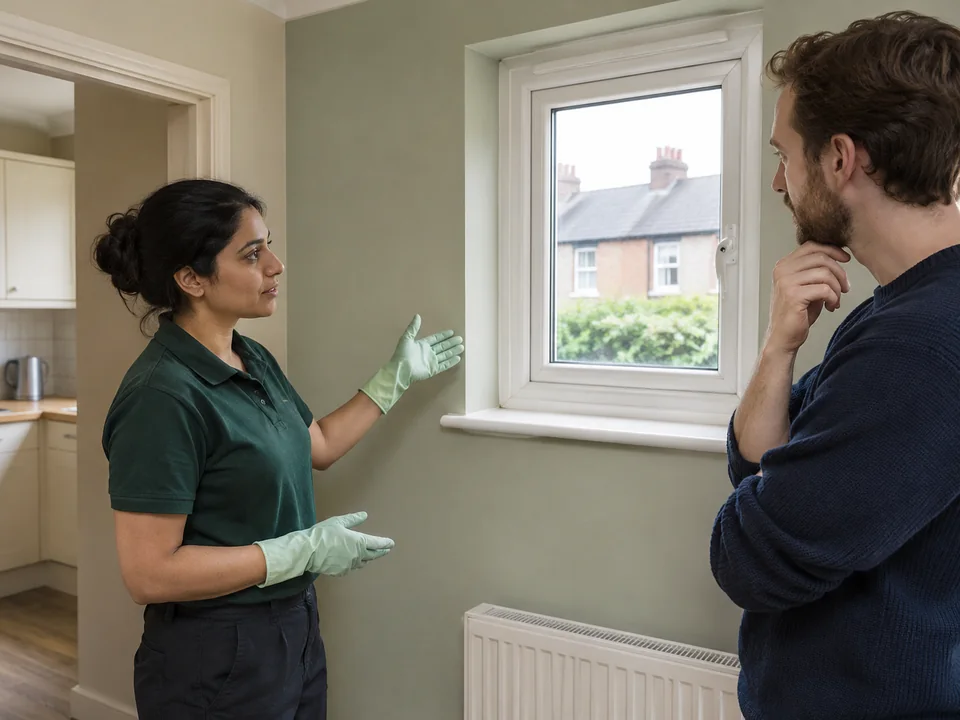
Start with the room, the affected area and who can show it
We record which room you are enquiring about and where the marks sit. Describe whether they are low on a wall, near the ceiling or around an opening. If you know which material is affected, give that information and say how much can be seen. A room label and a visible landmark help us identify the right surface if you are unable to be there. Where you have several affected places, we discuss each one so the proposed visit can be described clearly.
For an enquiry involving a private room and common space, we establish which contact can authorise each. Let us know if the person who first saw the marks has photographs or a description the person opening the door can use. We agree who needs to receive any quote and who should approve a change on the day. This can be particularly helpful in a property where an agent arranges access but the occupier has the room history.
We use photographs to understand position where possible. Take one wider view so we can locate the surface in the room, and a closer image if it can be obtained safely. Tell us if the appearance differs across the visible area. If part of a wall or ceiling is out of view, we discuss what can be assessed in its current condition and what might require separate access or permission.
- We locate each visible area in relation to a room feature.
- We check who can approve the proposed visit.
- We ask which parts can be seen and reached.
| Information to share | How we use it |
|---|---|
| Room and position | To identify the affected surface accurately |
| Approximate visible size | To understand the area under discussion |
| Finish condition | To decide which material needs assessment |
| Private or shared area | To identify the relevant permission and keyholder |
Plan the route from the address to the working position
Islington Council's Barnsbury conservation guidance records building details on Barnsbury Square, Thornhill Road and nearby streets. If the address has a separate entrance or several levels, give the full postcode, number and the actual door used by visitors. Explain whether arrival is directly into the property or through a shared hall first. The route to a room may differ from the one someone finds when looking at the street frontage alone.
We ask what the working position is like once inside. For a mark near a stair, describe the floor position, its approximate height and any barriers. For a low-level wall, mention fixed items that limit access. We check whether the relevant room can be opened at the agreed time and who can be contacted if the arrangement changes. If the assessment includes a shared route, we establish another contact when needed.
If the person meeting us will use a name different from the one on the door, tell us the door label or a suitable meeting point. We keep the arrival details with the room record. If one area is below street level and the other is upstairs, we confirm that both routes can be used before treating them as part of the same appointment.
- We confirm the postal address and actual door separately.
- We check the route to the affected room and the position beneath it.
- We confirm who can open every area included in the visit.
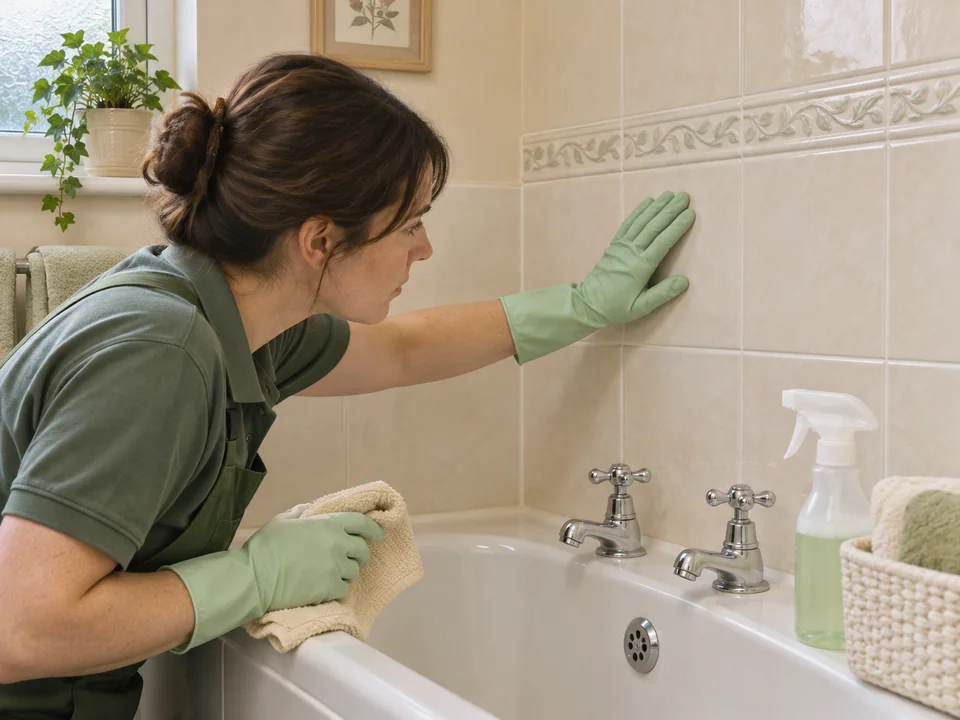
We assess each finish and agree a useful boundary
During assessment we review the visible condition of the finish and where it changes. Where marks straddle a painted face and a covering or joint, we identify how much is on each material. We consider which accessible hard surfaces are suitable for cleaning and which materials may need further assessment. The boundary matters even within a single corner. We want to be able to name the surface cleaned and the part that needs another decision without relying on a vague room description.
We also ask about relevant work already done in the room. A change to a window area or an earlier incident involving water can affect the questions raised during the assessment. Tell us if you have confirmation of what was repaired and what is still being investigated. If the finish is damaged or a building issue remains unresolved, we explain which part should be dealt with separately before work on that part can be discussed.
When the visible condition differs from the initial description, we review the changes with the contact who can approve work. If a new area is visible because previously fixed items were moved by someone else, we consider it in its current condition. We agree what can be reached and which surfaces can be included before altering the original arrangement.
| Position or material | What we check | What we discuss |
|---|---|---|
| Accessible hard wall face | Extent, condition and neighbouring finishes | Which reachable area is suitable for cleaning |
| Loose or changed material | Where its condition differs from the surroundings | Whether it needs a separate assessment |
| A high area beside stairs | Available working position and sight of the affected finish | Whether access is suitable before work is agreed |
| A formerly concealed area | What can be seen and reached now | Whether it can be discussed in an additional quote |
Prepare the agreed area and remove visible mould
After agreeing which surfaces are suitable, we check the available working area and discuss preparation with you. We confirm which items can stay where they are and whether the area can be made available for the agreed time. If it is next to a route used by more than one person, we consider the practical access around it. We prepare the immediate working position and keep the agreed boundary clear throughout the visit.
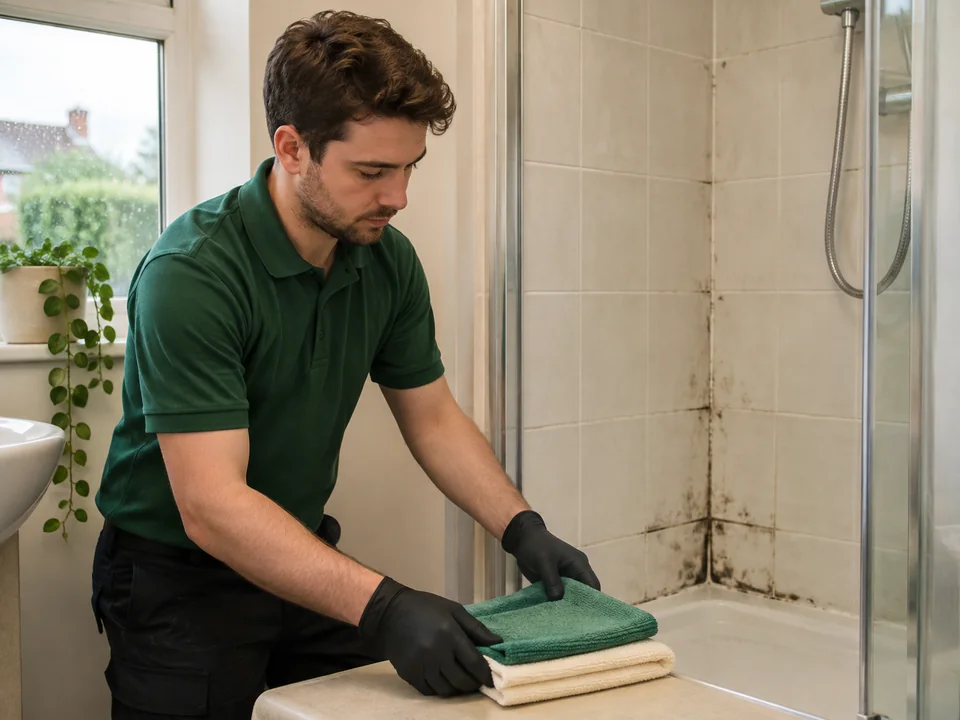
We physically remove visible mould from the suitable accessible hard surfaces included in the agreed clean. We check the adjacent finish where there is a change in material and keep to the work described. If a surface no longer appears suitable or cannot be accessed, we explain the limit to the person arranging the work. We review the visible outcome with the customer and identify each area that was attended to.
If there is another cleaning service being arranged, we keep its room list separate and discuss how the arrangements fit together. You can ask about regular housekeeping alongside a mould removal enquiry and give the office details of any room that may not be ready for everyday cleaning. Explain any assessment or building decision still to be made, so the access and timing can be discussed independently.
- We prepare the agreed working position.
- We physically remove visible mould from suitable accessible hard surfaces.
- We check the areas cleaned and explain any work limits.
Explain the outcome to the right person at handover
At the end of the visit, we identify the surfaces we cleaned and any part of the requested area that could not be included. The person attending the review may have a different role from the person who agreed the work. If an agent or owner needs to receive the outcome, tell us beforehand. We can use the original room labels to show how the work completed relates to the reported area and which questions still need that person's attention.
An issue with underlying moisture or a changed finish may need another professional to consider it. We explain the visible work discussed and completed and identify where a separate question remains. Keep any report or photograph alongside the surface and room description so the relevant person can identify it. If something changes afterwards, give the known dates and current position when discussing further work.
Use the booking page to prepare a room list before calling. Have the full Barnsbury address, access information and details of any earlier changes ready. We can then discuss whether the visit is to assess the surface or to carry out work already agreed. Confirm who opens the property, which areas can be seen at the agreed time and who should receive the work details.
| Review item | What we confirm |
|---|---|
| Work done | Which visible areas received the agreed clean |
| Materials outside the clean | Which decisions still need assessment |
| Property contact | Who receives the outcome and follows up |
| Other services | What has been agreed separately |
What we do when the original room list changes
If a new mark appears or a previously closed room becomes accessible, tell us where it is and who can show it. We consider the area separately and explain whether it needs its own assessment before being included. This helps everyone compare the original agreement with what can actually be seen during the visit.
When assessment changes the set of suitable surfaces, we review what the customer originally asked for and which areas can be considered at the property. In a room with several related marks, we describe where material or access changes and check whether the agreed work can still go ahead as planned. If one area needs a separately arranged visit, we make its position clear from the start. This helps the person responsible for the property explain what still needs doing and agree access for it.
If another person was expected to give access to a shared space, we check whether they are still available before including it. A visitor reaching the private part of a building may have no permission to work on the route outside it. We agree which areas can be reviewed at the time agreed and identify who is responsible for taking a different decision about a shared surface. We can then record the room and finish accurately at handover.
After cleaning, it may be useful for someone who knows the room well to review the boundary with us. A resident can identify a fitting or section of wall by everyday use, while the person arranging work may refer to the same area by floor or room number. We use both details where they help locate the work. If a separate assessment is needed, the information should make clear where the condition changes and who will handle the next step.
For an enquiry held open while earlier works are being reviewed, we confirm which elements are clear enough to agree and which depend on further information. The person responsible can then report the outcome using the original room details.
Questions about arranging mould removal
How do you arrange access to a room entered from a lower door off Barnsbury Square?
Give the complete address and identify the lower entrance and room level. We agree the practical arrival route and who will admit us.
Can the person who manages a shared stair book work in my own room?
We check permission and access for each area. Tell us who can approve work in the room and who will open it.
How do you describe a mark that reaches an adjacent wall finish?
We identify both materials, assess what is accessible and agree which suitable hard faces can be cleaned. Anything separate is explained before work starts.
What if I want to raise mould and general housekeeping in the same call?
Tell us the areas and priorities for each. We discuss the mould surface and preparation separately from the routine cleaning list.
Can you use a room photo from before a fitting was repaired?
Yes, as background. Include its date and any change to the finish since then. We assess the current visible area before confirming work.
Who should receive the outcome if a different occupier lets you in?
Agree the handover with the office before the visit. We can explain which surfaces were cleaned and what follow-up remains to the responsible contact.