 Housekeeper
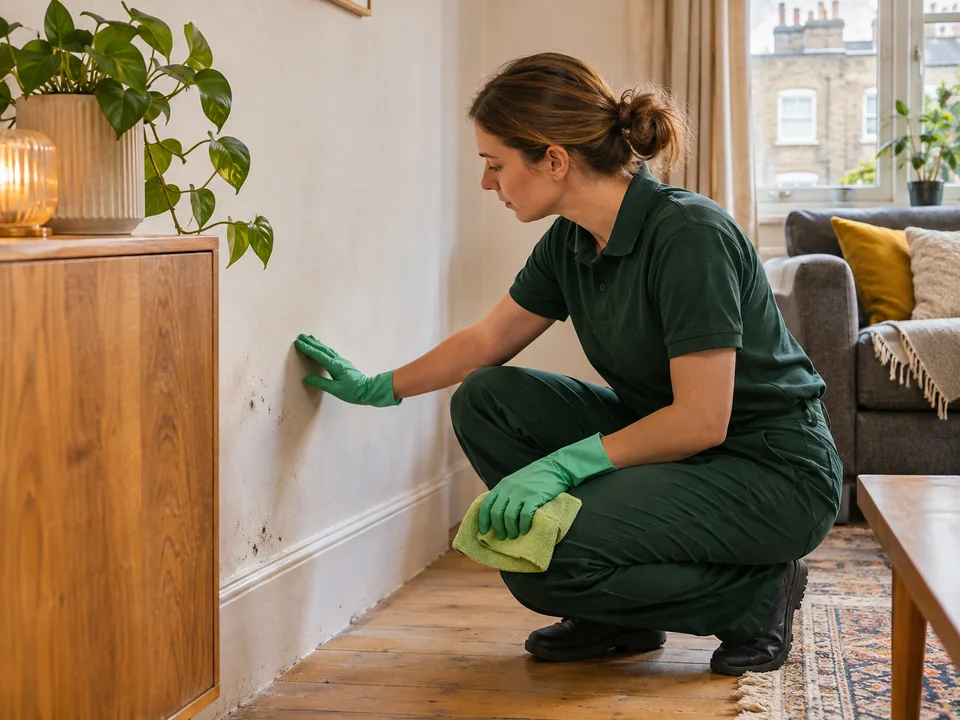
Mould Removal in Bloomsbury
We take mould removal enquiries for Bloomsbury kitchens and bathrooms by identifying each affected surface and how it can be reached. An area on a tiled face may be assessed separately from a loose finish or a mark behind a fixed item. We prepare the agreed working area, physically remove visible mould from suitable accessible hard surfaces and explain the outcome before handing the room back.
Can I give instructions for an entrance below street level?
Yes. Provide the full WC1 address and tell us how the entrance is reached.
Can we include the trim beside a kitchen window?
We assess the visible finish and confirm whether it is suitable and accessible.
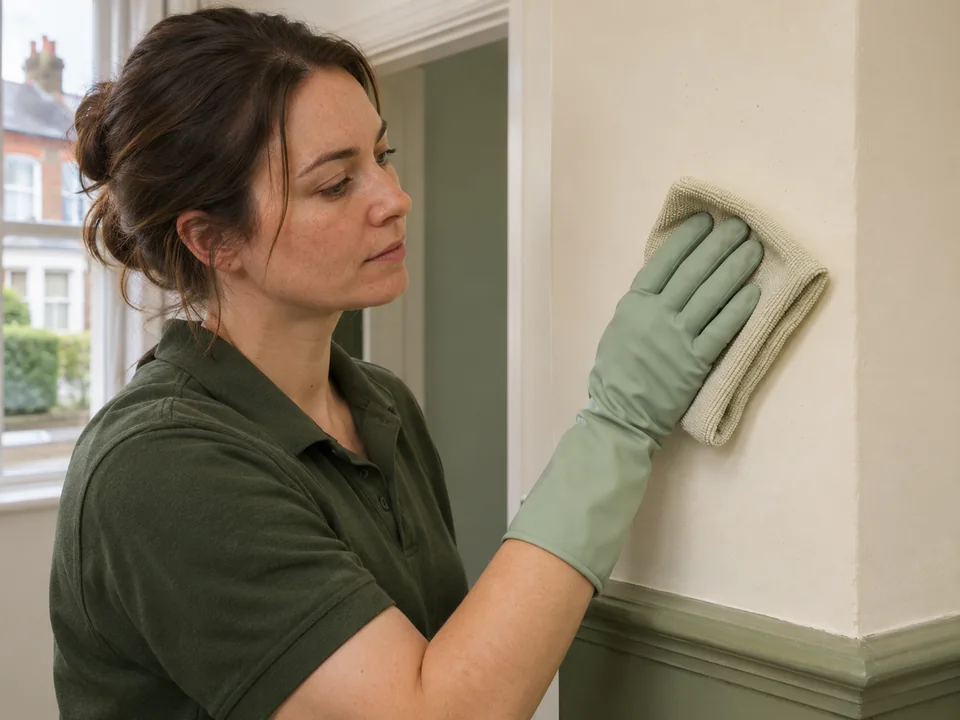
Specify the room and the accessible side of the fitting
We start by recording the room and the position of the visible area. If the mark is beside a basin or below a kitchen window, identify which surface it sits on. Tell us if the area spans a hard face and a different finish or reaches a part of the room you cannot normally see. The initial enquiry lets us discuss whether the surfaces need to be seen before we can confirm which work can reasonably be agreed.
We ask what you know about the condition of each finish. A painted edge may show a different appearance from the tiled surface beside it, and the place where those materials meet may need its own decision. Let us know whether you have noticed a loose edge or a change to the material. If you can safely take a little wider view, it can help us see which fitting the mark sits next to. A brief room description is useful if a photograph cannot be taken.
When more than one room is reported, we label each enquiry item. Give the level and say if one item is in a private room and another is in shared space. We check who can give access and who can authorise work if the room can be viewed. If the person arranging the visit will not be there, we agree which name or physical reference to use to make sure the right part of the property is discussed.
- We record each room, finish and visible area separately.
- We check what can be reached without disturbing fittings.
- We confirm the person responsible for access and approval.
| What you report | How we use it |
|---|---|
| Position of the mark | To locate the affected finish at the property |
| Size and condition | To check whether further assessment is needed |
| Fitting or item nearby | To discuss how the area can be reached |
| Contact and room availability | To plan a visit around actual access |
Agree how to enter a Bloomsbury property at a different level
Camden Council's Bloomsbury evidence base describes the terraced groups around Bloomsbury, Russell and Tavistock squares and records setbacks below street level around Gordon Square. When a property has more than one entrance, tell us which one visitors use and whether it is below or above the street. We record the full postal address and the practical route separately. A building may have a front door, but a lower-level room may be reached via a different door by prior arrangement.
We check how to get to the affected room once inside. Let the office know if stairs turn tightly, a door opens into a narrow passage or the room has to be made available by another person. For a kitchen or bathroom reached through different parts of a shared property, establish who can open any doors along the way. If the room is available briefly, give that time before we confirm how the accessible surface can be seen.
We agree the access description with the person who will be there where possible. If that person has not seen the original photographs, give them the room label and an identifiable feature such as the left side of the window or the wall corner beside the sink. This lets us start from the location you discussed with the office, even if the people involved have changed before the visit.
- We record the complete address and entrance level.
- We establish the route between the door and the affected room.
- We check who can make each part of the route available.
Assess hard surfaces around bath fittings
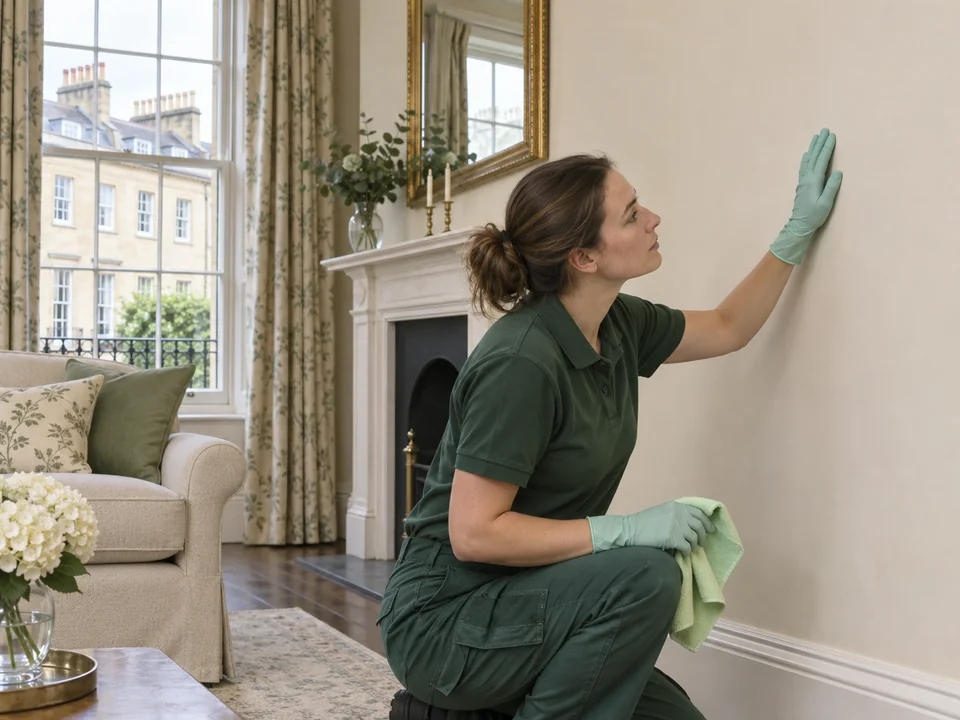
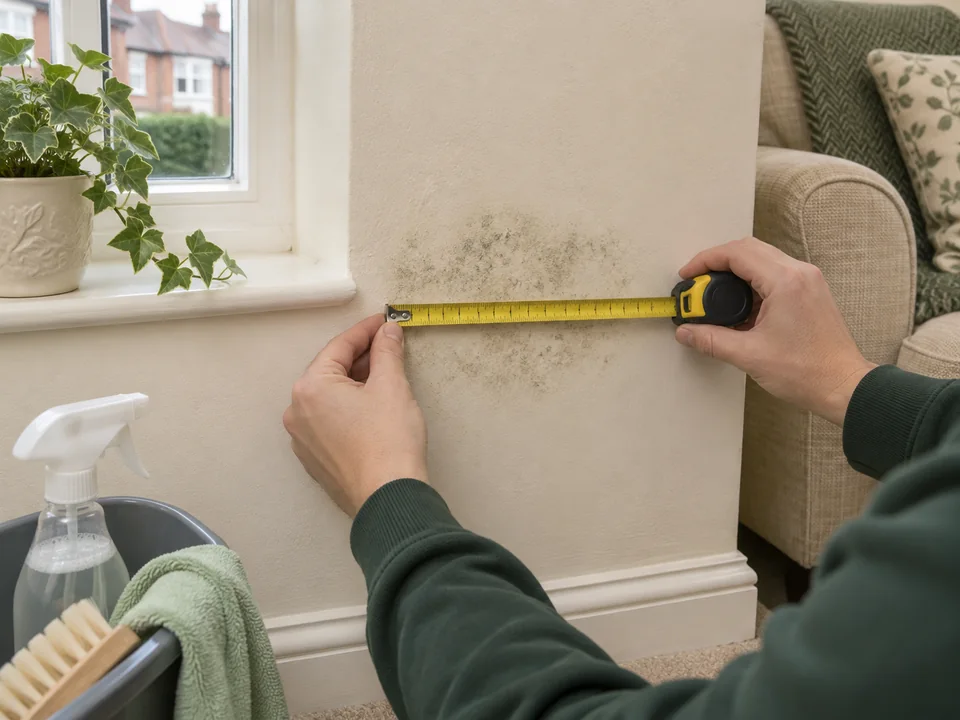
When we look at an accessible bathroom surface, we distinguish each finish and confirm the extent of visible mould. A hard tile face next to a fitting and the material joining the edge of the fitting can have different conditions. We identify the areas that can be considered and whether a different material needs its own assessment first. We discuss how to reach them without assuming the whole fitting or bathroom has been included.
For a suitable accessible hard face, we agree what will be cleaned and prepare the immediate surrounding area. We check where we can work and which adjoining surfaces or items the customer wants kept in place. We physically remove visible mould from the suitable surfaces described in the agreement. After the work we review the visible area and identify any boundary where the work stops because the condition or material changes.
If the customer reports that a fitting previously leaked or a joint has been replaced, we note that history when discussing what we can see. Tell us when the work was done and whether anything still needs assessing. A property contact may need to consider any unresolved issue with the fitting, adjoining materials or the source of moisture. We explain that separately at the review of the surface cleaning.
| Area beside a bathroom fitting | What we assess | What happens next |
|---|---|---|
| Sound, accessible tile face | Reach and extent of visible mould | Agree which face can be cleaned |
| Border beside a changed material | Whether the finish beyond the border needs assessment | Confirm where the agreed cleaning ends |
| Part hidden by a fixed fitting | What can be seen without disturbing the fitting | Discuss any separate access arrangement |
Prepare around kitchen windows, cupboards and work areas
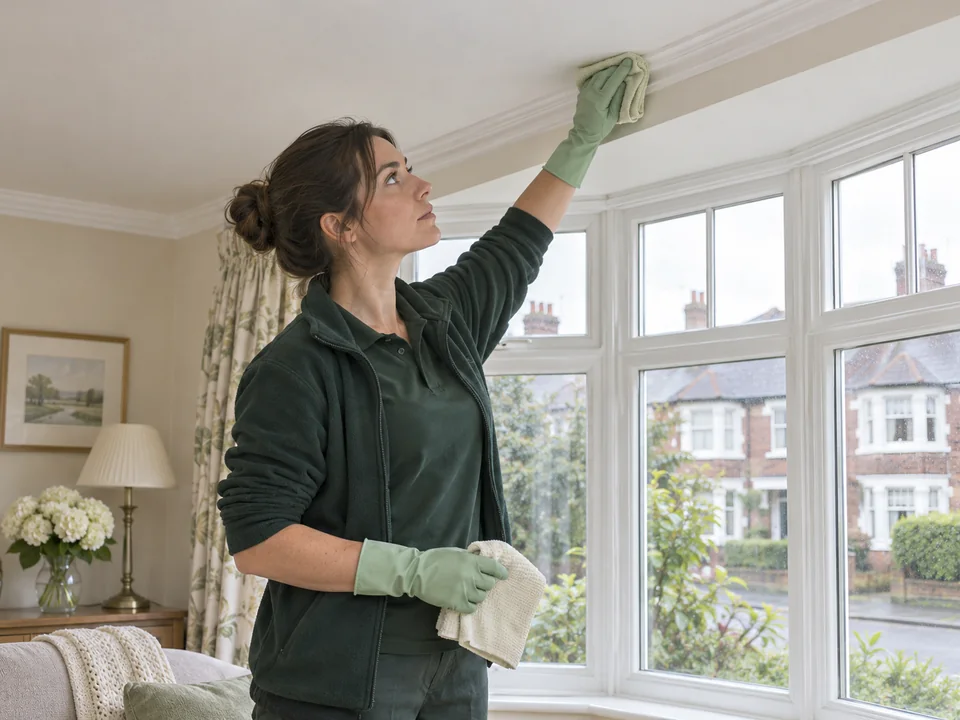
In a kitchen we locate the visible mould relative to windows, storage and the surfaces you use. If a mark is only seen when a door opens, tell us where it sits and how much room there is to view it. If it is on a visible hard face near a window, we review where the finish ends and which part of the opening is accessible. We agree which surfaces need attention before preparing around them.
If the area can be cleaned, we confirm the room access and prepare the immediate working position. A person might still need to use another part of the room or an adjoining space. Tell us before the visit if a route through the kitchen has to remain available at a certain time. We confirm how to reach the area we have agreed and clarify which items are to remain where they are. If a fitted item prevents access to a surface behind it, we discuss what would have to happen before that part can be assessed.
We physically remove visible mould on the accessible hard kitchen faces covered by the visit. We keep the position of the work tied to its room and finish instead of including nearby surfaces by assumption. If another area becomes visible and it is outside the agreed clean, we explain how a separate decision can be made. We review the work with the customer at the end and identify which finish or fitting remains a separate matter.
If the property has more than one kitchen or washing area, we check which one is involved before setting up. One room may have a door someone else needs to open, while another has different timing limits. We record the actual accessible surface for each enquiry item. This helps when the resident raising the issue has only seen one room and a contact elsewhere holds the other information. We confirm how any second area can be seen before including it in the work.
In a room with several different uses, tell us if there is a regular activity that limits access to the affected part. We agree the route and working position with the person responsible for the room. In a fitted kitchen, the position of the affected face can determine what has to remain clear during the agreed period. We record how the area can be used around the visit rather than treating an instruction about one surface as permission to work on everything nearby.
When a building contact is arranging access from a shared staircase, we ask how the visitor should get from the common part to the property door. We check who will be available to show the room and, if needed, explain previous changes to the fitting. This is particularly useful when the person agreeing the quote has never been in the property. We use the same position at assessment and handover so the occupier and the building contact can identify the work.
If a second surface becomes accessible before the visit, let us know what has changed and who can show it. We discuss whether it needs a separate decision.
- We agree the kitchen working position and access needed.
- We clean suitable hard faces within the agreed boundary.
- We review adjoining finishes and explain any limits.
Review the cleaned areas and hand back the room
At handover we review the actual areas cleaned and compare them with the agreed description. We clarify any part we could not include and provide enough location detail to identify it later. If the person who requested the work is different from the person who met us, confirm how the information should reach them. This helps a manager or another resident understand what happened and what still needs discussion.
We make a distinction between a completed surface clean and any unresolved property question. If a finish is concealed or changed, or a separate moisture problem is still being considered, we identify where someone may need to make a further decision. Your room list and previous photographs can be retained with this information. Keeping the same names for each location is useful if a condition changes and the person following up is new to the property.
Use our booking page to organise the full Bloomsbury address, the affected areas, the type of finish and any known changes. When you contact the office, tell us which rooms are available and which person can approve work. For spring cleaning or another visit, give the usual cleaning priorities as a separate enquiry. We can discuss how each arrangement fits the use of your home.
| Handover topic | What we explain |
|---|---|
| Completed surface work | Which agreed areas were cleaned |
| Other finishes | Where a further assessment or decision may be needed |
| Building matters | Which questions need to go to the responsible contact |
| Other arrangements | What to consider separately for another cleaning visit |
Questions about arranging mould removal
What should I say if my Bloomsbury kitchen is reached through a lower-level entrance?
Give the full address and the location of the door, and describe the steps and room route. Tell us who can open each door if needed.
Do you treat the area behind an appliance when only the outer edge is visible?
We assess the visible position and check what can be reached. An area behind the appliance needs a separate access decision before it can be included.
Can you include a suitable tiled face next to a loose bathroom finish?
We consider the two materials separately and clarify which hard face can be cleaned. We explain what may need to be assessed before discussing the loose finish.
What if the room is entered from a shared route controlled by the building manager?
We check who can approve the route and how access to the room will work. Give the manager's role and the details of the person meeting us.
How do you agree a window area if the marks cross from trim onto paint?
We identify each visible finish and its condition. We confirm which suitable accessible surfaces are included before preparing and cleaning the agreed area.
What do you review if the fitting was repaired before the cleaning visit?
We review the visible areas agreed for cleaning and explain any other questions to pass to the responsible contact. Keep any confirmed repair dates with the room record.
Other Cleaning Services in Bloomsbury
Discuss your mould removal enquiry
Mould Removal Prices in Bloomsbury
Tell us which rooms are affected, the approximate size of the visible patch and what surface it is on.
Get a Quote