 Housekeeper
Mould Removal in Erith
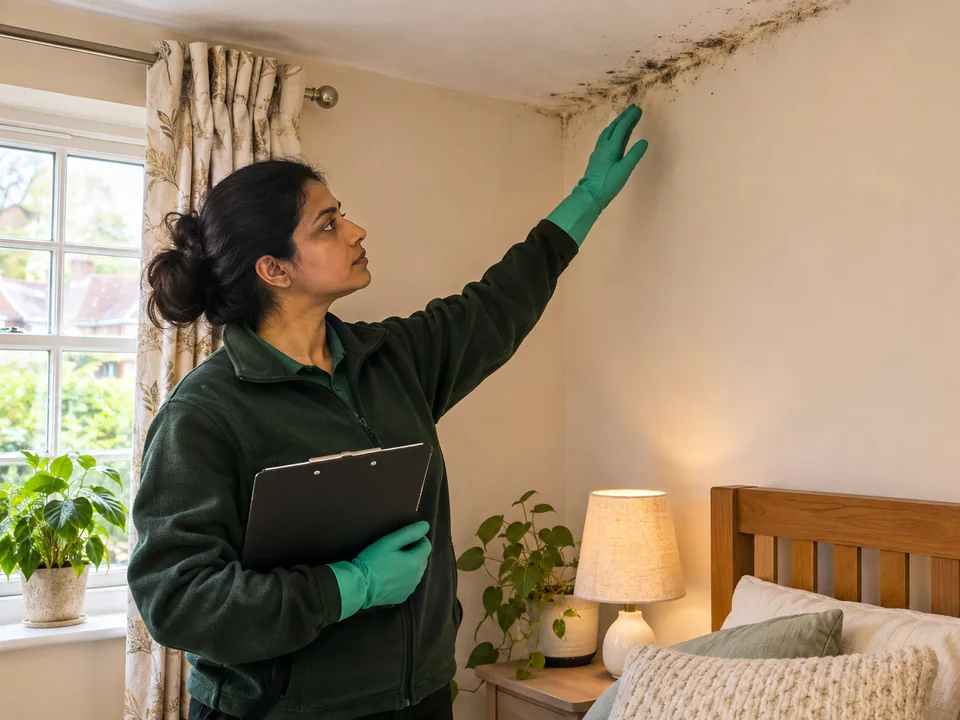
We organise an Erith mould removal enquiry around the actual property and the finish you want us to look at. We record how to enter, where the marks are visible and whether there has been any earlier building work. In the room, we assess the accessible surfaces and agree preparation before physically removing visible mould from suitable hard faces. We review the result and explain what needs a separate decision.
What should I provide for a DA8 address near Pier Road?
Give the full postcode, property number and the entrance used by visitors.
Do you need the keyholder to stay for the review?
Tell us who will be there and who needs to receive the outcome.
Plan an arrival near Pier Road or Erith High Street
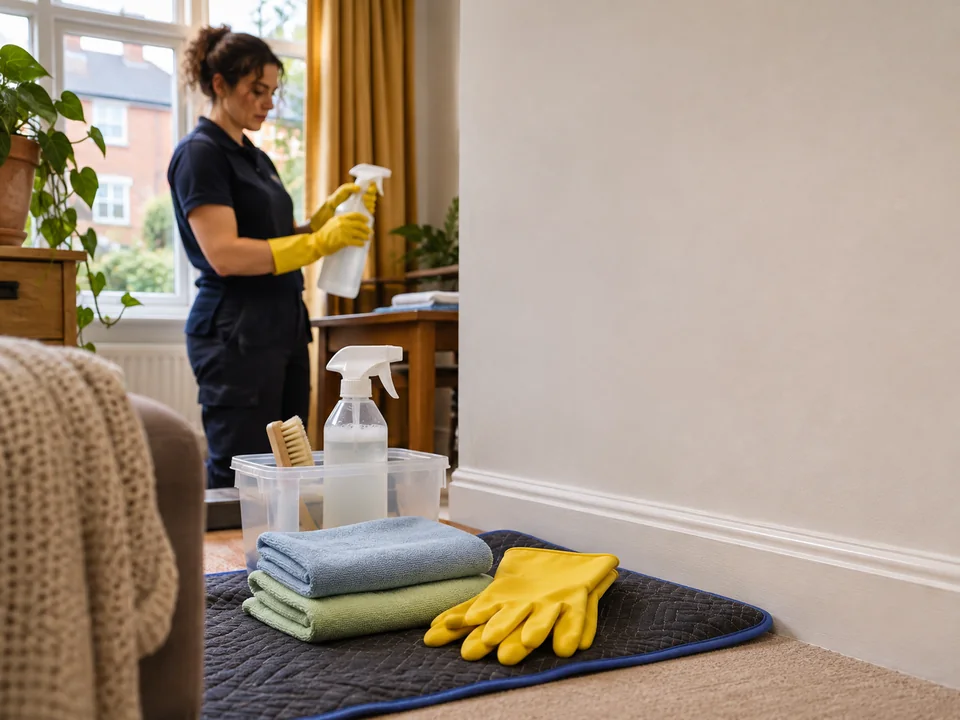
Bexley Council's Local Plan identifies sites around Pier Road, Erith High Street and Walnut Tree Road as part of the town centre context. We use the actual address for an enquiry, so explain which road the entrance is on and whether someone will meet us. A residential door can open from a different side from the frontage people first recognise. If access goes from a street to a shared entrance and then to a separate property door, describe both stages and identify who can open them.
When we discuss the visit, we confirm how to reach the affected room after entering. Give the floor and say if a second door or change of level affects the route. We need to know whether it is an internal room, an outside-facing wall or a shared part of the building. If the room can only be opened during a particular period, share that information with the office before agreeing a time. We can then discuss what is possible during the period available to see the surface.
If someone other than the person who called will meet us, give them the same description of the room and the position of the visible marks. We use room labels and recognisable features such as the side of a window or the edge of a ceiling to confirm that we are looking at the right area. If the situation changes before the visit, tell us which door or room is now available so we can review the arrival arrangements.
- We record the address and the door that serves the property.
- We check how to reach the affected room.
- We establish who opens each part of the route.
| Access stage | What we confirm |
|---|---|
| Arrival | Full postcode, door and meeting point |
| Inside the building | Shared access, second doors and level changes |
| Affected room | Usable access, availability and working position |
| Keyholder | Who can show the area and communicate changes |
Build a practical description of the visible area
On the initial call we ask which rooms are involved and how far the marks appear to extend. Tell us whether the area is on the wall by a fitting, at the ceiling edge or on another finish. We use those details to discuss whether it needs to be seen before we can agree what can be cleaned. If two rooms are affected, we record them separately, as the working position and the condition of the finish can be different even within one property.
We can review photographs if they help explain the visible area. A picture that includes the room or fitting helps us locate it from the description. If another view shows that the mark reaches a different material, include it only if you can take the image from a safe position. Explain any places that are out of view instead of trying to move a fixed object or reach past an obstruction for the photograph.
For a mark spanning a joint, we need to know which material is on either side. A sound accessible face may be suitable for cleaning, while a different surface close to it may need its own assessment. We confirm the visible materials and what can be reached at the property. If any surface is still concealed, we identify the separate question and check who needs to consider it before further work is agreed.
- We ask how large each visible area appears.
- We distinguish the surface material on each side of a join.
- We make clear when a separate inspection is needed.
Assess the finish before preparing the immediate working area
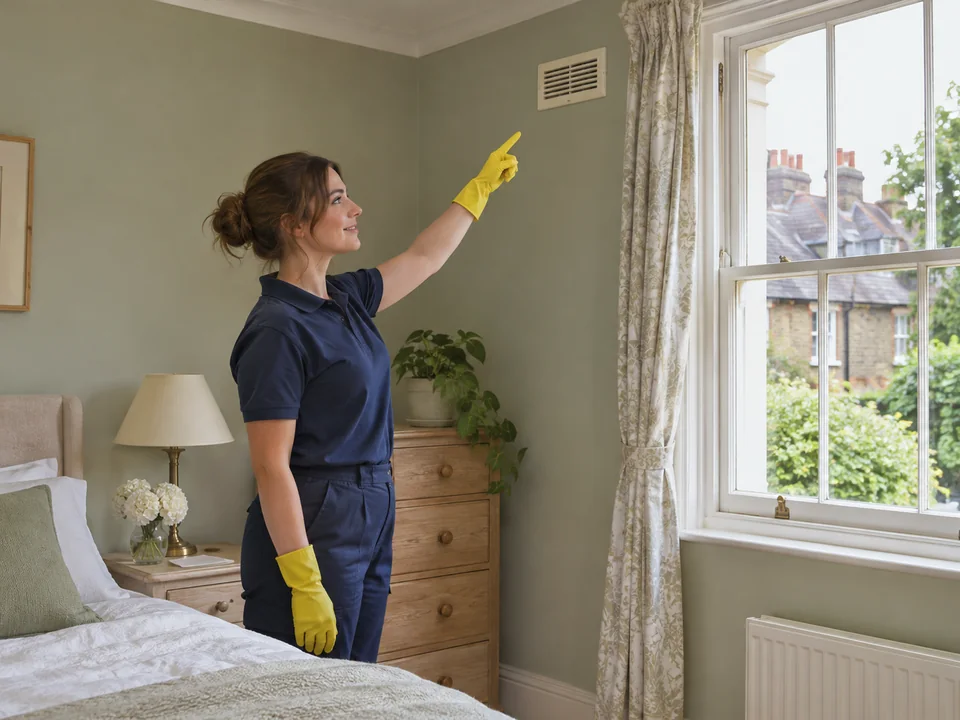
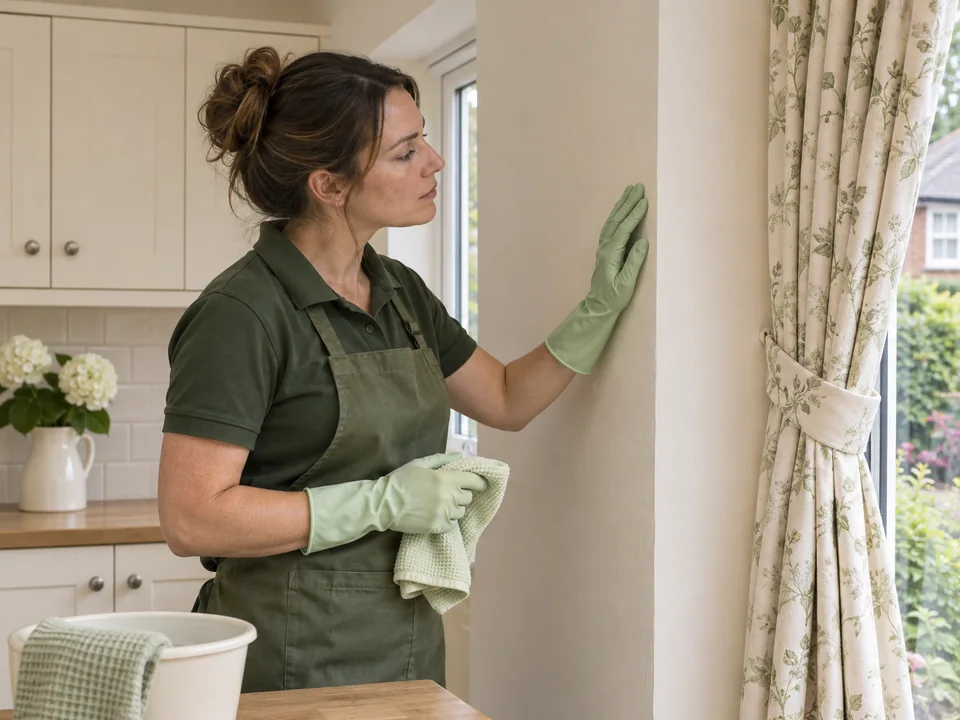
We start by checking which surfaces can be seen from an ordinary working position. We consider their visible condition and identify the boundary of anything suitable for cleaning. We ask about earlier changes to the area, especially where a finish has loosened or the surface looks different after a reported leak. This gives us the context for deciding what can be agreed in the cleaning visit and what should be discussed with a responsible property contact.
When a suitable surface is agreed, we prepare the immediate area around it. We establish which items can remain in place, how the room can be reached and whether other people need a route through it. If a wall near a fitting is to be cleaned, we confirm which part is included before preparing. This helps avoid confusion between the visible wall face and another finish that happens to be close to it.
If a room has been altered between the first call and the visit, we review the visible part against what was described. For example, a fixed unit that has since been moved by another party may reveal another surface. We identify it as a separate item to consider. We discuss changes before adding work rather than assuming that a quote for the original area extends to materials that could not be seen at the time.
| Condition or position | Assessment | Preparation decision |
|---|---|---|
| Sound visible hard face | Extent and reach | Agree the working area and access |
| Visible mould beside damaged finish | Extent on each material | Decide which areas can be considered separately |
| Surface previously concealed | What can now be seen and safely reached | Review whether an additional area can be agreed |
| Room used by several people | Who needs access and when | Agree a practical working period |
Remove visible mould from the agreed accessible hard faces
After setting the work limits, we physically remove visible mould on the suitable accessible hard surfaces included in the agreement. We work from the condition of the material and the area already discussed. If a patch reaches a surface that needs a different decision, we identify where the agreed work ends and leave any separate material question to be dealt with through the appropriate contact. We can discuss further work once the affected surface and access arrangements are clear.
We check each area after cleaning rather than assuming one room or material represents the rest. If a room contains several patches, we review them against the agreed list. Where the work is near an opening or fitting, we explain which faces were included and which were outside the accessible area. This gives the customer a clear description of the completed work and a useful reference if another issue has to be investigated.
If you are also planning a different cleaning visit, give us a separate set of rooms and priorities. A move-out clean, for instance, may have a timing requirement that needs to be coordinated with access for a mould assessment. We can discuss how to organise both enquiries while keeping each quote tied to the work it actually covers.
- We work on the suitable hard surfaces included in the agreement.
- We check each cleaned area before handover.
- We discuss different materials and additional areas separately.
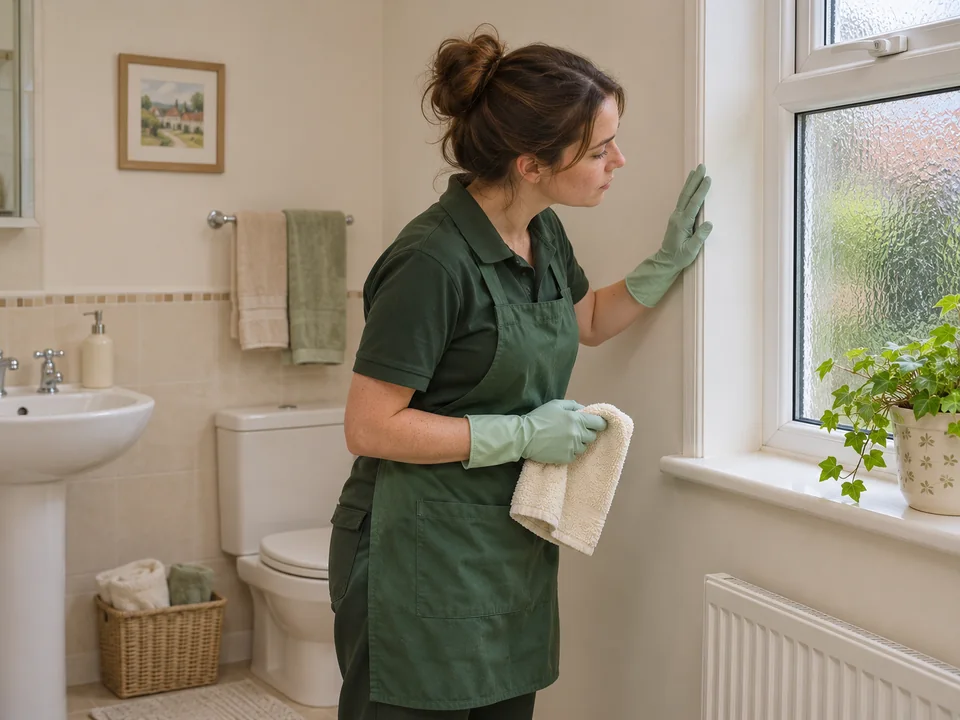
Hand over the room and identify any unresolved building questions
At the end of the visit we review the areas treated with you or the contact responsible for the property. We explain which surfaces we cleaned and which could not be considered, whether due to access or material condition. If another person requested the work, we agree who should receive the outcome. We refer back to the original room list and call out any changes so the person making later decisions has a useful record.
Where earlier water entry or ongoing moisture is part of the enquiry, we explain which question needs further attention from the responsible contact. Our review concerns what could be seen and what work was agreed for those accessible surfaces. Further investigation of the building or a damaged finish may need its own arrangement. Keep any known repair dates and room notes with the work description so they can be passed to the right person.
If the keyholder will leave before the handover, tell the office how to reach the person who needs to hear the outcome. We can then agree how any observations about an affected surface will be communicated. This matters when the resident, the owner and the person arranging visits have different roles. A clear record helps them agree what to do if a surface needs another assessment.
| Handover item | What we go through |
|---|---|
| Agreed work | The visible areas cleaned during the visit |
| Limits | Any material or position that could not be included |
| Separate decisions | What needs assessment and which contact should manage it |
| Follow-up | Who receives the outcome and retains the room details |
Prepare an Erith enquiry with the details we need
Use the booking page to organise the address, affected rooms and what is known about any changes before you call. We discuss access and confirm what the visit is for before you plan around it. If a room is being emptied or a visit depends on the availability of a managing agent, give the expected times and who can approve a change. That helps us consider the next step without asking you to guess the condition of a surface you cannot currently see.
If the property will change hands before work can be arranged, identify who can open the door and who should receive the quotation after the change. Keep the same description for each affected room and mention if a later visit will have access to areas currently blocked. We review the relevant changes and can then discuss what would be suitable at the new time.
We are sometimes given several descriptions of the same area at different points in the enquiry. If one comes from a survey or an earlier visit and another comes from the current occupier, tell us which one applies now and where it can be seen. We start from the current accessible location and explain when an earlier image or description is useful for comparison. At the end we refer to that location again when explaining which parts were cleaned.
When discussing a room that also needs to be used by the household, say whether there is a period that suits access and whether another room must remain available. We review the working area in that context and confirm how it will be handed back. These details help keep the agreed cleaning and the use of the property aligned on the day.
Questions about arranging mould removal
How do you locate a flat near the town centre with access from a separate road?
We use the full postal address together with the actual visitor entrance and the relevant door label. Explain who can give access to each door.
What happens if the resident cannot show you both affected rooms?
We record which rooms are accessible and what can be considered during that visit. We discuss separate arrangements for a room that remains locked.
How do you approach marks along a finish that changes beside a fitted cupboard?
We identify each visible surface and assess its suitability separately. If anything is hidden behind the fitting, we discuss what would need to be arranged first.
Can I discuss the work before I have a confirmed move-out time?
Yes. Give your expected date and the remaining access details. We can discuss which arrangements need confirming before the visit is agreed.
How will I know which wall was cleaned if another person has the key?
We review the agreed room description and explain which suitable surfaces were cleaned. Confirm who should receive those details when you arrange the visit.
Do you assume a nearby repair is complete when deciding how to clean?
We only use the repair information you can confirm. We discuss any outstanding property question separately from agreed visible surface work.