 Housekeeper
Mould Removal in Muswell Hill
We plan mould removal in Muswell Hill around the room, the visible finish and the route to it. If part of the affected area is beyond a high landing or fixed feature, we agree the accessible work before confirming treatment.
How do I identify a home near Muswell Hill Broadway?
Give the complete N10 address and the route to the correct door. Tell us if someone has to meet us first.
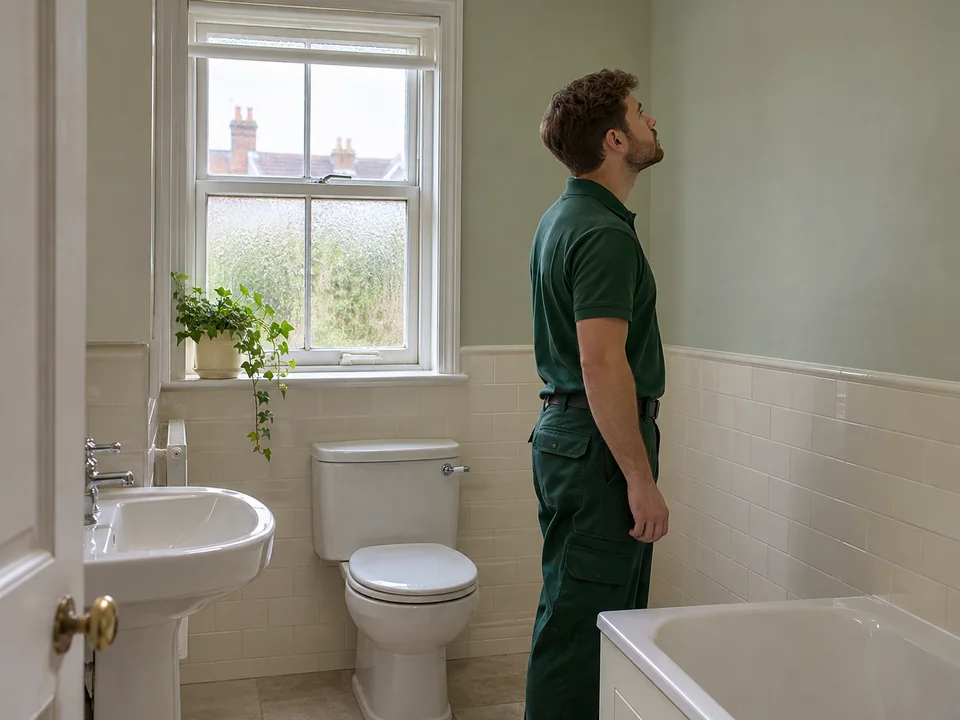
Can you assess a high wall beside a stair?
Describe the available approach and what lies beneath the mark.
Get the height and room layout into the first discussion
We ask where you first saw the visible issue, which finish it affects and how it can be reached. Give the room name and approximate dimensions of the mark. If it sits above a stair or a fixed unit, identify the nearest landing, window edge or fixture. A photograph from a stable position can show the route to the finish. There is no need to reach high or lean around an obstruction just to obtain a close-up. We use the accessible view and your description to discuss whether an assessment can be arranged and what practical limits apply.
Tell us if the same room has more than one visible position. An upper patch might need different access from a section beside a skirting or recess. We note both positions and describe what can be seen with the fittings left in place. If another person will meet us, give them the same room labels and tell us which surfaces were raised. That helps us make the visit practical, particularly if the person who first noticed the marks will not be present.
We ask whether you are expecting a property assessment, want to discuss treatment on an exposed hard finish or need to establish what still requires another decision. The answer affects how we discuss the room and what information should be available before the visit.
If the reported area is at the end of a narrow landing, tell us whether the room door can open fully and whether anybody needs to keep that route clear. We ask what somebody can observe from the available floor space before agreeing the assessment. If the pictures were taken when a different room or doorway was open, explain which arrangement currently applies. The visible finish and the access needed for the proposed work are separate practical questions.
- Identify each room and level of the affected area.
- Describe an approach from the floor or a stable doorway.
- Name the person who can show us the positions.
Confirm access around the N10 address
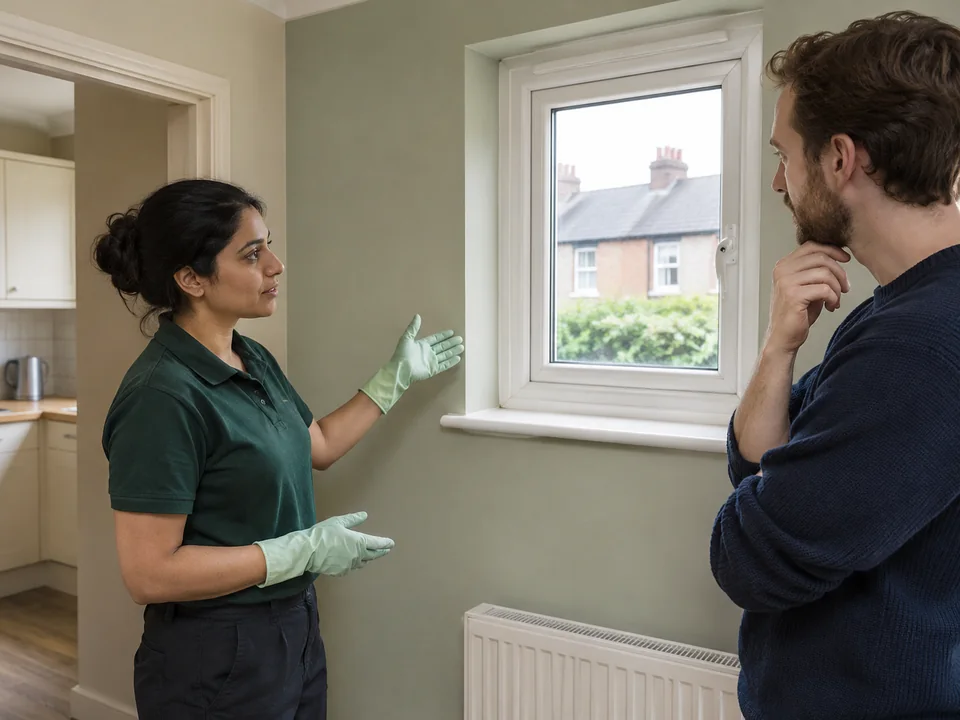
Haringey identifies Muswell Hill Library on Queens Avenue in N10. A local landmark can orient the enquiry, but provide the full address, dwelling number and entrance for the actual appointment. If the doorway is reached from a side path or separate stair, explain the directions and tell us who can open it. Some properties require somebody to meet the visitor at the street or a shared entrance. We confirm the proposed route to the room, including the floor and anything that affects access once inside.
Tell us if a gate, steps or a narrow internal position affects the approach. Where another person gives access to a communal door or holds a key, check when they can be available. We ask about the arrangements that apply to the present appointment rather than assuming the circumstances from a prior visit. The person agreeing the proposal should know which entrance and rooms can actually be made available. If a route serves a neighbouring dwelling or building area, explain who controls it. We can then discuss that access separately from the finishes visible inside your home.
| Access point | Detail to provide | Why we use it |
|---|---|---|
| Outside approach | Full N10 address and the door to use | Identify the correct property and entrance |
| Inside route | Steps, floor and orientation from the entrance | Arrive at the affected room |
| Separate permission | Named contact for a shared or restricted area | Establish what can be viewed on the agreed visit |
Assess how the finish changes at height or next to a fitting
We consider the finish that can be seen and the state of the material beside it. A mark may follow a painted surface and meet a decorative edge, hard tile or damaged covering. Give the approximate end of the visible portion and describe which side lies beyond a fixture. We ask which room, level and finish are involved so the proposal can name a precise position. If a patch appears at a ceiling joint, tell us what lies below and above as far as you know. Leave any concealed portion for a separate decision if it cannot be inspected from the room.
Any earlier repairs or decoration should have their own description and dates. If the marks appear in the space beside a repaired section, mention where the repair ended. We review the current condition and ask which existing record can be supplied. We discuss any issue requiring a separate property assessment before committing to work on a surface. If one finish is visibly damaged while another remains intact, identify them separately so the exposed hard area can be considered on its own terms.
When the high area can be seen from more than one floor, identify which view shows the front of the finish and which just shows a side or edge. This can make it easier to record an approximate boundary without relying on a photograph from one angle. We use those distinctions to discuss which part can be assessed directly and where another access decision may be needed.
| Finish or location | What we assess | Decision to make before work |
|---|---|---|
| High painted face | Position, exposed condition and means of approach | Can it be assessed and reached under the proposed arrangement? |
| Adjacent lining | Extent of visible damage and changes in material | Does it need a separate decision? |
| Area behind a fitting | The exposed boundary and what remains out of view | Where does the accessible assessment stop? |
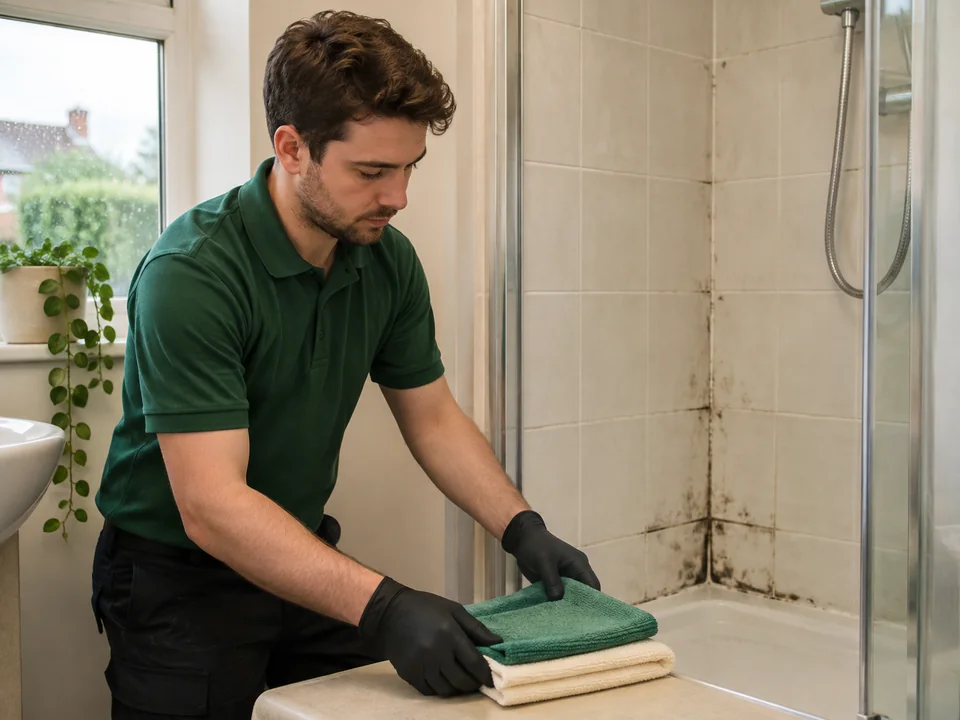
Agree practical preparation without disturbing concealed areas
We discuss preparation with the person who can make the affected room available. Explain if the area is used regularly, which things must remain in place and which route is open. If the room cannot be reached without passing through a shared space, let us know which person can grant access. We take those details into account along with the condition of the visible finish. Where a mark can only be seen from a particular landing or angle, describe what space is available around it.
If a separate visit is due to change the room or expose a different finish, explain when it can happen and who is arranging it. We can discuss an exposed surface now without assuming a concealed location will be ready on the same day. Some arrangements may be temporary, so tell us how the room will be set up when we are due to attend. If the keyholder or room use changes, let us know so we can consider the proposal with current information.
- Tell us which fittings remain in place.
- Confirm who can provide the route through any shared space.
- Mention work that may alter the room before our visit.
Physically remove visible mould where the agreed hard surface is suitable
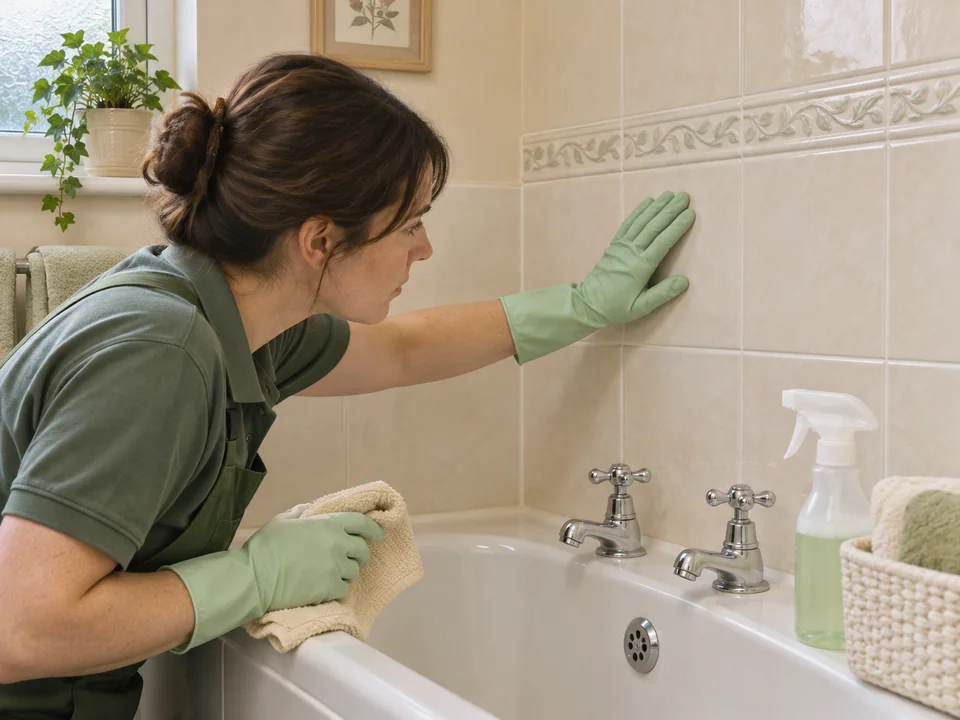
We physically remove visible mould from suitable accessible hard surfaces agreed for the visit. We confirm the position, finish and preparation before starting. If an adjoining material is visibly damaged, porous or out of reach, we discuss it separately rather than assuming the same work applies. The appointment covers the assessed and agreed surfaces we can access. If the layout differs from the original enquiry or the exposed condition has changed, we ask the named contact about that difference before extending what has been agreed.
After the surface work we review the accessible positions and explain which finishes were cleaned. We discuss aftercare for the areas treated and identify any access, material or property concern that remains. Where another person will deal with a concealed or separate location, we tell you which record is relevant to them and what our work has covered. This can help a property contact distinguish between a treated hard finish and an adjoining part that needs another visit.
During the work we keep each named position distinct. If the lower part of a hard finish is accessible while a higher part remains out of reach, the handover names the part treated. A request covering a whole room should not be confused with an agreement covering one visible area in that room. We check any variation with the relevant contact and explain whether the separate part would need more preparation or a different assessment.
| Stage | Our approach | Handover record |
|---|---|---|
| Preparation | Confirm the agreed accessible surfaces and approach | Room, finish and any limits |
| Surface work | Physically remove visible mould from suitable agreed hard surfaces | Named positions treated |
| Review | Review the work and discuss aftercare | Any unresolved concern for a separate contact |
Discuss quotes, timing and additional services separately
We consider the surface condition, available room access and named activities when discussing a proposed price. Ask whether the quote concerns an assessment or agreed cleaning and identify any other finish that has yet to be seen. If the enquiry has moved from one room to several, tell us which one needs priority and which contacts are able to arrange their access. We can then consider the most useful order for the visits and record the areas that still need information.
If you also want an end of tenancy clean or regular housekeeping, give us the room and task list separately. The additional work may depend on a repair, a handback or the point when a room is available again. We discuss that timing without treating it as automatically included with the surface appointment. If somebody else will receive the findings, give us their role and tell us what the next decision depends on. Keep the names of the affected positions so that each visitor can locate the finish or area they are expected to consider.
If the original concern came through someone who will not be there, share a copy of the room descriptions and proposed work with the person giving access. They can help identify where the surface changes or where there is no further view. We discuss how the outcome will be shared after the room is reviewed. A record naming the specific wall face or part of the landing is more useful than a general note that a room was visited. If a separate inquiry later concerns an adjoining position, tell the office how that position is related to the original assessment.
- Ask what the quote covers and which areas remain separate.
- List additional room cleaning with its own date and requirements.
- Confirm who receives the review and who acts on separate findings.
Questions about arranging mould removal
What directions make an N10 visit easier to arrange?
Use your full address and the doorway leading to the affected room. Add the meeting point for a visitor if access needs a keyholder.
Can you use a photo taken from below a high wall?
Yes. Tell us the approximate height and how the surface is approached. A wider image can identify the location from a stable position.
Would you examine a hidden part beyond a fixed feature?
We consider the exposed position and record the concealed area. We discuss any separate assessment that might be needed.
What does your agreed cleaning involve?
We physically remove visible mould from the suitable accessible hard surfaces named for treatment and review them afterwards.
What should I say if earlier decorating changed only a narrow section?
Give the date and identify where the new finish starts and stops. Keep the current appearance separate from the description of earlier work.
Who gets the handover if I arrange the quote for someone else?
Confirm who can accept the proposal and who needs the outcome. Give the name of the person able to show the affected room.
Other Cleaning Services in Muswell Hill
Mould removal service in London, End of tenancy cleaning, Regular housekeeping visits
Discuss your mould removal enquiry
Mould Removal Prices in Muswell Hill
Tell us which rooms are affected, the approximate size of the visible patch and what surface it is on.
Get a Quote