 Housekeeper
Mould Removal in St John's Wood
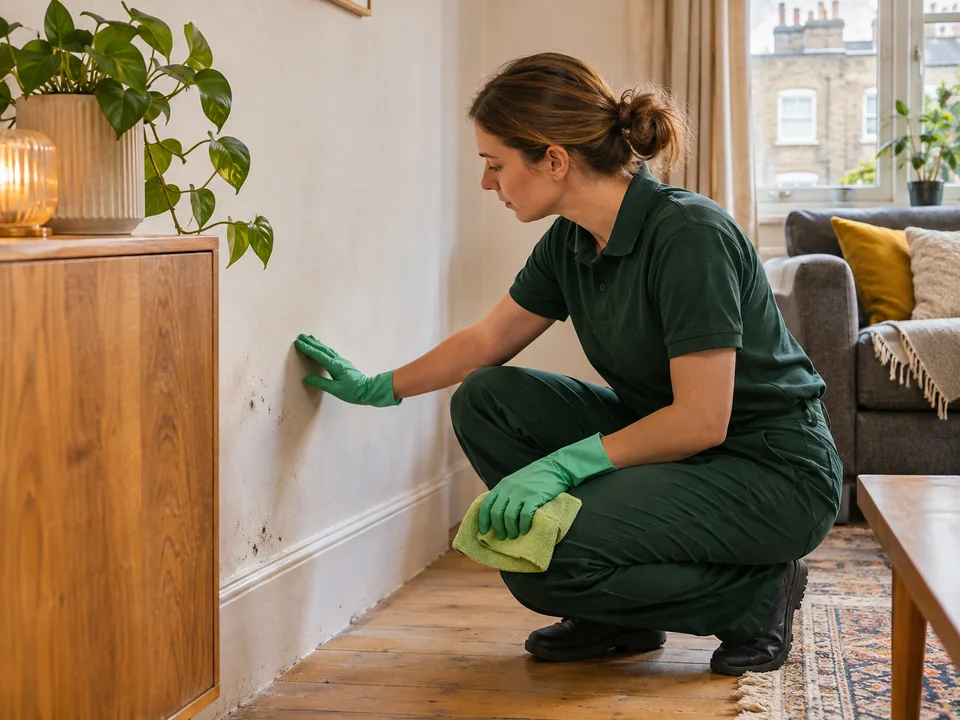
We plan mould removal in St John's Wood by assessing what is visible and deciding which finishes can be cleaned without disturbing fitted or decorative features. Our first discussion identifies the room, the practical access and any work that needs a separate decision.
Which address details help for a property near St John's Wood High Street?
Give the complete NW8 postcode, dwelling details and actual entrance. Add which person can open the affected room.
What if a decorative feature hides part of a mark?
We consider the exposed area and note the parts that need a separate access decision.
Identify the surface and the feature next to it
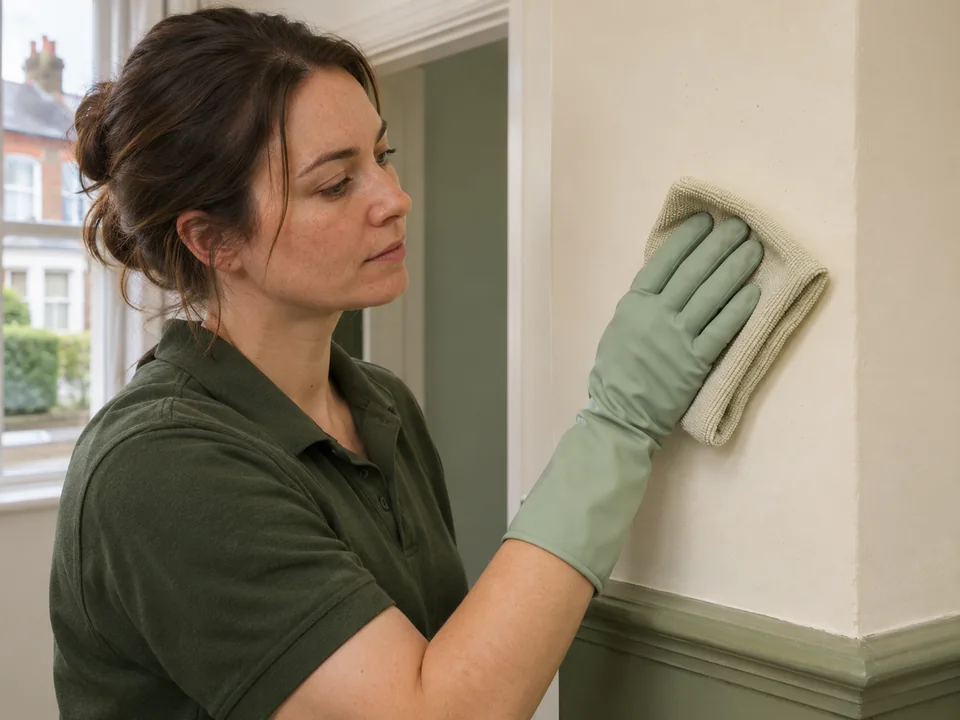
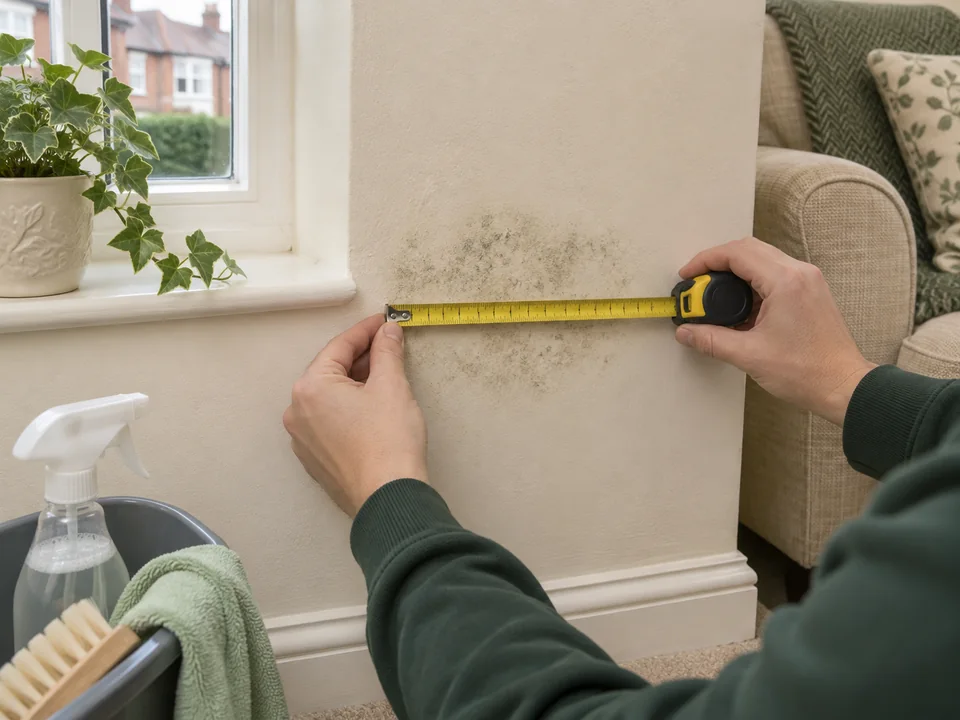
Our first questions establish which room and finish you want us to assess. Give an approximate size of the visible mark and its position relative to a permanent feature. If it appears below a dado, beside a decorative surround or along the paint at the corner of a recess, say what part can be seen clearly. We ask which surface meets the mark and whether any finish looks raised or loose. The answer helps us discuss the treatment of suitable hard materials before committing to an appointment that assumes all areas can be reached.
We take information about earlier decoration or repair alongside the current description. If a finish was painted again, tell us when and what part of the wall it covered. If there was a later change, mention the new position separately. A photograph from the doorway can make it easier to tell which finish the current picture shows. Leave any concealed layer in place; a report of the visible condition is enough to begin the discussion. Where more than one person is supplying information, agree the room and surface names before sending it.
A report about a mark may include a concern about the area behind it. We ask whether that part has been viewed by somebody with access or remains unknown. This gives us a precise basis for discussing a visible assessment and helps keep any investigation that requires separate arrangements outside the proposed surface work.
- Use the room and permanent feature to identify the position.
- Provide an approximate visible size and condition.
- Explain which parts are concealed or were only seen previously.
Arrange the actual residential approach in NW8
Westminster’s City Plan identifies St John's Wood as an NW8 local shopping centre. If your property is close to the high street, the frontage or a familiar landmark is useful only as an orientation point. We ask for the full address, flat or house number, actual entrance and details of the route through the property. Let us know if the residential door is away from the main frontage, or if an internal stair or landing leads to the affected room. Where a visitor needs to report to building staff first, give us their role and relevant access instructions.
If a manager can provide entry to the building but a resident controls access to the dwelling, confirm that both arrangements fit the proposed time. In a home with a separate lower-level entrance, explain which door leads to the room. We use the access details to discuss how the site can be visited and what can be viewed. Individual instructions may change from one appointment to the next, so give the office the current arrangement even if somebody attended the property before. Identify who can respond to a practical question if the person giving the quote is different from the keyholder.
| Access detail | What we record | Who can verify it |
|---|---|---|
| Address | Full postcode and exact dwelling entrance | Person arranging access |
| Route indoors | Landings, floor and any shared passage | Resident or building contact |
| Key handover | How the room is opened and who meets us | Keyholder or attending contact |
Assess mixed materials around decorative features
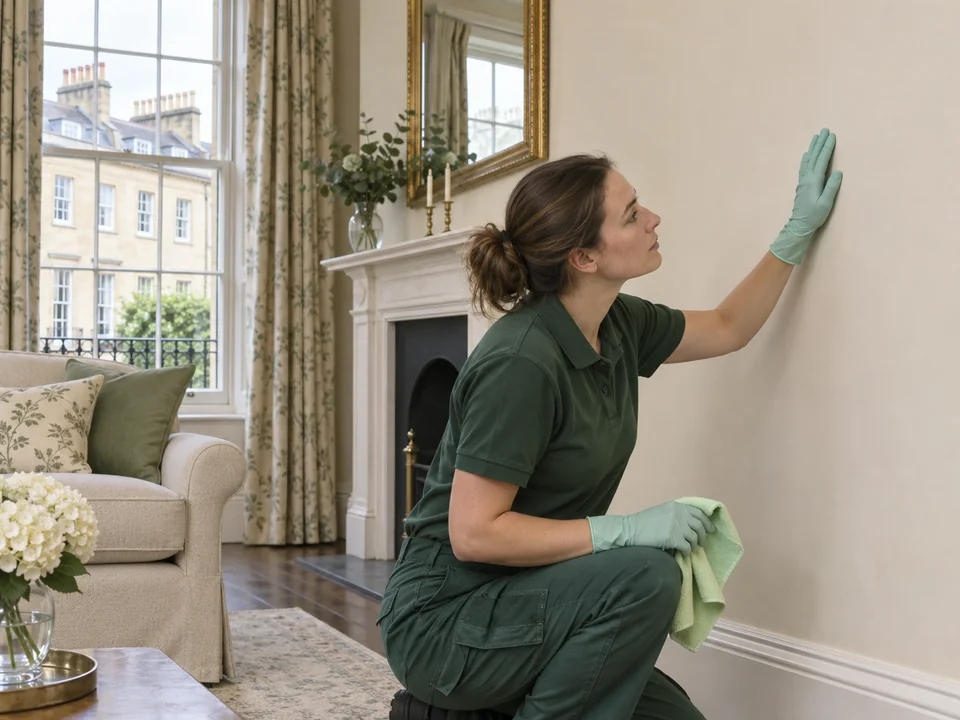
We look at which finishes are exposed and how the visible mark meets a neighbouring surface. A hard painted face next to paper, sealant or a piece of fitted trim may need its own decision. Identify both materials as far as you can and tell us which one shows damage or is not easy to reach. If a photograph only shows a close view, tell us which side of the feature it shows. We can use the relationship between the feature and the room to understand what remains accessible for assessment without asking you to alter the finish.
Where a finish appears fragile, loose or concealed, we discuss which material may need separate consideration before any cleaning is agreed. Sitings close to an ornament, lining or fixed cabinet should be described in terms of the visible boundary. If a repair or another assessment is already due, explain what it covers and which part might be exposed afterwards. We can record an accessible hard surface separately while another person makes a decision about an adjoining finish or property issue. The agreement should make the limit clear before work is proposed.
We also ask about how the feature is finished. If the visible face is painted but a narrow adjoining edge is not, note the point where that difference begins. A wider photo can show its position without relying on the names of decorative elements. We use that view along with the room description when we discuss which exposed finishes are suitable for assessment and which position would need to remain undisturbed.
| Visible position | What we consider | Point to distinguish |
|---|---|---|
| Painted face beside a surround | Condition, edge of the mark and access | Treatment of an exposed hard surface |
| Raised decorative lining | Visible extent and adjacent material | Separate assessment or decision about the finish |
| Mark beside a fixed item | Which part can be reached while the item remains fitted | Any concealed portion outside the visit |
Prepare access while agreed fittings stay in place
We discuss preparation after the room and exposed positions have been identified. Describe where furniture or fixed features restrict the approach and which items must stay in place. If an area can be viewed from the side but there is little space directly in front of it, say so when we discuss the room. We consider practical access as well as the existence of a visible mark. If permission from another person would be needed to change the room, agree who takes that decision before arranging the visit.
For an occupied room, tell us what is normally used nearby and whether the available access depends on a particular time. We discuss how the agreed layout will work for the person attending and the occupants. If another visit will alter the finish or rearrange the room, provide an update so the proposed preparation is based on what is actually expected. We distinguish work that can be agreed with the present arrangement from an area that will only become available if somebody acts first.
- Identify fixtures and features that should stay in place.
- Discuss the available approach to the exposed area.
- Tell the office if planned work changes the surface or route.
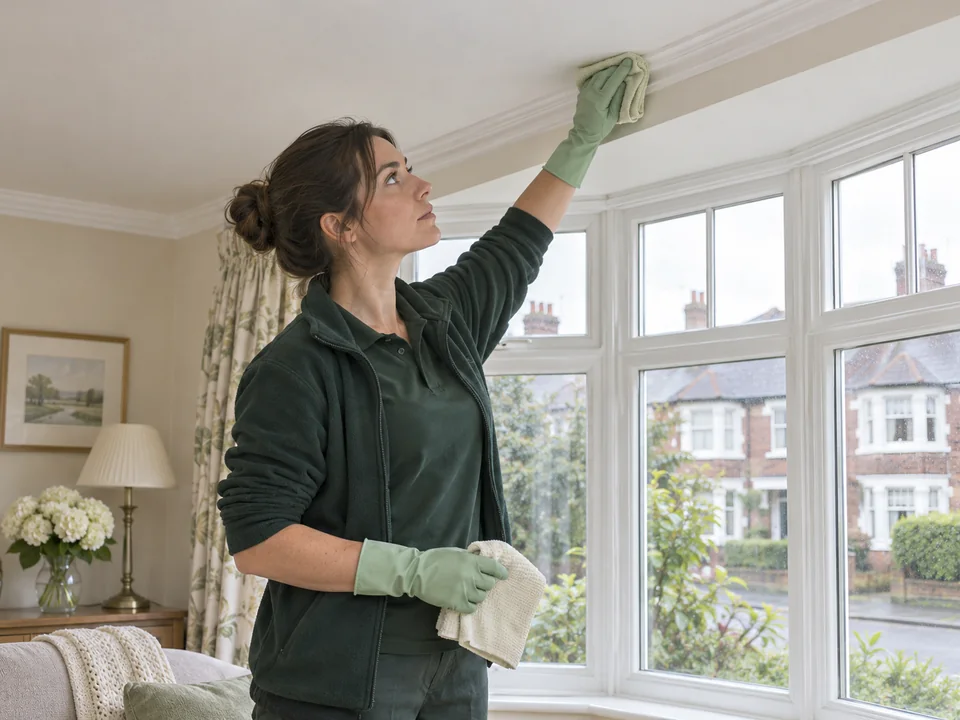
Clean the suitable hard finish and confirm what was covered
We physically remove visible mould from suitable accessible hard surfaces included in the agreed work. Before we begin we check the room and named finishes and confirm the preparation discussed. If the mark continues onto a visibly damaged or different material, we establish the boundary and agree what needs separate consideration. Should access to a named surface differ from what was proposed, we discuss that with the person authorised to make decisions. The treatment relates to the exposed hard areas that have been assessed as suitable and included.
We complete a review of the accessible areas and explain which surfaces were cleaned. We distinguish a finish treated under the agreement from a neighbouring feature or concealed part left outside the work. We discuss aftercare for the treated position and clarify which separate questions should be raised with the person responsible for the property. A short record naming the finish, room and relevant feature makes the handover easier to understand, especially if the person receiving it was not present for the visit.
For an area next to decorative material, use the same position names at assessment, during the proposal and in the handover. This helps us and the person receiving the outcome distinguish what happened on the exposed hard face from what remains unknown behind the feature. If further work later changes the access or visible finish, tell us what has changed so we can discuss any next appointment on the basis of the new information.
After an assessment we can describe the preparation agreed for the hard surface and distinguish an adjacent feature that was outside the work. If the property contact expects a written account of which part was treated, agree the room and finish names before the date. This avoids confusion where a new quote later concerns a visibly similar position on the other side of a fitted feature.
| Visit point | Our work | Record for follow-up |
|---|---|---|
| Before treatment | Confirm named finish, preparation and access | Agreed surfaces and limits |
| Cleaning | Physically remove visible mould from agreed suitable hard surfaces | Visible locations cleaned |
| Review | Check the accessible work and explain aftercare | Excluded or concealed area and any separate action |
Agree the quote and co-ordinate any other work
We discuss the quote with the person able to accept it. The proposal should identify whether the appointment concerns assessment or agreed surface work and name the rooms and materials covered. If a follow-up depends on further access or information from a property contact, tell us who can provide it and when. Where a separate room or finish has become accessible since the enquiry began, describe it before relying on the previous proposal. We use the information to check whether what has been agreed still corresponds to the position at the property.
If you are arranging general cleaning after the specialist visit, explain the rooms and tasks separately. For housekeeping, discuss which rooms are ready for regular work. For a one-off clean, explain what the visit needs to cover and how it fits around any other appointments. We can consider the timing of the additional work once the required access is understood. Keep those arrangements distinct from questions about the surface and the property, so each attendee has the right description of what has been agreed.
If a planned date relates to a property inspection, tell us what information is needed beforehand and who will receive it. We discuss our accessible-surface work separately from any decision affecting the structure or a concealed part. When a separate visitor needs to see the assessment, retain the position and date so that work can be considered appropriately.
- Ask which areas are included and what lies outside the proposal.
- Identify who can accept the quote and receive the final review.
- Discuss separate cleaning or property appointments by their own room and timing requirements.
Questions about arranging mould removal
Can you look at a hard wall beside decorative trim?
We consider the exposed condition and decide which surfaces are suitable. We agree what stays outside the work where materials differ.
Should I give the building name and full NW8 postcode?
Yes. Give those details and the entrance that leads to the dwelling and room involved.
What if an earlier paint layer is lifting beside the visible mark?
Describe where it lifts and what can be seen nearby. We discuss the damaged finish separately before agreeing treatment.
What work do you carry out on the agreed hard surface?
We physically remove visible mould from the suitable accessible hard surface, then review the area and discuss aftercare.
Can a building manager meet you in place of the resident?
Tell us what access they can provide and who can respond to decisions about the dwelling. We can discuss both contacts when arranging entry.
What should I tell you if a fixture was removed between photographs?
State when it was removed, which area is now exposed and whether the earlier view can still be matched to the current position.
Other Cleaning Services in St John's Wood
London mould removal service, Regular domestic cleaning, One-off cleaning enquiries