 Housekeeper
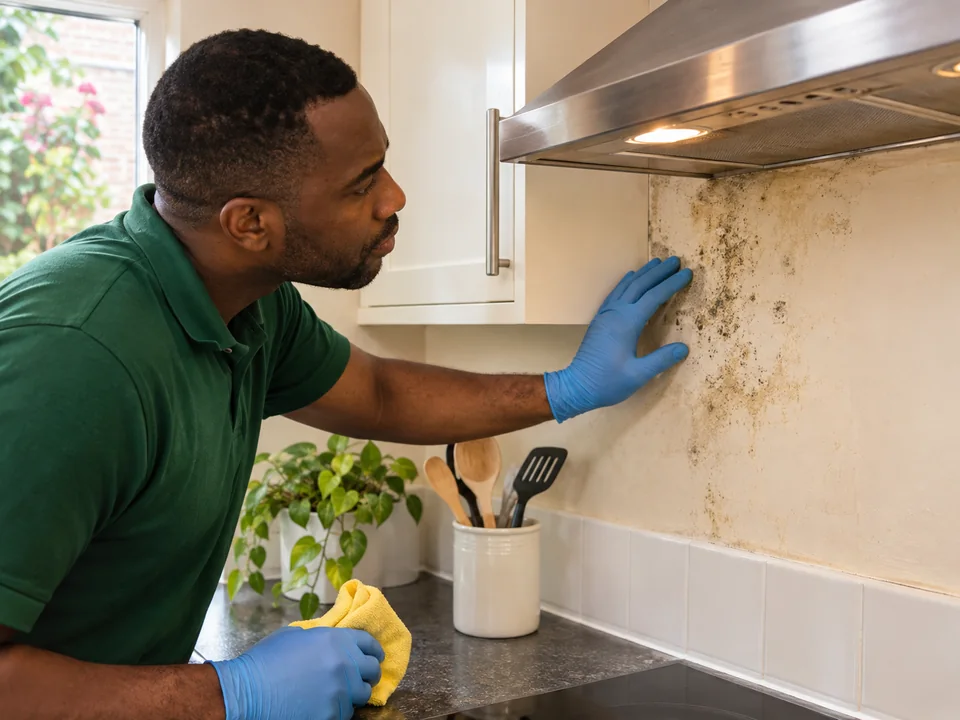
Mould Removal in Greenford
We record the condition of the kitchen and bathroom separately before arranging mould removal in Greenford. This helps us agree which hard finishes can be cleaned while the rooms, fittings and access are organised around your household.
Can I ask for a visit near Greenford Broadway?
We ask for the full UB6 postcode and doorway. Include any route that leads to the kitchen or bathroom from a side entrance.
Do you consider a tile face beside a worn seal?
We assess the accessible tile and seal separately before agreeing surface work.
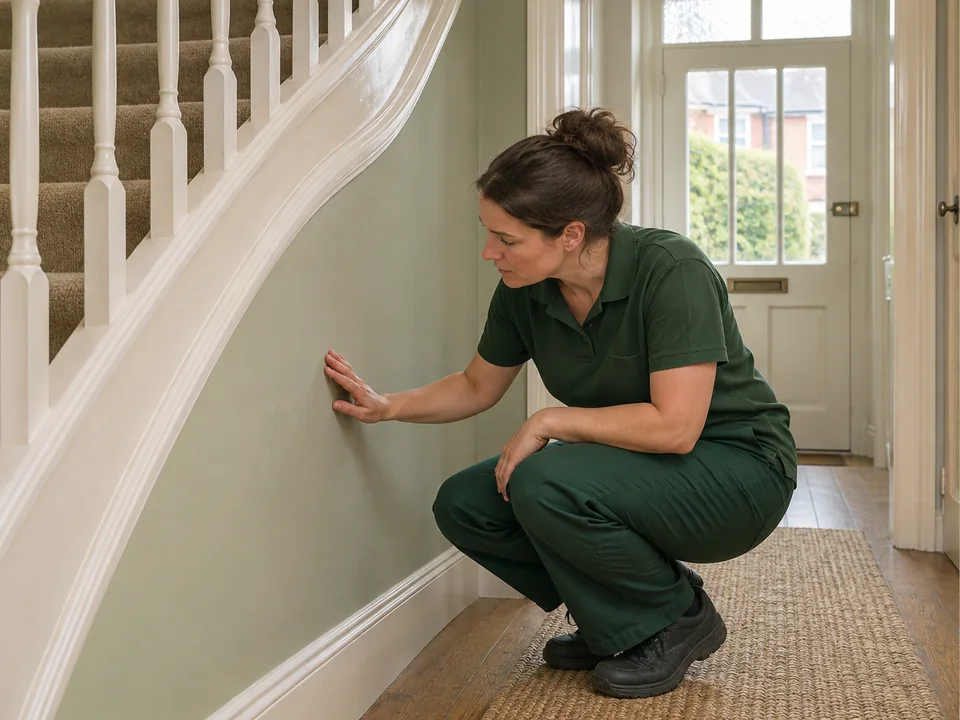
We start by establishing how the kitchen and bathroom are used
Tell us which rooms show visible marks and what needs to stay in use during the proposed visit. We ask whether a single bathroom is shared, whether kitchen equipment affects access and whether there is space near the affected hard finish. We use that information to discuss assessment around the actual room arrangement. If there are two sightings in a kitchen, such as the side of a worktop and a mark below a window, name each position. The details help us prepare for what someone can actually observe when they enter the room.
We take descriptions in relation to features that remain in place. Tell us whether a mark is on the worktop joint, a hard splashback, below a window or on the paint beside a fitted unit. For the bathroom, describe the tile face, grout line, shower surround and any other finishes separately where relevant. If we receive more than one photo, use a room label and date for each. This helps establish the visible position and avoid treating photos of the same tile or wall edge as different areas.
Let us know whether an appliance has been moved or a room is being used differently since the pictures were taken. We can then consider the layout we are likely to see rather than relying on a picture alone. If preparations need to be agreed with another person, identify them before providing a preferred date.
- Label the kitchen and bathroom positions before sharing images.
- Describe the room use and any fitting that blocks access.
- Tell us about preparation that would need another person's agreement.
Agree the right way in near Greenford Broadway
Ealing Council describes Greenford Broadway as the town centre and identifies Greenford with the UB6 postcode district. If your property is close to a frontage there, give the actual address and the doorway into the dwelling. A local reference may help someone recognise the area, but a named block or a side entrance can still need separate directions. We confirm which approach you can provide and which floor or room can be reached. If a shared door leads to two properties, explain which entrance and floor belong to your home.
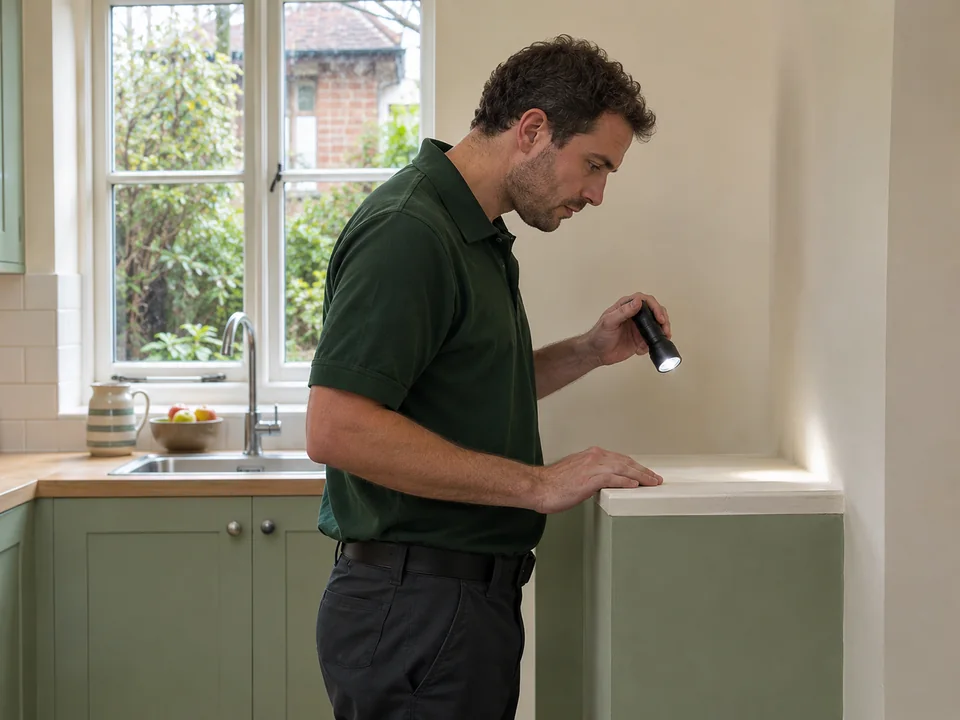
We ask you to name the person who can open the relevant rooms. If the kitchen is at the rear and the bathroom is approached by a different stair or hallway, tell us the route so both access arrangements can be considered. Where a resident cannot attend, confirm whether somebody else can hold the key and show the reported areas. If property rules affect the time or entrance, check them before arranging entry. We take these details along with the description of the marks because those are the conditions under which the work needs to take place.
| Access detail | What to provide | What it establishes for our visit |
|---|---|---|
| UB6 property | Full address, dwelling number and doorway | Which entrance to use |
| Approach indoors | Route to each room and any narrow access | How to reach the reported position |
| Keyholder | Person available and the time they can admit us | Who confirms practical access |
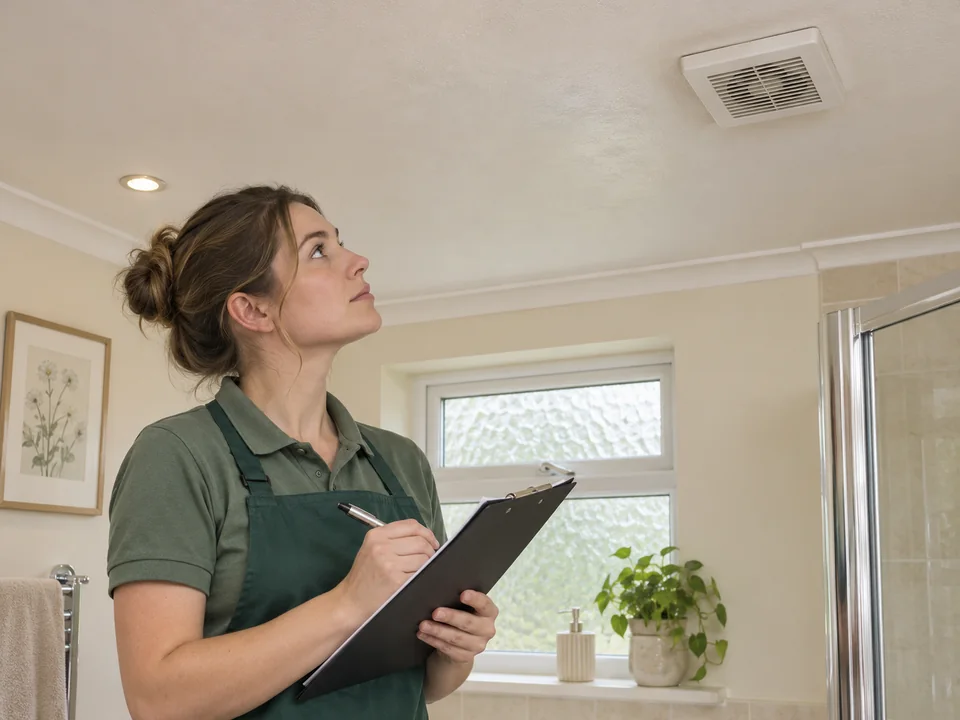
We review the kitchen around fittings and changes in finish
We ask what is beside the mark and whether it can be seen without moving a fixed appliance or cabinet. If it is under the sink, state whether the affected surface is a hard shelf, the face of a backing board or the exposed wall through an opening. For a mark above the worktop, identify whether the finish is tile, a coated panel or paint. We consider only the exposed position when something remains concealed. If an area appears distorted or loose, explain where the condition changes. A different material or damaged finish may need its own assessment before any work can be agreed.
If a window or extractor is close to the affected area, show where the visible mark sits in relation to the fitting. A wider view can provide this context while a close photo can show the state of the surface. We ask about earlier work only where it is relevant, such as an appointment that changed a fitting or exposed a new part of the wall. Tell us which material you can now see and which remains covered. We review the visible condition as it stands rather than assuming the current interest in one surface includes anything hidden behind it.
A photograph taken before a fitting was changed can be helpful if you also say which part can be seen today. We check the relationship between the earlier view and the visible position before discussing work. If a hard panel is sound but a neighbouring joint is loose, describe the transition. We can then assess the exposed hard face while recording an open question about the other material.
| Kitchen position | Useful observation | Question we resolve before arranging work |
|---|---|---|
| Under a sink | Visible material and condition of edges | Which area can be seen with the unit in place? |
| Beside a splashback | Where tile or panel meets the neighbouring finish | Which materials should be considered separately? |
| Near an extractor or window | Location of mark and unobstructed approach | Does any fitting restrict assessment? |
We consider bathroom finishes before agreeing treatment
In the bathroom we establish whether the concern is on an accessible glazed finish, a nearby seal or a surface beyond a fixed screen. The condition of a glazed face can be considered separately from a worn or raised edge. Tell us if it is a hard wall face, a painted ceiling or a panel. We ask what lies below the position if it is high, and whether a wide view shows enough to discuss the approach. If some areas are only visible around fixed fittings, we note the limit rather than asking you to expose more yourself.
We review how the room can be prepared, which fittings should stay in place and which contact can agree access. A bathroom that serves several residents may require a time when the area can be viewed without disruption. Give us the practical restriction before agreeing a date so we can discuss what can be assessed in that room. If a damaged lining or seal needs another decision, we distinguish it from the suitable hard surfaces that are being considered for treatment. That means the proposed work has an identifiable set of finishes rather than a general room name.
- Give the visible extent on the tile, joint or adjoining finish.
- Describe where a screen, panel or fitting blocks the view.
- Discuss preparation for a room that remains in use.
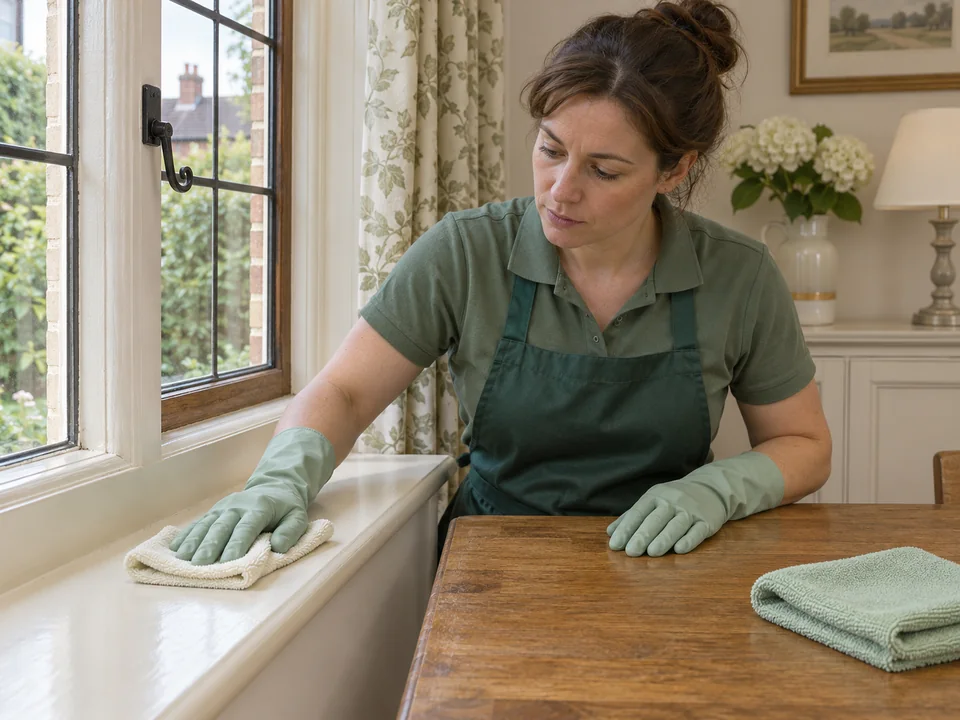
Clean agreed accessible hard surfaces and review the result
We physically remove visible mould from the suitable accessible hard surfaces included in the agreement. Before starting we match the areas to the room description and confirm the agreed preparation. Where the marks reach a different material or continue behind a fixed feature, we review what can be seen and clarify whether a separate decision is needed. Work on an exposed hard finish remains tied to that location and material. If another surface appears unsuitable or cannot be reached, we record it rather than silently including it in the cleaning.
After cleaning we review the accessible areas and explain what was treated in each room. We discuss aftercare in relation to the cleaned hard finishes and record any question left open about something concealed, damaged or in need of a separate property assessment. The position can be described by where it sits next to a fitting so the property contact can locate it later. If a separate repair concerns part of the kitchen or bathroom, we identify which details need to be passed on to the person responsible.
When the proposed work covers both rooms, we review the surfaces in each one before treating them. If the kitchen remains available but the bathroom cannot be opened at the agreed time, we explain what can still be done in the accessible room. We discuss the other area separately rather than treating the named rooms as interchangeable.
| Visit stage | What we do | What to retain afterwards |
|---|---|---|
| Preparation | Confirm the eligible finish and access in each room | Surfaces agreed and any fixed access limit |
| Cleaning | Physically remove visible mould from agreed accessible hard surfaces | Named finishes cleaned |
| Review | Check the work and discuss aftercare | Any separate material or building question |
Agree the timing and price around the two rooms
We ask what the quote is intended to cover before confirming dates. One room may be available in the morning while the other depends on someone arriving later. Explain what can be reached when and which issue is the priority. If a room still needs an owner's permission or another visitor has to complete work beforehand, we note that difference. We can discuss which part of the proposed visit remains practical and which area calls for another arrangement.
If a later kitchen appliance clean or recurring housekeeping visit is also under discussion, give us their own requirements. For oven cleaning, list the appliance separately from the wall or ceiling concern. For a routine visit, give the rooms and timings independently of any outstanding property question. We discuss each price against the named work and the access available. If you receive an estimate based on earlier photographs, tell us about any new changes before agreeing when we should attend.
We can make a useful handover when the person meeting us and the person receiving the outcome share the same room list. Confirm whether both need updates on both rooms or whether a separate property contact needs only a question about one position. Once an area has been assessed or cleaned, name it in the record by finish and room. That helps when a later appointment concerns an adjoining surface or a different stage of work.
A dated room record helps if somebody else makes the next appointment. Keep the description of what we cleaned separate from any note about an area that was only assessed. If a repaired fitting later changes what can be seen, tell us which location has changed and when. We use that information to discuss the appropriate next step.
- Set a priority if access to the two rooms differs.
- Discuss later cleaning by item or room with its own price.
- Tell us which people receive the final review.
Questions about arranging mould removal
Do I need to take a close-up behind a kitchen unit?
Describe the exposed face and the part the fixed unit conceals. We can explain what the assessment might cover without asking you to remove it.
How do I describe a shower patch near two finishes?
Tell us which part sits on the glazed face and which part touches the seal or adjacent finish. We consider those surfaces separately.
Is the Greenford Broadway landmark enough for directions?
Give the complete UB6 property address and correct residential doorway, even if the building is close to the Broadway.
What physical cleaning is included when you agree work?
We physically remove visible mould from the suitable accessible hard surfaces agreed for the visit, then review those areas.
Can we leave one room available while the other remains occupied?
Discuss which room can be reached and at what time. We confirm what the agreed appointment can cover under those conditions.
Should an oven clean and a marked splashback be listed separately?
Yes. Identify the appliance and the affected finish individually so we can discuss suitable work and timing for each.
Other Cleaning Services in Greenford
London mould removal service, Oven cleaning, Regular housekeeping