 Housekeeper
Mould Removal in Edgware
When you enquire about mould removal in Edgware, we ask which visible surfaces are affected, how they can be reached and what the household knows about earlier work. We use those details to discuss assessment, agree suitable surface treatment and review the areas covered at the end of a visit.
What address details do you need in HA8?
Give the full postcode, flat or house number and the visitor entrance. At a mixed-use building, identify the door leading to the home.
Can a patch be assessed after a repair?
Tell us the repair date, what was repaired and the visible condition now. We discuss which surfaces can be considered.
We identify the actual entrance and working area in Edgware
We start with the full HA8 address and the details that allow someone to reach the affected rooms. Barnet's local-plan inspector describes Edgware town centre around Station Road and High Street as including a mix of retail, residential and other uses. A landmark or development name can help with orientation. If the affected home shares a building with other premises, give the separate residential entrance and explain which route from that entrance leads to your floor. A block name, flat number and a named access contact all help when the postal and visitor approaches differ.
If the property has an entrance from another road or a route through a side gate, give the practical directions in the order a visitor would follow them. Include steps, a lift or a restricted corridor when relevant. Explain if a building contact needs to be present. Where the same property has a downstairs and upstairs area to consider, note how each can be reached. An enquiry can include several rooms without making all of them available at the same time. We use the route and access windows when discussing assessment and possible work.
Tell us who will show us the affected area and who can agree work. Where an agent is enquiring and the occupier knows the rooms best, use their information to confirm the location and visible condition. If keys are being held at a separate address, give the hours during which they can be collected or returned. Confirm that the person giving access can direct us to the right part of the home. Where that person cannot approve changes, we ask for a separate named contact before the arrangement is agreed.
An area such as a landing or shared entrance may need permission to view independently of a room in the flat. List it separately and tell us if the manager or owner has done anything to give access. A room may already be available for assessment while a communal section is awaiting another decision. We discuss the area we can consider on the information and permissions you have. A clear description of the home and the immediate route gives the office what it needs for a first discussion.
- Include the full postcode and agreed entrance.
- Describe the route to each room and any change in level.
- Identify who gives access and who can approve work.
We consider what the marks touch and which part is visible
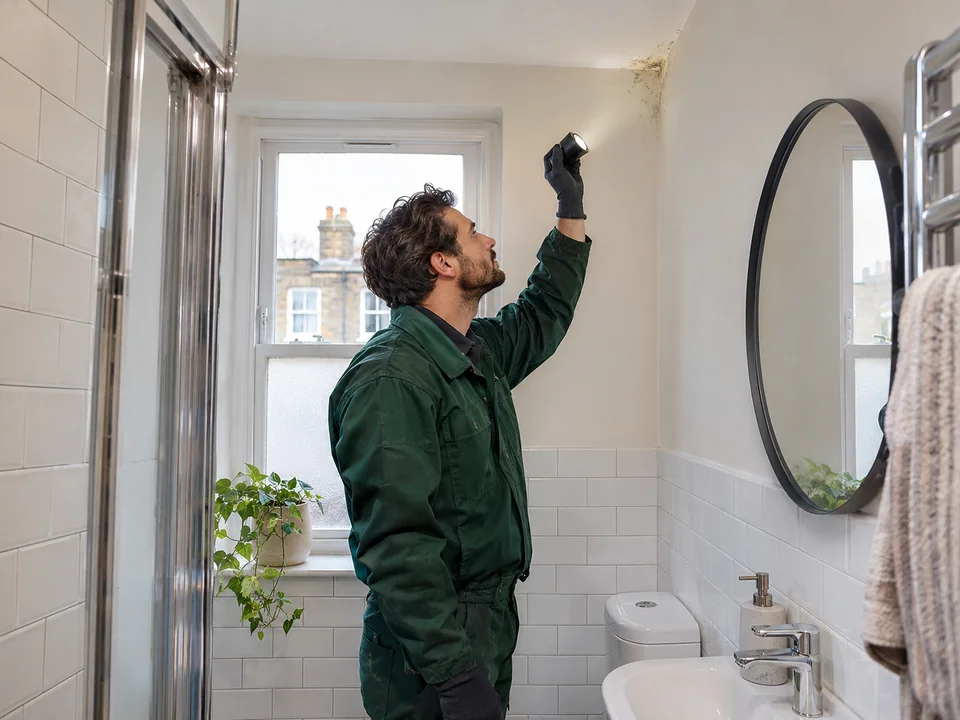
Give the room, approximate dimensions and visible finish for each affected place. At a window, point out whether the marks are on the painted wall, the hard frame or another adjoining surface. A wider view may show how the area reaches a corner or a fitting even when a close-up is clearer about colour. Include both views if they can safely be taken. We use the room description and the visible boundary together when considering what can be assessed and whether different areas need their own treatment decision.
If the surface is flaking, soft, damaged or an unknown material, let us know. That condition is relevant alongside the age and size of the marks. Where a finish was renewed before the signs appeared, give a date and identify which wall or fixture was affected by the earlier work. We can discuss a suitable exposed hard surface while a fragile or porous material beside it needs a separate decision. If information about an older finish is available from a decorator or the property manager, give the person who can confirm it.
We ask about any furniture or fixtures covering the edge of the affected place. Leave fixed items in position and describe what is visible. A mark that passes behind them may need a separate inspection before its full extent can be understood. If the area lies high above a fitted surface or stair, give the approximate height and the usable approach. That helps us discuss where assessment is possible. We identify the limits of the visible section and describe which other questions concern access or the material beneath the finish.
Give separate names to any patches that appear in different rooms even if you suspect a common cause. A smaller visible area on a wall can need a different assessment from a section of ceiling or a surface partly obscured by a panel. These differences affect what can be included and how an agreed area can be prepared. If the marks approach a covered or inaccessible part of the building, explain what you can see from the room. That helps us state where the assessment boundary lies.
| Reported area | What we consider | What may need another decision |
|---|---|---|
| Marks on accessible hard paint | Visible condition and extent of the solid finish | Suitability and any adjoining coating |
| Paper or porous material beside a patch | The visible edge and material condition | What is beneath it and whether further assessment is required |
| Patch obscured by a fixed item | Which part can be seen and how it is approached | Separate access to the material behind it |
| High patch near stairs or fixtures | Height and immediate surroundings | Safe access before any work is agreed |
We agree preparation and clean the suitable accessible surfaces
We ask whether the room needs to remain in use and which items close to the visible marks must stay in place. If access has been arranged for only part of the day, tell us which times apply. We discuss what can be cleared, what requires protection and what may limit approach to the area. We confirm the immediate working area before beginning, including the materials where the marks cross a boundary. If another person needs to review an adjoining surface or secure access to a separate room, we keep that part outside the work until the decision is made.
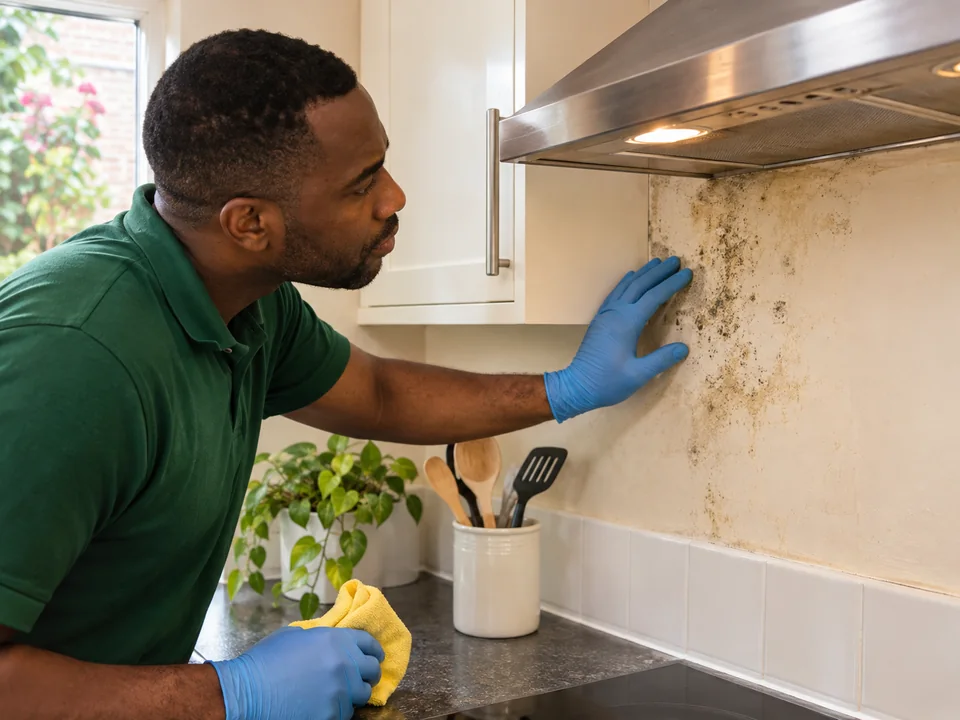
We remove visible mould from the agreed suitable accessible hard surfaces. If the material is different from what was described or a larger area becomes visible during assessment, we discuss the new information before proceeding outside the agreed boundary. We can keep one accessible hard surface distinct from concealed parts and materials that need an independent decision. Where the room layout has changed since you sent photographs, give the current approach and any new access limitations so we can review the preparation with the named contact.
Tell us about any repair or assessment already reported. Give the location, date and information you have, and mention if drying or the condition of the material still needs confirmation. We discuss the visible area and distinguish surface cleaning from investigations or repairs concerning the building. If water is still affecting a room or the same place repeatedly shows new marks, a property professional may need to assess what is happening before a surface visit can be agreed. Tell us what is known and which part of the property is waiting for someone else's decision.
Give the office any timing difference between the person who admits a visitor and the person who can make decisions about the plan. For example, a resident may be available at arrival while the property contact can be reached later. If access to an exposed section is already agreed, let us know how a separate area should be handled in that interval. We can confirm the arrangement for the visible place and discuss whether the other location should stay outside the visit.
- Confirm the immediate work area and nearby items to protect.
- Agree the suitable hard surfaces before cleaning begins.
- Discuss unresolved moisture or access questions with the respective property contact.
| Visit point | What we agree or do |
|---|---|
| Preparation | Identify the room route, work area and protection arrangements |
| Agreed work | Remove visible mould on the suitable accessible hard surfaces included |
| Unexpected condition | Review material or area changes before altering the proposed work |
We review the agreed areas and explain what remains open
At the final review, we identify which surfaces were covered and any that were excluded because material or access needs further assessment. Give the office the name of the person who should receive the information if they are not present. A landlord, resident or other property contact may need a different part of the record to organise a separate review. Keep the location names and existing repair references with the outcome. If you notice later changes, report where they are and when you first saw them so we can refer to the earlier areas discussed.
For a quote discussion, give the office the complete postcode, the accessible places you want considered and the finish in each. Include any deadline that affects access or handover and tell us if another appointment is being arranged. The price depends on the agreed areas, condition and work required. If you are also enquiring about an unrelated service, give the other rooms or tasks separately. We can discuss how a regular cleaning visit or a tenancy handover fits around the mould enquiry without mixing the two lists.
Keep the handover useful to someone seeing the property for the first time. Note which accessible place was addressed and which part remained hidden or outside the agreement. If a fixture or material still needs checking, identify who is responsible for the next decision. A later discussion is easier when the resident can match new marks to the original room record and describe what changed there, including any building work or different access since the visit.
When the property has separate room descriptions from a landlord and occupier, check that the handover uses names they both recognise. One person might refer to the smaller bedroom while another calls it the room above the entrance. Give the same unique location when reporting a later change. We can then discuss the earlier visible area and whether the new enquiry concerns the same hard surface, an adjoining finish or another room entirely.
- Record the surfaces covered and any separate questions.
- Agree who receives the outcome and who follows up building issues.
- Use the earlier room record when reporting a later change.
| Handover item | How it helps |
|---|---|
| Rooms and surfaces included | Connects the result to the original proposal |
| Areas left outside the agreement | Identifies where separate assessment or access is still needed |
| Named next contact | Helps residents and property staff direct the follow-up |
Questions about arranging mould removal
The flat entrance is around the corner from the building address. What should I provide?
Give the complete postal address and identify the entrance a visitor is authorised to use. Include the floor and the person who can admit them.
The window trim is marked and the adjacent wallpaper is lifting. Can they be included together?
List both materials and their visible condition. We can discuss cleaning the suitable accessible hard surface and whether the other finish needs separate assessment.
I can see only part of the patch because the rest is behind a fixed unit. How do I enquire?
Describe the exposed section and obstruction. Tell us who controls access to the fixed area so we can distinguish the visible assessment from any further investigation.
A household repair has taken place. Do you need to know which room it covered?
Yes. Give the location and date, the relevant information you received and the condition that is visible now. That helps keep separate repairs and observations clear.
Can we arrange the assessment for one floor if the other is closed?
Give the room list and available route and say which floor is closed. We discuss the accessible areas and keep the unavailable section for another arrangement.
If a new patch appears near an area that was treated, what should I tell you?
Give the room, exact position and date. Mention any building work or change since the earlier visit so we can discuss whether another assessment is appropriate.
Other Cleaning Services in Edgware
Regular housekeeping in Edgware, Carpet and upholstery cleaning in Edgware