 Housekeeper
Mattress Cleaning in London
Discuss treatment for a mattress with surface soil, a spill or persistent marks. The construction and condition of the mattress determine what can be attempted and how long to allow for drying.
Can you quote for several mattresses in London? List each size, construction if known, the sides affected and any stairs or lift restrictions.
Will the bed be ready that evening? Allow time for airing after treatment. Ask about expected drying for your particular mattress before confirming the appointment.

Read the label and identify the size
Give the size and thickness of each mattress and note whether you want the top, side panels or both faces addressed. A pillow top or quilted surface can trap soil differently from a flat woven cover. Tell us if the mattress is foam, sprung or a hybrid and share a label photo if accessible.
If the mattress has a removable cover, check how the manufacturer says it should be cleaned and tell us what can safely be removed. Some covers can be laundered separately and some are not intended to come off. Leave the protective cover in place until you know whether it needs separate cleaning.
Distinguish a spill from deeper moisture
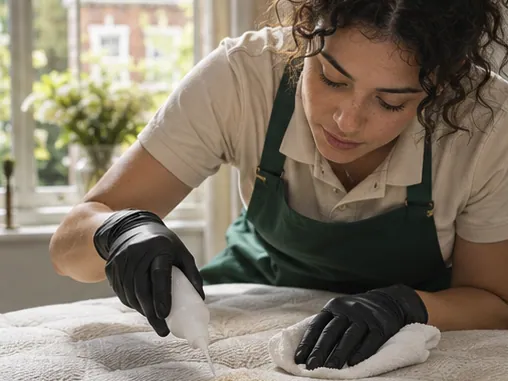
Say what the mark is, when it happened and how far it may have soaked into the filling. Include products tried at home, even if they seemed to have little effect. An old tide line or discoloured fabric may still be visible after surface soil has been reduced. A mark beside a seam can behave differently from a spill on a flat panel.
Tell us about persistent odour, damp storage or a mattress that has not dried after a previous incident. A wet core or widespread mould needs a different decision from textile surface cleaning. Ask if replacement or other action is more appropriate before paying for a treatment.
Mattress details for an informed quote
| Detail | What to supply | How it affects the visit |
|---|---|---|
| Size | Single, double, king or dimensions | Establishes surface area and handling |
| Construction | Foam, springs, hybrid or label photo | May limit treatment and moisture |
| Sides | Top, sides or reverse | Affects access and turning |
| Stain history | Cause, age and products tried | Helps assess appearance after treatment |
Agree a method compatible with the mattress
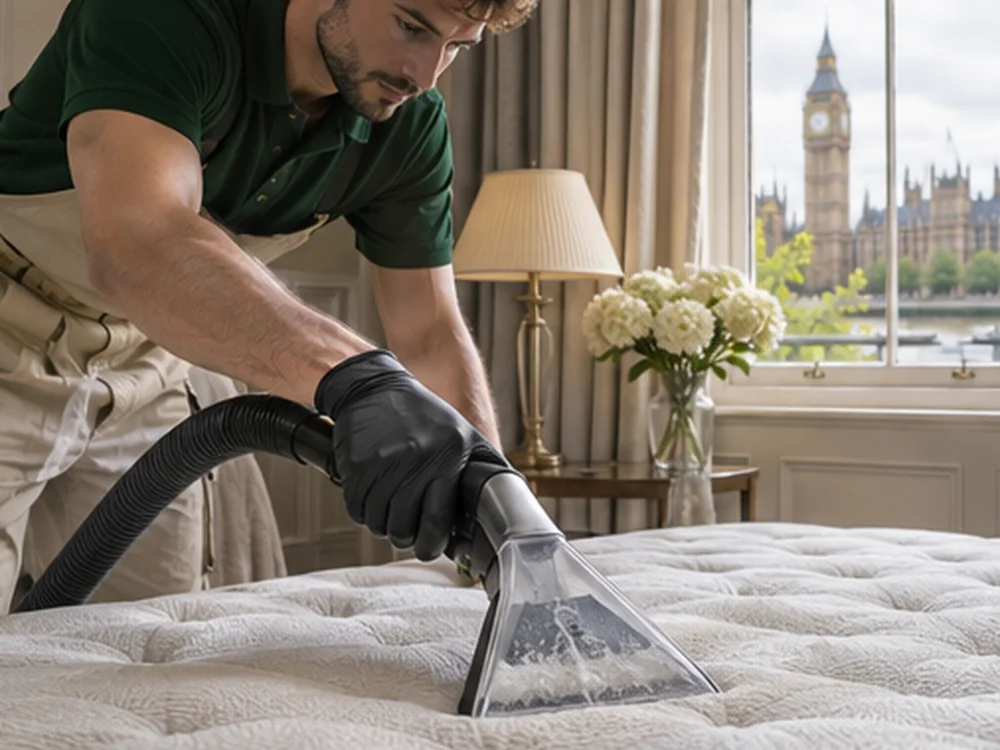
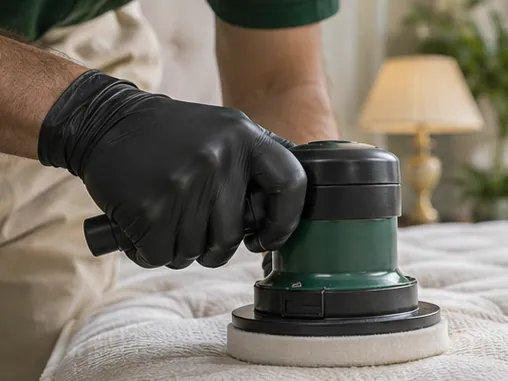
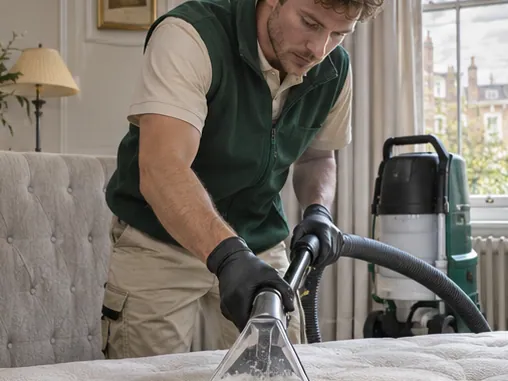
The existing service describes hot-water extraction for suitable mattresses. Moisture levels, filling and manufacturer advice need assessment before committing to a method. Point out foam layers, weak edges or a waterproof finish. Ask which surfaces would be treated and how the proposed approach accounts for drying.
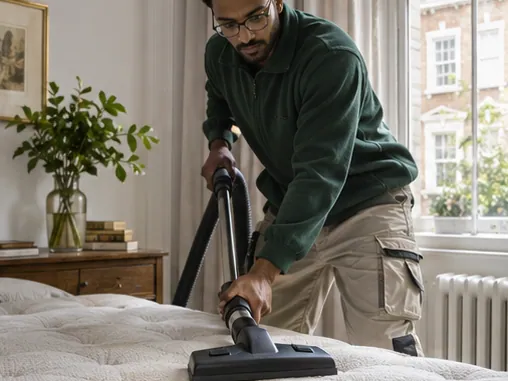
Vacuuming loose surface material, assessing marks and considering a targeted treatment are separate decisions. Tell us if there is a suspected infestation so it can be referred for the right assessment. An ordinary cleaning booking does not establish pest control or a medical outcome.
Prepare the bedroom for access
Strip linen and give the technician room beside the bed. Explain how the mattress sits on the base and whether access from both sides is possible. A large mattress may need more than one person to turn safely. Say who will help or agree in advance which faces can be reached.
Keep a route clear from the front door to the bedroom and tell us if there are steep stairs, a tight turn or no lift. Keep pets away from the work area and point out nearby electrical or water access if needed. In a bedroom with fixed furniture, photographs can help show how much working room is available.
Access and drying decisions
| Situation | What to discuss | Practical note |
|---|---|---|
| Bed in an alcove | Reachable sides and ability to move mattress | Plan around fixed furniture |
| Several beds | Sequence and room use | Prioritise beds needed first |
| Cold or humid room | Ventilation and drying time | Do not replace bedding while damp |
| Persistent damp | Likely source and depth of moisture | Inspect before agreeing surface cleaning |
Plan the rest of the day around the bed
Ask when the mattress can be dressed again and how the room should be aired. Do not cover the surface until it is properly dry. If you need to use the bed on the same evening, let us know before accepting a slot and arrange an alternative if drying will be uncertain.
For several bedrooms, say which bed needs to be ready first. If stains elsewhere are part of the same incident, list them separately. The process for a sofa cushion and the surface of a mattress may be different even when the spill is the same.
Put a mattress enquiry together
- Show the label and bed layout. Take one photo of the mattress and one of the accessible manufacturer label. Say whether it lies on slats, a solid platform or a fitted base. Mention if the mattress is difficult to move away from a wall.
- Mark what needs attention. Point out any discolouration or smell and say if others are present in a nearby room. Give the date of the incident if you know it. A report of a spill is more useful than a photograph alone when it may have reached deeper layers.
- Choose when the bed can be out of use. Give the time someone next needs it and explain if the room can be aired. If several mattresses are being assessed, list them in the preferred order and identify any guest room that is temporarily available.
A mattress in a box room or loft
At the quote stage, say if the bed takes up most of the floor. There might be access down one side and almost no space at the foot. Photograph how the mattress sits in the frame. If you would like the reverse cleaned, confirm that it can be turned safely and that the manufacturer permits using that face. A mattress specified for one-sided use may still need inspection, but its orientation and support should follow the manufacturer’s advice.
If equipment has to pass over a stair runner or through a child’s room, identify where it can be set down. Clear the route without shifting heavy furniture unnecessarily. In a home with a loft stair, provide the route from the main door and mention changes in height or stair width. This is also the time to ask which electrical and water access is needed.
Check room for equipment
- Bed · Show access at each side
- Stairs · Identify any tight turns
- Base · Explain handling and turning
Working around several beds or a furnished let
Give each mattress an identifier that matches the room. In a furnished rental, ask what the inventory requires and note any older stain documented at check-in. The mattress may have a surface mark, a protector that needs washing and a bed base that needs separate attention. Each should be listed appropriately. Confirm who can approve changes if a label prohibits the originally discussed method.
For a move or handover, avoid packing or covering a mattress before it is properly dry. Where the keys are due back on the same day, ask if an earlier booking would leave a more suitable interval. A mattress strapped into a vehicle or held in storage needs different practical decisions from one that can stay on a ventilated base at home.
Several mattresses
- Label each room and mattress
- Plan order around handover or sleep
- Allow drying before wrapping or covering
What to ask about after a spill
Share as much of the history as you know, including the amount of liquid, whether it passed through a protector and whether the room was cold or closed up. If the surface dried but a smell persists, ask whether the filling or the room itself needs attention. Do not assume everybody uses the same name for a stain type. Plain details about the incident and earlier treatment will help more than a guess.
Report the spill history
- What spilt and roughly how much
- What reached the protector or filling
- Which products were applied
Review the treatment before bedding goes back
Ask which areas were worked on and what care is appropriate for the particular fabric. Check the advice about ventilation, heat and how long to keep the mattress uncovered. A protector cannot fix a dampness problem if the material beneath it is still wet. Agree the plan for using the bed again before starting work on all the mattresses in a home.
Before putting the linen back
- Check surface and drying advice
- Air as advised
- Redress when properly dry
Tell us about lower rooms that air slowly
A basement or inward-facing bedroom may have fewer options for ventilation. State which windows open safely and whether the bed can remain uncovered for the period advised. If the bed is used by guests, ask about timing before promising when the room will be available again. Mention a dehumidifier or existing damp concerns without assuming they establish a suitable treatment. A different appointment time may make the practical arrangements easier when a room has limited airflow.
Limited ventilation
- Tell us which windows open
- Say when the bed is next needed
- Agree a practical drying plan
Mattress Cleaning FAQs
Can you clean a memory foam mattress?
Share the manufacturer and construction. Moisture may be restricted, so confirm suitability before agreeing a method.
Can you clean the bed frame too?
Describe the base or upholstered headboard as a separate item and include any care labels.
Should I turn it over first?
Tell us which side needs attention and ask about handling. Large mattresses should not be turned alone if they cannot be handled safely.
Can you promise a stain will disappear?
No fixed result can be quoted from the name of a stain alone. Tell us the cause, fabric and any earlier treatment for an assessment.
Discuss your mattress cleaning visit
Related services and information: Carpet and Upholstery Cleaning, Mould Removal.