 Housekeeper
Mould Removal in South Kensington
We plan the visit around the affected finish and the route through your South Kensington property. If an area lies below street level, above a stair or beside a fitting, we identify the accessible parts before discussing surface treatment.
Plan your enquiry
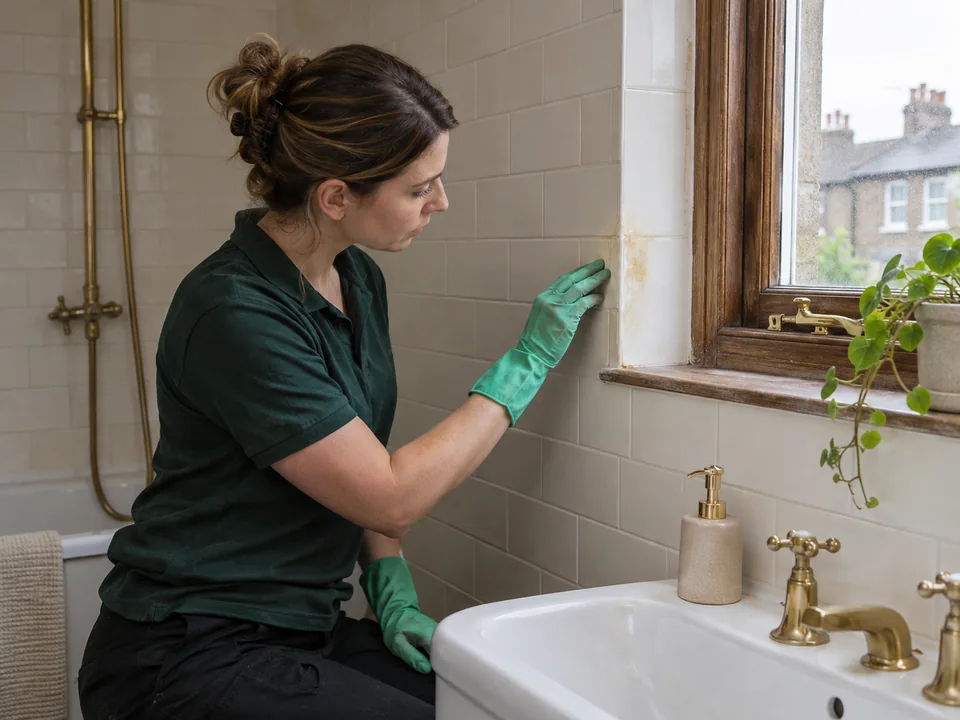
What address details help around South Kensington station?
The full SW7 address and the door to your dwelling help us distinguish the actual entrance from the local landmark.
Can you assess a ceiling above a stairwell?
Tell us the height and approach from a nearby safe position so we can discuss access.
Find the right approach before agreeing an assessment
We gather practical access information when you make the enquiry. The Royal Borough identifies South Kensington station in SW7, but the station area alone does not specify which door leads to a property. Give us the street, house or flat number, entrance and full postcode. Tell us if we need to use stairs, a route off the main street or a separate door to a lower level. If there is a building contact, describe where the visitor should report and what access they can provide. Those details help us assess whether the person attending can reach the correct room.
The person who opens the property may be different from the person who commissioned the work. We ask who can identify the reported area and who will be available to receive our assessment. If the issue extends to a landing, utility area or part of the building that serves another dwelling, state who can authorise access. We can discuss the area you can show us and keep a separate access question open. That is useful where a visit to one room should not be taken to include any adjoining property or shared area.
Let us know about any restrictions that are important to the route, such as a narrow stair or a room that has to remain in use until a particular time. We consider those conditions as part of the visit discussion. If the relevant access changes, tell us before an arrangement is made for someone to attend.
- Give the full address and the correct residential doorway.
- Describe stairs and routes that affect access to the marked finish.
- Name the person who can show the area and receive the assessment.
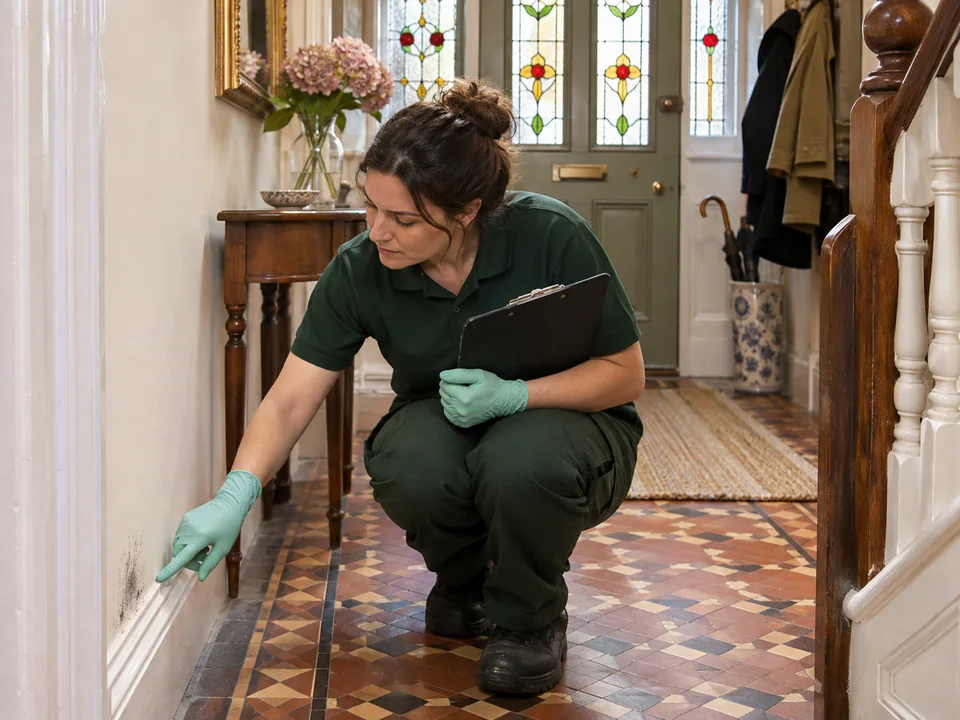
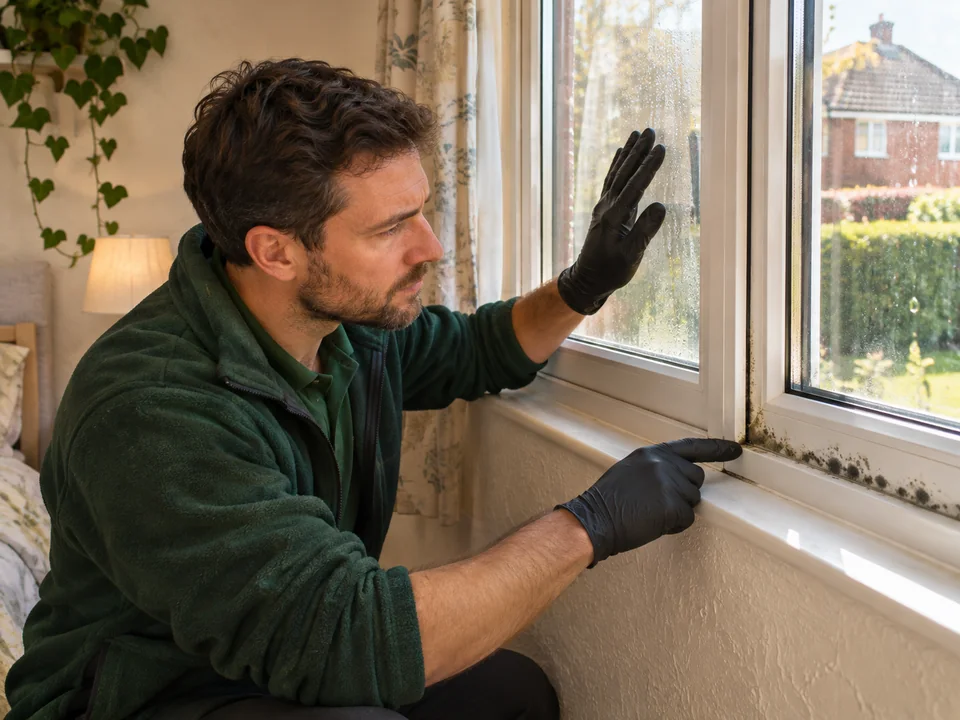
Record the boundary of a mark above or below a stair
We ask where a ceiling mark begins relative to the landing, joints and nearby fittings. Note what lies directly below it. Pictures from the floor or a stable doorway can show the position without requiring anyone to reach a high or awkward finish. If the mark continues into a cornice, a recess or an area out of view, describe the accessible part first. We use that information to discuss how the finish can be reviewed and whether a decision about access is needed before anyone attends. A mark in a room and one on a shared stair are recorded as distinct locations.
For a wall below street level, describe what can be seen from the room and which side faces a stair, vault or lightwell if you know. We ask which area the person attending can actually view. If the outside or adjoining room lies beyond access controlled by the household, identify who can consider it separately. The first visit may concern the visible finish inside, while a different person assesses an issue elsewhere. We clarify the purpose of the visit so those decisions remain separate.
| Location | What we ask for | Decision to discuss |
|---|---|---|
| Above a stair bend | Approximate height and access below | Can the visible area be assessed at the first visit? |
| Wall near a lightwell | Position in relation to the room and any outside area | Which face of the wall can be viewed? |
| Ceiling near a fitting | Wide view of the location and limits of access | Does any part need separate arrangements? |
Review the visible material and any earlier changes
We consider exposed paint, plaster and other materials separately where they meet within the reported area. A photograph may show a discoloured strip beside a decorative edge. Tell us where the visible mark stops and whether a surface has begun to lift or break away. If an area was painted or repaired earlier, describe the location and date. When the finish remains concealed by a fixed item, tell us what is in place. We can discuss the visible boundary without asking you to disturb a feature just to obtain an image.
Where one part of a surface looks damaged, we discuss whether it needs further consideration before any agreed treatment. A proposal for an accessible, suitable hard finish should identify its extent and the materials that lie outside it. If a different property professional is considering an issue above, below or behind that finish, retain the dates and positions from their records. We can use those observations to inform the enquiries about the exposed part without assuming that an earlier report applies to every area you can see.
If different works have taken place over time, keep the descriptions with the original dates and locations. We ask which work relates to an adjacent finish or room rather than assuming it altered the area under discussion. If a visible joint would be hard to identify after decoration, include the name of a fixed feature nearby. The information helps us record the present surface and decide what needs to be checked at the visit.
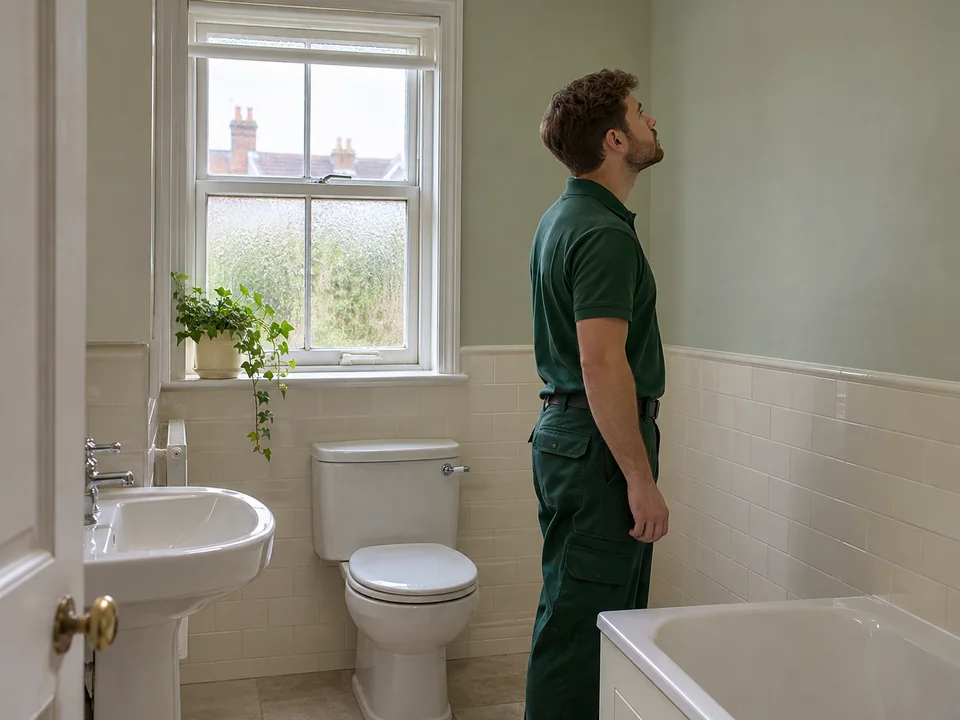
| Finish | Detail we consider | What stays separate |
|---|---|---|
| Sound accessible hard finish | Extent of the visible area and nearest joint | Areas not named in the proposal |
| Raised or damaged covering | Where lifting begins and what is exposed around it | Any material decision needed before work |
| Fixed or concealed area | Where the exposed surface ends | Access or assessment beyond the visible finish |
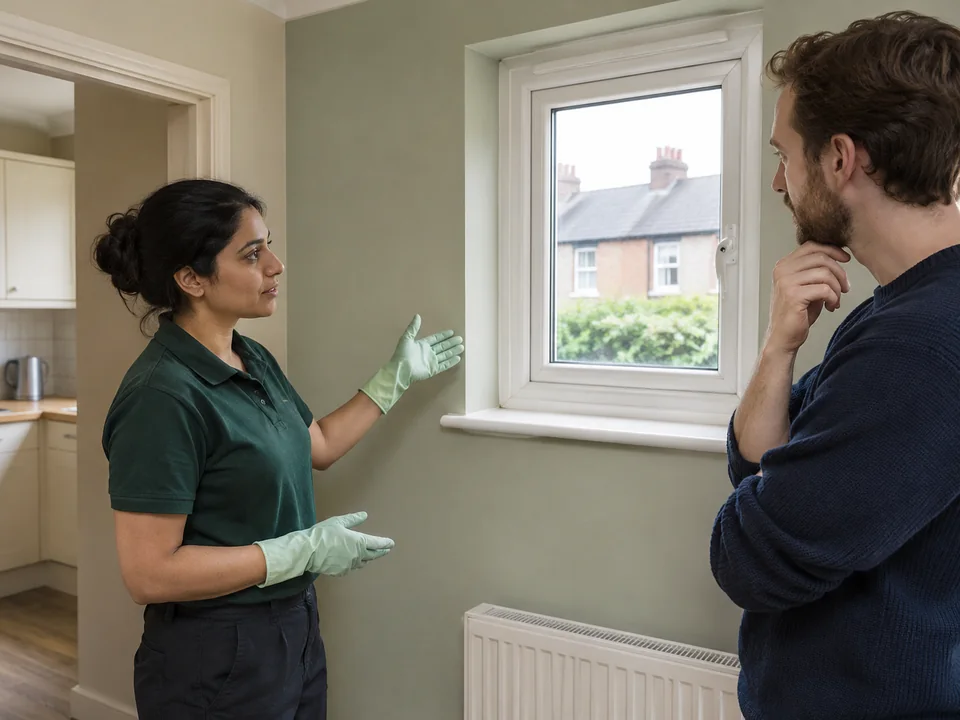
Prepare the named surfaces and agree access for the visit
We discuss preparation after we have considered the room arrangement and visible finishes. If furniture or decorations restrict the route, tell us what stands in the way and whether it is fixed. We identify which areas can be approached without making changes to the property. If access relies on work by another trade first, explain what that person expects to do and when. We can plan around the accessible finish and state what to leave for a separate conversation. This helps whoever will be present on the day understand what is expected as part of the agreed arrangements.
If a resident uses the room throughout the day, tell us which times can make the room accessible. Where a surface is visible from the doorway but difficult to reach, let us know before the appointment. We can discuss any preparation or alternative appointment rather than assuming that a close photograph means the finish is accessible for work. If belongings must remain nearby, describe the space around them. The agreement should be clear on the room position and how the affected surfaces will be reached.
When the layout has changed, let us know whether our attendee would need to approach from a different door or use another floor. Describe any keys that can only be used by the property contact. We can confirm how the start of the visit will work and which named areas can be shown. If a second person needs to remain available for another room, agree the sequence with them ahead of the date.
- Describe access while furnishings remain in place.
- Tell us which point depends on earlier work or consent.
- Use recent pictures if the layout has changed.
Treat suitable exposed hard surfaces and check the result
We physically remove visible mould from the suitable accessible hard surfaces included in the agreement. At the start, we check the named location and finish. Where a mark crosses onto a different material or into a part that cannot be reached, we identify that boundary before expanding the proposed treatment. If a surface is unsuitable or a condition requires separate assessment, we leave that area for the relevant decision. This is particularly useful near fitted or decorative parts where two finishes meet and only one has been included.
After the cleaning we review the accessible work and explain which surfaces were treated. We record any positions that remained out of reach or needed another decision. We discuss aftercare for the cleaned surfaces and state if a question about the building condition remains. An owner, building contact or other professional may need to consider that question separately. We name the affected location so the person taking the matter forward can recognise it without relying on the general room name alone.
If the enquiry involves two positions at different heights, confirm which one was the priority before the visit. At handover we can distinguish work on the suitable area we reached from consideration of an adjacent position. A record that includes the height, room label and key fixture can help later if an owner compares photographs or passes the matter to a separate contact. This is useful even where the next action is simply to take another look when access is available.
| Visit stage | What we do | Information for your record |
|---|---|---|
| Before work | Confirm suitable finish, reach and preparation | Named surfaces and access restrictions |
| Cleaning | Physically remove visible mould from agreed hard surfaces | Locations covered by the job |
| Review | Check accessible work and discuss further points | Areas excluded or referred separately |
Get the quote and handover in the order you need
We discuss the proposed assessment or surface work with the person who can agree it. Ask what the price relates to, which positions are included and whether further information is needed before work can be arranged. If different people manage the dwelling and the communal space, share the appropriate room details with each. A clear price conversation separates work on known exposed surfaces from a future decision about a concealed area. If access and the room description change before the date, let us know so we can revisit the agreed arrangement.
If you need routine housekeeping or another visit afterwards, discuss its requirements on their own terms. The timing may depend on access to rooms or on a separate property appointment. We can use the named rooms from the assessment to discuss which rooms will be available for later work. Confirm who is taking the handover if you will not be present. Tell us how to reach that contact and which outcome they are expecting so they can communicate any remaining question accurately.
An estate manager may give an affected area a different description from a resident. Add the room name commonly used in the home and a location relative to a fixed feature. We can use those details to make the proposed work practical for the person attending. Keep earlier reports, the quote and the work record distinct so a reader can see which condition each refers to.
- Check the specific finishes named in the proposed work.
- Agree who receives the review if you are absent.
- Identify which other visits or decisions still need planning.
Questions about arranging mould removal
Should I give directions to a lower-ground flat separately?
Yes. Give the full property address and the door and stair that lead to the correct dwelling.
What details help if I can only see a patch from the bottom of the stairs?
Describe the position above the stairs, a nearby fixture and the available approach. A wider photo from a safe point can help.
Can you prepare one finish beside a raised covering?
We discuss the condition of each material before work. A damaged or raised finish may need separate assessment.
Which parts are treated after preparation is agreed?
We physically remove visible mould from the suitable accessible hard surfaces named in the proposal and review those finishes afterwards.
Who can receive the outcome for a managed property?
Confirm the contact who needs the assessment or handover and the person able to agree any further decisions.
Can I move a housekeeping visit until after a separate inspection?
Tell the office how the visits affect access and which rooms should be available for routine cleaning. We discuss the dates as separate arrangements.
Other Cleaning Services in South Kensington
Mould removal in London, Regular housekeeping, End of tenancy cleaning