 Housekeeper
Mould Removal in Hampstead
Our starting point for mould removal in Hampstead is the visible affected area and the material underneath the marks. A window frame, a painted wall and a delicate decorative finish can require different decisions. Tell us what you can see and how the area is reached. We can discuss assessment, preparation, possible cleaning and what should be reviewed separately.
Plan your enquiry
What address details help around Hampstead Village?
Give the full NW3 postcode and visitor entrance. Tell us if a passage, steps or a separate side door is involved.
Can you assess an older decorative finish?
Tell us what the finish is, if known, and describe any damage. We discuss suitability before surface work is agreed.
How we establish access in Hampstead before planning the work
We ask for the complete postcode, building number or name, and the route to the affected room. Around Hampstead Village, narrow streets, passages and changes in level are part of the street pattern described in Camden Council's conservation area appraisal. If an entrance is set back behind a gate or approached from a different street, the postal address alone may leave the final part of the journey unclear. Give the visitor entrance and the name or number shown there, along with any arrangements needed for the person who can admit someone to the property.
Once we know the entrance, we discuss which floors and rooms can be reached. If the affected room lies down steps from the garden while the main entrance is above it, explain the route available to a visitor. A downstairs room may be entered from a common passage or through another part of the home. Identify where a door, bend or stair limits access. Tell us if the person meeting us is also the person who can answer questions about the affected finish. If not, share the names of the two contacts and agree how they can be reached.
At an occupied address, tell us which spaces must remain available and what preparation is possible. A room used as a study may have a shorter window for access than an empty room. A hallway with a fragile surface or possessions that need to stay in place may also affect the approach. We discuss the route and living arrangements together with the work area so that the appointment reflects what can actually be accessed. If access requires permission from a manager or another resident, tell us which part is still waiting for agreement.
- Give the full address and describe the door to use.
- Explain changes in level and how the affected room is reached.
- Name the people who can grant access and discuss the finish.
What we assess when an affected wall has more than one finish
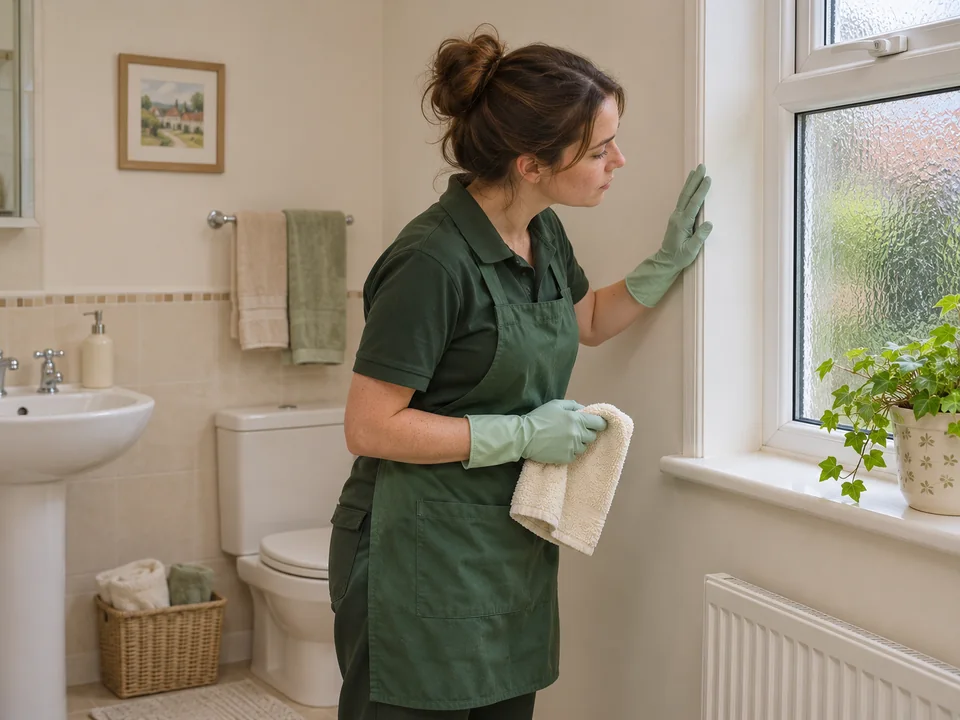
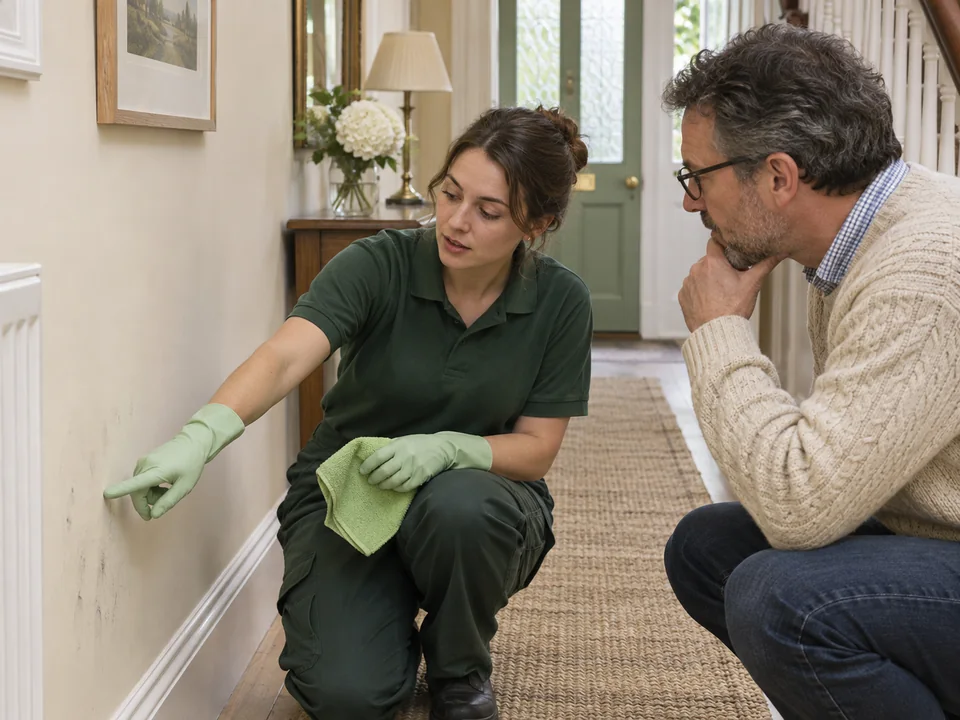
We examine the available description and consider the visible surface and its boundaries. At a window, the marked area may cross from paint onto wood, a seal or an adjoining covering. An alcove might contain a different finish from the outer face of a wall. We discuss those materials individually, including where a coating is lifting or the condition beneath it is unknown. If the finish needs particular preservation or has been repaired before, tell us what is known about it. The appearance of a patch alone does not establish whether every surface it touches is suitable for cleaning.
Use a wider view to show the relationship between the affected area and any nearby trim or built-in item. A window photograph can show a mark on the reveal and also where a blind or panel obscures the edge. If you can take a close view safely, give it alongside the room photograph. Include the approximate dimensions and note which part you could not see. Leave wall coverings, fittings and finishes undisturbed. We can consider the exposed area and explain what requires another assessment before it can be priced or included.
Where a material might be porous or where the finish is damaged, we consider what can be assessed without disturbing it. If the visible marks sit on a suitable exposed hard surface beside porous wallpaper or fabric, describe the materials as separate entries. The owner, decorator or property professional may need to consider the condition of a sensitive or damaged item before deciding whether it is suitable for any work. We can discuss the accessible hard surface independently, and keep adjoining sections outside the proposal until their condition and suitability are understood.
If your photographs show one finish and a property record describes another, tell us where each came from. A repair note might refer to a replacement part of a window, for example, while the marks sit on its original surround. We ask about the difference so that the assessment follows the visible area rather than relying on a description intended for a separate task.
| Visible location | What we consider | Separate decision to discuss |
|---|---|---|
| Paint meets an older timber frame | Where the marks cross and whether both coatings are intact | The suitability of each finish |
| Papered recess beside a hard surface | Visible marks, damaged edges and the accessible boundary | Condition beneath the paper or possible replacement |
| Area partly hidden by fitted storage | What can be viewed without disturbing the fitment | Separate access or investigation of concealed material |
How water history changes the order of assessment and cleaning
You can help us by describing when the signs became visible and whether there has been any work nearby. Give dates for a known leak, window repair or earlier work if you can. Where information comes from a previous occupant or tradesperson, identify the source of that account. A reported repair does not explain the current condition by itself. We ask whether anyone checked the affected material afterwards and whether anything has changed in the room since then. If a repair is unconfirmed, we keep that question separate from the assessment of visible marks.
If a patch is near a window, note if changes follow rainfall, if there is moisture on the window when the room is used, or if you have observed something else at a particular time. We use observations to identify what is relevant for discussion, without assuming they determine why the material is affected. A suspected defect, unresolved leak or concealed issue may require a building assessment by someone responsible for the property. We can discuss an accessible surface separately when its condition and the status of other work allow an informed decision.
Tell us if more than one person has already attended, and name which part of the property each person viewed. If a decorator reviewed only the hallway, their notes may not answer a question about the bedroom window. Equally, a visit to an adjoining flat may establish that someone inspected it without giving information about the finish inside your own property. The differences matter when deciding what can be assessed next. Keep repair and assessment references tied to their locations, and let us know if another appointment would prevent access to a room.
- Record dates of visible changes and relevant works separately.
- Identify which parts of the property were actually reviewed.
- Explain which decisions remain with the property contact.
| History to share | What it helps clarify |
|---|---|
| Reported leak or repair | Timing and which part of the property the report concerns |
| Recent decoration | Whether earlier observations refer to a previous finish |
| Possible ongoing moisture | Whether further building assessment may be needed first |
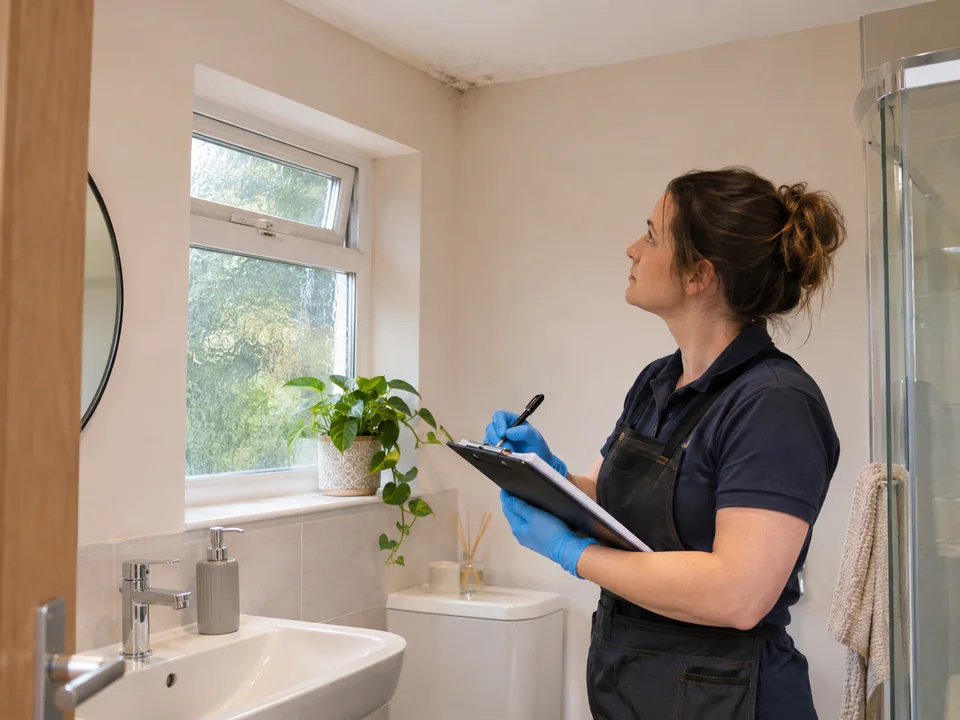
How we prepare the area and clean the agreed hard surfaces
Before starting agreed work, we identify the room boundary and discuss which items can be cleared, which need protection and which must remain in position. Tell us if furniture has to stay beside the work area or if a decorative feature needs particular care. We check how the surface can be approached and where the visitor can work without obstructing a route the household needs. If a high part of a wall or a ceiling lies over a fitted unit or staircase, we discuss suitable access before considering it as part of the work. Photographs can help with that discussion from a safe position.
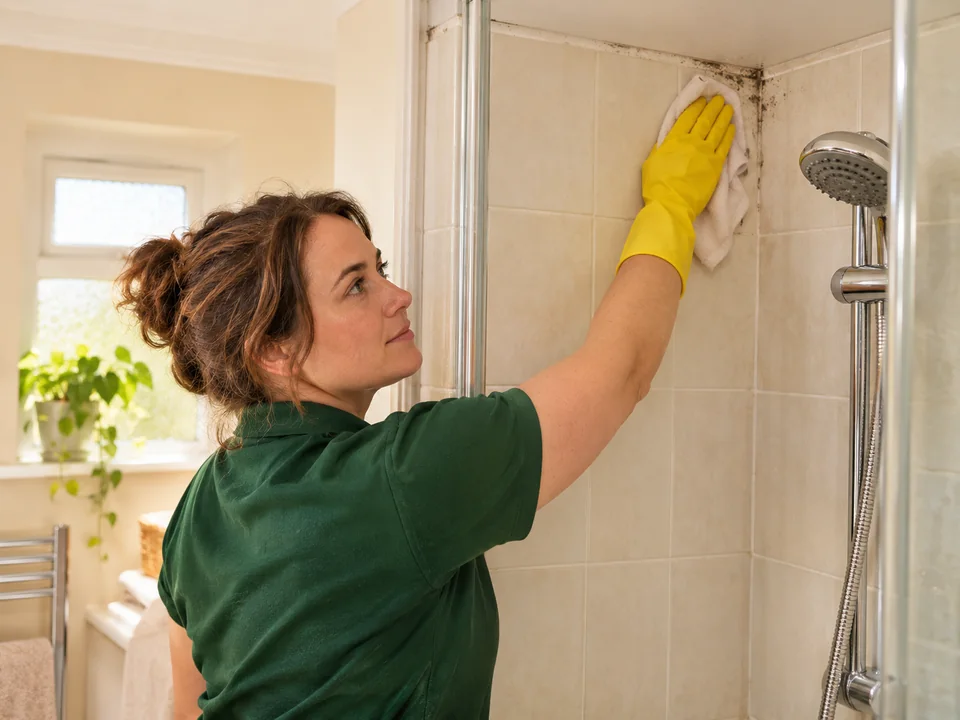
We remove visible mould from the agreed suitable accessible hard surfaces. If a material changes or the visible area extends beyond the proposal, we discuss the difference before carrying out further work. A coated timber frame that can be approached may have been included while the part hidden behind a fixed trim remains outside the arrangement. We identify those limits as part of the visit so that the person arranging the handover can tell what was covered. Where a reviewed finish is unsuitable, we discuss which question needs to go back to the owner or their chosen specialist.
A room may have two suitable areas that can be reached in different ways. We agree the order when it affects preparation. If a route used for one patch would pass through a room that must stay available, we discuss timings before work is confirmed. We keep any location awaiting another material or access decision outside the agreed working area.
| Stage | What we confirm |
|---|---|
| Set up the agreed area | Access route, visible finishes and which items stay protected or undisturbed |
| Clean the agreed hard surfaces | Locations included and any new condition that changes the proposal |
| Review the result | Which areas were covered and what remains for a separate decision |
What our handover covers and when to discuss a return visit
At handover we review the work against the original room descriptions. We confirm the areas covered and explain if a part remained outside the arrangement because it could not be accessed or its material condition needed a separate decision. If you need someone else to receive that information, agree it before the visit ends. In a home where separate people manage repairs, decoration and access, that record should distinguish each unresolved issue. When a patch reappears later, give the date and the position in the room so we can discuss what to reassess with you.
An individual quote depends on the areas, materials, access and work agreed for that address. Tell us whether the appointment needs to fit between other trades or a tenancy deadline. If you are arranging regular cleaning for other rooms, give us the separate task list before discussing dates. Collect the postcode, affected room details, finish description and relevant repair history when you contact the office. We can explain what we are able to assess and what information is needed to consider the next stage.
Where there is a handover deadline, such as a new occupier collecting keys, tell the office who needs the room record and when. We discuss whether all the areas can be considered within that window or whether an unresolved section needs follow-up after the handover. This makes it clear which work has been discussed and which parts still need to be assessed.
- Confirm the locations covered at handover.
- Share exclusions with the person arranging repairs or decoration.
- Report later visible changes against the same room record.
Questions about arranging mould removal
Do I mention both the small lane and the numbered front door?
Yes. Give the postal address first and describe the agreed route from the lane or passage to the visitor entrance.
An older window trim meets a wallpapered section. Can both be cleaned on the same basis?
We consider each visible material separately. Tell us which coatings are intact and whether there is damage, then discuss the suitable hard surface and any other review needed.
The wall was decorated before I noticed the marks. Does the date matter?
Give the date if you know it and explain where the earlier decoration was applied. That helps us distinguish observations concerning the old finish from the current area.
Can I ask about a patch above steps without climbing to check it?
Yes. Describe what sits below it and the height you can estimate safely. Tell us which floor or landing gives the widest view.
Who should receive the notes if I am booking on behalf of the homeowner?
Agree beforehand who will answer questions about the work and who will receive the outcome. Share the original room descriptions with the named person.
Does a visible surface quote include investigating a possible roof problem?
We consider the visible surfaces and explain if the roof issue needs separate assessment. Tell us what is known so the two requests can stay clear.
Other Cleaning Services in Hampstead
Regular housekeeping in Hampstead, Carpet and upholstery cleaning in Hampstead