 Housekeeper
Mould Removal in Paddington
We arrange mould removal enquiries in Paddington around the room, the accessible finish and the person who can authorise the visit. When an affected area lies near a communal corridor or service space, we make the boundary of the assessment clear before any surface work is agreed.
What address details help around Paddington Basin?
Use your full W2 postcode, building name and flat number. Give the entrance facing the correct street or courtyard.
What if the visible patch continues into a communal area?
Describe the point where it crosses the boundary and tell us who is responsible for the shared space.
How we organise a Paddington visit
We confirm access with the person who is able to show the affected surface and note any separate contact for shared areas. We use the location, dimensions and available pictures to discuss the appropriate assessment. Before agreeing treatment, we discuss preparation and the materials that can be considered with the property as it stands. At the handover we identify the exposed surfaces agreed for work and distinguish them from any concealed area or property concern referred for a separate decision.
Start with the person who can show the affected surface. In an occupied flat that might be a resident, but they may need to coordinate with the owner before a cleaning visit is arranged. Where a building manager controls shared plant or service spaces, explain what authority the resident has and which spaces require separate permission. Ask your contact who should receive the assessment outcome. A useful handover names the rooms covered and the people who can decide what happens afterwards.
Place the main entrance instructions in a separate note from the room description. A visitor should be able to find the building without having to interpret a reference to the damaged finish. Give the building name, floor and flat number. Explain if arrival is through a lobby, a side entrance or a courtyard. Where a concierge requires notice or an arrival window, confirm those details before the appointment is agreed.
- Name the person with access to the dwelling.
- Identify who controls communal or service areas.
- Confirm which contacts need the outcome of the visit.
Explain the address within the Paddington area
Westminster’s Paddington public realm strategy identifies Paddington Basin, Paddington Green and the canal among the distinct parts of the wider area. If you live in a building near the Basin, use the residential address for the enquiry even if deliveries normally come to a different entrance. An address linked to a business or lobby may not show how to reach your home. Explain where a visitor should report and how they get from there to the affected room.
Tell us if equipment needs to be carried through a shared path, stairway or lift and whether there is a restriction on using it. If there are resident move-in rules or a visitor registration requirement, discuss how those apply to this appointment. For a property where key collection is off site, give the times someone is available and say how keys should be returned. Give a contact the office can reach if the entrance is unavailable when the visitor arrives.
| Arrival detail | Helpful description | Confirm with |
|---|---|---|
| Entrance | Street, courtyard or lobby to use | Resident or concierge |
| Route to the room | Floor, lift and any access restrictions | Person managing the building |
| Key handover | Location, collection window and return arrangement | Keyholder |
Provide a surface record that can be checked in person
Label each reported point by room and by finish. A rectangular patch near a vinyl panel is easier to identify when you state whether the marks are on the panel, the painted wall above it or the edge of the unit beside it. For more than one mark along a wall, supply dimensions for the separate sections rather than one measurement for the whole room. Add a wider photograph that shows the height and positions of nearby fittings. It should orient the person reviewing the enquiry without asking you to disturb any material.
Describe what can be reached and what is hidden. If a built-in wardrobe covers one part of a wall, the assessment of the exposed section should not be taken to cover everything behind it. If the finish changes at the edge of a fitted cabinet, let the office know that the visible part is the only one you can describe. Accessibility can change as soon as a resident moves furniture or another trade opens a panel, so tell us if the proposed date depends on any of those arrangements.
| Finish or area | Useful evidence | What the enquiry can clarify |
|---|---|---|
| Painted wall | Room position, dimensions and condition of paint | Whether a visible assessment can cover that finish |
| Join beside a unit | Materials either side and any concealed portion | Where the proposed work would stop |
| Ceiling | Height, fittings below and accessible floor space | Whether separate access arrangements are needed |
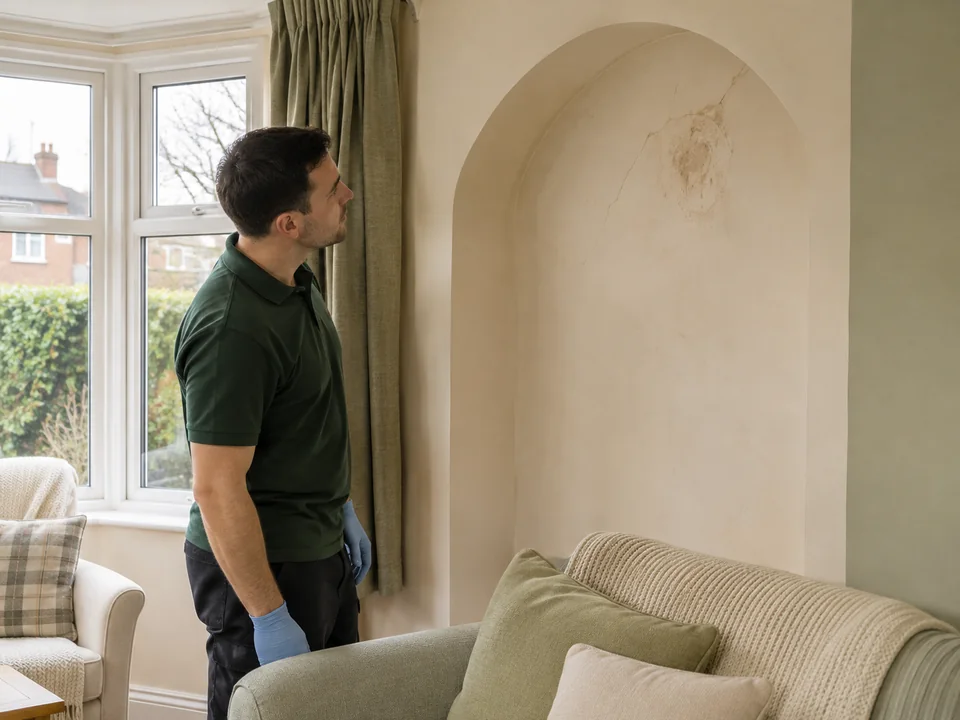
Share repair records without assuming a diagnosis
When a stain or visible growth has returned, record when it was first seen and what has happened to the property since. State whether another person inspected it, and whether an issue has been recorded or repaired. Give the date and the location described in the repair report. That can be especially useful when the repair relates to one surface and the current concern relates to another. Share the observations side by side so the person considering your enquiry can identify which questions are answered and which still need to be investigated.
If you suspect a connection to an area outside the dwelling, identify who controls that area. An issue beside a shared riser or a mark near an adjoining dwelling may need discussion with a building manager before decisions are made about concealed materials. If a specialist report is pending, say what it is expected to cover rather than booking work on the assumption it will be suitable. A conversation about the exposed finish should have a clear purpose and should state what lies outside it.
A resident may be able to show when a mark changed without having the complete building history. Note both what you witnessed and where the building history came from. If you have several messages about earlier work, identify the most recent update and the date it was sent. Photos without dates can still be useful if you explain their order. If an earlier picture appears to show a different position on the same wall, label it separately so the later assessment can identify which features belong with each observation.
- Keep old and new photographs in date order.
- Provide the locations given in previous repair records.
- Name the contact responsible for any separate investigation.
Set expectations before surface preparation is agreed
Give the office a short list of decisions that need to be made. For example, you might want to know whether a visible wall beside a cupboard can be addressed while the unit remains fitted, or whether the condition of the finish needs further inspection. Ask which person can determine that, when it can be established and what information is needed. Discuss practical preparation only once the visit type and the material are understood. Items that should stay in place can be included clearly in the notes for the appointment.
A proposal should distinguish sound finishes from material that appears loose, damaged or unidentifiable. A room can include several adjoining surfaces, and suitability for a proposed method may differ across them. Where a part is damaged or extends into an area that cannot be seen, ask whether it should be dealt with separately before you decide about cleaning. A clear description of the work leaves less room for assumptions about replacing finishes, repairs to the property or decorative work afterwards.
| Decision | Ask before accepting a quote | Record for the visit |
|---|---|---|
| Surface preparation | What does the condition of the finish permit? | Agreed surfaces and any parts left undisturbed |
| Adjacent materials | Do different finishes need their own assessment? | Where each material begins or ends |
| Further work | Who would investigate or arrange it? | Named person and outstanding questions |
Plan for the building to remain in use
Explain how people use the property across the day. An occupied flat might need to keep a hall clear for other residents, while an affected room may only be free when the occupant is away. Say where someone can stand while viewing the reported area and whether the entrance to another room must remain accessible. If a household has a pet, describe the practical arrangements the occupants expect to make on the day. Ask how those arrangements fit the type of visit before booking.
For an owner arranging access while away from the property, leave details with the person who can attend. Tell them which rooms are on the list and who can approve any change. If a building inspection or repair is due around the same time, identify who is coordinating the two appointments. A visit covering an accessible finish may need to be considered again if another trade will remove part of that finish first. Keeping the timing explicit is more useful than a general request to finish everything by a given day.
If the affected area is on a route that other residents need to use, describe that before the proposed visit. Explain where an attendee can set items down, who controls the shared door and what space must stay clear. In a property with a shared stair, another entrance may be available for some people but not for equipment or building services. Confirm practical arrangements with the person responsible for the premises rather than assuming there is a suitable alternative on the day.
- Explain which rooms must stay usable around the appointment.
- Keep the room list with the person providing access.
- Confirm the timing of other trades that could change the visible area.
Get a proposal you can compare with the visit brief
Before accepting a price, check how many rooms and visible surfaces were used to calculate it. Ask whether you are agreeing to an assessment, work on suitable surfaces or separate appointments. Confirm what is excluded, what depends on further findings and how the end of the visit will be handed over. Include any property instructions that affect arrival or access, and coordinate with the building contact before relying on a date. Where an affected section is concealed, ask for the limit of the proposed work to be recorded.
If regular domestic cleaning is also needed afterwards, explain which rooms may be ready and which still depend on a different decision. If the property is being handed back to an agent, retain the record of specialist discussions separately from an ordinary checkout cleaning brief. Keep dates and written details for both. If the visible area changes while you are waiting, describe the new condition using the same room and surface labels and ask whether the proposal needs to be updated. The office can then discuss the next step against the condition you can actually describe.
At the end of the enquiry, note any open decision and the person who is dealing with it. A quote can be clearer when it distinguishes the visit you are arranging from a later investigation or repair. Ask about timing again if access changes, a room returns to use or a previous report raises a question about areas beyond those discussed. If a resident and a building manager need separate updates, agree who will receive which part of the outcome.
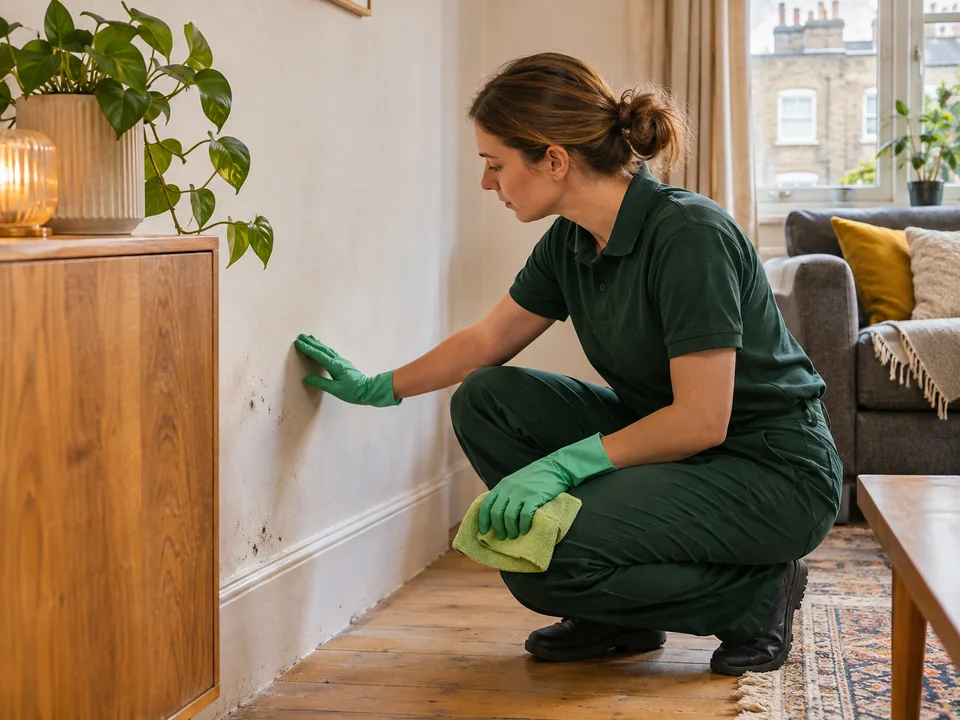
We physically remove visible mould from the suitable hard surfaces we can access and have agreed to treat. The visitor checks that the relevant room and finish match the agreed proposal when they arrive. Work in the dwelling remains separate from a shared riser or corridor that needs its own permission or assessment. After cleaning we review the exposed finishes and confirm whether any adjoining area was outside the visit.
Questions about arranging mould removal
Should the concierge or the resident give the arrival instructions?
Give instructions from whoever manages the entrance, and add the resident’s details for access inside the dwelling.
The mark is next to a riser door. Can the visit include the space behind it?
Tell us what can be seen from the dwelling and who controls the riser. Discuss any necessary permission and separate assessment before arranging work.
Does a building name identify the correct door near the Basin?
Give the building name and full postcode, then describe the entrance independently. Tell us if the residential door is different from delivery access.
What if repair notes only cover part of the affected wall?
State the exact portion named in the repair notes and label the rest as a separate observation.
Which dimensions matter if several small patches sit beside a unit?
Estimate each visible area separately and state where the unit starts. A single room measurement does not show which parts can be reached.
Can a different person be available for the handover?
Yes. Identify them before agreeing the visit, explain their role and confirm who can receive the outcome or authorise an updated proposal.
Other Cleaning Services in Paddington
About the London mould removal service, Regular domestic cleaning, End of tenancy cleaning
Discuss your mould removal enquiry
Mould Removal Prices in Paddington
Tell us which rooms are affected, the approximate size of the visible patch and what surface it is on.
Get a Quote