 Housekeeper
Mould Removal in Stratford
For a mould removal enquiry in Stratford, make a short record of the affected rooms and any building checks already under way. A property manager may control access to one part of the building while a resident can explain what changed inside the flat. The office can use both accounts to discuss what should be assessed and whether visible surface work can be considered.
Plan your enquiry
What should I include for an E15 or E20 address?
Give the complete postcode, building name, floor and correct entrance. Mention any concierge or lift arrangements.
Does Newham have its own reporting routes for rented homes?
Yes. Newham Council gives different routes for council, private, temporary and housing association homes.
Bring resident and building information into the same enquiry
For an enquiry involving a managed building, give the full address and identify the person who can speak about access. Share what the resident has observed separately from anything the building team has recorded. A resident may know when a patch first appeared, while a manager may know whether the building has received reports of water entry. The two accounts are useful even if they refer to different dates or parts of the property. Put the dates next to the observations and explain which room or surface each one concerns so the office can discuss the appropriate next step.
Newham's planning material identifies East Village and neighbouring residential development around the Olympic Park, and the council identifies Stratford East Village with E20. Its Housing Liaison Team gives a Stratford E15 address on Broadway. In practice, the complete address matters more than either district label. Give the building name and the arrival point that leads to your part of it. If an estate has several entrances, use the street name or entrance identifier specified by the property contact. Confirm whether that takes a visitor to a public reception, a shared door or directly to the flat.
Ask for the current route and any restrictions before proposing a visit time. If access is via a concierge, give the hours when someone can allow entry and explain whether any separate permission is needed for service areas. If a lift needs to be used, mention whether it reaches the floor or whether the last part of the approach uses stairs. At an address with a separate courtyard or external path, explain how to reach it without assuming that all directions take a visitor to the same entrance. If building arrangements change, tell the office before someone travels.
- Give the street, entrance identifier and complete postcode.
- List the resident and building contact separately if they hold different information.
- Confirm the access route when timings are discussed.
Make wall and ceiling descriptions specific enough to compare
Use a fixed feature for each affected location, such as the wall section over a bedroom door or the ceiling in the corner above the kitchen units. State the approximate size and whether several marks touch or form separate patches. Mention changes in the material across the area. A mark may run from paint onto an adjacent trim or around the edge of a fitted unit. Give a wide photograph if you can safely take one from the floor and write a separate note for any part you cannot see. Those records serve different purposes when the area is discussed.
Describe the state of the visible finish and whether it has previously been treated, decorated or damaged by water. For example, a photograph can show an edge where a coating has lifted, but it may not tell the office what the layer underneath is made of. Leave the surfaces undisturbed and flag any uncertain material. High areas, fitted units and enclosed voids have access limits as well as material limits. If investigating the condition would require opening something, give the name of the person responsible for deciding whether and how that can happen.
Where the patch is close to a common wall or neighbouring flat, describe your own visible area first. Say whether the building manager has already received a related report rather than using another household's experience as a diagnosis for yours. If you know an adjacent room cannot be accessed, explain why. Before a visit is considered, ask which surfaces can be identified from the available information and which need to be examined in person. A short list of surfaces is usually more helpful than a single description of the whole room.
| Information | Useful Stratford enquiry example | What still needs checking |
|---|---|---|
| Position | Ceiling near the corner above the fitted kitchen | Height and safe approach in the room |
| Material | Paint meets a fitted panel at the edge of the patch | Whether both materials can be assessed |
| Visibility | Part of the room cannot be reached behind a closed unit | Who can assess the area if more access is needed |
| Shared building | A related issue has already been reported to the manager | Where the wider investigation has reached |
Bring any repair history up to date before taking a slot
Prepare a short timeline starting when the issue became visible. Include any known leak, time when water was seen, relevant repair or appointment to assess an adjoining area. An occupier may have been told that work took place without knowing which section of the property was affected. Give the facts as they were shared and identify who may have a written record. If somebody said a material needs more time or a further check, include that too. The office can discuss the order of events without using the dates to infer the cause.
Newham Council publishes separate reporting routes for people in council homes, private rented homes, temporary accommodation and housing association homes. If you live in rented accommodation, use the route appropriate to your home for building repairs. Make a note of the report reference when you speak to the office so it is clear whether assessment by a property professional is already being considered. Keep any contractual, repair or responsibility decisions with the appropriate property contact. If the building cause is unresolved, ask whether a separate review is needed before surface work is agreed.
While an investigation is under way, record what has changed. If a mark looks dry now or another room has developed visible signs, say what you observed and when. Mention whether the property has been occupied throughout or a room was closed for a period. If exterior repairs are underway or materials have been opened by another contractor, state which room now has access and what may still be unsafe or unsuitable to approach. Do not rely on an earlier photograph to describe a changed layout without dating it.
- Record discovery, repair attendance and later changes as separate dates.
- Keep the housing report reference with the room notes.
- Identify any areas affected by ongoing investigations or access restrictions.
| Who already has information? | Check what they can provide |
|---|---|
| Resident | First observation, photo date and current extent |
| Property contact | Repair references and what parts of the building have been checked |
| Other contractor | Whether any work is complete or still awaits assessment |
How we move from an assessment to agreed surface work
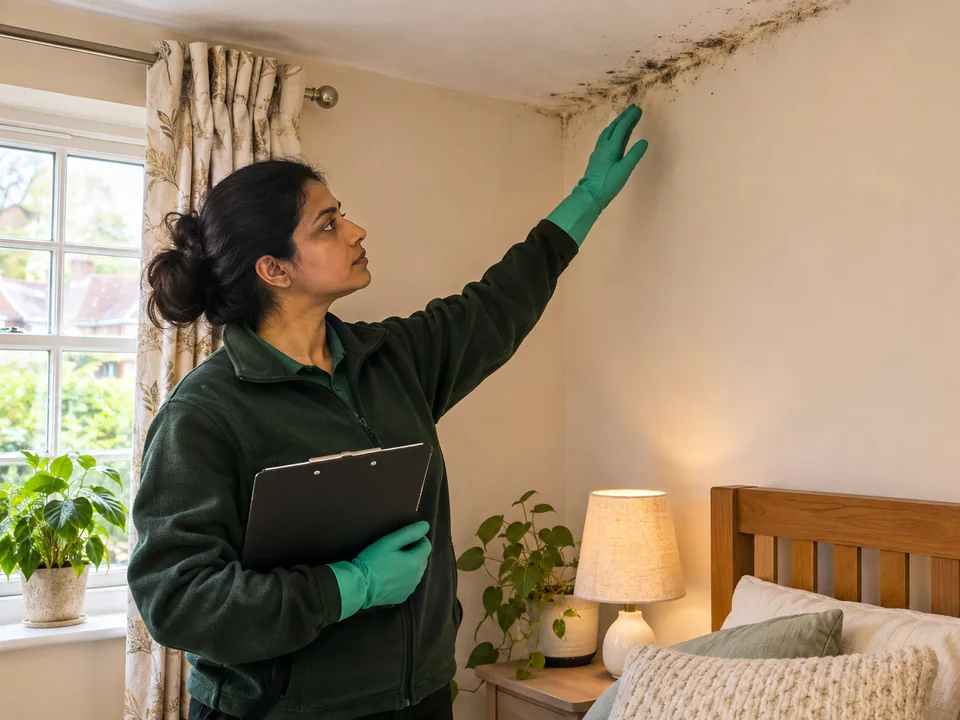
Ask which spaces are being considered and how work would be agreed for each. For a single accessible location, the office may have a different set of questions than for several affected rooms across two floors. Explain which parts of the route to each area need to stay clear, which belongings should be left in place and whether a room must remain in use around a specific time. The initial request should state whether you want assessment information, a visit to consider surface work or both. Clarify what information would be needed before a price could be confirmed. For the suitable accessible hard surfaces identified at assessment, the cleaning task is to remove visible mould and review the agreed area with the contact.
Set expectations for what happens if the visible limits differ from the photos. Ask whether another inspection might be needed if an affected finish is damaged or cannot be reached. Agree who can speak to the office if that happens and what should stay outside the visit until another person has checked it. This is especially helpful when a landlord has requested work but the resident will be the only person present. Before accepting an estimate, ask which locations, finishes and preparation arrangements are included. Keep that description alongside any limits you have agreed.
At the enquiry stage we record the room, the part of the wall or ceiling involved and the kind of finish reported. We use that to discuss whether a visit is appropriate. When an assessment is agreed, the starting point is the accessible affected surface and its visible condition. This establishes which area the discussion covers. If the material is badly damaged or the patch runs into a concealed part of the building, the next step may be a separate property or moisture assessment before any cleaning is agreed.
When suitable visible surface work is agreed, we confirm which parts are included and what preparation is needed. That includes discussing access to the affected section and which surrounding surfaces or belongings need to remain protected or undisturbed. The work is limited to the surfaces and areas agreed for the visit. If the condition or extent differs when it is viewed, we discuss that before considering additional work or changes to the price. Repairs to fixtures or the building need to be agreed with the person responsible for them.
| Booking point | Agree before a visit |
|---|---|
| Property access | Correct entrance, floor and authorised contacts |
| Room list | Which rooms can be reached and which are waiting for permission |
| Surface work | Which visible finishes are being considered and what needs separate review |
| Outcome | Who receives visit information and handles unresolved questions |
Prepare the handover before the next appointment is booked
If another person will use the record, give them the location names and the changes you observed after sending the first enquiry. Check that each note refers to the right room, the right side of a wall or the correct floor. Where an affected area remains behind a fixture, mark it as unassessed rather than placing it with areas already viewed. State whether a repair or inspection has been requested but not carried out. Agree who can update the resident while a separate decision is pending.
Ask the office what other cleaning requests may be discussed independently. If a move-out deadline is approaching, give that date and say which parts of the property will be free of belongings. Keep the general rooms and tasks on their own list. Where signs return later, describe their new appearance relative to the record already held and give the date. The best next call starts with the full postcode, area notes, access plan and any references that explain which work has already been considered.
At handover we discuss what was included, what remained outside the arrangement and what may need checking before another visit. Keep those points with the building or repair record if more than one person is involved in the property. If the reported conditions change, the previous description helps us identify which part of the enquiry needs reviewing.
- Share the room record and relevant repair references with the named contact.
- Give other cleaning work a separate task list.
- Use dates and positions when reporting any change.
Questions about arranging mould removal
Can I use the estate name if the building has its own postal address?
Give the full postal address first and add the estate or development name as an orientation note. Confirm the door that leads to your part of the building.
Concierge staff can give the visitor access. Do they also need the full room record?
Provide what they need for authorised access. Identify a separate contact for the affected rooms, proposed work and any decisions that need the occupier or property owner.
The wall photo is older because furniture has now been installed. Should I still share it?
Yes, if it is relevant. Give its date and describe the new layout so it is clear what is visible and reachable now.
Someone in another flat mentioned a leak. Is that enough for my enquiry?
It is useful context. Record what you were told, what you can see in your own property and which building contact can confirm whether anything has been investigated.
I have a Newham repairs reference. Can I use it when speaking to the office?
Keep it beside the room details and mention the status of that report. The office can then discuss a surface enquiry without assuming any separate repair is complete.
A room will become available only after keys are handed over. Can I still send its details?
Yes. State when access is expected and which details come from previous photographs. Discuss assessment timing when the keys and current room access are confirmed.
Other Cleaning Services in Stratford
Read the cleaning price guide, Give the office your property details, Discuss move-out cleaning
Discuss your mould removal enquiry
Mould Removal Prices in Stratford
Tell us which rooms are affected, the approximate size of the visible patch and what surface it is on.
Get a Quote