 Housekeeper
Plan around the family kitchen
Oven Cleaning in Harold Wood
Tell us how the oven fits your household routine in Harold Wood. If you batch-cook or use the grill during the day, give the next time you need it and the last time it can go off. Photograph the oven and name the parts you would like to include, with details of the working room and approach to the kitchen.
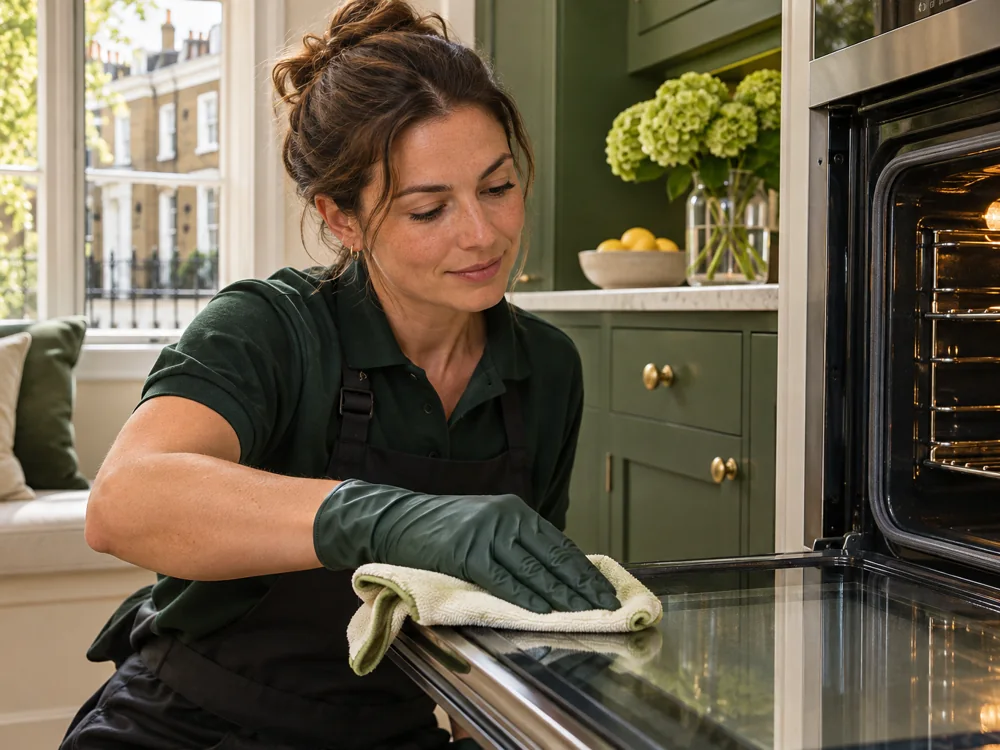
What should I include for an address near Gubbins Lane?
Give the full RM3 postcode and name the front or side door used by your home.
Can we discuss an appointment when the oven has to be free for batch cooking?
Yes. Give the last use and the time you next need it.
Set a time between cooking sessions and agree who opens up
If several dishes are prepared in one session, decide when the last tray can be taken out and the oven can cool. Tell us when you want it available for the next meal. You can keep the same plan for the grill if you want to include it. If the hob runs on a different schedule, mention its position and when the surrounding worktop can be clear. That discussion helps when the oven sits in a kitchen people cross frequently and the door needs to stay open for the appliance and accessories to be assessed.
Ask somebody at home to keep the appliance out of use until the visit. If a different person is arranging the clean, give the person opening up the same details about the next use, cavity and area to review. Keep food and personal pans out of the oven. Let us know which counter can be discussed for the loose parts and give any household constraints around children, pets or movement. Agree how to keep the area clear when the oven door and accessories are being handled.
- State the last use and earliest time the oven will be cool.
- Give the planned next use and any activity in the adjacent area.
- Share the appliance details with the person opening up.

Fit the visit around batch cooking
| When | Information to give | Who to tell |
|---|---|---|
| Last cooking session | When the final tray comes out | Person cooking first |
| During visit | Clear oven and working room | Person at home |
| After review | Next expected use | Person cooking next |
Separate the oven used for big trays from the smaller compartment
A household may use the lower cavity for several trays and keep the upper area for toast or small portions. Tell us which space you want assessed and how it normally works. A photograph of the front and its controls can help describe the compartments if there is no readable label. Include the model from accessible positions or paperwork if you have it. If the top appliance has another function such as steam or microwave, identify it separately and tell us whether it is part of the cleaning enquiry.
For a range, count working ovens and grills by their positions. A drawer used for keeping dishes warm may look similar to a small oven. Say which working space you want included rather than relying on a door count. Check the shelves, original trays and grill pan for each requested cavity. You can use the handbook to identify a liner or a fitted guide. Keep everything in its normal fitted position and use the current layout to describe which area gets the heaviest cooking use.
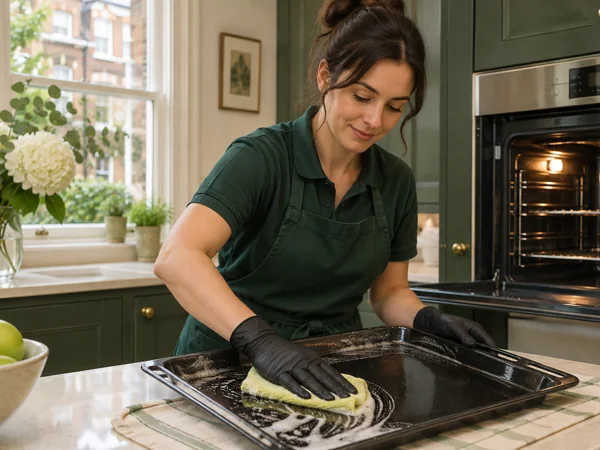
Describe the approach from the street in Harold Wood
National Rail lists Harold Wood station on Gubbins Lane in RM3. Use it as a landmark if appropriate, but give the full address and the door or gate that actually serves the kitchen. A home close to the station may have its entrance on a different road. Include the number as visible from the pavement and say where to meet the cleaner. For a building with several doors, give the one that leads to the right stair or lift and name the person who will open up.
If you prefer a side approach, describe the path and any steps at the end. A kitchen extension may have a different threshold from the front of the house. Let us know where to leave space for access or unloading if you can arrange it. Tell the person meeting the cleaner which door route is agreed and how to identify the appliance parts once inside. Building codes or key arrangements can be shared directly after the visit is arranged. Avoid putting them in a general description of the property.
- Give the exact residential postcode and entrance.
- Mention steps, shared doors or a side route.
- Agree how someone will meet the cleaner at the right door.
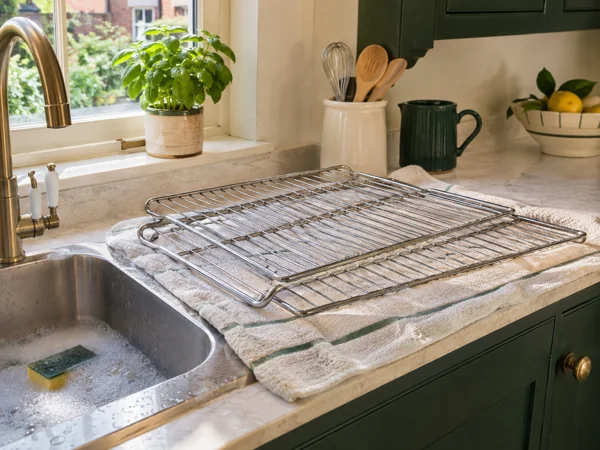
Make room for the open oven and the pieces it contains
A table beside a low oven or a counter behind it can restrict space while the door is down. Look at the clearance while the oven is cool and send a picture if the panel almost meets another surface. Put away loose floor items you can move comfortably. Keep fixed cabinets and appliances in place. Identify how to reach the oven from the kitchen entrance and check where removable racks or trays can be reviewed. Tell us if there is a sensitive worktop finish beside the appliance or an awkward change of level under the door.
Take pans, food and items you store in the oven out before the cleaner arrives. If the kitchen is also a path to the garden or a dining room, plan how people can avoid the immediate working area. Tell us if someone needs to use the sink or a second worktop. A short plan for those activities helps avoid moving loose oven pieces once they have been identified. Let us know if a particular counter or the area immediately beside the oven must also stay available for the next planned meal.
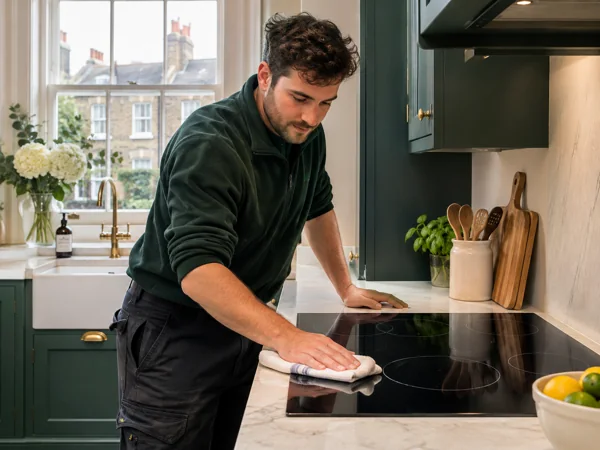
Identify the accessories in a family oven
| Item | Where it normally sits | What to say |
|---|---|---|
| Extra shelf | Main cavity or cupboard | Quantity and finish |
| Grill pan | Upper compartment | Tray and insert listed separately |
| Slide rail | Side wall of oven | Model and usual movement |
Use meal and cooking details to locate a deposit
If residue is visible on a shelf used for batch cooking, identify the shelf by level and cavity. Give the location of any spilled food on the floor or grease above a grill tray. If several marks overlap, say which one you want assessed first. A photograph of the cool oven can include a rail or liner edge to locate the area. Share any information from the manual about the finish beneath it, especially if a smooth and textured area meet at the affected spot.
If you tried a product or cleaning cycle previously, name it if you can and report any changes in colour or appearance. A scratched or worn patch can be mentioned alongside the grease. Leave loose or damaged parts in place while describing them. The technician can inspect accessible grease and baked-on material in relation to the construction and condition. If the original marks were noticed by another person, tell the person who will show the kitchen which areas you included so the descriptions use the same parts and positions.
- Give the shelf level or grill position nearest the mark.
- Mention the surface and any previous treatment you know.
- Record existing wear independently of the residue.
Keep the original racks ready for individual assessment
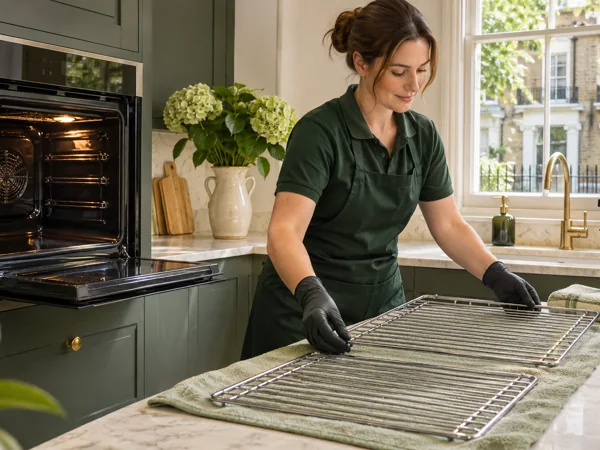
Check whether a spare shelf was moved out to make room for a deep tray. If it belongs to the oven and you want it considered, put it on the list with its normal position. A grill insert and its pan can be identified separately, including the place where you keep them. Tell us if you are asking about a rail that stays fitted or a drawer containing other accessories. Do not force a shelf or guide to move if it has stopped working the way you expect.
Suitable removable pieces can be considered for dip-tank treatment once checked. Describe any coating, wear or loose handle before the cleaner examines the items. Keep family cookware in a different place from the original pieces you requested. Write down which cavity an unusual tray or extra rack fits. The resident available on the day can check the count and match the parts with the quote before the work starts and again when the oven is being reviewed.
Give the route from a Harold Wood street
| Stage | Useful detail | Who checks |
|---|---|---|
| Address | Full postcode and exact entrance | Person booking |
| Gate or hall | Steps, threshold and door label | Resident |
| Kitchen | Access to working area and appliance | Person meeting cleaner |
Name the window, hob or hood independently of the cavities
If the oven window is the part you notice first, give the door and face that appears affected. A mark behind glass can need its own access discussion based on the model and condition. Identify wear near the handle and controls and mention a loose seal without moving it. A photograph of the entire oven front can distinguish the main oven door from the grill and show where printed markings are affected. We can assess accessible surfaces and consider each concern in relation to the condition you report.
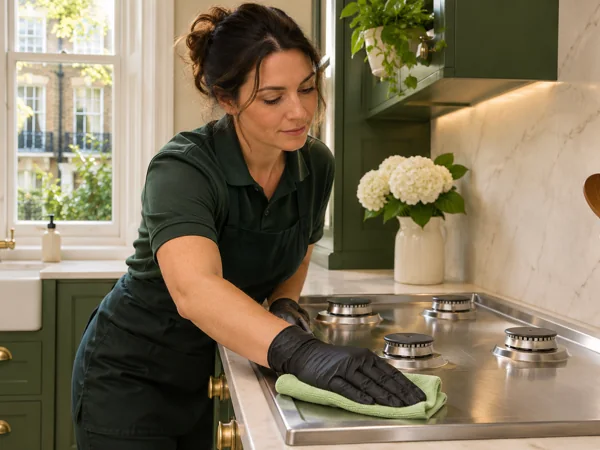
If another cook in the household wants a hob or extractor considered, name the type and the part of the appliance. A gas support, mark on an induction zone and a hood filter are separate items to describe. Give the hood position, finish and any known filter material from the handbook. Include a photograph from underneath if it helps show the accessible surfaces. Check which additions are on the quote before sharing the list of oven pieces and extras with the person at the property.
- Identify the oven door and possible face of glass.
- Name the hob surface or support and the extractor’s visible part.
- Share the accepted extras with the person meeting the cleaner.
Tell the household when the oven is back in use
At the end, compare the oven and grill with the items you agreed. Check the accessories and ask what was removed or treated. Use your original location notes to ask about an affected surface. If a household member needs it for another meal, confirm when the oven can be used again and give them the same information. Ask where a spare rack or tray belongs if someone else normally uses it. Keep the model and the agreed items available in case they are needed for another enquiry.
For a rental property, agree who can see the oven before the keys go back. Share the requested parts with that person and name the areas you reported. Record a distinct future item if another cavity or the hood still needs a quote. The handover should give the next user the location of any original parts and the manufacturer’s care instructions where available. A household planning meals can then find the pieces and use the appropriate appliance following the visit.

Get an oven cleaning quote in Harold Wood
Tell us the oven type, number of cavities and whether the hob or extractor also needs cleaning.
Get a QuoteOther Cleaning Services in Harold Wood
Local references · National Rail, Harold Wood station
Harold Wood oven cleaning questions
Can I arrange the clean after cooking a large batch?
Tell us when the last dish comes out, when the oven will be cool and when the room is needed again.
What should I report if a spare oven shelf has a coating?
Give its usual location and name the coating if known. Mention any visible wear so the item can be assessed.
Does a wide kitchen photograph help if the table is close to the oven?
Yes. Include the table, oven and usual door clearance so we can discuss how to reach the parts.
Can I use Gubbins Lane as a reference for a separate residential door?
Yes, with the complete postcode and street of the door itself. Give the position of a gate or second entrance if you want it used.
Can I put the hood on the same quote as the main oven?
Include the hood as a separate item with its position, finish and filter details where known.
Can the person cooking later check which shelves go back into the oven?
Give them the original accessory list and confirm the return-to-use advice before the household starts cooking again.