 Housekeeper
Signature care for well-used ovens
Oven Cleaning in Homerton
Start with the oven you want cleaned and the care information for your exact model. For an oven enquiry in Homerton, include the cavity, surfaces and removable parts you want assessed, then provide an access note for the technician.
Can I enquire with an E9 postcode?
Yes. Add the complete address and the approved entrance for the visit.
Can I discuss a particular lined surface?
Yes. Give the model, liner instructions and position of the affected area.
Give the technician the right appliance instructions
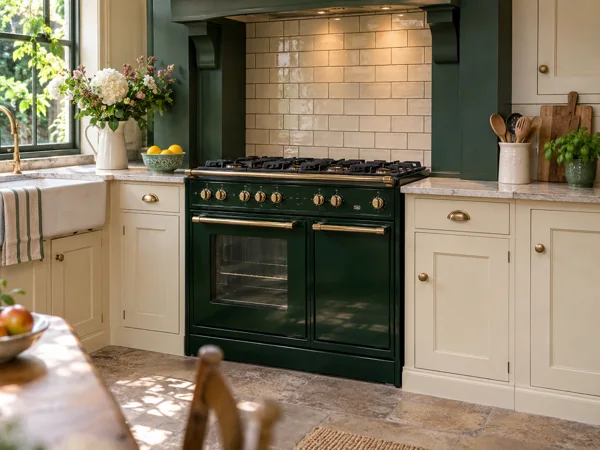
Check the appliance front and find the paperwork that matches it. A stacked installation can show a small oven above a larger one with very similar controls. Write which door each cook uses and identify the cavity with the issue. A combination oven or warming drawer should have its own name in the notes. Use the product reference from a visible label or handbook. Keep installed units in place when checking. If the oven was replaced recently, compare the controls with any manual left in the property.
Tell us about coatings, specialist liners and automatic cleaning programmes. The maker’s guidance may be different for a textured side panel, the oven floor and a door with a printed border. Give the advice for the part you want assessed. If a tray has care requirements of its own, include them separately. A photo from the front can identify the cooker layout, while a second image from the cold oven’s opening can focus on what has changed. Keep both images tied to the same cavity.
- Give the model from the actual installed unit.
- Identify each cooking or warming compartment.
- Share relevant care information for a finish or accessory.
Confirm the Homerton entrance for equipment
National Rail lists Homerton station on Barnabas Road in E9. You can refer to the road or station if it helps identify the area, alongside an exact residential address and postcode. State which entrance to use if the building name is on a different side from the correct door. Give the bell label and where the technician should meet a resident or porter. If the route from the street follows a common path, describe the gate or turn after the first entrance. Add the floor and flat number separately.
Check the permitted place to unload if the building has an agreed arrangement. If access involves a designated lift, confirm its position and whether it reaches the same level as the flat. Tell us about steps after it and any door that needs another person to open it. For a home with a front and side entrance, name the actual route to the kitchen and the person who can leave it available. Share the same information with any resident who will provide entry on the day rather than booking.
Point out what changed after everyday cooking
Wait until the oven is cool and show the visible deposit or mark from the front. A lighter area beside a blackened spill might have been present earlier. The technician can assess the affected surfaces and consider what type of build-up is there. Tell us which cooking event led to the mark if you remember. It helps to give a typical tray height and say if you used the same oven again afterwards. A picture showing the position of the liner or shelf support gives helpful context.
Report any earlier product and say exactly where it was used. If two people cleaned different parts, keep their descriptions separate by appliance and surface. Give approximate dates and mention a built-in cleaning cycle that may be relevant. Ask what can be cleaned safely when the technician begins the inspection. A permanent change to a surface may remain visible after cooking residue has been removed. If a residue is uncertain, point it out and leave the surrounding fittings in position rather than scraping at them yourself.
- Include the affected surface and what you cooked.
- Describe earlier treatments in the right order.
- Give available care instructions for the area.
Describe the finish by component
| Component | Useful note | Decision |
|---|---|---|
| Textured liner | Manual and location of mark | Appropriate care |
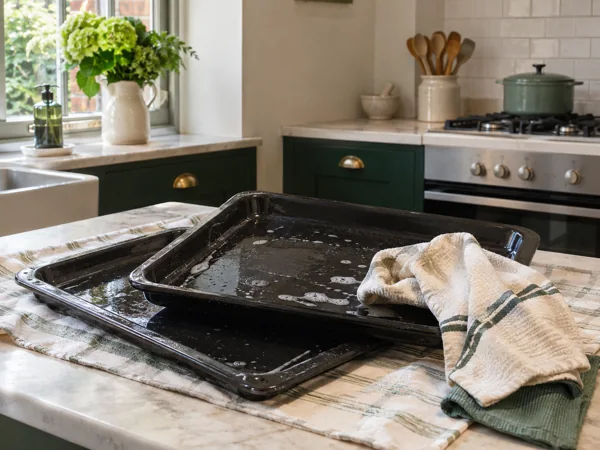
| Tray | Original or separate coating | Suitable treatment |
| Glass | Position and condition | Reachable face |
Keep the shelf list clear
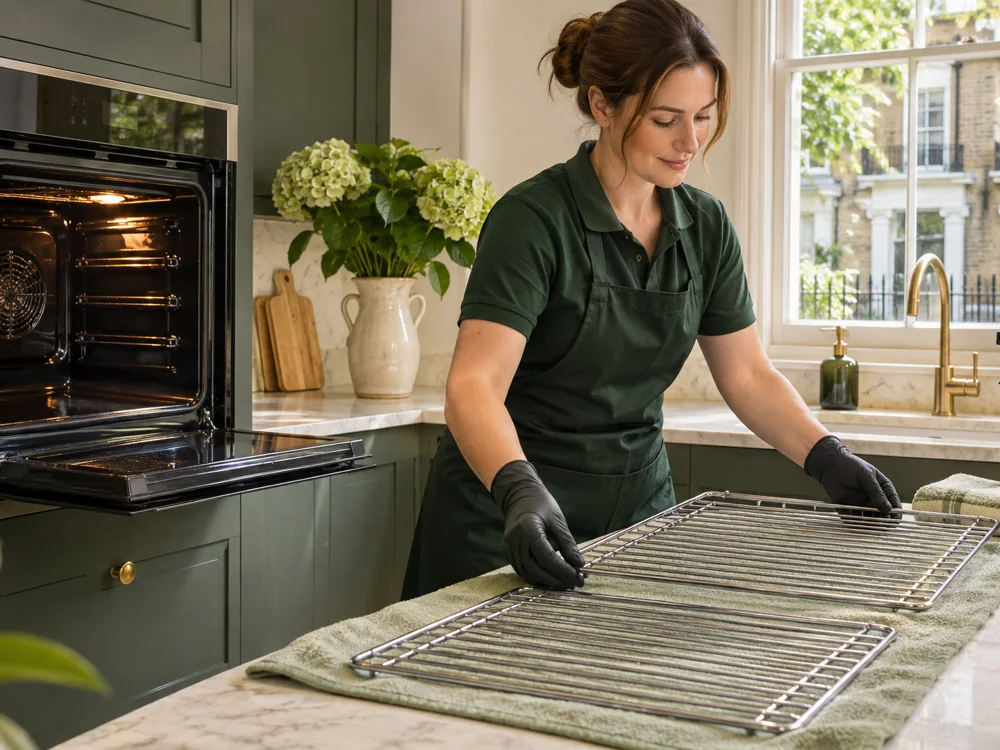
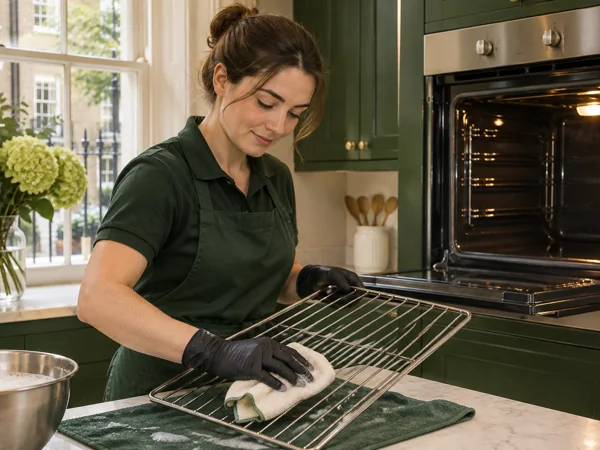
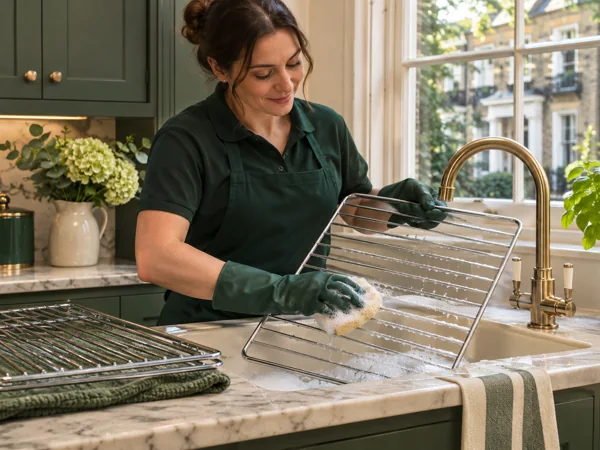
Count the main wire shelves, tray and any removable grill insert. Do the same for a second cavity if it is part of the work. If a rail extends on a mechanism or catches at a particular point, describe how it normally feels during cooking. Let the technician check whether it can be safely removed. Suitable removable parts may be soaked in a dip tank. A liner, coating or mechanically attached piece can require a separate approach and needs assessment before handling.
Once the oven is cold, take out loose pans and food, and keep personal dishes away from the working surface. Ask about anything you bought separately. A tray that fits both cavities may still have been made for one oven and carry specific instructions. Let the technician know where it usually sits and which cavity uses the most heat. A different accessory that is already out of the oven may need its own assessment. Keep a short list of the parts that form the agreed work and confirm it before they are handled.
Discuss door glass by access and condition
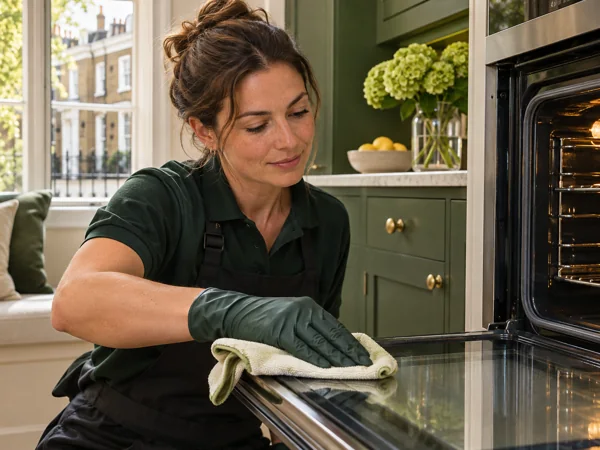
Look at the glass with the cool oven open and with the door closed. If a persistent mark is most obvious when a lamp or window is reflected, describe that view. The mark could be on a readily accessible face or in the gap between panes. The technician can check possible access using the model and present condition. Mention loose trim, a chip or signs of earlier work on the door. Leave fitted pieces in position. An image showing the full door can help identify which cavity is affected.
Ask about the exact face of the glass before extra work is agreed. If a line sits near a patterned or coloured edge, describe that part separately from the clear centre. Some visible change may reflect wear to a finish rather than grease that can be removed. A good photo and relevant instructions can guide the discussion but the actual condition is assessed on the visit. At the first check, show where you usually see the mark and ask which surfaces can be reached.
- Identify the affected door and position.
- Report any movement or chip before work.
- Show the technician how the mark appears.
Use a nearby worktop and leave a clear approach
Clear a counter or other stable area next to the cool oven. Take food, utensils and personal items away from the immediate space, and check which way the oven door opens. A fold-down table or trolley may sit exactly where a technician needs to stand. Move lightweight obstacles early and keep the approach free. If the kitchen gives access to another part of the property, tell us which route must be available and agree how other occupants can use the space. Keep children and pets outside the working area.
Let us know where water and power can be accessed if relevant and any surface you need kept clear. A counter beside the oven may have different care requirements from the oven itself. Tell the technician where to set down parts and equipment before work starts. If a second person is at home, make sure they can show the agreed area and contact someone who can answer questions about the work. A narrow alcove, angled door or fixed desk can affect which parts are reachable.
Match the cooker to the quote
| Appliance | Provide | Confirm |
|---|---|---|
| Main oven | Front and controls | Cavity and rack count |
| Compact cooker | Mode and position | Separate appliance or grill |
| Hob or hood | Finish, height or filter | Optional item list |
Keep the hob and extractor outside the oven line on the quote
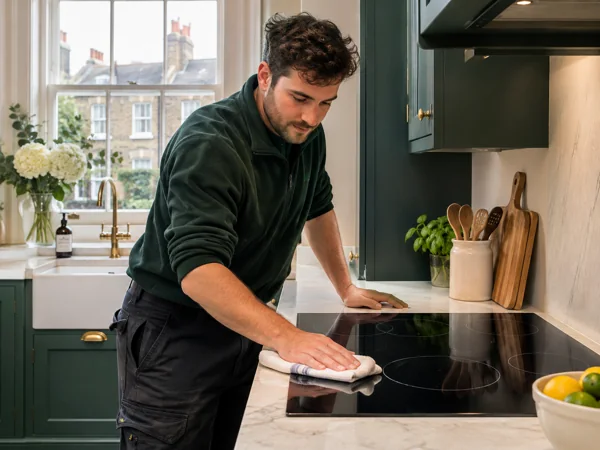
Give the hob surface and identify any requested supports or controls. The stove top may be a different appliance even if it sits above the cooker, so use its own details. If the concern is a spill on a splashback or a coating beside the cooking zone, say what material it is. A photograph of the whole area may show where one finish ends and another begins. Ask for optional items independently and explain whether someone needs a separate burner or cooking zone available during the visit.
An extractor should have a position, approximate height and filter description. A filter set inside a casing and an exposed cover may need their own checks. If you know it has a washable metal filter or disposable insert, tell us. Give a relevant manual if the location is hidden. Confirm each part that can be reached and include the agreed options on the quote. Leave space for those parts as well as the oven and let the person opening up know what is included.
- Identify the hob material and affected parts.
- Give the extractor height and filter type.
- Check the written list matches the parts requested.
Make the handover about the appliance you will use next
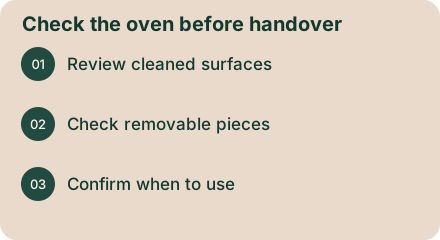
Enter the full postcode to begin and keep the entrance, oven model and main concern ready. If another person will admit the technician, show them the labelled photo and the written list. Identify a contact to ask if the assessment raises a question about the finish or condition of a part. Check how long a permit or key can be used and who deals with return arrangements. Tell us about the intended first meal afterwards so there is a chance to discuss when the appliance can be used.
Ask which parts were cleaned and where the relevant racks and trays go. Note any advice on the main oven or secondary grill separately, and tell the next person who plans to cook. If a panel or glass face stayed outside the agreement, write down its position and model for another enquiry. A short record beside the manual means the advice can be found in the future. Complete any building sign-out and return the key or visitor pass as arranged.
Confirm the approach into the property
| Stage | Check | Name or detail |
|---|---|---|
| Street | Correct residential entrance | Postcode, bell and unloading |
| Shared entrance | Which lift visitors can use | Flat level and steps afterwards |
| Kitchen | Door opens and counter is clear | Person who can show the agreed area |
Get an oven cleaning quote in Homerton
Tell us the oven type, number of cavities and whether the hob or extractor also needs cleaning.
Get a QuoteOther Cleaning Services in Homerton
Local references · National Rail, Homerton station
Homerton oven cleaning questions
Can I use the manual from when the kitchen was installed?
Yes, if the model matches the current appliance. A view of the controls can help confirm it.
What if a rack finish differs in the top and bottom compartments?
Identify the finish for each piece and which cavity it normally fits.
Can a permanent stain be visible even after cleaning?
Yes. Show the affected spot and its history so the technician can explain what may remain.
How do I describe a house with a separate side entrance?
Give the full address and explain where the gate or door is and who can open it.
Can I enquire about the cooker hood separately?
Yes. Give the approximate height, exterior finish and filter type if known.
Can we ask about another oven at the handover?
Yes. Keep its model and any relevant photos separate from the oven cleaned on the day.