 Housekeeper
Plan your kitchen visit
Oven Cleaning in Dagenham
Tell us which oven you use and how to reach it in your Dagenham home. An accessible photograph and the count of working compartments can identify the requested appliance, even if it came with the property. Say which racks and trays you want considered and whether the kitchen uses a separate door.
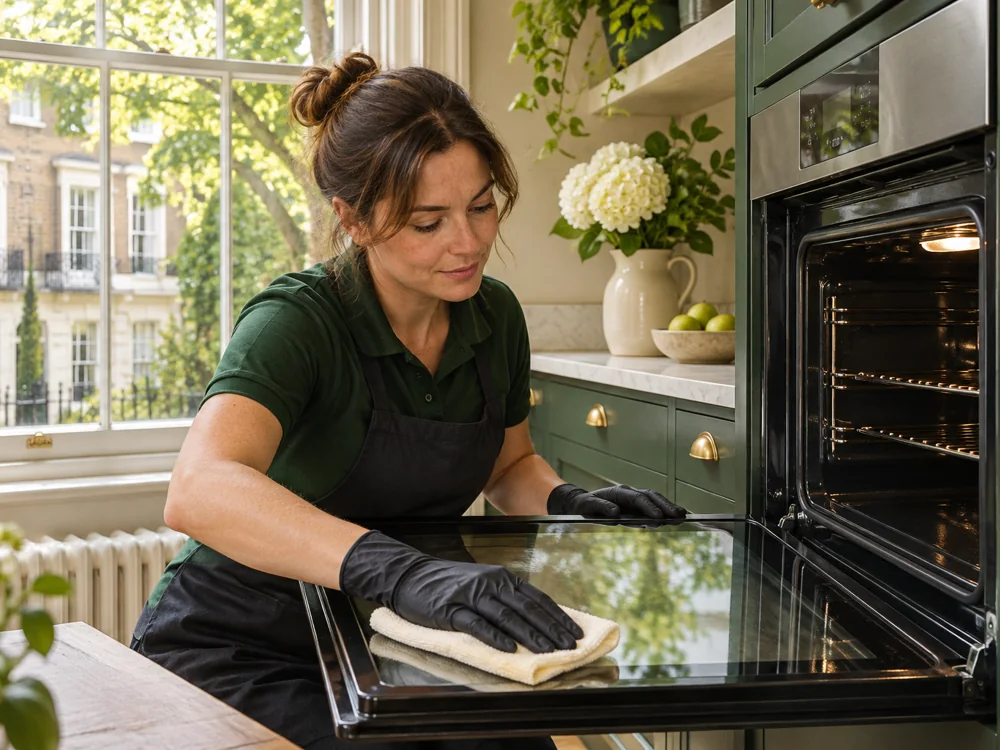
What should I include near Dagenham Heathway?
Give the full postcode and the door or side gate leading to the kitchen.
Can you discuss an oven I did not buy myself?
Yes. Send the visible model or a picture of its front and the affected cavity.
Start with the precise front or side entrance
Transport for London gives the address of Dagenham Heathway station on Heathway in RM9. If that is the local point people recognise, use it after giving your complete address and the door you want the cleaner to approach. For a different RM8, RM9 or RM10 address, provide the full postcode rather than the district alone. Say which door number or block name will be visible once a person reaches the pavement. If the route is through a side gate, describe the gate and tell us who can let the cleaner through.
After the entry, establish how far the visitor has to go to reach the kitchen. A rear extension can carry an external door and internal doorway that open at different levels. A flat or maisonette may have a shared approach and its own stair. Mention those details if they affect the route. For a home with a place to unload, tell us how it can be reached and whether somebody has to provide access. Give the name of the person showing the appliance and share private entry details directly when arranging the visit.
- Use the full address and actual entrance.
- Give a side gate or staircase only if it serves the chosen route.
- Name the resident or key-holder who can open up.
Identify what is fitted in the kitchen without moving it
Start with a photograph showing the complete appliance and its controls in place. If there is a model label visible by the door or a handbook in a cupboard, add that information. A freestanding cooker can have one working cavity and a separate grill, or two ovens with controls on the same panel. A matching drawer might simply hold cookware. Name the part to be considered by its position and usual function. A picture of each open cavity while cool helps show which one has the condition you are describing.
If the kitchen contains two separate ovens, give a model or position for each requested unit. Tell us if the top one is mainly used as a grill or is a combination appliance. That can affect discussion of its liners and door. Include details you can find without moving an integrated unit or a range. Leave cables, fittings and panels in place. If somebody else is at the property, send them the same oven description so they can point to the right door and show any loose pieces.
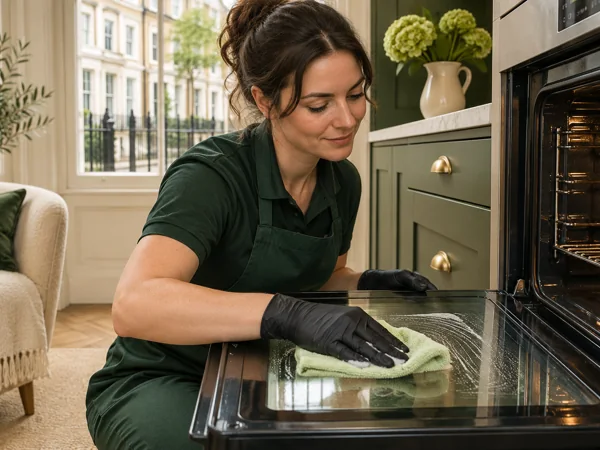
Describe entry to a Dagenham property
| Step | What to tell us | Who can confirm |
|---|---|---|
| Street | Full postcode and front or side door | Resident |
| Gate or communal door | Label, steps and access | Key-holder |
| Kitchen | Working space and oven position | Person at home |
Put the oven accessories in one identifiable group
A spare shelf can be kept with baking sheets instead of the cavity it belongs to. Look for the original racks and trays that you want to ask about and name their usual positions. Give the grill tray and inner rack separate entries if both are relevant. Note which pieces are coated and tell us if one is already bent or has a loose handle. A fixed runner is a different item from the wire shelf that moves along it. Leave supports you do not usually remove where they are.
Suitable removable parts can be considered for dip-tank treatment after their finish and condition are checked. The model helps when an original accessory has unusual guides or coating. Remove personal cookware from the oven before arrival and keep it separate from the agreed pieces. If access is arranged by a resident who rarely cooks, tell them where to find a stored tray. We can inspect the parts in the kitchen and use the item list when reviewing which ones were included at the end.
- Give the count of original pieces you want discussed.
- State where any spare parts are kept.
- Describe coatings and fixed guides separately.
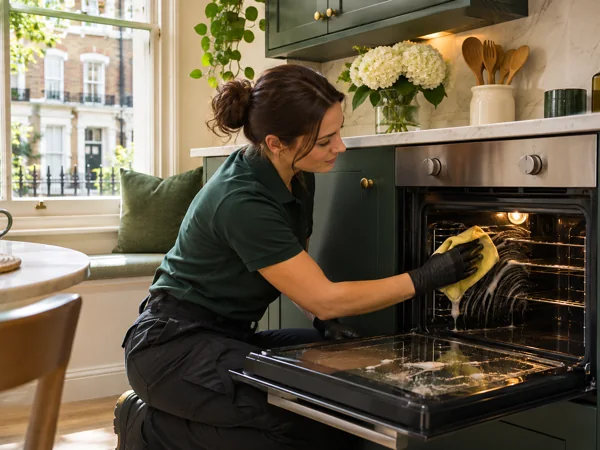
Give a position for any spill, grease or existing change
When the oven is cool, note where residue sits in relation to the base, nearest shelf guide or glass. If a deposit has collected against a lining, include the edge of that lining in the picture. A large image of the cavity can make a close picture of the mark easier to place. Tell us which interior surfaces are textured or smooth if the difference matters to the condition. If the oven was in the property when you arrived, explain what you know from earlier records.
Mention any oven spray or appliance cycle already used on the area. Describe changes in colour or texture if you observed them. An existing scratch or chip can be recorded independently of a layer of grease. The technician can inspect accessible grease and baked-on residue in the context of the finish underneath. Give the area you want looked at before a general account of the cooker. If there are similar marks in another cavity, note its condition on its own line.
- Name the affected cavity and surface.
- Report products or cycles you know were used.
- Mention wear beside the residue before the work.
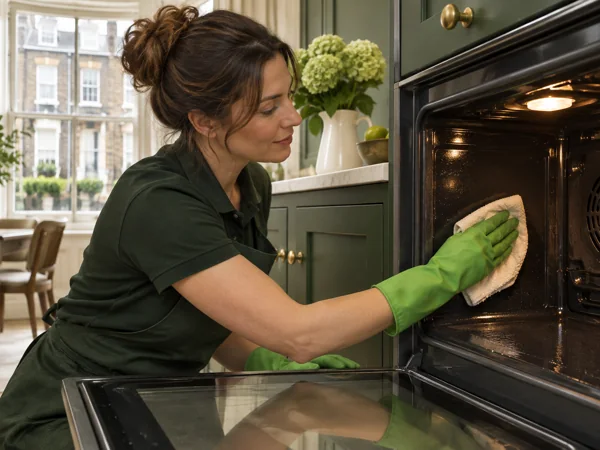
Describe the working room at a freestanding or fitted oven
Open the appliance only once cool to see where the door reaches. A freestanding range can project from the worktop, while a fitted oven can open into a narrow galley. Describe how much room there is to stand and where the controls and loose parts can be reached. Clear lightweight items from the floor or nearby worktop if practical. Leave fixed units and anything too heavy to move where it is. Let us know if the oven door almost meets an appliance or table on the opposite side.
Arrange who will leave the oven cool and empty. Check which counter can be discussed when we review the racks and pans. If other people need to go through the room, plan another route while the appliance and pieces are being handled. Give notice of children or pets usually sharing the kitchen. Make sure anyone opening up on your behalf can tell us when the room is needed next and point out a worktop or floor finish that may need to be taken into account.
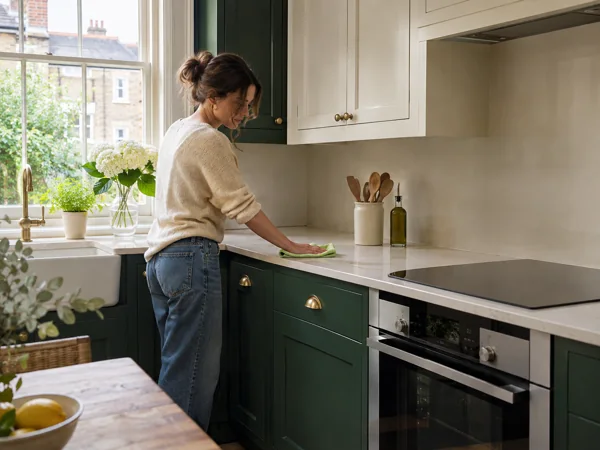
List the accessories requested for assessment
| Part | Where it goes | What to give |
|---|---|---|
| Wire rack | Main oven or storage | Quantity and appearance |
| Grill tray | Upper compartment | Insert and handle details |
| Side support | Along the cavity wall | Usual movement and model |
State what the affected door or control looks like
If grease is visible through a window, tell us which door and whether it seems to sit on an accessible face. You can compare how it looks from the kitchen and from inside a cool oven with the door open. If it appears between panes, give the model and say where in the window it can be seen. Access depends on the design and condition of the door. State if there is wear around the lower trim or a seal that appears to move, without disturbing it.
A greasy smear around an oven setting needs a different description from a mark on the glass. Name the nearest control and report whether the markings were already fading or the fascia finish was scratched. Give an overall view of the front if two similar panels could be confused. The cleaner can assess the accessible glass and controls and consider the existing condition as part of the discussion. Keep those same part names available when you review the agreed items.
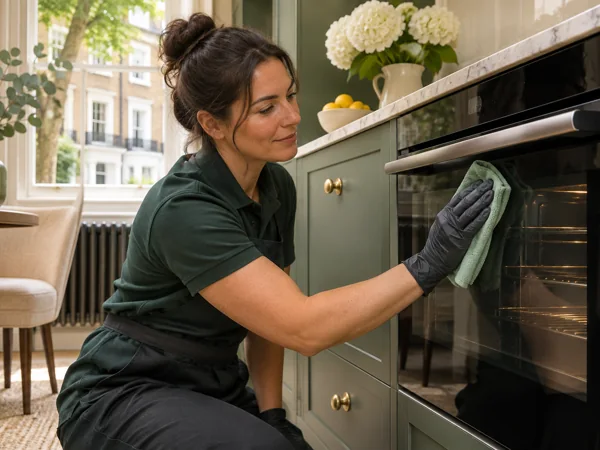
Add separate cooking top and extractor details only where relevant
If there is visible residue on the hob, say whether it is gas, ceramic or induction and identify the relevant zone, support or control. The cooking top may be built into a separate counter from the oven. Include its position in the enquiry and show where the glass or metal edge meets an adjacent finish. Tell us if you also want to discuss a splashback. For a gas top, identify any loose supports in the request rather than leaving it unclear which pieces are under consideration.
For an extractor, explain where it sits and what the outer panel is made from if known. Name the filter model or material from the manual if available. Give a description of the underside without moving any unfamiliar piece. You can ask for a visible surface, filter or full hood to be considered separately. Keep each item as a separate entry in the quote and tell the person opening the property which additions were agreed. That way, they can show the correct parts when the cleaner arrives.
- Use the cooking zone or support as a reference.
- Send the extractor model if available.
- Name each accepted extra separately.
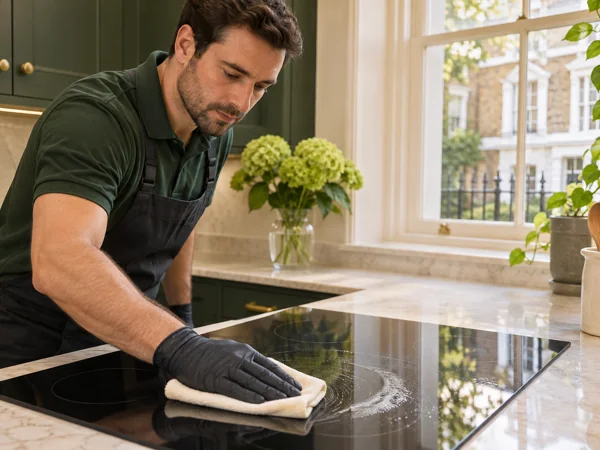
Check the agreed items before handing the kitchen back
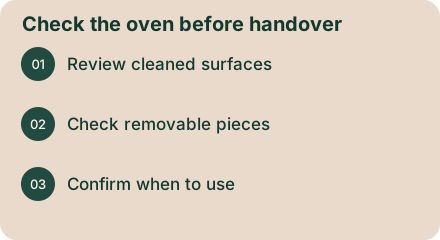
Use the accepted request to check the oven cavities and accessories after the visit. Ask which parts were removed and which areas were accessible. If you described a deposit by the lower rack or in a particular grill, use those positions to locate the area again. Note any explanation of an existing mark to pass to the next person. Ask when the appliance can be used again before you plan the next meal, and make sure that detail reaches whoever is responsible for the kitchen that day.
For a move, arrange a review before you hand back access to the property. Give the person checking the oven the model and accessory list. If a hob or hood was included, record that as its own line beside the oven. Leave the manual and original parts where the next resident can find them. Note a separate cleaning enquiry for a secondary appliance, if one was only discussed. That keeps the completed item list clear and gives the next occupant practical details about what belongs to each oven.
Locate grease or residue by part
| Surface | Position to give | Relevant detail |
|---|---|---|
| Oven floor | Nearest seam or shelf guide | Earlier product if known |
| Door | Affected glass face | Model and prior wear |
| Cooker fascia | Control or nearest edge | Existing fading or scratches |
Get an oven cleaning quote in Dagenham
Request a quote with the oven type, number of cavities and any extra appliances.
Get a QuoteOther Cleaning Services in Dagenham
Local references · Transport for London, Dagenham Heathway Underground station
Dagenham oven cleaning questions
Can I use the station as a landmark if my Dagenham address is off Heathway?
Yes. Give the full residential postcode and door first, then use the station only to identify the area.
How can I find the correct model without sliding the cooker out?
Check paperwork or a visible label near the door. If no label can be read, show the cooker front and settings in a photograph.
Can I ask about a loose handle on the original grill tray?
Yes. Identify the tray and describe the existing issue so it can be examined as a distinct piece.
What should I show if the main oven door blocks the kitchen aisle?
Send the oven and opposite unit in view, and describe the available floor when the door is open.
Can I discuss a grease line beside the cooking top’s trim?
Describe the hob, the edge and the adjacent finish. A picture of the entire top can locate the affected area.
Who checks the accessories if I have already moved out?
Agree whether the agent, owner or another key-holder can review the parts before access is returned. Give them the list you accepted.