 Housekeeper
Detail-led care for your oven
Oven Cleaning in Blackwall
Arrange oven cleaning in Blackwall for your fitted cooker, grill or range. Identify the priority cavity and the finishes or accessories you want assessed. Give the approved approach to the residence, especially where the building has a separate lift, visitor lobby or equipment entrance.
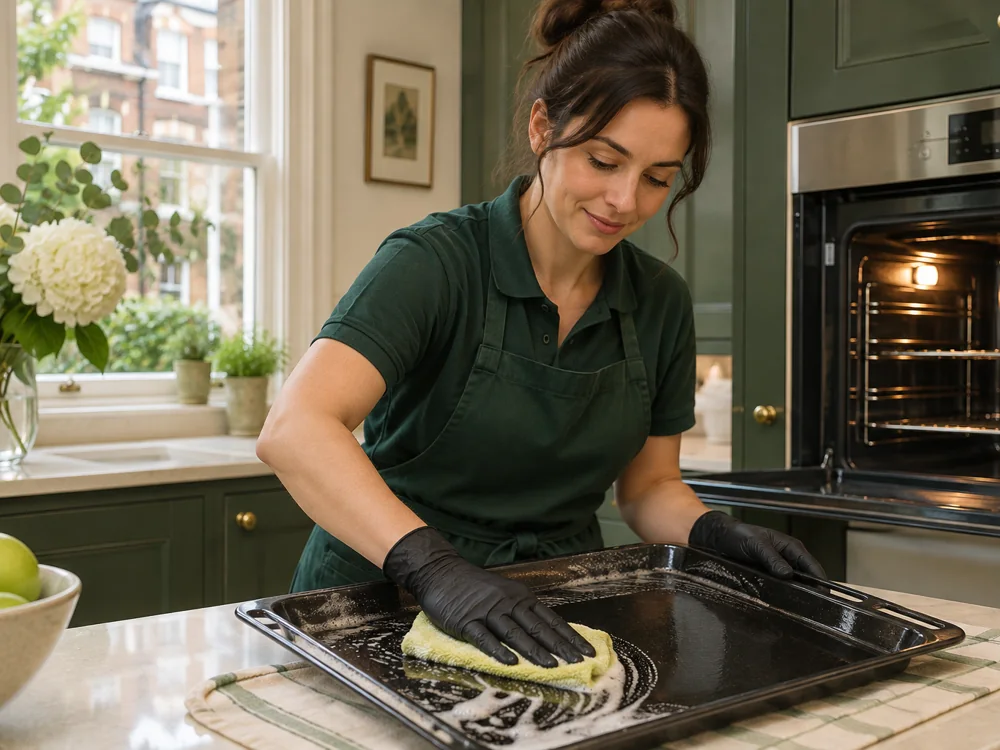
Can I request an oven clean in a Blackwall apartment?
Yes. Send your full postcode, block, approved door and lift route. Include the model and number of cavities.
Can you look at adjoining liner and enamel finishes separately?
Yes. Give the manufacturer’s guidance if available and show exactly where the affected surfaces meet.
Map the cooking appliances before making a request
A kitchen with matching doors can conceal two different cooking units or an oven and a warming drawer. Send one picture of the complete row of doors and controls, then identify the unit you use for roasting, baking or grilling. If there is a second oven on a different wall, tell us where it sits. A separate grill may have a shelf or pan that differs from the ones in a full-size oven. Give the relevant model from a manual or a label visible when the appliance is cool and in place.
Mention any replacement parts and choose the cavity you most want assessed. The priority is sometimes a smaller grill with residue on its pan rather than the larger but less frequently used oven. A photo can help distinguish a separate cavity from a microwave or storage front. Give the person meeting the technician a copy of the marked pictures. If the owner of the home will be away, that person can use them to point to the exact appliance and show how the accessories are kept.
- Use one photograph showing all of the appliance fronts.
- Name the doors by position and normal use.
- Identify accessories that belong to another oven.
Name the riverside or courtyard approach for your Blackwall home
Transport for London’s DLR map shows Blackwall on the Beckton branch between Poplar and East India. Use Blackwall station as a reference only when it helps locate the property. Send your current full postcode, the actual block and entrance and the floor of the kitchen. A residential block can have a pedestrian entrance towards the water and another approach from a street. Check which door will be used for a technician arriving with equipment. Give the building name as it appears at that door rather than relying on a map pin.
Find out whether the approach goes through a visitor desk, a gated courtyard or a lift only available from a managed loading point. If more than one lift reaches your floor, explain which one leads towards your flat. Describe steps beyond a lift or any narrow space where equipment has to pass. Let us know who can let someone in at the start and whether they can release a second door. If a parking arrangement is needed, discuss it with the building contact ahead of the appointment.
- Share the correct block, postcode and visitor entrance.
- Explain which lift connects to the kitchen floor.
- Confirm the approved approach from unloading.
Identify appliances and relevant parts
| Item | Useful detail | What to confirm |
|---|---|---|
| Built-in oven | Door position and model | Priority cavity and set of shelves |
| Independent grill | Pan material and insert | Accessories to include |
| Matching unit | Normal use and controls | Whether it should be considered |
Show the seam where two oven finishes meet
The side wall and base of an oven can have different finishes. A self-cleaning or catalytic liner may sit beside enamel, and the care advice can be different for each. Give the manufacturer’s guidance if it is in the paperwork. Take a picture that shows any mark crossing a seam or edge. Tell us if it first showed up after cooking, a spray or a cleaning programme. A dark patch can involve food residue, a change in colour or other wear. The technician can inspect the relevant surfaces before discussing treatment.
If the residue follows the base of a dish or appears near the grill tray, explain the cooking routine that led to it. Mention if the oven continued to be used after the spill. Identify existing chips or discolouration separately from food residue. A door seal, loose hinge or fault with heating should also be disclosed before booking. An appliance specialist can advise on operation separately from the clean. Let us know if the appliance is already out of use, and show which part you would like assessed within the remaining condition.
- Show the shape and position of a spill or grease patch.
- Include maker guidance or past products.
- Identify damage or faults before agreeing the appointment.
Identify the parts suitable for separate treatment
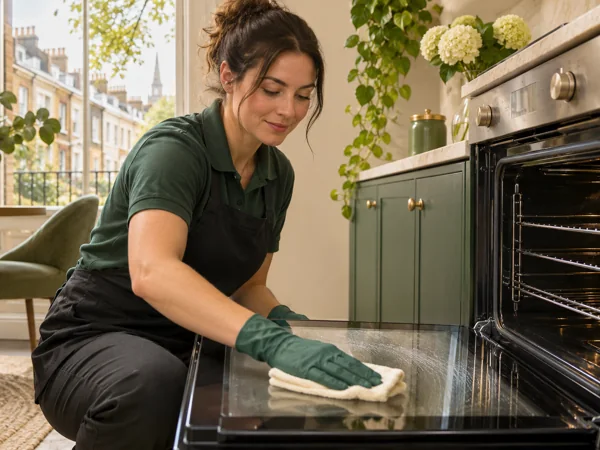
Once the oven has cooled, take out food, loose foil and ordinary cookware. Put the shelves, tray or grill pieces you want considered within reach. Suitable removable pieces can be cleaned separately and may be soaked in a dip tank depending on their material, coating and condition. A tray that has been replaced can need a different approach from the original wire rack. Point out any lifting on a coated surface and give the type of finish if known. Keep a pan and its insert with the right oven.
For a shelf on runners, explain whether the rail moves freely and stays level. Leave the assembly in place if you cannot identify its fixings or if something sticks. Show the point where movement changes so the technician can assess it. A drawer beneath an oven can collect other loose pieces, so check before agreeing the quote and put aside accessories not meant to be included. A clear worktop near the appliance gives the technician room to look at the requested items.
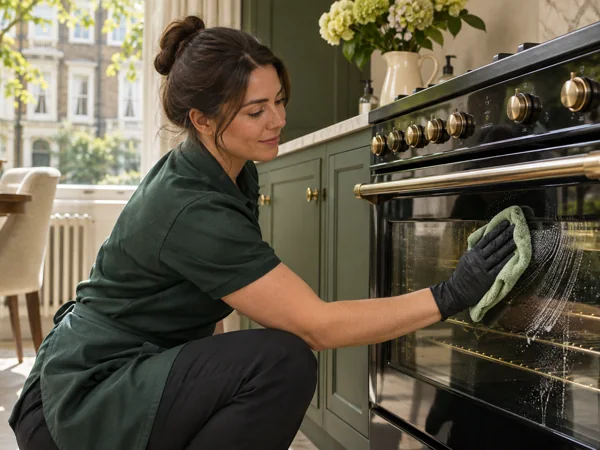
Show where coatings and glass are affected
| Surface | Condition or observation | What to discuss |
|---|---|---|
| Side liner | Mark at the enamel seam | Manufacturer care and suitable treatment |
| Glass | Streak near the handle or bottom | Reachable pane |
| Outer trim | Existing chip or lifting finish | Condition and possible access |
Ask separately about oven glass, the handle and adjacent trim
With the appliance cool, look at the marked pane with the door open and shut. Describe which side it appears on or if it seems to be behind the first layer. A streak can be visible from a sharp angle near the handle but look different under the oven light. Report previous glass replacement and mention any loosened surround or seal. Access to different panes depends on the construction and condition of the door. The technician can discuss which surfaces can be reached after looking at the actual oven.
If the handle or printed controls also show marks, give their position and finish on a separate line. A worn knob can already have less visible lettering before cleaning. Mention an adjoining cabinet edge that touches the door or a coating that has lifted. Include enough of the kitchen in the photo to show those surfaces in relation to the oven. Ask which finishes can be considered and explain if a particular change is a concern for a landlord or for the resident taking over the home.
- Point to the affected pane or approximate position.
- Mention previous work to glass or the door surround.
- Separate the marks on glass from marks on nearby fittings.
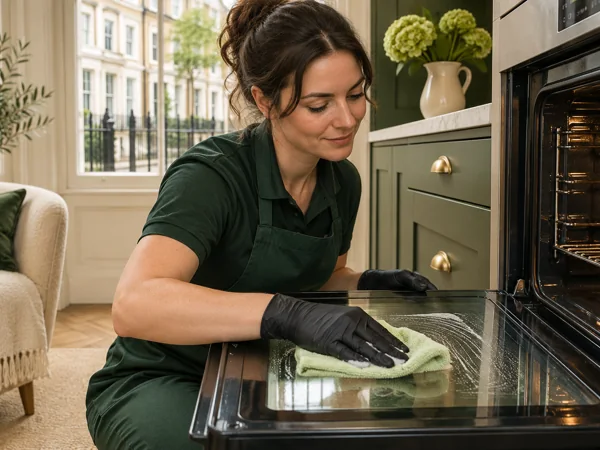
Check the visible parts of a hob or extractor when requesting more work
A hob can be a separate appliance even with controls arranged beside the oven. State whether it is gas, ceramic, induction or another kind and identify the pieces that need consideration. Gas caps, pan supports and a separate griddle can have different surfaces. On a glass hob, indicate which zone or edge has marks. Photograph the area and mention scratches or existing damage. Ask for the hob to be identified separately before assuming any of its parts are on the oven quote.
Describe the extractor position, cover and height from the hob. If the unit is built into a cabinet, show the edge from a safe position. Note if there is a metal filter or disposable insert, and separate grease on the visible housing from deposits on the filter. If an island or cupboard restricts approach, give an overall picture. Ask what parts can be considered and confirm any separate hood work alongside the rest of the quote. Tell us if another appliance needs to remain available during the visit.
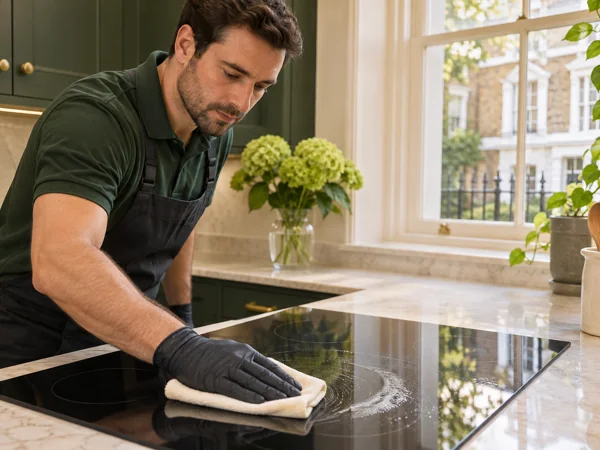
Agree how the kitchen can be shared before and after the clean
Keep the oven cool and out of use before the visit. Move items that would be in the path of the oven door and clear the adjacent worktop for inspection. Tell the household how the visit fits the use of other appliances or routes through the kitchen. Keep children and pets away while the technician handles oven equipment. Discuss any water or electrical access limits before booking. Let us know if the kitchen needs to be ready for a later meal, and give that time before you confirm the appointment.
During handover, ask which parts were treated and when the oven can be used. If a separate part stayed in place, ask for any notes from the technician and share them with the next person who cooks. In a kitchen with more than one oven, check where each rack and pan fits before putting it away. Leave time to receive these instructions, particularly if a concierge or key holder was involved in getting the technician to the home. Pass the details to whoever will be there next.
- Clear the oven approach and give your next cooking time.
- Discuss any other appliance that needs to stay accessible.
- Arrange for somebody to receive and relay handover.
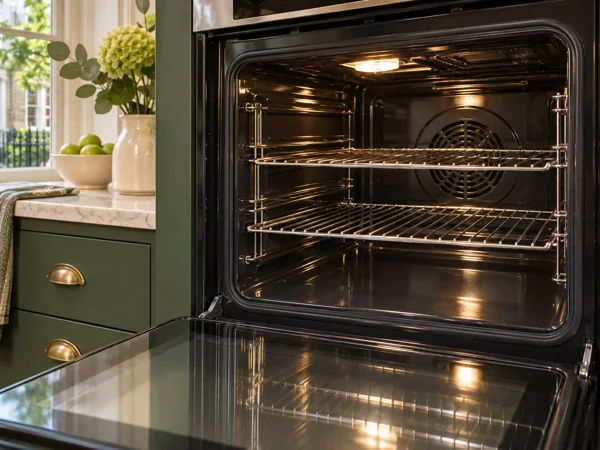
Get from the road to the correct Blackwall flat
| Location | Instruction to provide | Who can agree it |
|---|---|---|
| Approach | Unloading point and visible block name | Building contact |
| Entry | Visitor door or reception | Resident or concierge |
| Floor | Lift core and remaining steps | Person meeting technician |
Match the quote to the exact cooker and visitor route
Begin with the full postcode and the agreed approach to the kitchen. Send the model, priority cavity and photos, then name the tray, rack or specialist finish you want assessed. Give other appliance details separately. Check that the person meeting the technician can show each listed part. Give the next use of the kitchen and any known condition up front. If something differs from your original list, such as a spare tray or changed visitor route, ask to review the arrangements before the date is confirmed.
For a property handover, compare the cooker and accessories listed in the inventory with what is present. Confirm who will provide access and who can be there to hear advice on the return to use. Tell us if other work means the kitchen or approved loading route is needed at the same time. Keep the agreed photos, quote items and access instructions together with the person who can meet the technician. Share the correct return-to-use instructions with the next cook rather than assuming they saw the appointment details.
Get an oven cleaning quote in Blackwall
Request a quote with the oven type, number of cavities and any extra appliances.
Get a QuoteOther Cleaning Services in Blackwall
Local references · Transport for London – DLR map, Blackwall
Blackwall oven cleaning questions
Can I give the waterside entrance if it is closest to my flat?
Confirm the approved visitor and equipment access with the building, then give us that door and the route inside.
Do I need a photo of every oven door?
Send an overall view and identify the doors and cavities you want assessed. A close-up can show a particular issue.
Can you assess a tray that is newer than the oven?
List it separately and point out differences in finish or visible wear.
Can you assess a door with new glass?
Tell us which pane was replaced and give the model. The technician can inspect how the door is assembled.
Can you clean the oven while another appliance is used?
Describe the appliance positions and ask about working space when arranging the visit.
How do I tell the next cook when to use the oven?
Ask about use at handover and pass on the advice, including which parts were treated and where they fit.