 Housekeeper
Plan around the family kitchen
Oven Cleaning in Beckton
Arrange a Beckton oven clean around the cooker your household relies on. Identify the main oven, grill or second cavity and the shelves and trays you want assessed. Give your own address, the approach to the kitchen and the next time you need the appliance.
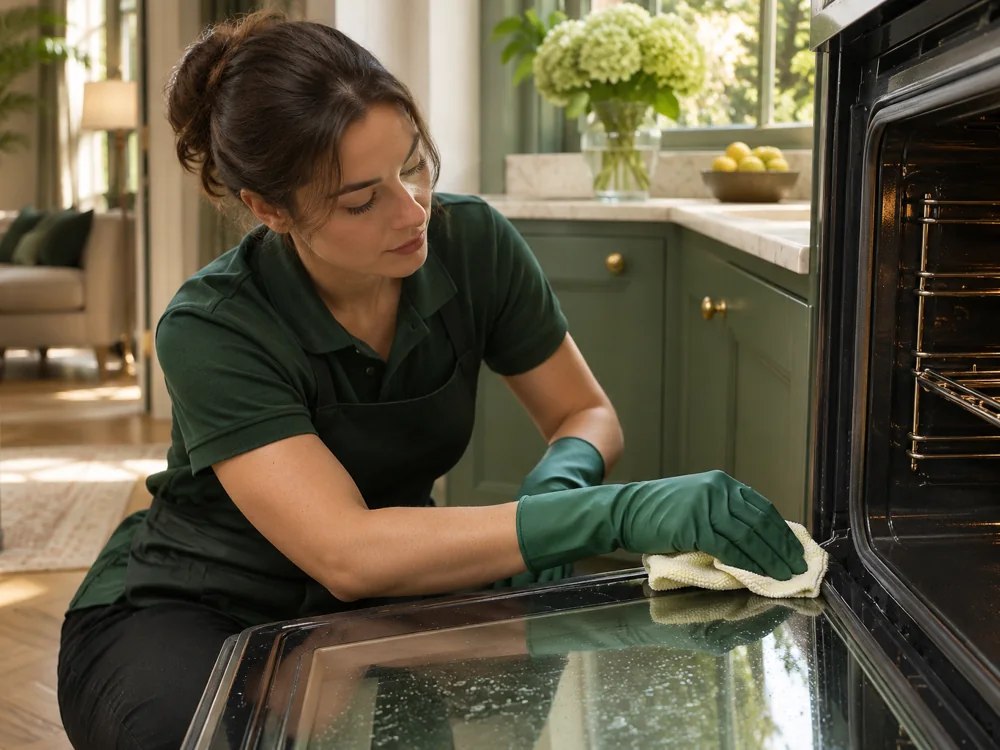
Can I book an oven clean for a family kitchen in Beckton?
Send your full postcode, actual entrance and type of cooker. Tell us when the oven is needed again.
Can I request both the main oven and the separate grill?
Yes. Describe each compartment and its shelves, tray or grill insert so they can be listed separately.
Start with the single oven the family actually uses
If the same oven cooks most meals, begin by describing where the largest dishes fit. A low rack may carry casserole dishes, while an upper rack tends to be used when food needs to brown at the end. Look at the oven while it is cool and note where grease and food residue collect. If the grill is part of the same cavity, identify its usual tray and insert. Give the oven make and model when it is visible on a label or in the paperwork, with the cooker in place.
A full photo of the front helps show if the grill uses a separate control. Include a clearer view of any baked spill you want assessed, and describe whether it happened once or built up during regular use. Tell us if you have recently used oven spray or a self-cleaning programme. Some surfaces have specialist care requirements, and a dark area can be residue or a change to a finish. Share a manual if the maker identifies a liner or special coating. If one part of the oven is out of use, explain why.
- Identify the shelf height used for the largest dishes.
- Show grease and spills in their position inside the oven.
- Give the model and any guidance for specialist linings.
Compare options for a family cooker
| Appliance | Common priority | Useful detail to send |
|---|---|---|
| Single oven | Main cavity and shelf | Usual shelf height and fitting |
| Double oven | Lower cavity or separate upper grill | Which compartment is used most |
| Range | Main oven, separate grill and griddle | Position and material of each part |
Explain a double oven by the main and smaller compartments
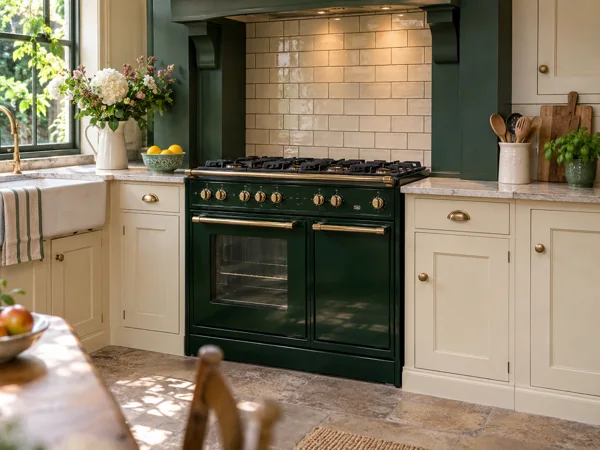
A double oven may have one compartment the household uses daily and one that only sees regular use as a grill. Say which one you want considered, even when the controls and front look similar. List any pan, shelf or insert relevant to either compartment. Identify newer or replacement pieces separately. On a range, tell us which door leads to the main oven, second oven, grill or warmer. A picture of the full appliance and doors is a good way to point to each compartment without guessing from the cooker size.
Tell us about known faults, including a loose seal, door hinge or unreliable heating, before deciding on an appointment. Use an appliance specialist separately for advice about operation. If one compartment stays shut or is already disconnected, say which one it is. When a person other than the usual cook is meeting the technician, leave clear photos and use the names everyone in the house uses for the oven and grill. Ask that person to show the affected marks and explain which tray normally fits each cavity.
Describe the visitor route in Beckton from street to kitchen
Newham Council lists the north part of Beckton District Park on Tollgate Road and the south part on Stansfeld Road. A reference to the park can therefore mean more than one part of the neighbourhood. Give your own full postcode and exact entrance. If a building has a walkway on one side and a visitor drive on another, tell us which approach is approved for equipment. For flats in a courtyard, write the entrance name from the door and the flat number rather than just the road name.
Check with the person responsible for the property about shared gates, unloading or access to a lift. Tell us where to meet someone and which steps or doors come after the entrance. If the kitchen is reached from a side door, describe any sharp turns, narrow passage and stairs. The person providing entry should be able to open the whole agreed route. If another resident needs access across the same area, discuss how the equipment can reach the cooker without leaving a shared entrance unavailable.
- Give the postcode of your address and approved opening.
- Include a visitor approach from the unloading point.
- Check who can open shared gates or a second door.

Gather pieces for separate consideration
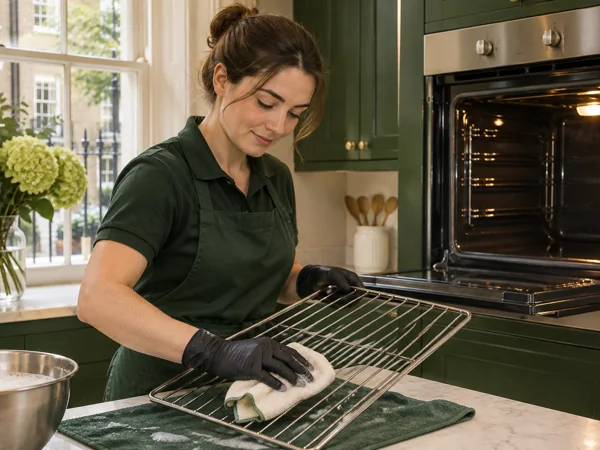
When the cooker is cool, put aside the loose racks, oven trays and grill insert you want assessed. Remove ordinary pans, food and loose foil from the cavity. Suitable removable components can be cleaned away from the oven and may be soaked in a dip tank if their condition and finish allow. A plain wire rack and a coated tray can be treated differently. Tell the technician if an insert has a detachable handle, and keep both with the right pan. Mention a chipped finish or a bent shelf when setting out the parts.
Some support rails release only at a particular point. If you are unsure of the fitting or the rack sticks, leave it in the appliance and describe how far it moves. Show which part gets caught and whether the rack normally sits flat. Keep the accessories for each cavity together, especially if two sets look nearly the same. A clear work surface beside the oven leaves space for an assessment. Tell the person receiving the technician which tray is stored outside the kitchen if it should be included.
- Group the rack, insert and tray for each cavity.
- Mention worn coatings and stiff supports.
- Leave unfamiliar fitted pieces where they are.
Keep the visit clear for the household
| Time | Task | What to confirm |
|---|---|---|
| Before arrival | Leave the oven cool and set out parts | Shared kitchen and other cooking plans |
| At assessment | Identify the main residue or grease | Which items are agreed |
| At handover | Check which accessories go back | When to use the oven again |
Compare the condition of the glass and control area
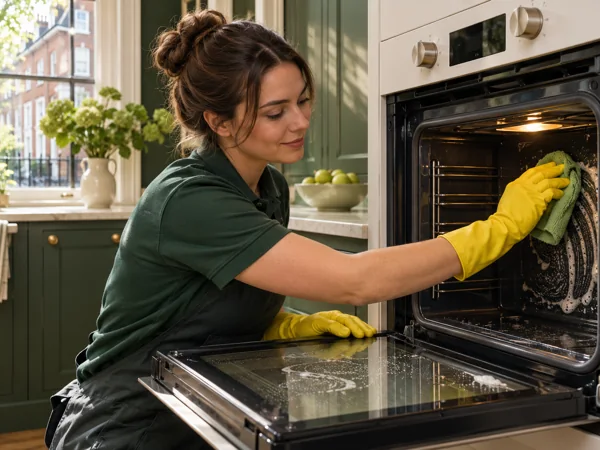
Grease on the inner face of the door can be obvious when it opens, while a streak you suspect is between panes may be visible only from the room. Compare the view with the door open and shut while the oven is cool. Tell us about past glass replacement or damage to the trim. Which panes can be reached depends on the appliance’s construction and condition. The technician can inspect the glass before discussing practical treatment. Include a picture that shows the handle or lower edge as a reference.
If a handle looks worn or the controls have faded markings, point to them separately from the grease on glass. The surface of the handle or panel can require a different approach. Mention a nearby cupboard that catches when the door opens, and show any visible chip before work begins. If you have the maker’s care information, keep it with the photos. Give an accurate description of the areas you want considered, including if you want the glass assessed independently of other finishes.
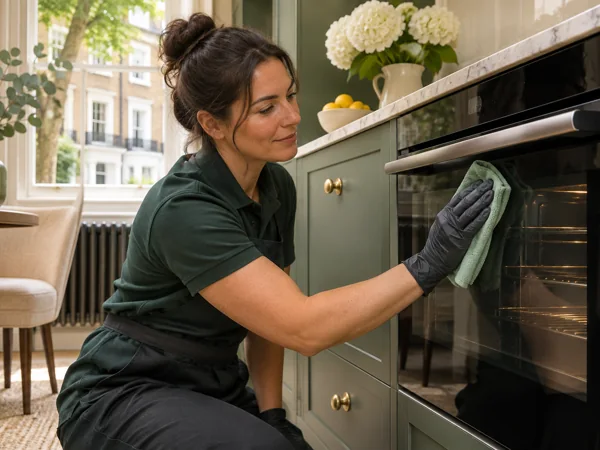
Identify the hob, extractor or griddle before adding them
Tell us which type of hob you have and which parts matter if it needs assessment as well. A gas hob can have separate caps and supports while a glass surface may have deposits around a single zone. A range may have a distinct griddle plate with its own finish. Include a photo showing the controls, and identify any existing scratch or chip. Put a separate hob on its own line even when it sits directly above the cooker. Ask us to confirm the parts discussed before arranging the visit.
Describe an extractor’s height above the cooker and the visible cover. Tell us about metal mesh filters or disposable inserts if you know the type. An extractor concealed in cabinetry can take different access from one over a freestanding island. Show where it is mounted, explain any shelves that get in the way and list the outside housing and filter separately. Ask for the agreed work to appear alongside the oven on the quote. Let us know if another appliance needs to stay accessible during the appointment.
- List each extra appliance individually.
- Describe loose hob parts, cover and filter type.
- Check which components are agreed.
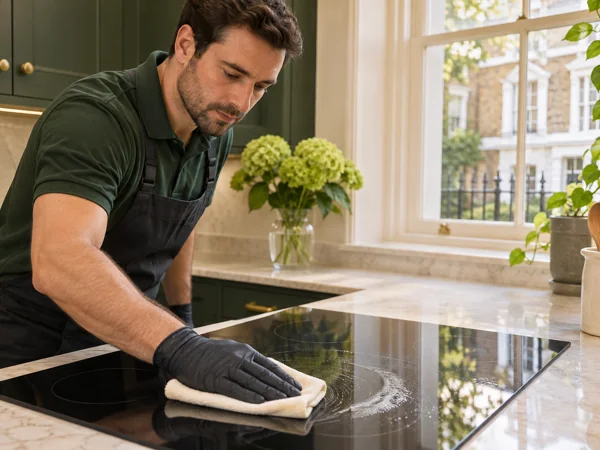
Confirm the approach from the correct side of the property
| Point | Detail to share | Who can confirm |
|---|---|---|
| Outside | Postcode and approved unloading | Resident or building contact |
| Building door | Actual entrance label and gate | Person meeting the technician |
| Kitchen | Clear door opening and worktop | Next person to cook |
Work around the next meal and keep the kitchen clear
Tell the household when the cooker needs to be cool and out of use. Clear worktops next to the door and move a stool or bin that would get in the way. If the kitchen is the route to the garden or another room, let the technician know and tell other people when to stay clear. Keep pets and children out of the working area. Agree access to water or power before the appointment if something is restricted. Give the next time the oven is needed, including if you need it again that day.
At handover, check which parts were touched and when the oven can return to use. Confirm where any loose shelf or insert should go and ask about advice for unusual coatings. If another adult will cook the next meal, leave the information where they can find it. Give the technician enough time to explain it to somebody who can relay it, especially if whoever provided keys will leave before the work ends. If the cooker is being handed over for a new tenant, tell them about use and relevant accessory positions.
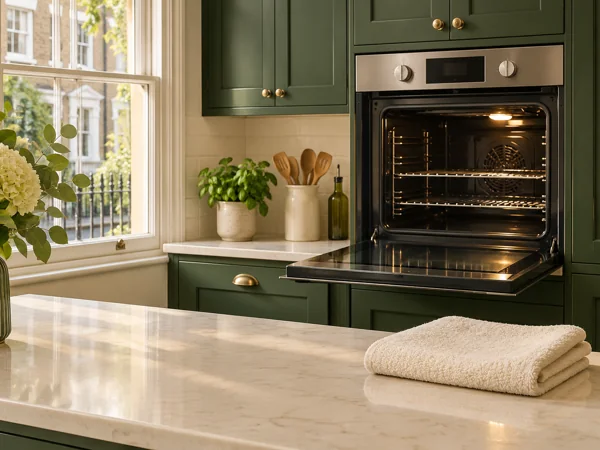
Use the postcode enquiry to give the cooker's details and timing together
Send the full postcode, access path and model, then list the oven and accessories you want assessed. Give photos of the whole cooker and priority areas with separate notes about known faults. Add the hob or extractor only if you want those considered and describe their relevant parts. Give the time the kitchen is needed again. Ask the person who will be at home to review the list and be able to point to the right compartments. Confirm any changes before the technician arrives.
If this is for a tenancy handover, check the inventory and decide which accessories remain in the kitchen. Match what is written to the actual cooker and make space for the oven clean in the rest of the property timetable. Confirm the key holder and who can receive the handover. If an additional warming drawer or loose tray appears after the quote, ask to update the list. Keep the approved entrance and next cooking time on the final request so the household can review it.

Get an oven cleaning quote in Beckton
Request a quote with the oven type, number of cavities and any extra appliances.
Get a QuoteOther Cleaning Services in Beckton
Local references · Newham Council – Find your local park, Beckton District Park
Beckton oven cleaning questions
Does a separate grill count as an extra compartment?
Give its own position and purpose and list the tray or rack. Ask which items will be covered.
Can I leave a spare tray in the cupboard?
If you want it assessed, make it available with the accessories for the relevant oven.
Should I keep cooking until the technician is due?
Allow time for the oven to cool and remain out of use before arrival.
Which part of Beckton District Park should I name in my directions?
Use your full property postcode and actual approach first. A nearby landmark can be added to orient the visitor.
Can I ask about a new mark after a self-clean programme?
Yes. Say which cycle ran and where the mark appeared so the finish can be assessed.
Can a housemate hear the handover?
Yes. Give them the agreed appliance list and ask them to pass on when and how the cooker can return to use.