 Housekeeper
Plan around the family kitchen
Oven Cleaning in Waterloo
When your Waterloo household uses the kitchen at different hours, choose a time when the oven can be cool and the nearest worktop can be left free. Tell us which cooking cavity and accessories you want assessed, and who can admit the technician to your home.
Can I enquire from a home in SE1?
Yes. Add the complete residential postcode and exact entrance.
Can I discuss keeping the hob in use?
Tell us which surface and time you need before agreeing the oven work.
Plan the last meal before the cooker cools
In a kitchen used across the day, agree which person will finish cooking before the appointment. The oven needs to cool completely before the technician’s check, including a small grill or upper oven that may have been used for breakfast. Tell us if a different appliance nearby has to stay available while the work is under way. In a small space, a separate cooking surface may still be within the oven door’s swing. Work out where people can prepare snacks or drinks without using the counter beside the appliance.
If there is a school or work interruption, agree who will open up while others are out. The person at home should have the quote and know which parts the household intends to include. If somebody is coming home to cook later, ask the technician when the oven can be used again and give that person the answer. Allow time to put loose dishes or utensils away before the visit and keep the daily food preparation together on a surface outside the work area.
- Choose a gap after the last use of each cavity.
- Set aside another place for meals or drinks.
- Share the agreed list with the person at home.
Choose a gap that fits the family
| Routine | Before the appointment | What to confirm afterwards |
|---|---|---|
| Breakfast | Choose a different place for hot food | Which oven can be used again |
| Lunch or snacks | Keep food away from the working counter | When the counter can return to use |
| Evening cooking | Identify the cavity and shelf needed | Where the clean parts go |
Make the residential entrance unambiguous
National Rail lists London Waterloo station at Station Approach in SE1. If it helps orient a visitor, refer to it alongside the exact postcode and door for your property. In a building with different entrances for residents and deliveries, tell us which one the technician can use with equipment. Give the street name, number and notice or bell label a visitor will see. If there is a lobby serving several towers, identify the correct lift or stair after the entrance and name the flat level.
Discuss any time restriction on reception, unloading or lift use before booking. The building contact can confirm how to arrive and who can admit a visitor. Tell us if an occupant has to come downstairs to open a second door or show the way into a shared kitchen. If the home opens from a raised walkway, explain where steps or a lift start at street level. Keep the steps in the same order the technician will follow them, and make the available contact easy to reach on the day.

Make a record of which oven each person uses
Look at the cooker fronts and controls together. A small glass door may be a grill, second oven or combination unit. Give the exact position of the cavity that needs attention and keep any warming or storage space separate. Send the model number where it is visible or the relevant handbook page. If one person usually grills and another batch cooks, ask them which rack positions they use. A note about the parts and their positions can help make sense of the marks in each compartment.
Tell us if there is a separate oven under the counter or built into a different area of the kitchen. If you want only one unit cleaned, say which one and list the matching accessories. Avoid moving either appliance for a model number. A fitted unit may contain a coated or textured lining that calls for different care, even when the controls look like those on another oven. Give any manufacturer’s guidance you have for the actual cavity and pieces you want the technician to assess.
- Photograph the complete arrangement and controls.
- List cavities by position and cooking purpose.
- Give details of a specialist finish where known.
Show what spilled and who last cleaned it
Look at the cool oven from the opening and tell us what can be seen without touching fitted parts. A roast might leave drips from a shelf, while a heavy baking spill can spread along the base. Mention if a patch under a grill is separate from residue elsewhere. For a shared oven, ask whether another user noticed the mark before you did or used a household product on the surface. Give the product name, timing and which cavity and finish were affected.
Tell us if you ran the oven’s own cleaning programme and whether the same mark was visible afterwards. Wear or permanent discolouration can remain visible after reachable residue is cleaned. The technician can assess what you see alongside the finish beneath it. Show the concern that prompted the request first, particularly if it is easy to miss when the oven is open. A picture of the wider area as well as the mark can help the technician confirm whether it sits on the door, lining or a nearby piece.
Describe the right oven or part
| Feature | Information | Assessment |
|---|---|---|
| Small upper door | Controls and normal use | Cavity or combination appliance |
| Sliding rack | Slot and sticking position | Safe removal and treatment |
| Cloudy glass | Viewpoint and door condition | Which surface is reachable |
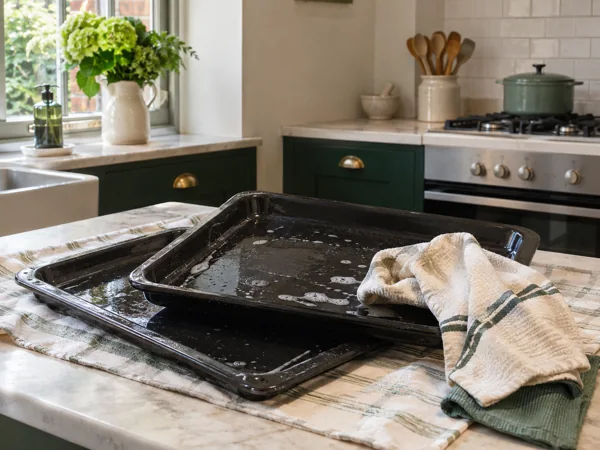
Avoid mixing the loose trays with fitted parts
Count the manufacturer’s racks and trays and distinguish any baking dishes that belong to an occupant. Describe a sliding assembly that sticks and leave the part in its current position. The technician can assess what can safely be removed. Suitable pieces may be soaked in a dip tank. Share the maker’s instructions if a tray has a special coating or a rack uses a particular release. Put personal dishes and accessories unrelated to the quote somewhere away from the working area when the oven is cool.
Keep pieces for the grill in one place if you want them assessed alongside the oven. If a grill insert is already out, identify where it fits. A spare tray might normally be stored in another cavity and may need to be listed separately. Give the person attending a clear list of the items that should stay available. The kitchen is easier to organise afterwards when the technician and occupants know which oven the cleaned racks belong to and which pieces were outside the job.
- List original equipment and optional trays by cavity.
- Report sticking parts before anyone handles them.
- Keep unrelated loose pans away from the cooker.
Give the best view of the door glass
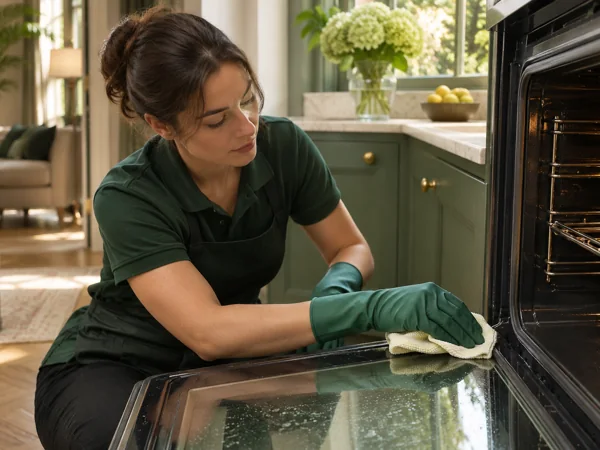
A mark on the door may stand out when light from a sitting area falls across it. Once the oven has cooled, look from the closed position and from the opening and describe where you see it. It may be on a reachable face or within the space between panes. Access depends on the door assembly, model and condition. Tell us about a loose trim, cracked edge or earlier work to the same door before it is handled. Leave all fixed glass in place for the technician to check.
Send a close picture alongside a view that shows the relevant door. If neighbouring glass fronts look the same, identify the cavity in the filename or note. Point to the mark during the first inspection and ask which faces are reachable. If the main reason for the clean is seeing through one particular pane, make that clear when you ask for the quote. The technician can consider whether treatment is available for the affected area and explain where a mark may remain due to access or the finish.
Confirm the way into the building
| Stage | What to confirm | Useful detail |
|---|---|---|
| Street | Approved visitor door | Full address and visible sign |
| Reception | Lift and unloading procedure | Time and contact |
| Flat | Who will open it | Clear route into the kitchen |
Keep nearby appliance work separate from the oven
A hob above the oven might share the same part of the kitchen, while a separate hob on an island may need another area cleared. Give the material and note any pan supports, cooking zones or controls you want considered. If you need to cook a meal on the hob while the oven is being worked on, discuss the arrangement beforehand. A splashback or separate trim should have its own material details. Ask for each agreed hob item to show independently in the written list.
An extractor has an exterior face and a filter that may be at a different level. Give the height, the filter type and where you see grease. If the extractor is hidden in a cupboard, identify its position and provide the manual if possible. An accessible cover and metal or disposable filter may need different handling. Confirm which optional work is included before the visit. If another person will be there for the appointment, explain what space needs clearing around each included item and who can approve it.
- Describe the hob finish and exact parts.
- Specify the extractor height and filter if known.
- Confirm all optional items in writing.
Prepare the kitchen and explain the handover
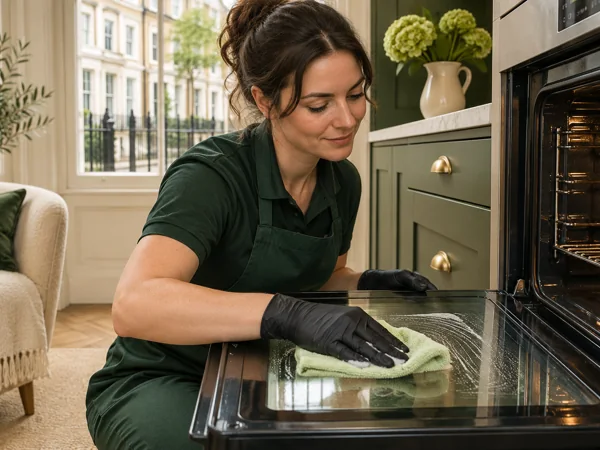
Start with the postcode form. Have the access notice, appliance photo and parts to be assessed ready to discuss. Leave the oven cool and clear a counter close to it. Move anything light that blocks the doorway or front of the appliance. Keep children and pets outside the work area while equipment is being handled. Tell us if access to a utility cupboard or water is limited or if a particular surface beside the oven needs to be left clear. Agree a safe path for occupants if they need to pass.
At the end of the work, ask which parts were cleaned and when and how to use the cooker again. Tell the next person who is planning a meal if racks or trays belong in a particular place. Keep the model and finish details if a part needs to be discussed later. A clipped note on the inside of a nearby cupboard can remind the household of the technician’s advice. Where a key or pass has to go back to the building contact, confirm how it will be returned.

Get an oven cleaning quote in Waterloo
Request a quote with the oven type, number of cavities and any extra appliances.
Get a QuoteOther Cleaning Services in Waterloo
Local references · National Rail, London Waterloo station
Waterloo oven cleaning questions
Can someone else handle access between school and work?
Yes. Give them the approved entrance details and a clear list of the oven items agreed.
Should I include the small oven if we use it only for reheating?
Only if you want it considered. Give its exact model and function so we can discuss it separately.
Does a grease mark on two surfaces need separate details?
Point out the border and provide any care information for the two materials.
What if we cannot tell which rack came with the grill?
Send a picture of the grill and rack or give the model. Leave the part for assessment.
How do we describe a block approached from a raised walkway?
Give the full postal address and explain how to reach the walkway and the actual flat entrance.
Can the person making dinner hear the advice directly?
Yes. Ask them to be available at the handover or pass on the technician’s instructions for the exact appliance.