 Housekeeper
Signature care for well-used ovens
Oven Cleaning in Vauxhall
For an oven cleaning enquiry in Vauxhall, tell us about the exact cooker and the way into your building. Share photographs of the parts that need care, especially where the oven sits beside another fitted appliance or the building has a separate route for visitors with equipment.
Can I enquire with an SW8 postcode?
Send the whole postcode, flat number and building entrance for the address check.
Can I ask about a single cavity in a stack?
Yes. Identify the door and model, and specify the racks or trays you want assessed.
Orient the technician from South Lambeth Road
National Rail lists Vauxhall station on South Lambeth Road in SW8. If it is a useful local reference, include it after the full postal address and the actual door. A flat in a building with two approaches may have a reception desk on one side and an outdoor access route on another. State which entrance admits a visitor with equipment and what signs or numbers they will see. Give a contact for the flat so they can meet in the agreed place if the entry system requires it.
Ask the building contact about an approved loading position and the route from there to the kitchen. If a service lift has to be booked, provide the start and end of the slot and state who is authorised to open it. Check for steps after the lift and a second door leading to the flat. If a pass is issued for a visit, make sure someone knows how it is returned. Give the person opening up the same directions as the person booking, so the work can fit the actual access time.
- Provide the postcode and equipment entrance.
- Confirm the lift and any later steps.
- Identify who opens gates or returns a pass.

Name the actual oven in a fitted bank of appliances
Use the control labels and door position to identify the one you want cleaned. A smaller glass door might belong to a compact oven that can grill or to a different combination unit. Include a photo showing at least the fronts of the appliance group and the nearby cooking surface, if relevant. Find an exact model from the handbook or an accessible label. Leave the appliance in place. The photograph and reference together help distinguish a plain oven from one that has special settings and care requirements.
Write down which compartments take a tray or rack and which are used to store loose items. Where you have a separate grill, identify whether it is inside the main oven or has its own door. Tell us which compartments to put on the quote before the visit. If you intend to use a second oven at a specific time, discuss how close it is to the working area. A clearer picture of the layout lets the technician consider the appliance that needs attention and the safe working space around it.
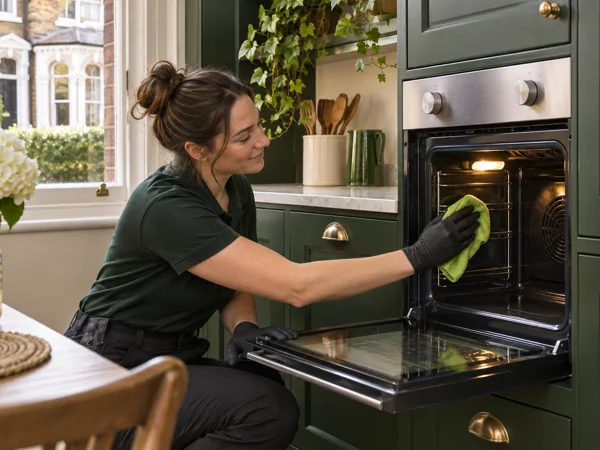
Record the finish before discussing a darker mark
One affected part might be a stainless front beside enamel, glass or a coated lining. Look up the manufacturer’s care notes and tell us which part has changed in appearance. A darker surface can be grease, a cooked spill, wear or discolouration. Send a picture from the opening of the cool oven showing the area and the nearby edge or fitting. Describe where a spill reached and when it happened as best you can. If a separate panel has a different texture, point that out before you enquire about it.
Tell us about any earlier cleaning spray or automatic programme and which surface it was used on, including when it ran. The handbook can explain a finish or remove ambiguity around a particular setting. A technician can look at the accessible area and discuss appropriate care. Visible differences in the finish may remain after removable material is cleaned. Agree the priority marks beforehand, especially where the oven is visible from the living area and part of the concern is its appearance in the kitchen.
- Mark the affected surface in the photo.
- Give the finish and appliance care information.
- Report when you last treated the area.

Confirm the route for equipment and parts
| Where | Check | Provide |
|---|---|---|
| Outside | Is there an approved equipment door? | Address and confirmed loading point |
| Lobby | When can the lift or pass be used? | Contact and times |
| Kitchen | Is there clearance around the open oven? | Working counter and access route |
Separate out racks, trays and sliding assemblies
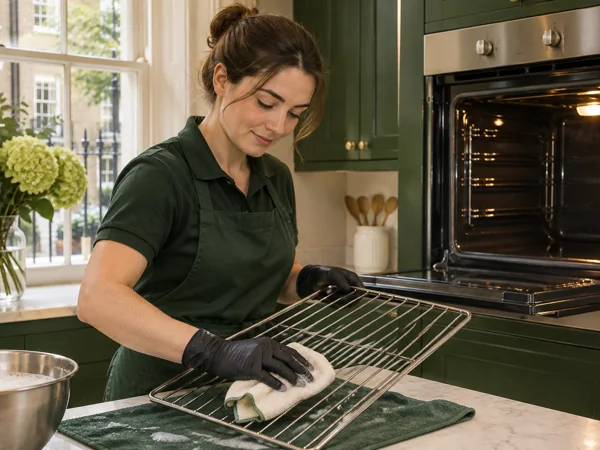
List the parts that came with the cooker and any accessory you want considered separately. A tray in a standard-sized oven can have a coating distinct from the main cavity and may have a removable insert. An extending rail can have its own movement and release, so describe a part that feels stiff and let the technician check it in place. Suitable removable components can be taken out and soaked in a dip tank after assessment. The construction and condition can influence what is safe to do.
If a tray moves between two ovens, tell us the original position if known. A spare rack may be stored in the small cavity and intended for the oven below. Give a photograph showing any unusual fitting and keep the maker’s instructions close by. Empty the cool oven of food, loose foil and personal dishes. Keep any additional item you want assessed clearly identified. Ask which parts are going on the quote so the person who will be at home can recognise and confirm the agreed items.
Explain what you see from the living part of the room
An open kitchen may make a mark on the glass visible from a distance, particularly when sunlight or a lamp shows reflections. Look from the front and from the open position once the oven is cool. Tell us whether you can identify the face or the position only seems to be behind the glass. The ability to reach a mark between panes depends on the door’s design and condition. Mention anything that looks loose or chipped at the edge, and provide the relevant manual if available.
For a fitted stack, label the door in each photo. If a mark on an upper unit is visible only under a certain light, point it out during the initial check. Leave glass and fixtures assembled while the technician looks at the oven. Ask which faces can be assessed safely and which are included if you are chiefly interested in being able to see through the door. A panel that has already been worked on may need a closer look before the technician can confirm what access can be agreed.
- Give the door position and best viewpoint.
- Report any damage or loose trim.
- Discuss reachable surfaces before adding glass work.
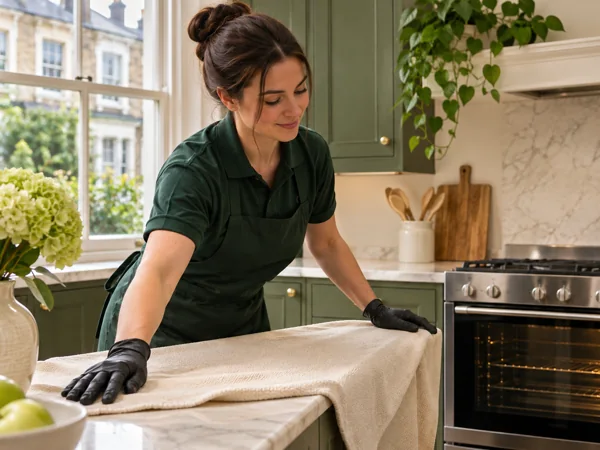
Keep space beside the oven in an open or compact kitchen
Leave the oven fully cool and clear the closest stable counter. Set dishes, cables and other everyday items elsewhere. Make enough room for the door to open and the technician to stand in front of it. If the kitchen is also the route to a bedroom or front door, explain the layout and plan how other occupants can get around while the work is under way. Keep children and pets away from the working space. Tell us which facilities can be accessed if they are needed.
A kitchen island may look spacious in an image while leaving little gap around one side. Move light objects and ask us which passage has to remain clear beforehand. If you intend to work in the living area during the visit, tell us whether a second person will need the entrance or the counter nearby. A building may ask that equipment never be placed in front of shared doors. Confirm how to bring it to the kitchen without waiting for another visitor to leave or other work to finish.
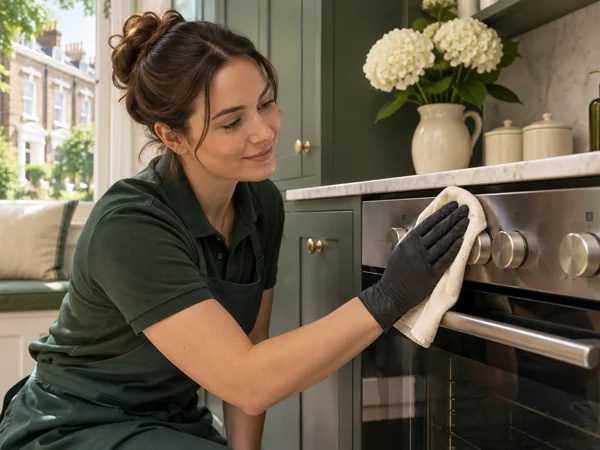
Identify the fitted surfaces
| Part | What to send | Decision |
|---|---|---|
| Door glass | Position and model | Which faces can be reached |
| Cavity lining | Manufacturer care information | Appropriate handling |
| Sliding assembly | Cavity and movement | Safe removal |
Bring the hob or extractor into the quote individually
Describe the hob surface, cooking zones and any removable pan supports. Name the section that needs care and keep a separate surround or splashback distinct. If the cooking surface is in a different part of the kitchen from the oven, include a photo that shows both locations. Ask which parts can be included and what surface the technician may need to use. If the hob has special steps for cleaning its finish, pass those instructions on to us when you share the rest of the appliance details.
For the extractor, identify the cover and filter independently. Give the approximate height and tell us whether it is above an island or integrated into a cupboard. A removable metal filter and a disposable insert have different handling requirements. Ask about reachable parts and have their agreed descriptions put on the quote. If the extractor’s construction makes it hard to identify a filter by sight, describe the appliance from the manual instead of reaching into it. Confirm the arrangements if another person expects to use the hob or extractor during the appointment.
- Identify the hob material and optional components.
- Describe the extractor position and filter.
- Ask for separate written lines for each agreed item.
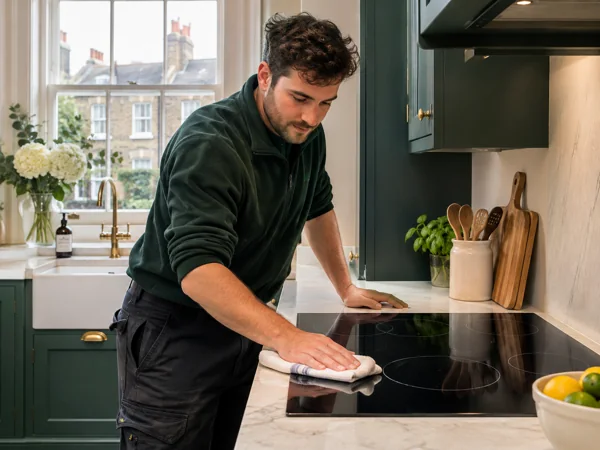
Give the next person the visit details
Start with the complete postcode and have the model references and entrance note available. Tell us if the person admitting the technician will only be there during a limited access window. Give them the appliance photo, priority list and the number for whoever can agree any changes after inspection. If a pass has to go back to reception or a booked lift must be released, include that when discussing the appointment. Keep a way to reach the access contact until departure rather than relying on a shared door staying open.
Ask the technician when the oven can be used again and which racks, trays or other components were handled. Pass the same advice to the next person who cooks and point out the accessories that belong in the clean cavity. If a surface is changed permanently or stayed outside the agreed work, note which appliance and part are involved. Keep the details beside the relevant care information. For a future enquiry, you can use that record to identify a new mark or a different appliance without repeating the wrong instructions.
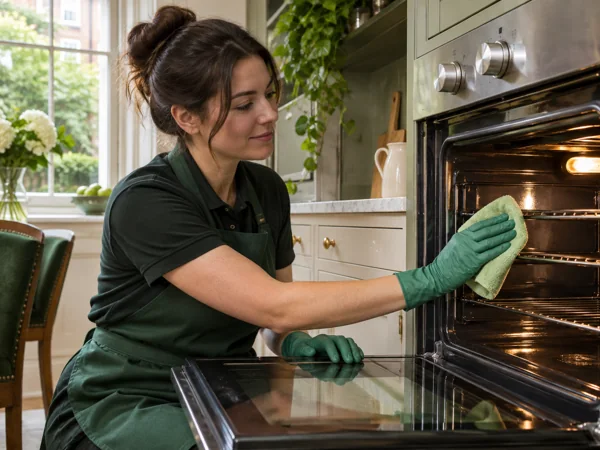
Agree the work on each appliance
| Item | Description | Check afterwards |
|---|---|---|
| Main oven | Cavity and rack list | Parts cleaned and when it can be used |
| Hob | Surface and any supports | Which parts were included |
| Extractor | Height, cover and filter | Which accessible areas were treated |
Get an oven cleaning quote in Vauxhall
Tell us the oven type, number of cavities and whether the hob or extractor also needs cleaning.
Get a QuoteOther Cleaning Services in Vauxhall
Local references · National Rail, Vauxhall station
Vauxhall oven cleaning questions
Can the service entrance require a resident to escort visitors?
Check your building’s rules before booking and tell us who can meet and escort the technician.
Should I send a picture of the glass in daylight?
A picture in the light that shows the mark is useful. Include the complete door as well.
What if the main oven is under the counter and the grill is elsewhere?
Give both locations and say which appliance and parts you want included.
Can I enquire about a rack that has started to stick?
Yes. Leave it where it is and describe the position that catches.
Does a filter come under the extractor cover work?
Ask for each part specifically. Provide the filter type and approximate height where known.
What if another resident will cook before I return?
Pass on the technician’s return-to-use advice and the position of the cleaned parts.