 Housekeeper
Care for built-up cooking residue
Oven Cleaning in Stockwell
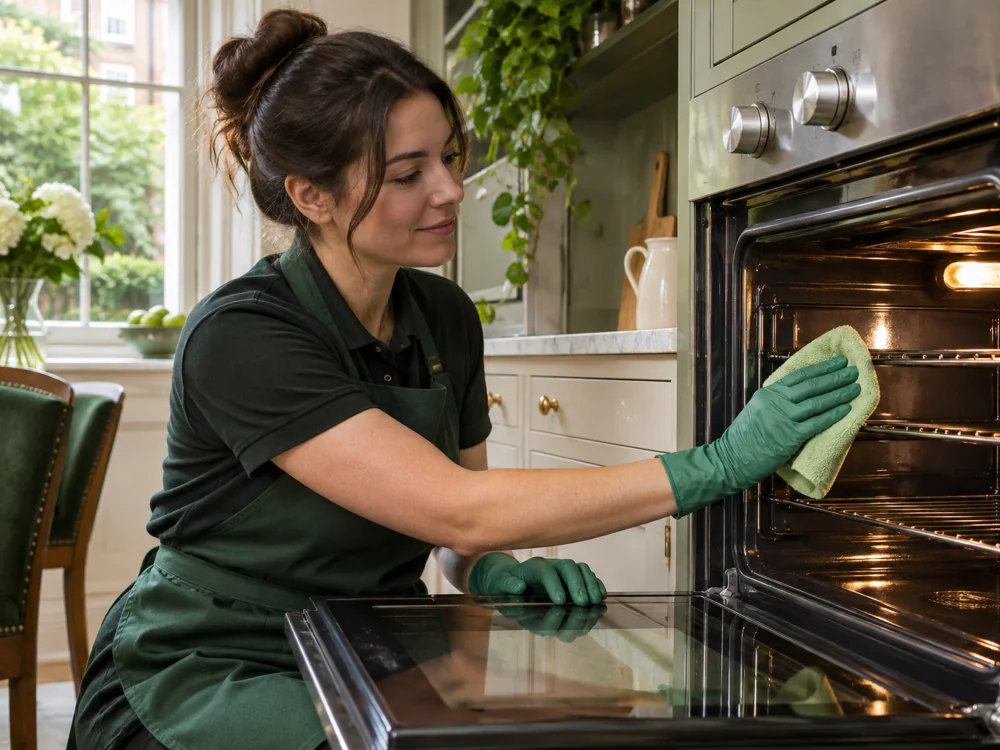
If grease has reached the oven walls, rack or door, describe priority areas rather than treating every dark mark as the same problem. A Stockwell oven cleaning quote can start with the cooker model, the affected compartment and your full property postcode.
Can I enquire with an SW9 or SW8 postcode?
Give the full residential postcode and entrance so we can check the address.
Can the technician look under the grill?
Identify the grill compartment and the tray. The technician can check accessible surfaces and fittings.
Map the build-up against the oven’s hot spots
Look inside the cold oven and compare the areas around the grill and base. A fine film on the upper wall can come from regular cooking, while baked material in one corner may follow a particular spill. Write down where you noticed the difference. If the mark runs down a side, describe which shelf or dish normally sits above it. Take a broad picture from the front to show which cavity it occupies and what the nearby surface looks like. Include a closer picture if the position is easily visible.
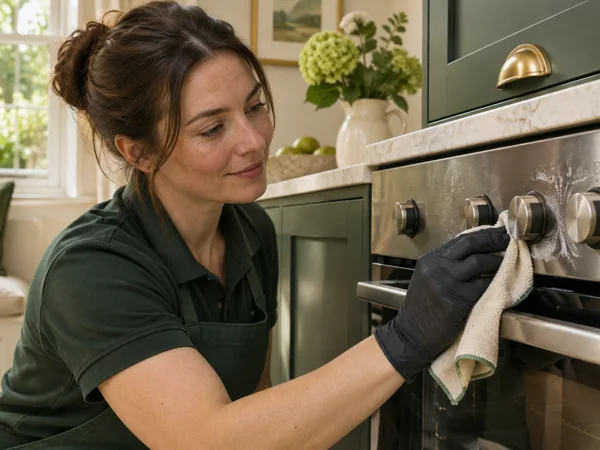
A deposit can spread across a liner or collect under a fixed rail. Show where it meets a different finish rather than guessing how much can be reached. If the oven had a mark at move-in, explain whether it looks the same now or has grown after repeated use. A technician can assess the base, walls and other reachable surfaces to see which areas can be cleaned. Some wear or discolouration may remain visible. Ask about the specific area that prompted your enquiry.
- Compare the upper cavity and the base.
- Identify the nearest rack or tray.
- Separate older finish changes from the most recent spill.
Record the oven’s treatment history
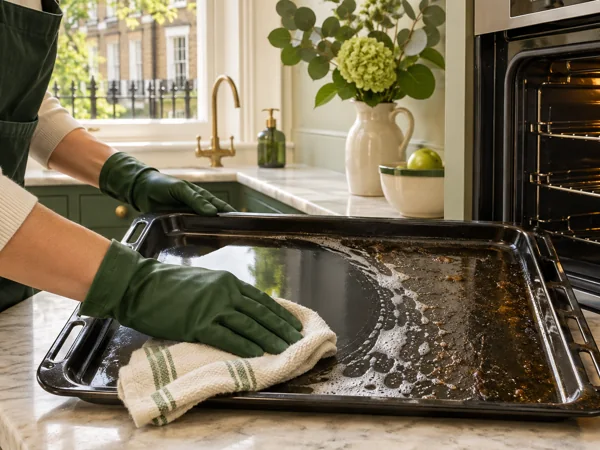
Tell us about any product, automatic cycle or other intervention used on a marked area. Give the product name, approximate date and affected surface. A cloudy streak after a product used on one face of the door can be a useful observation. Mention if you cooked in that compartment again before noticing it. If previous treatments varied by cavity, write down which one was used where. Keep the product label or any relevant section in the appliance guide so the technician can see what took place.
If there is a liner with a textured or coated finish, give its care information separately from instructions for the oven as a whole. Some accessories have their own guidance too. Identify any part that has changed colour or left a different finish underneath a tray. Let the technician check the surface before trying to treat it again. Previous instructions and a picture of the affected area together make it easier to see what needs to be discussed at the initial assessment.
Tell us which Stockwell entrance leads to the appliance
Transport for London lists Stockwell Underground Station on Clapham Road in SW9. If you use it to orient a visitor, include your actual residential address and full postcode along with the agreed approach. A nearby main road may name the area but the flat may be entered from a side street or through a common hall. Explain the sign above the correct entrance and whether to ring, call first or meet someone outside. This is useful when a building has several sets of numbers or matching doors.
Confirm any unloading location and where equipment can be carried. If a visitor takes a lift, give its location and which level or half-landing opens near the flat. Include any further steps before the kitchen and say whether a separate door needs someone to open it. In a house, tell us whether a lower floor can be reached directly from the street or only through an internal stair. Make sure the person meeting the technician knows the route if the booking contact is not available.
- Give the full property postcode for the address check.
- Describe the signed visitor entrance and internal route.
- Confirm any agreed unloading point and opening contact.

Break the build-up down by surface
| Area | What to report | What the inspection checks |
|---|---|---|
| Floor | Spill position and recent cooking | Accessible deposit and condition |
| Grill | Tray and source of grease | Reachable surfaces |
| Glass | Viewpoint and door condition | Location and access |
Use the panel to identify the compartments you want cleaned
A compact upper door can conceal a standard grill, a separate small oven or a combination unit. Send a photo with the controls visible and identify the affected compartment by position. Include the maker’s model if available from the manual or a label you can reach without moving the cooker. If a lower drawer contains cookware, keep it separate from the cavity count. Tell us about specialised finishes and identify any instructions that belong to the exact compartment rather than to the oven as a whole.
With a double oven, someone may be able to show which controls are used for cooking and others may only recognise the largest door. Keep a written list that both people can follow. A photograph of the whole appliance and the shorter note about the affected area can be read together when confirming the quote. Mention any cavity that you want left alone and explain if the largest oven is used alongside a separate grill. Ask for relevant cavities and optional items to be listed independently.
Give the racks, rails and other removable parts their own checks
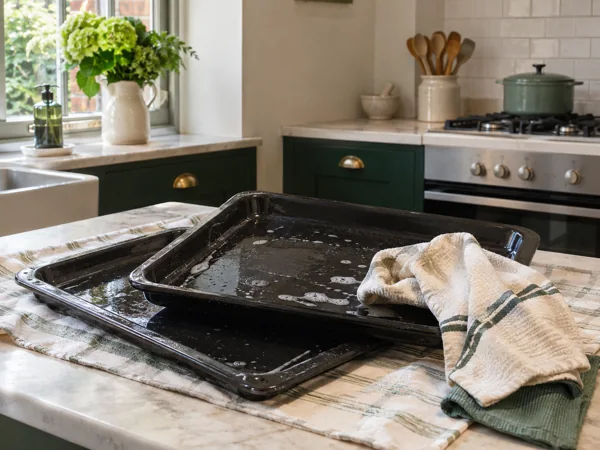
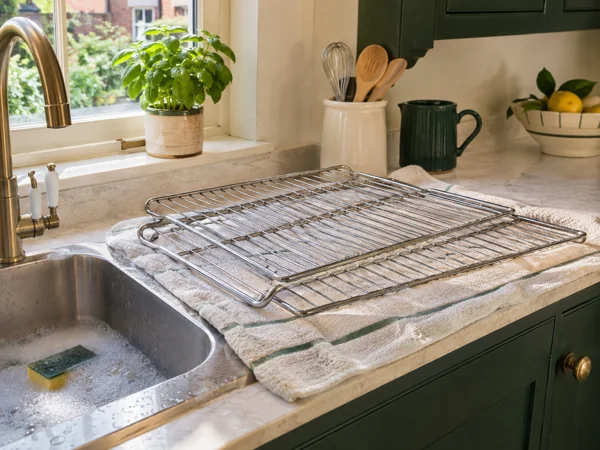
A wire rack with greasy marks and a telescopic shelf with an attached runner have different construction. Tell the technician if any part is out already or moves unevenly in normal use. Leave a sticking shelf in position for the inspection instead of pulling it forward. Appropriate parts can be removed and may be soaked in a dip tank if their design, finish and condition permit. Ask which pieces can be handled when you review the proposed work. Give the maker’s notes for a protective finish if you have them.
Store loose personal cookware away from the working area once the oven is cool. When a tray belongs to another appliance or includes a removable plate, describe the pieces so they can be identified individually. For parts stored outside the cooker, let us know where each one normally sits and whether you want it assessed. If a rack can fit either cavity, give its original placement where known. A count by type and door makes the agreement clearer than a general statement asking for all metal items.
- Count loose and fitted accessories by cavity.
- Identify the parts that stick or have changed position.
- Point out original and replacement pieces separately.
List metal accessories by their fittings
| Part | What to share | Decision |
|---|---|---|
| Original rack | Number and cavity | Which pieces are covered |
| Telescopic rail | How it extends and catches | Whether safe removal is possible |
| Grill insert | Matching tray and coating | Approach to each part |
Look for residue on accessible door glass
If you see a smudge near the handle or a streak near the edge, look once with the cool oven open and again with it closed. Describe where it appears from both positions and in what light. A mark can be on an accessible face or between panes. Whether that area can be reached safely depends on the model and the door assembly’s condition. A chip, loose fitting or earlier work on the trim should be part of the discussion before anyone handles the glass.
Ask the technician how to identify the likely location during the assessment. A wide picture showing both doors helps when you have more than one compartment with a glass front. Use a second photo from the side if the doorway throws a reflection on the panel. Keep all glass and trim where it is and give any care notes rather than exploring the space yourself. If an exact line is bothering you, mark it in the photo and discuss the accessible glass as its own item.
Decide if the grease has spread beyond the oven
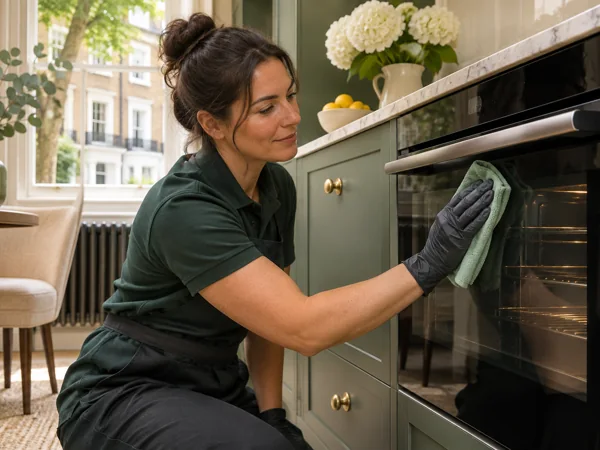
Look at the hob and the wall above it when describing nearby work. Residue at the back of a glass surface, on a gas pan support and on an adjacent splashback belongs to different parts of the kitchen. Name which of them you want to ask about and identify the finish. If the hob is mounted away from the oven, note the route around it and whether someone needs to use it during the appointment. Confirm the work on that appliance separately, including any accessible controls or supports under discussion.
An extractor can pick up grease on its exposed frame and on a filter set further inside. Describe the approximate height and filter type. Give the model if you cannot see the holder clearly from below. Ask for the cover and filter independently on any quote, then confirm the working space needed to reach them. If the manufacturer has special precautions for a permanent surface, give that information with the photo. Confirm those items before booking to make sure the person at the property knows the complete plan.
- Identify where the residue crosses from one surface to another.
- Describe the hob finish, extractor height and filter.
- Check agreed items are listed by appliance.
Prepare for the kitchen to go back into use
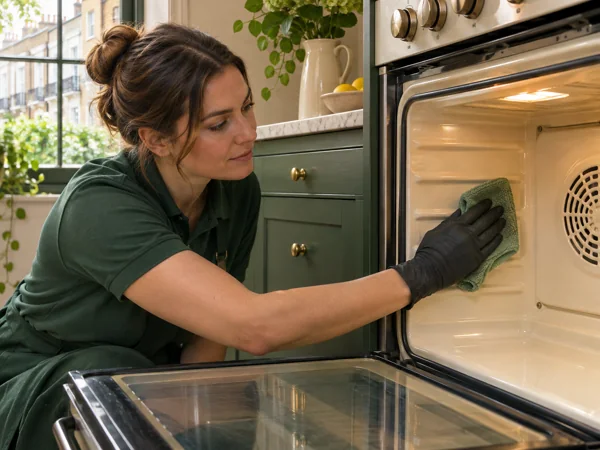
Before booking, start with the postcode form and keep your appliance photo and condition notes ready. Once the visit is arranged, leave the cooker fully cool and clear the counter beside it. Take away food and loose pans. Set a clear route through the room and keep children and pets outside the immediate working area. Confirm any access to water or power needed. If another adult will be home, show them the working area and discuss who can answer questions about the proposed clean after assessment.
At the end, ask when you can use the oven again and check which accessories were handled. If grease has been cleaned but an area of colour change remains, record where it is so you can describe it accurately in any later enquiry. Tell the person who cooks next what the technician said and show where the trays and shelves belong. For a property handover, give the person taking over the cooker the work list and instructions for the exact cavity. Keep any optional appliance notes separate.

Check the route before booking
| Stage | Ask about | Send |
|---|---|---|
| Street | Approved place to unload | Full address and intended door |
| Flat entrance | Lift or internal stair | Floor and person available |
| Kitchen | Working space at the cool oven | Counter or alternative surface |
Get an oven cleaning quote in Stockwell
Tell us the oven type, number of cavities and whether the hob or extractor also needs cleaning.
Get a QuoteOther Cleaning Services in Stockwell
Local references · Transport for London, Stockwell Underground Station
Stockwell oven cleaning questions
Should I mention that the lighter patch predates a spill?
Yes. Tell us what you already saw and where the new residue sits so both can be assessed.
Which photo helps identify the oven layout?
Send the full front with controls and doors. Mark the exact compartment you want assessed.
Can an unused loose rack be added?
Discuss it separately and identify which cavity it belongs to and the material if known.
Can a person meet you by the bell instead of giving a key?
Yes. Confirm where they should wait and how they can be contacted on the day.
Does a smoky film on the glass tell me which face is affected?
It can be hard to tell. Describe both viewing positions and leave the door assembled for assessment.
Can I ask about a greasy extractor cover but leave the filter out?
Yes. Describe the approximate height and finish and state which parts should appear on the quote.