 Housekeeper
Plan your kitchen visit
Oven Cleaning in Holland Park
Tell us which cooker needs attention and which entrance leads to your Holland Park kitchen. A photo of the appliance, a sensible list of parts and a short access note can help us work out what needs assessment before you agree a visit.
Can I enquire for a home in W11 or W14?
Send the full residential postcode and entrance so we can check your address.
What if I only want the oven and grill tray?
Identify the cavity and the corresponding tray. Other appliances can stay outside the quote.
Describe a visit from the street to your particular home
The Royal Borough of Kensington and Chelsea lists several entrances to Holland Park, including Ilchester Place and Duchess of Bedford Walk. A park entrance can help you describe the vicinity, but give the full postcode and the residential door the technician should use. If the house or block has an entrance on a different street from the front elevation, explain the approach and the number that appears on the bell. Include the complete floor or flat information with the directions, especially where neighbouring buildings have similar signs.
Check the permitted route for equipment if a porter manages the building. Give the name of the contact, the designated unloading point and the door they want visitors to use. Explain if a lift stops at a different level and stairs remain before the kitchen. If the property is reached through a side passage or down steps to a separate floor, describe both the gate and the point where the technician should ring. The person who arranged the work can share the same note with whoever is meeting the technician.
- Use the full postcode and building or house number.
- Explain steps after the entrance and lift.
- Confirm any arrangements for equipment at reception.
Check whether the oven name on the handbook matches the installed unit
Read the door controls and locate any visible model number before sending the request. A separate grill and a small combination oven can have similar fronts, particularly when they sit in a fitted stack. Describe each of the units using the door position and what it does. Tell us which one you want cleaned and send a full picture of the appliance group. Keep any appliance reference legible without pulling a unit out. If you only have paperwork, check it against the visible controls.
Where an oven was replaced separately from the hob, use the details from each appliance for the quote. A hob or microwave manufacturer may differ from the main oven even when finish and controls look consistent. Name the number of cavities you intend to have assessed and add the corresponding shelves and grill accessories. If a piece is stored below the worktop, tell us where it belongs. A misleadingly similar spare rack may be from an earlier appliance and needs separate consideration before anyone treats it.
Give a usable route to the kitchen
| Point in the route | What to supply | Why |
|---|---|---|
| Street | Building number and correct entrance | Identifies the home beyond the landmark |
| Lobby or side entrance | Contact and steps or lift | Identifies the route for equipment |
| Kitchen | Available counter and door swing | Provides space for the appliance check |
Mark the places that need inspection
Grease under a shelf, a line of cooked-on drips and a cloudy door all describe different concerns. Inspect the cold oven from its opening and list the easiest observation first. Include the compartment, surface and whether you remember a spill. If you have several images, label them in the same order as the cavity names. If the lower tray has a deposit that is separate from the oven floor, give each its own line. That lets you ask about the exact surface during the visit.
If the oven has a textured liner or another special finish, include the maker’s instructions. Tell us about earlier oven sprays or a built-in cleaning programme. Note whether the area changed afterwards and how much you have used that compartment since. The technician can assess which marks are accessible and whether a lasting change in the finish is also visible. A treatment may remove suitable residue while leaving wear or discolouration unchanged. Discuss those observations at the inspection before agreeing the work to the affected part.
- Identify the cavity and surface for each mark.
- Note if a previous product touched the area.
- Share any special guidance about the finish.
Treat racks and trays as individual items
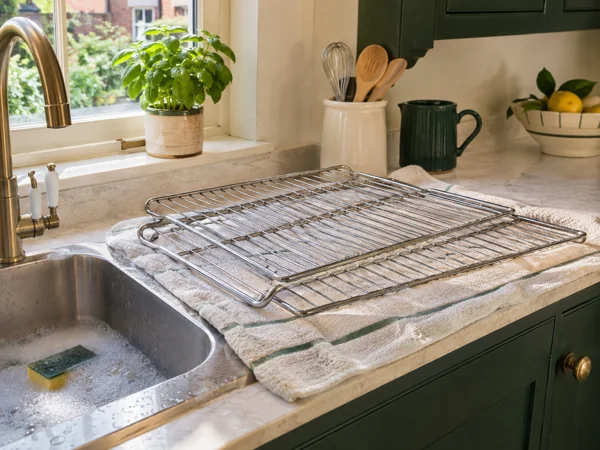
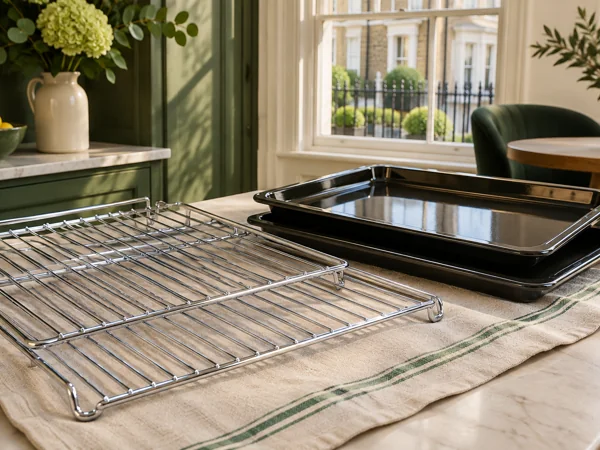
List the parts supplied with the oven and any separate items you want to enquire about, such as a loose grill insert or an aftermarket tray. Mention if a wire shelf is awkward to move or if a telescopic rail seems to jam at one side. Let the technician look before trying to take that part out. Suitable components that can safely be removed may be soaked in a dip tank. A precise accessory list lets the technician match each fitting to the right cavity rather than assume the pieces are interchangeable.
If the original manual describes a coating on a shelving part, add the instructions. Two racks can fit the same oven but have different finishes or release mechanisms. Keep spare pieces split by the appliance they belong to, and put loose pans away from the counter the technician will use. For a tray stored outside the oven, explain how it normally sits and whether it has a removable insert. Ask us to list agreed accessory work with the oven instead of relying on a general note about metal parts.
Decide how to report marks on glass without removing it
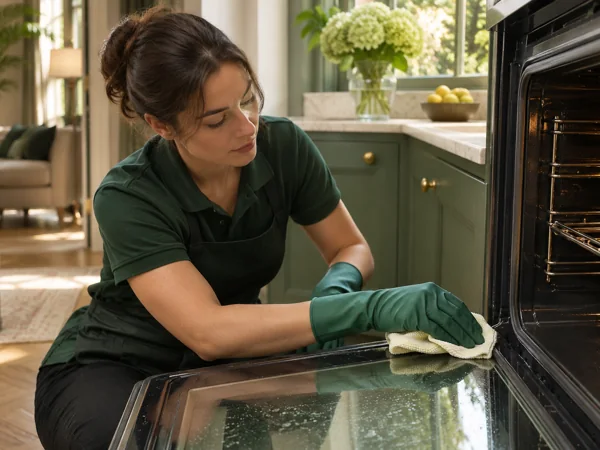
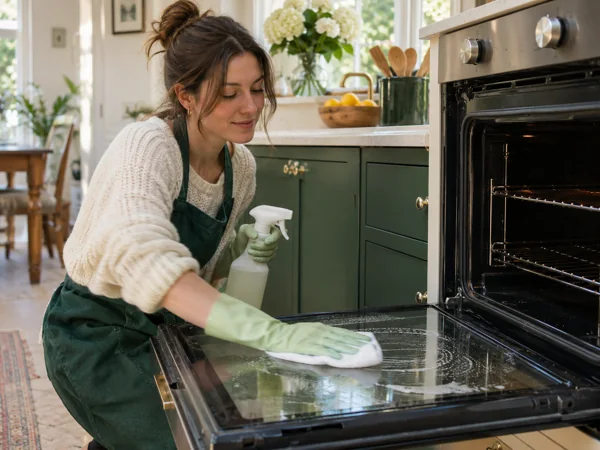
Look at the closed door and then the open position after the oven cools. Explain whether a mark is clearly on the inside face or only seen through a reflection. A streak can be between panes, where access varies with the model and condition of the door assembly. If the affected area is easy to miss, include the best angle and which light reveals it. Report any chip, loose section or previous handling of the door if known and keep its fittings in place for the first check.
Ask the technician which faces can be reached before any further door work is considered. If two glass doors are involved, discuss the top and bottom independently. A manual or front photograph may show how the doors are arranged, but it does not establish whether a particular section can safely be reached when the unit is installed. If a persistent mark on the door is why you want the visit, say so at the outset. That gives the technician a specific point to inspect before the rest of the agreed work.
- Describe where you stand and which light reveals the mark.
- Identify the door and report chips or loose trim.
- Keep all glass fittings in place until inspected.
Check which parts belong to each unit
| Component | Helpful evidence | Decision |
|---|---|---|
| Wire shelf | Cavity and number of shelves | Which parts to include |
| Sliding rail | Where it catches and type of fitting | How it can be safely handled |
| Grill tray | Original purpose and finish | Whether optional work can be agreed |
Plan space for the technician’s first check
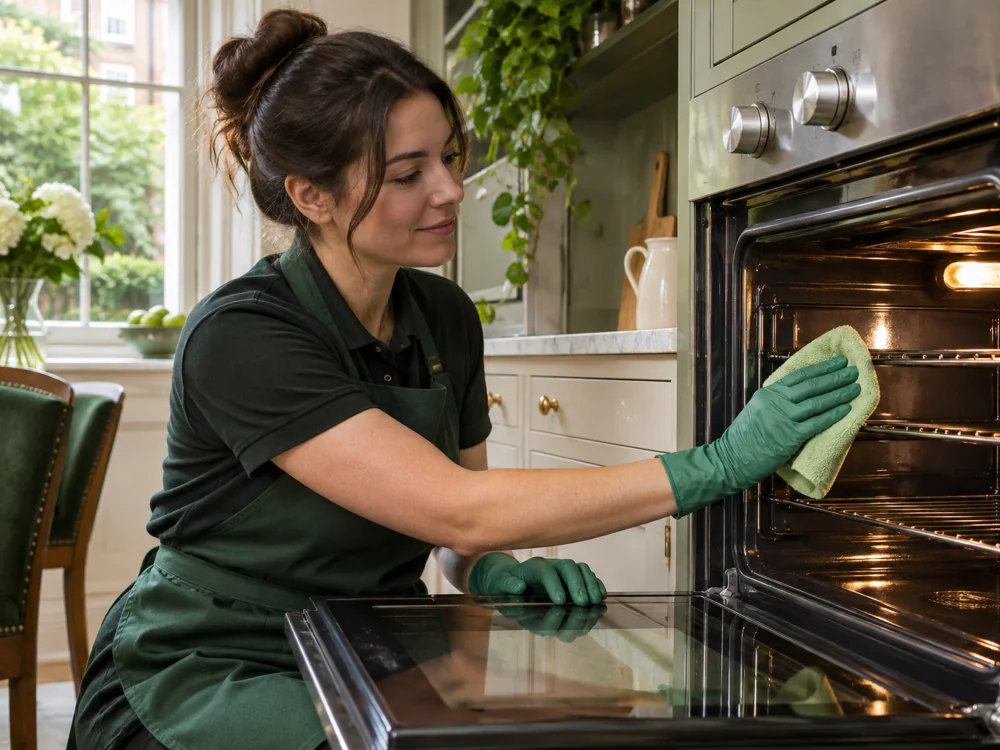
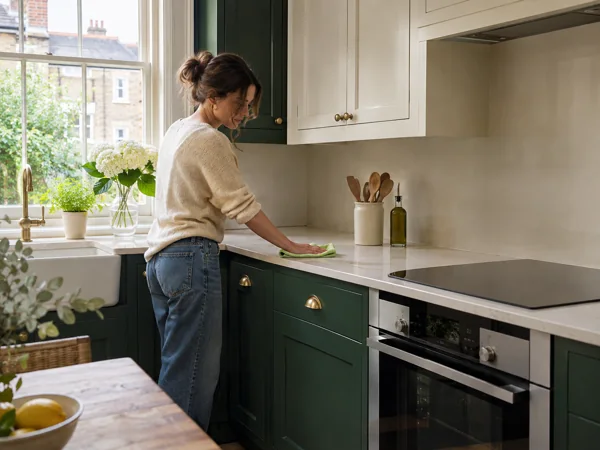
Leave time for the appliance to cool and take food, loose cookware and foil out when safe. Clear a counter beside the oven so the technician can handle the agreed pieces. Compare the space in front of the oven with the swing of the door. Move lightweight furniture that blocks it. If the kitchen is also a route from a hall or garden, agree a clear path that keeps occupants outside the immediate work area. Keep children and pets away while equipment or parts are being moved.
Tell us where water and power can be accessed where needed. If a counter is delicate or the owner asks for a particular area to be left untouched, explain that restriction before the work starts and identify an alternative surface. If another person will handle the visit, make sure they have the appliance photo and know which rooms are available. Agree whether a utility door can be opened or needs to stay shut. Those details determine how the technician can reach each area safely in the room.
Ask about a hob or extractor as an independent job item
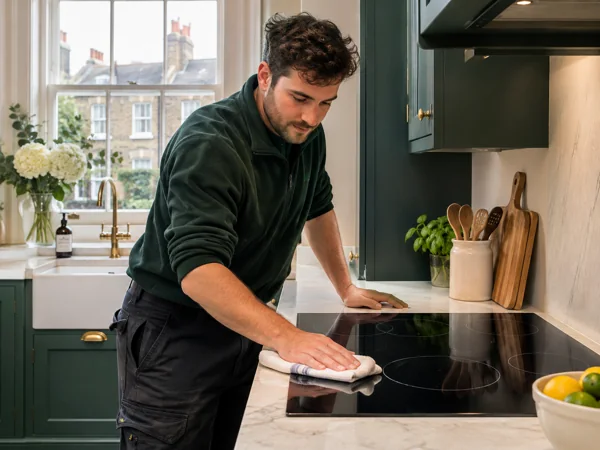
A hob over the oven may belong on the same visit if that is what you request. Say whether the top uses glass, gas with pan supports or another cooking surface. Include separate trim, splashback or grilling accessories only if you want those pieces discussed. The parts may be made from different materials even where the cooktop has a consistent colour. Share any instructions about the exact surfaces around the affected area and identify what is visible from normal working height.
For an extractor, give the approximate height, finish and filter type if known. The filter frame may be set back behind the case or directly reachable from below. Ask about the cover, filter or both, depending on your concern. If the oven and hob are in different places, include a kitchen photo that shows where each appliance sits. Confirm the optional items separately with the agreed work. This helps the person checking the appointment see exactly which appliance and removable pieces were included.
- Name the hob finish and components.
- Separate the filter and extractor cover.
- Check the agreed optional items are listed.
Keep the handover simple for the person using the kitchen
Enter the full postcode to start an enquiry and keep the appliance model, component list and entrance note together. If someone else will let us in, give them the agreed requirements and a way to redirect a question to the person who can answer it. Say when another occupant needs to come home, put a meal in the oven or use a route through the kitchen. Ask when the unit can be used again before organising the next meal around it.
At the end, note which parts and cavities were cleaned and where their accessories now sit. Pass the technician’s return-to-use advice to the next person who uses the cooker. If a fitted surface or part remained outside the work, save its description with the manufacturer details. In a property with two ovens, note the door position alongside any advice, so another person does not apply instructions for one oven to the other. If you need to discuss a separate appliance later, use its precise reference and current pictures.
Match the observation to the finish
| Mark | What to say | What the technician checks |
|---|---|---|
| Cooked spill | What spilled and where it ran | Accessible surfaces and residue |
| Pale patch | Earlier treatment and liner information | Possible permanent finish change |
| Glass haze | Position and condition of door | Which face can be reached |
Get an oven cleaning quote in Holland Park
Tell us the oven type, number of cavities and whether the hob or extractor also needs cleaning.
Get a QuoteOther Cleaning Services in Holland Park
Local references · Royal Borough of Kensington and Chelsea, Holland Park
Holland Park oven cleaning questions
Can I use the park as a street reference?
Yes, when it helps describe the approach. Add the full postcode and actual door used for visitors with equipment.
Can only the metal grill insert be discussed?
Yes. Name the tray it belongs to and describe the finish so the technician can assess that part.
What if a second oven is used as a cupboard?
Say which door opens to the storage space and specify if you want it considered separately.
Can the porter coordinate an appointment without visiting the kitchen?
Agree who can show the technician the appliance and answer questions if the person admitting visitors stays at reception.
Should a pale mark be listed even if it has been there for months?
Yes. Tell us how long you have seen it and which products or cleaning programmes were used.
Can a high extractor be included?
Give the approximate height and filter type. We can discuss which areas are reachable before adding it to the quote.