 Housekeeper
Care for built-up cooking residue
Oven Cleaning in Gospel Oak
If you inherited a cooker with heavy build-up, show us the areas you can see when the oven is cool. Our Gospel Oak enquiry can start with the model, the position of the residue and the parts you want discussed. We can then consider the accessible cavity surfaces and any suitable removable items, with the entrance and time to work built into the visit.
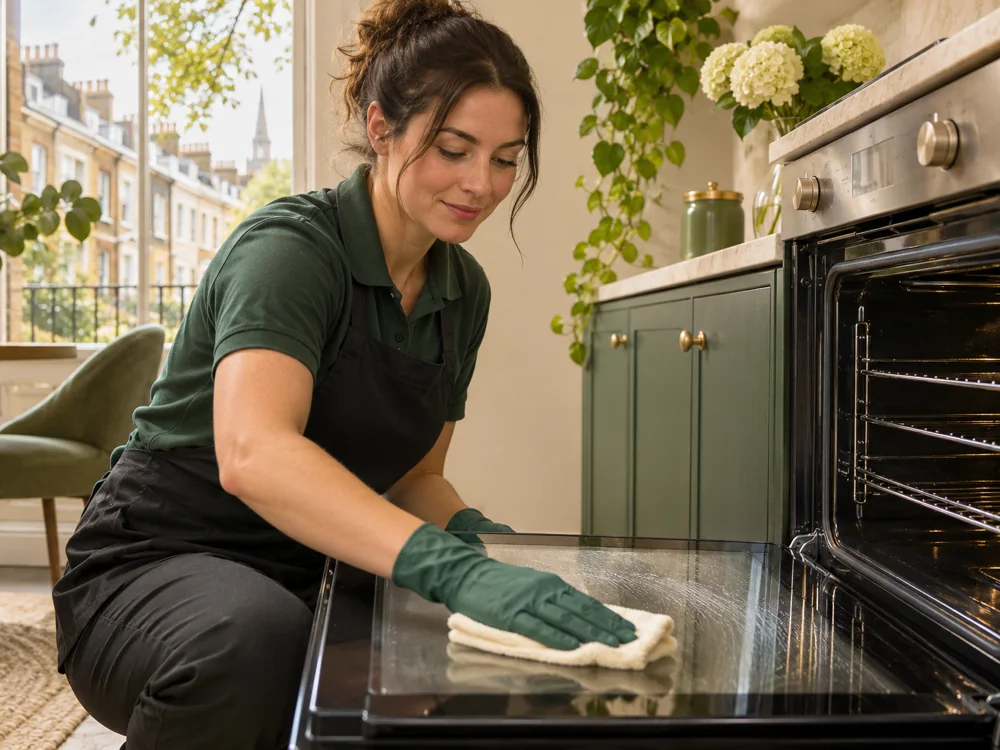
What should I put in an enquiry near Gospel Oak station?
Give the whole NW5 postcode and identify the door or courtyard that leads to the kitchen.
Can you look at an oven I have just moved into?
Tell us what you can see, which pieces came with it and if anything has been treated.
Use the appliance you inherited to guide the first assessment
An oven that came with the property can contain several generations of use. Start by looking at the appliance you have, rather than assuming its condition from the age of the kitchen. Describe the main cavity, grill and accessories you are able to see. Mention if there are old photographs or an inventory showing a mark on the glass or an existing chip. If you are the new resident and have only used the oven once, say how much you know and give the location of the deposit without guessing when it arrived.
Try to take a front-on photograph of the complete oven with the controls and a second view of the affected cavity when it is cool. Include a model label if it is easy to see. The exterior may suggest a double oven while only one cavity is used for baking and the upper section is a grill. Name each compartment you want considered. Let us know if the appliance has a setting or a lining that you are unfamiliar with, especially when it matters to the area you have reported.
- Give the parts you recognise and their locations.
- Share any useful record of existing wear.
- Include the model if it is readable without moving the cooker.
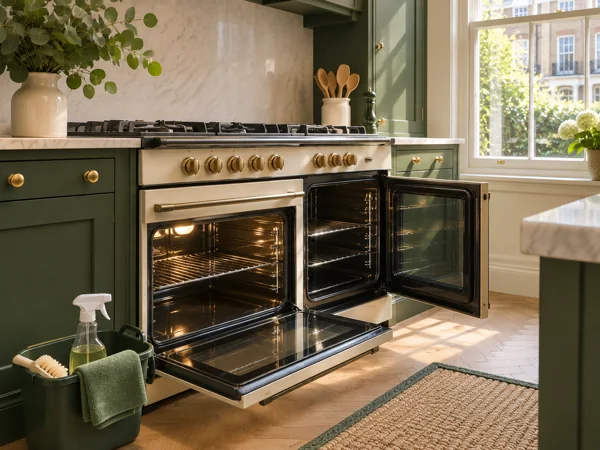
Mark the location where a deposit is heaviest
If something dark has collected in the bottom of an oven, use the cavity front and nearest shelf as points of reference. A patch below the back of a shelf may lie across both the flat area and a side lining. Describe the material around the deposit and whether you can see a boundary or seam. In a separate grill, look for build-up above the tray or across the inner glass. A wide image makes it easier to tell which area in the appliance the closer image shows.
Say if the deposit was still present after a cleaning cycle or if somebody used an oven product on that surface already. Give the product or cycle only when the information is available. A faded surface, scratch or chip nearby may need to be considered separately while reviewing the cooking residue. Leave the surface alone when you enquire. We can examine the accessible area and discuss the treatment of grease and baked-on material after taking account of the condition and the type of lining.
- Describe the patch by nearby guides or seams.
- Report what has already been tried if known.
- Identify wear or colour change separately from residue.
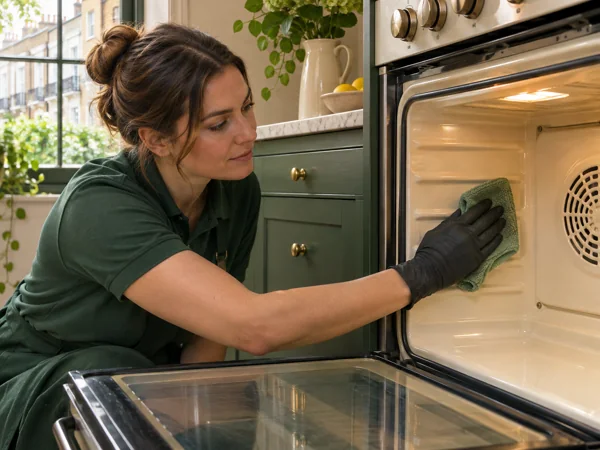
Identify rack, guide and cover by what each part does
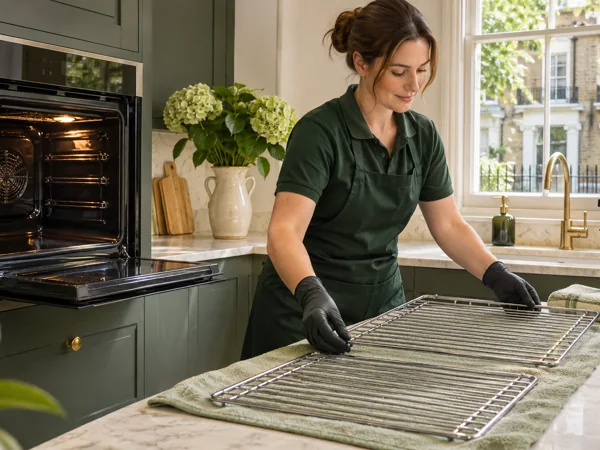
An oven shelf may lift out for different tray positions. A metal guide against the wall might stay where it is, and a second insert could belong to a separate grill. List the pieces you want considered and give the number of shelves in each cavity. If one has been left behind an ordinary stack of cookware, leave it identifiable. Take away your own dishes from the appliance before the visit. A person looking at the oven for you can then match the requested pieces with the parts actually present.
Some removable items can be assessed for dip-tank treatment. The condition and finish decide which parts are suitable. Give details of any loose handle or coating on an accessory you are asking about. If a fitting feels stuck or sits on a sliding support, describe it without trying to take it out. The model may give its usual position and removal instructions. Keep fixed linings and controls where they are, and point out the item at the appliance if the cleaner needs to identify it before discussing treatment.
Describe residue in an inherited oven
| Location | Photograph or note | Relevant history |
|---|---|---|
| Cavity base | Patch together with nearby guide | Known products already used |
| Upper grill | Area above or below tray | First time mark was noticed |
| Door | Glass face and nearest edge | Any documented prior wear |
Plan the way into your home using the station only as a reference
National Rail lists Gospel Oak station in NW5. If it is the landmark you use for giving directions, follow that with the street, complete postcode and precise door used to reach your flat or house. State which side of the building to approach if there is a numbered entrance that cannot be seen from the street. A flat served by a courtyard might be reached more easily from a different door from the one suggested by a building’s name. Explain where you want the cleaner to meet you.
Add any practical detail between that entrance and the oven. If the flat sits above another one, say which staircase and level lead to it. If there is a ground-level path to a rear kitchen, describe any threshold at its end. An estate entrance may have a sign at the street and another block name beyond it. Give both if they help. Let a resident or key-holder know when they will need to open up, and arrange how the cleaner can reach them when a shared bell is difficult to identify.
- Send the address as it appears at the correct door.
- Describe any shared outdoor or indoor route.
- Arrange a direct contact for access on the day.
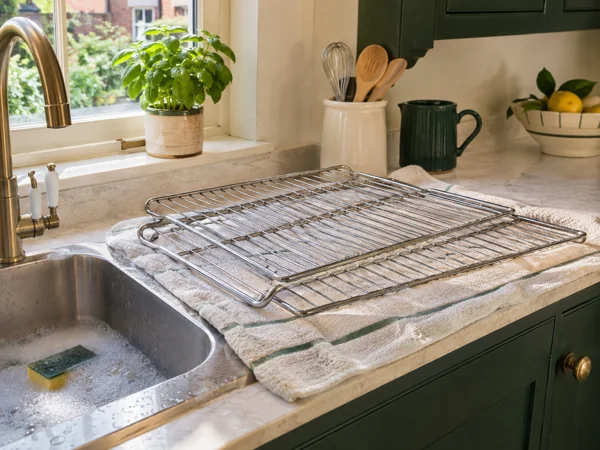
Clear enough space to review greasy pieces safely
Leave the oven cool and take out food, pans and loose personal items before the cleaner arrives. Agree an area where the oven door can be opened and viewed. If the aisle is tight between two rows of cabinets, include a picture with the opposite surface in view. Mention any fixed appliance or worktop corner that limits where you can stand. Move lightweight loose items away if convenient. A narrow kitchen with only one route to the sink needs a conversation about the room available before the parts are handled.
Tell us which nearby worktop can be considered and whether loose oven accessories can be placed there for inspection. Keep children and pets away while the oven and pieces are being handled. If another occupant uses the kitchen continually during the day, check when they can step away. A key-holder should be able to show what furniture is fixed and what the resident has put aside. Giving us those details early helps plan the assessment of the surfaces you requested.
Identify what can leave the cavity
| Part | Ordinary position | What to discuss |
|---|---|---|
| Wire shelf | Sits on a guide | Finish and suitability for treatment |
| Grill tray | Under a separate grill | Original insert and handle |
| Fixed lining | Against a cavity wall | Material and access |
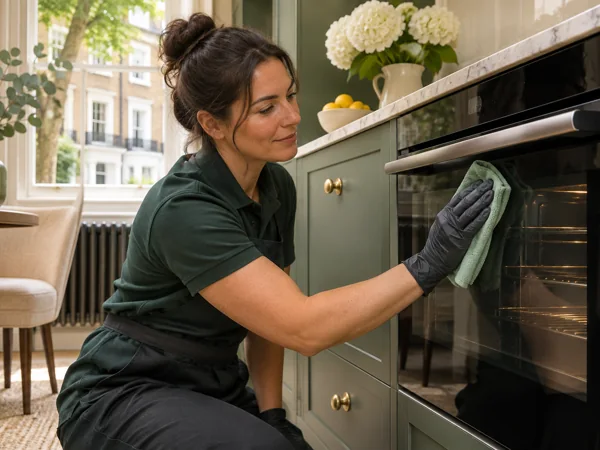
Distinguish an accessible face of glass from a mark further inside
A greasy window can have marks on the outer glass, the inner face or a position that looks to be between layers. When the oven is cool, explain where the mark seems to sit and name the door. If there are two cavities, indicate whether it is the window of the original oven or the upper grill. A view of the whole door shows how the affected area relates to the handle or a seal. If the stain reaches the trim, name the separate finish around it if you know it.
We can discuss access to the different glass faces once the door design and condition are known. Mention a loose seal or a mark by the hinge without disturbing either piece. If the control panel has faded settings, tell us which part you want considered and identify existing changes to the finish before the work. The oven can then be reviewed in terms of accessible parts around the door and controls, as well as the residue already reported in a cavity or grill.
- State which door has the affected window.
- Mention any markings that look as though they sit between glass layers.
- Identify surrounding wear or changes in finish.
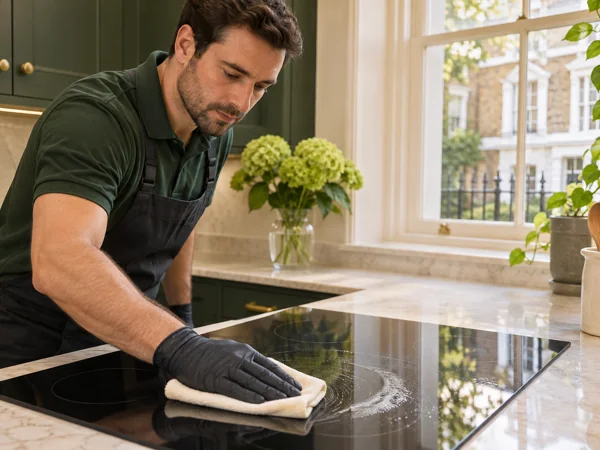
Ask about a hob or hood if old residue affects those as well
If you can see a patch around a hob ring or a line of grease next to the controls, give the hob type and say which part you want reviewed. A smooth glass hob can be described from its heating zone or edge. A gas top may have removable stands and accessible metal surfaces with different finishes. Show a wider view that includes the position in the counter. Give any concern about existing scratches or a coated part so it can be considered separately.
For the hood, identify the model if visible and explain whether there is residue on the canopy, underside or filter. Say if it is fixed to the wall or sits under a cupboard. If the filter cannot be seen, use any detail from the manual rather than reaching up or removing a panel. Give the hob and hood separate entries in the request. That lets the person reviewing the quote see which surfaces are attached to the oven and which extras have their own agreed work.
Pass accurate information to whoever next uses the oven
After the visit, go back to your initial description and identify the accessible areas and pieces involved. If you raised several deposits, ask which were assessed and what the cleaner saw underneath. Check loose parts against the list that was agreed and find out when the oven can be put back into use. If the person who made the booking was away during the visit, share the findings using the same names and positions. That keeps the history of the appliance clear for the rest of the household.
If the oven is in a flat being handed over, give the property contact the accepted item list and the name of the person who carried out the review. Record old wear or any existing change that was discussed. Keep the manual or model with the information left for the next resident. An additional hob or hood item requested for a later date can have its own note. The next person can then identify the part without relying on memory of an older photograph.
Arrange entry in Gospel Oak
| Stage | Details to send | Responsible person |
|---|---|---|
| Street | Full postcode and exact door | Resident or person booking |
| Shared way in | Courtyard, block name or bell | Person meeting the cleaner |
| Kitchen route | Stairs, path or threshold | Key-holder |
Get an oven cleaning quote in Gospel Oak
Tell us the oven type, number of cavities and whether the hob or extractor also needs cleaning.
Get a QuoteOther Cleaning Services in Gospel Oak
Local references · National Rail, Gospel Oak station
Gospel Oak oven cleaning questions
What should I mention about a cooker installed before I moved in?
Send the model if you can find it, name the working compartments and describe the condition you can see.
Can I show you old grease when I do not know what caused it?
Yes. Give the location and describe any known change to the surrounding surface. We can discuss assessment at the appliance.
Should I include an accessory I found in a storage drawer?
If it belongs to the oven and you want it assessed, describe the piece and list the cavity it fits in.
What if I cannot identify the right face of the oven window?
Describe how the mark appears with the cool door open and closed and give the model if available.
Can I give directions using a station landmark and an estate block name?
Yes. Put the full street address and the correct residential entrance first and add the landmark and block name as references.
Should I leave the appliance handbook for the next resident?
If it belongs to the property, leave it with the appliance information and note which original pieces go with the oven.