 Housekeeper
Care for built-up cooking residue
Oven Cleaning in Silvertown
For a Silvertown oven that has developed a coating from regular roasting, describe where the grease has collected and which fittings you use. We can discuss compatible cleaning for the accessible interior, shelves and glass. Include your full postcode and the actual entrance for your kitchen when you ask for a quote.
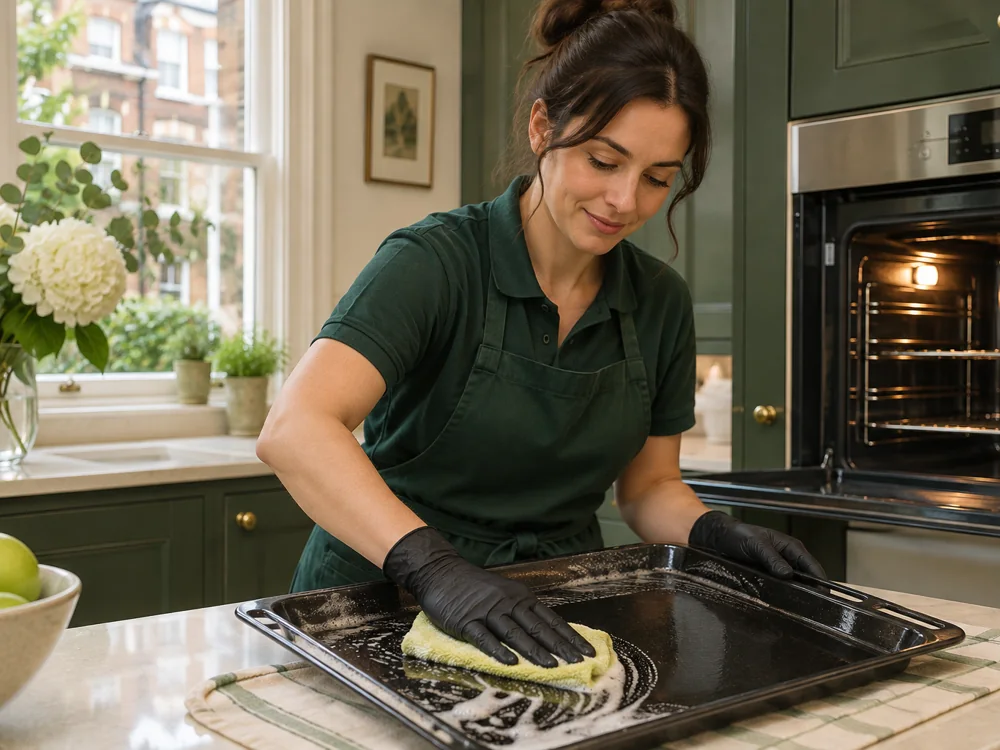
Can I enquire from a block near Pontoon Dock?
Yes. Give the full address, lobby name and route to your flat.
Can you assess old grease on the cavity floor?
Yes. Say where it sits, what you have tried and which oven contains it.
Describe where the oven's cooking film starts and ends
A sheen across the back wall may come from regular use and look different from a thick patch below a roasting dish. Describe those areas separately. A cool appliance is easier to look at from a normal position in front of the door. Tell us if the film is on the cavity sides, edges of the tray or panel beside a fitting. If one corner has a deposit from food burning on, add how long it has been there if you know. The details help the cleaner decide what to assess first.
Tell us what happened at the last cleaning attempt if there was one. Perhaps a grease cleaner lifted a loose layer but left a durable patch on the base. Share the name of the product or the oven programme you used and the parts it touched. The technician can inspect the material and choose a compatible method. A patch that looks different after the residue has come away may reflect the condition of the surface itself. We can explain what we observe when we go through the finished result.
- Describe the edges of the deposit.
- Identify a previous product or programme.
- Say where the remaining patch is visible.
Establish the position of the kitchen entrance near Pontoon Dock
The Royal Docks location guide shows West Silvertown and Pontoon Dock as separate stations. If you live near one of them, name the station if it helps, then give the full property postcode and the actual entrance. A kitchen can overlook a path or the dock while its lobby faces an entirely different approach. Include the building name, floor and flat number, as well as any instructions for reaching the correct door from the pavement. Check that the address text matches the label a visitor will see.
If access depends on reception or a designated equipment route, give the details the cleaner needs before setting out. Confirm who will meet them and whether there is any time window for that particular entrance. A lift can stop at the right floor for the flat but leave a change of level along the corridor. Say if the approach includes a step or if a safer route is available with your permission. Agree any arrangements with the person responsible for the building or front door.
- Use the full postcode with the lobby name.
- Describe the last part of the route after the lift.
- Confirm who can open the residential door.
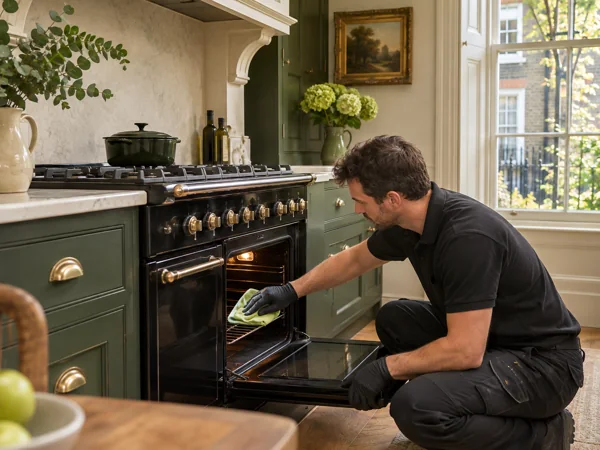
Show how the oven sits beside neighbouring appliances
An oven under a worktop may have a separate warming drawer below it or share the wall of cabinets with a combination cooker. Point out the cavity you want cleaned in a wider photo of the kitchen. If there are two appliance controls that look similar, say which is for the oven in the photograph. Give the model if the label is visible when everything is cool. The office can use these details to discuss the intended work and confirm which oven accessories to include.
Look at the floor around the doorway when it is open. A cabinet opposite can make it awkward for a person to work in front of the oven even if its door operates normally. Describe the usable approach and tell us if any lightweight loose furniture can be moved by the household beforehand. A good place to put a tray from the oven may be near the sink even when there is more floor space elsewhere. Agree the location of a clear counter before the visit.
Describe deposits by location
| Area | Send this | Cleaner checks |
|---|---|---|
| Cavity wall | Photo and lining details | Finish and access |
| Base or lip | Where a dish overflowed | Reachable enamel and residue |
| Door glass | Side from which the marks show | Accessible face and visible condition |
Work from removable metal parts back to the cavity
If the wire shelves are already out, leave them together where the technician can see them and say which ones fit the main oven. A rack may carry weight on a sliding support or have a stop at one edge. Avoid moving unfamiliar parts just to prepare for the visit. We check which pieces are designed to come away and whether their finish and condition are suitable for separate treatment. Leaving something fitted until it has been assessed makes the decision easier on a model you do not know well.
A supplied grill pan can carry a removable grid and might look like an ordinary roasting tray when it is on the counter. Tell us which pieces you expect to be included, what their finishes are if you know and which part of the oven they sit in. Once compatible removable pieces have been assessed, the cleaner can work on the agreed cavity surfaces with more room. Fixed or unsuitable pieces are assessed in place within the access the appliance allows.
- Identify the oven for each loose rack.
- Point out a grid or insert that belongs to the grill pan.
- Leave stiff fittings where they are.
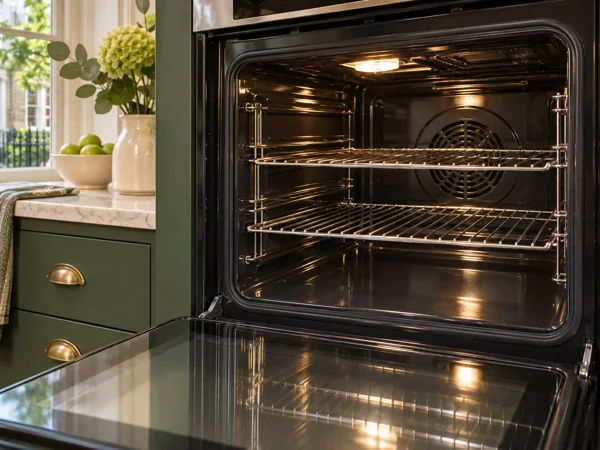
Check the base and walls individually before degreasing
The floor of the cavity can have a glossy enamel surface while the side walls carry another type of lining. A coating from cooking can travel between them, and the appropriate cleaning method is determined by each surface. Show which edges matter to you and mention if the manual refers to treated panels or a self-cleaning cycle. The technician looks at reachable areas, identifies relevant fittings and assesses any sign of wear before choosing how to approach the visible residue. Ask how that affects the area you mentioned at booking.
An old overflow can reach the lip near the doorway or leave a separate patch below a wire runner. On some models, access around the runner is limited. The cleaner works on surfaces where compatible cleaning is possible and can explain areas with access limits. If there is a small chip, unusual roughness or a patch that was visible before the spill, show it first. We can then distinguish the condition of the surface from the cooking material being addressed during the appointment.
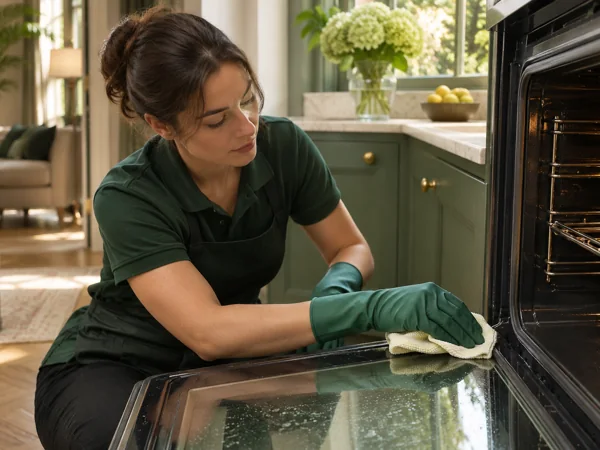
Access to a fitted kitchen
| Point | Information |
|---|---|
| Lobby | Building name and authorised visitor door |
| Route inside | Level of lift, steps and flat number |
| Kitchen | Open-door clearance and free worktop |
Describe any haze against the light at the door
Glazing can look clear at one angle and show a stripe of residue at another. A reflection from the kitchen window can also make it hard to tell whether a mark is on the outer face. Explain what you see with the oven cool and from which side of the door the mark appears accessible. If it looks deeper within the door, describe it without trying to separate the panes. The technician assesses the appliance as fitted and can set expectations for which faces can be reached on that model.
Look at the handle, trim and surrounding controls while you make the list. These areas may have printed symbols, a brushed finish or a coating that differs from the glass. If one symbol has already become hard to read or a section of trim is loose, say so. The technician can check compatible accessible surfaces and discuss the door from the front and inside. When you review the work, use the same viewing angle to compare the area that concerned you.
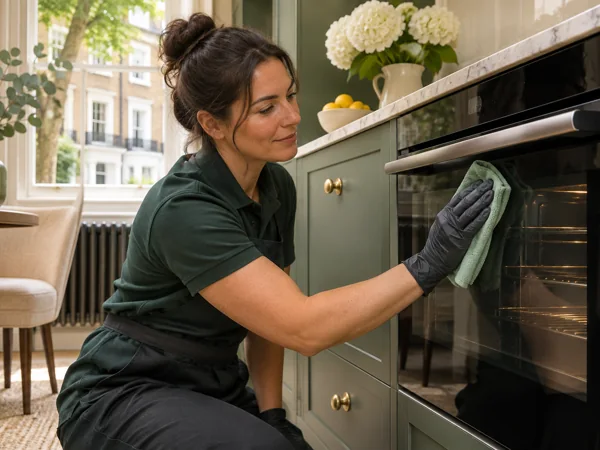
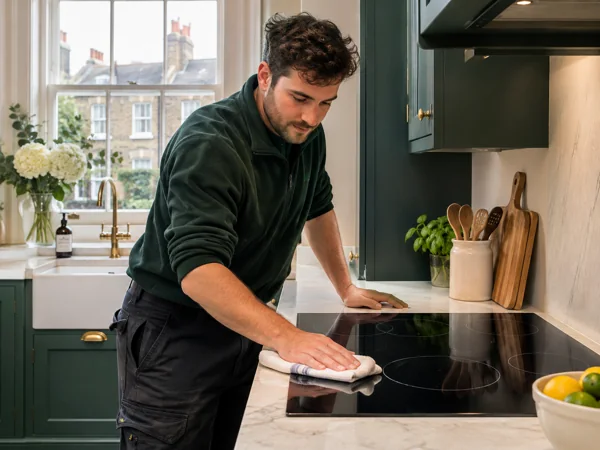
Keep apartment hob and extractor requests clear on the quote
The counter above a fitted oven may hold a glass hob, or there may be gas supports and individual burners. Tell us the type and describe which parts need assessment. A separate extractor may sit inside or under a wall cabinet where the filter is only partly visible from below. Mention the position and whether there is clear access. The details help the office quote for the specific extras you are asking about and keep them distinct from the agreed oven work.
If the hob still needs to be used before the visit, plan time for its surface and fittings to cool as well. Leave the cooker switched off and use any other preparation space agreed with your household. If an extractor is on the list, clear the worktop immediately underneath. Describe any unusual cabinet or wall finish before having the technician set up there. A short list agreed before arrival keeps the visit clear for the person providing access if someone else made the initial enquiry.
- Identify the hob surface and accessible parts.
- Describe how the extractor sits within the cabinet.
- Keep the agreed working area clear.
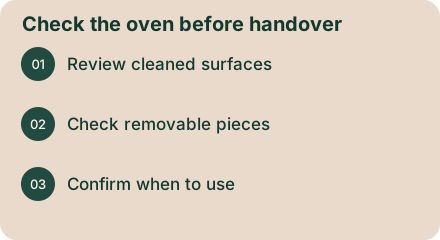
Confirm shelves and return to use before the technician leaves
After cleaning, review the specific areas listed on your quote. Check what has been returned to the oven and what is left on the agreed counter. If a rack had an unusual position, ask to confirm where it sits now. The technician can explain what was accessible, which marks changed and whether any difference in the underlying finish remains. If there are two cavities with similar fronts, make the check one at a time so you can tell which one was included and which pieces belong to it.
Agree when you can use the oven again and pass the instructions to the next person cooking. If you need to meet the cleaner back at reception or hold a door on the way out, allow a few minutes for the kitchen check first. Leave contact and entry details with the people who are expecting them. For the next booking, keep a record of the appliance model and any special fittings rather than taking more photographs if the appliance arrangement is the same.
- Review each compartment included in the quote.
- Confirm where the cleaned shelves have been placed.
- Ask when to resume use before agreeing the departure.
Check before the technician leaves
| Item | Confirmation |
|---|---|
| Removable parts | Where loose racks and pans were returned |
| Cavity | Which visible marks were assessed |
| Return to use | Instructions for the next person cooking |
Get an oven cleaning quote in Silvertown
Request a quote with the oven type, number of cavities and any extra appliances.
Get a QuoteOther Cleaning Services in Silvertown
Local references · Royal Docks · Location and transport map
Silvertown oven cleaning questions
Can I give Pontoon Dock as the entrance if my block faces away from the station?
Use the station to orient the route if useful. Give the full address, lobby name and street you want us to approach.
How do I describe a deposit that extends along a shelf support?
Tell us which side it is on and whether the support is fixed or sliding. Leave the fitting in position for assessment.
Does part of a spill on the front lip change the quote?
Mention the location and extent when you enquire. The office can discuss it alongside the cavity and other accessible areas.
Can I request cleaning for an oven next to a combination unit?
Yes. Identify the oven by its position or controls and tell us whether the neighbouring unit is also on your list.
What if an old product left the bottom looking dull?
Share the product and point out the area. The cleaner will assess the visible condition and decide what compatible cleaning can cover.
Do I need to leave room below the hood even if it is inside a cupboard?
If the extractor is on your quote, clear the agreed area underneath and explain where the filter is accessed.