 Housekeeper
Detail-led care for your oven
Oven Cleaning in Borough
Let us know what is fitted into your Borough kitchen and how to reach it. If the main oven is stacked with another appliance, give each its own model or position. If the building has a staffed entrance or a door away from the main street, include the entry details alongside the oven parts you want discussed.
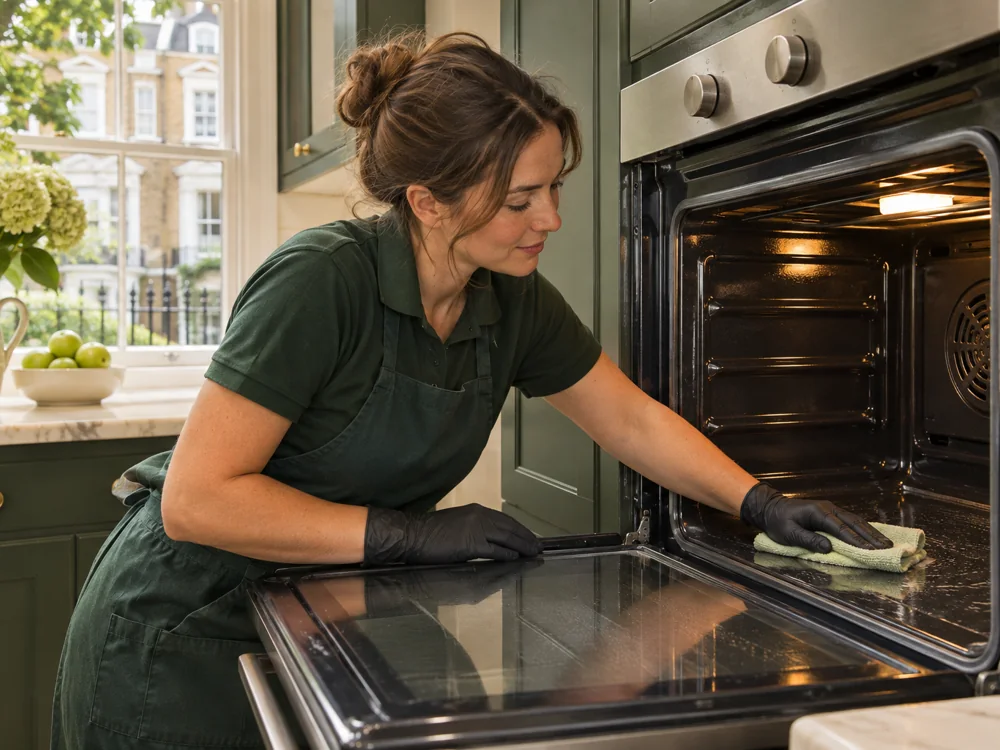
Which address details help near Borough Market?
Give the full SE1 postcode and the residential entrance street or door label.
Can you discuss a single oven fitted beside a wine cabinet?
Yes. Show its model, door clearance and the adjacent finishes in a photograph.
Name the street door as well as the Borough landmark
Southwark Council describes the Borough High Street conservation area as running between St George the Martyr and London Bridge. Its description includes Borough Market and the stretch of Southwark Street to Park Street. If you use any of those places to locate your home, add the address and the entry a visitor can actually use. A property overlooking the market or Borough High Street might have a different residential approach. Give the complete SE1 postcode and tell us what name or number is visible at the first door. Identify the entrance separately from the apartment number.
Let us know about the route within the building. A staffed lobby might lead to a service lift and then a separate section of the floor. Where advance permission is needed, check which person can arrange it before the visit is agreed. If the kitchen is reached from a shared courtyard, describe the way through its gate and where to meet. The same instructions should go to the key-holder and anybody who is showing us the appliance. Give them an easy way to answer a question about access on the day.
- Name the residential entrance and full postcode.
- Ask about booking or permissions for shared access.
- Identify the person who can confirm the route to the flat.
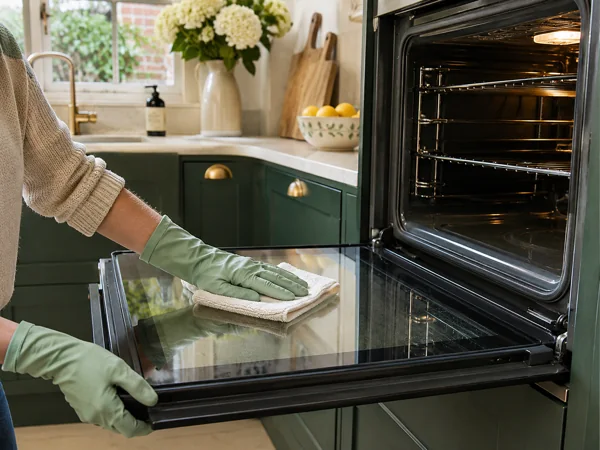
Tell us how the appliance is integrated
An oven can fit beneath a glass hob, at eye level next to storage, or at the bottom of a column of matching appliances. Tell us where yours sits relative to the adjoining units. If the open door approaches a fridge, cabinet handle or end of an island, give an overall view of that space. A narrow gap can change the approach to the appliance even if the kitchen looks open from its entrance. The photograph can help show a lip or joint in the surrounding finish without moving the oven out of position.
For matching appliances, distinguish the one you use for roasting or baking from the steam oven, grill or combination appliance next to it. Give the model where it can be read from the front or from the manual. If both are to be considered, give a short description of each cavity and the accessories that belong to it. If a drawer beneath the oven is for storage, identify it that way. That lets us discuss the layout without including an unrelated part based on the number of doors alone.
Record the way to a Borough flat
| Point on the route | Detail to submit | Who confirms |
|---|---|---|
| Address | SE1 postcode and residential street | Person booking |
| Lobby or gate | Entry label and any permission | Building contact |
| Floor or courtyard | Lift or door and meeting point | Key-holder or resident |
Review the finishes on a closely fitted front
A section of brushed metal or printed glass on the oven fascia may sit directly against a painted unit face. Tell us which material you see and name any nearby trim you wish to discuss. The colour alone can make the two areas hard to distinguish in a picture. If there is a separately finished handle, show where it meets the window. Give an account of existing wear, particularly where a well-used selector has faded markings or a cupboard edge close to the drop-down door has been chipped.
If you wish to ask about a mark on the window, explain where it lies with the door shut and when it is open. The model can help identify the glass construction, especially if the marking appears to be between panes. We can inspect accessible faces conditionally on the design and condition of the appliance. Report a loose edge or shifted seal and leave it in position. That information can be considered alongside the request to assess exposed surfaces around the door and controls.
- Describe the affected face and its nearest control or edge.
- Mention wear around printed markings and cabinet edges.
- Flag any apparent mark between panes by door and model.
Show the relation of residue to the original lining
A dark area at the bottom of a cool oven might have appeared after a spill, while a similar colour on a side panel might be part of the finish. Show where the mark lies in relation to a seam or shelf guide. Include the manual’s name for the lining if available. If the mark reaches two surfaces, tell us which part concerns you most. A wide picture is useful alongside any detail view because it puts the patch in the context of the other surfaces that need attention.
Give any history you know of recent sprays or the oven’s own cleaning programme. If someone used a product on the door but not on the oven floor, report the areas separately. Explain a visible change in gloss or colour that you noticed after treatment. The technician can inspect accessible grease and baked-on residue and take account of the material underneath before reaching a decision about the area. Describe any pre-existing scratch or damaged patch in the same enquiry so it can be identified during that assessment.
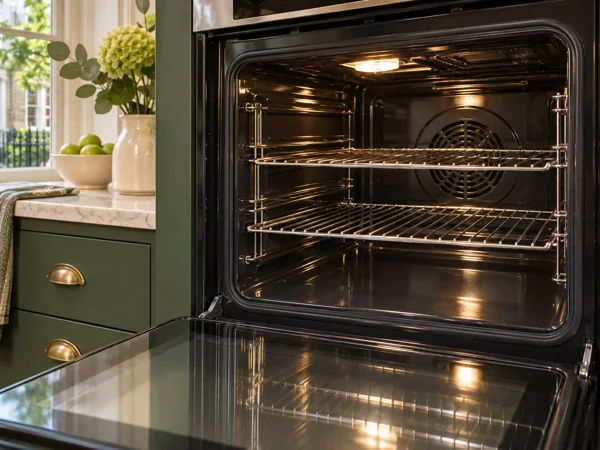
Explain adjacent kitchen finishes
| Surface | Where to look | Detail to mention |
|---|---|---|
| Fascia | Behind or beside controls | Markings and finish |
| Glass | Door front or cavity side | Visible face or unknown |
| Cabinet edge | Where the door swings | Clearance and existing chips |
List accessories before deciding which are suitable to soak
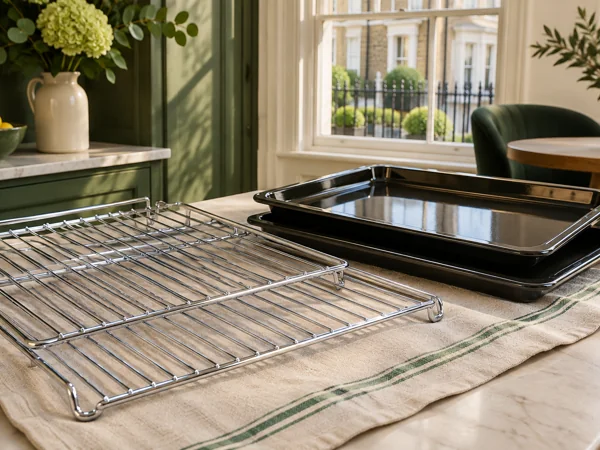
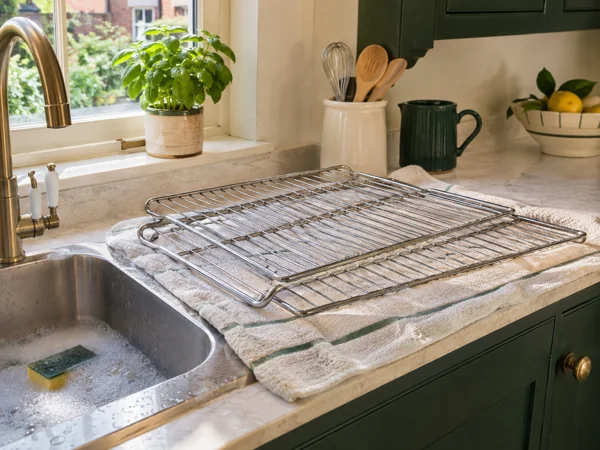
Extra oven racks can be kept in a drawer beneath matching cabinets. Look for the pieces you want included and identify their normal position. A shallower rack might belong to a combination oven and a deeper one to the main appliance. Give the size or a photograph if the difference is hard to express. The tray used with a grill insert can be named as two items when both are being considered. Explain which accessory stays on a fitted runner if you have not removed it before.
The visit can include assessment of parts suitable for removal and dip-tank treatment. Suitability depends on the surface and construction, so mention coatings or signs of wear on a tray or rack. Leave fixed guides or an accessory that feels stuck in its place. Before the appointment, move your own cookware out of the appliance and keep the requested loose pieces identifiable by model. If there is very little space for them, discuss a clear counter or other nearby area that can be used to review them.
- Name each loose piece by oven position.
- Mention unusual coatings or supports.
- Agree where the parts can be reviewed if the worktop is small.
Give a compact kitchen room for the oven and its parts
Some kitchens have a single usable aisle between the oven and the sink. A door that projects into that aisle may change how people can pass when it is open. Clear a route to the appliance and put away loose items normally left on the floor or worktop. Tell us when the kitchen can stay out of use. If the room is also an entrance or a route to a balcony or dining space, discuss what movement can take place elsewhere while the parts are being handled.
Plan for the oven to be cool and empty when we arrive. If you usually use a different cooking surface during the day, tell us whether it sits next to the oven or over the same worktop. You can send a view from the kitchen entrance to show door clearance and the counter space available. Report any existing edge or surface that needs special care. We can discuss the kitchen layout alongside the focused cleaning you requested, with any additional appliance raised as a separate item.
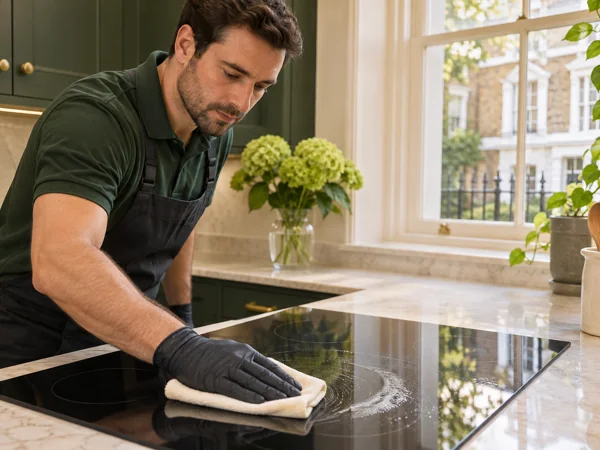
Ask about the hob and hood while retaining an appliance list
A gas, ceramic or induction hob has components of its own even if it is installed directly over the oven. Identify the hob type and the cooking zone or removable support for which you want a quote. Indicate how the top meets the counter and where grease is visible. For a cooking zone with a single mark, use the glass edge or control strip to show the position. If there is a contrasting metal or timber finish beside it, include the adjoining material in your description.
The extractor may have a filter listed in the manual and an outer panel that meets the cupboard. State which of those you are asking about, and give the model or filter material if known. Look for the best view you can take from floor level without moving a fitting. A cupboard-mounted hood may look different from the side and underneath. We can discuss access to the surfaces and filters and record the agreed additional appliance separately from the cavity and parts you already requested.
- Identify the surface on the hob or hood.
- Give the hood model and visible filter type if known.
- Check that each extra has its own line in the quote.
Pass an oven list to the person at the flat
| Check | What to prepare | Review question |
|---|---|---|
| Cooking cavity | Model and position | Which oven was included? |
| Accessories | Loose parts by cavity | Which pieces were treated separately? |
| Additional appliance | Hob or hood item list | Which surfaces were agreed? |
Carry out a short review before the key-holder leaves
When another person will be available only for a specific interval, give them your agreed components before the day. Show them how to distinguish the oven from another matching appliance and tell them where the original pieces have been kept. After the clean, review the accessible areas you identified and ask which removable pieces were treated separately. If an issue arose about a mark on a particular surface, share the explanation with the person booking the visit. That way, someone returning later can locate the same cavity and the same mark.
At a property about to change hands, confirm who sees the appliance before the keys go back to the building desk or agent. Ask the cleaner when the oven can be used again and pass that information to the resident. Keep a note of any hood, grill or accessory only discussed for a future visit. The next appointment can then use its own model and position details. The booking or handover should record what part of the kitchen was agreed without relying on the look of matching cabinet fronts.
Get an oven cleaning quote in Borough
Request a quote with the oven type, number of cavities and any extra appliances.
Get a QuoteOther Cleaning Services in Borough
Local references · Southwark Council, List of conservation areas
Borough oven cleaning questions
How do I direct you to a residential entrance off Southwark Street?
Give the actual flat entrance address and complete postcode. Add the name of the nearby road or market only as a reference.
Can I use the position of a matching oven to tell you which one needs work?
Yes. Provide the model if readable and name its location, for example the fan oven in the middle of the cabinet.
What should I mention if the front trim is already scratched?
Give the position and a picture of the finish if possible. Point it out before the accessible front surfaces are assessed.
How do I show the room left when the oven can barely open?
Photograph the appliance and the opposite unit together from the side. Describe the available clearance without shifting fitted parts.
Can I ask about only the canopy above my induction top?
Yes. Give its position and finish and say if the filter is a separate item you also want to discuss.
Who should review the oven if my building has a visitor time slot?
Agree who will be there before access ends and provide the model, requested areas and any accessories to check.