 Housekeeper
Pressure Washing in London
Refresh outdoor paving by discussing which surfaces can be washed and where the runoff can go. Photos of the paving and access route help identify the right approach.
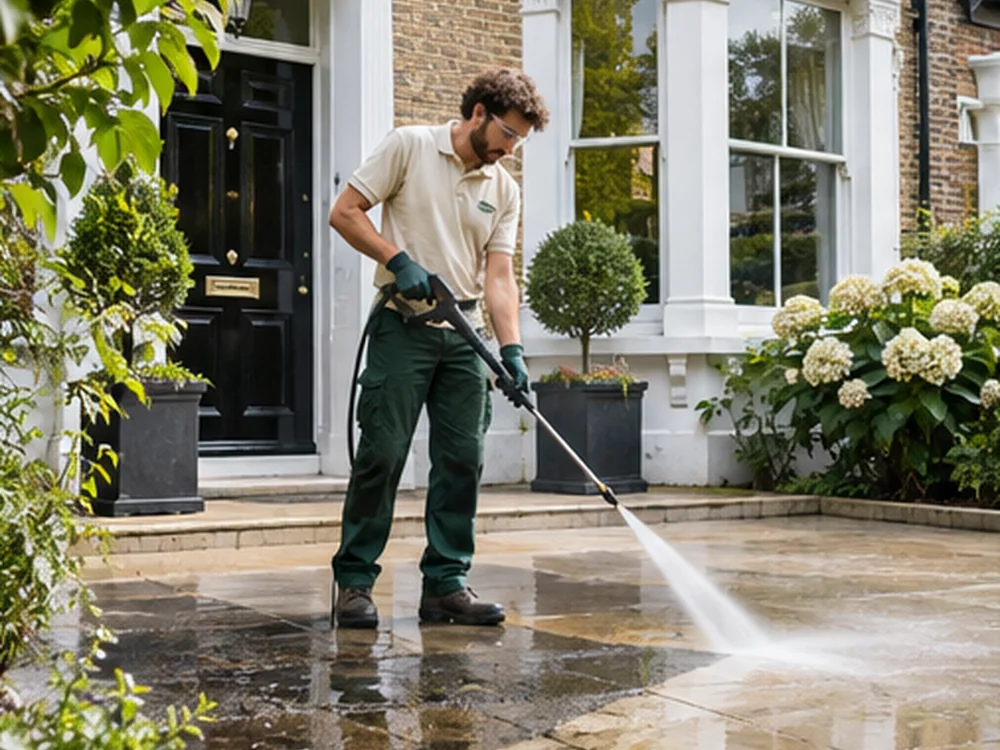
Can I request patio pressure washing in London? Send the approximate area, paving material and photos of the surface and garden access.
Can you wash a shared entrance? Confirm permission, access hours and a workable route for water before the visit.
Identify the surface before agreeing treatment
A concrete driveway, sandstone patio and block-paved path can look similar when wet but respond differently. Tell us what the surface is and how the joints are filled. Sand may be displaced during washing and may need replenishing as a separate task. Loose mortar, cracked paving and unstable steps should be identified before the jet is used.
Send an overall photo with close views of the worst areas. Note a previous sealer, painted finish or repair. Worn stone can show uneven colour once surface dirt is lifted. If the paving is new or under warranty, check the installer’s care instructions before agreeing a method.
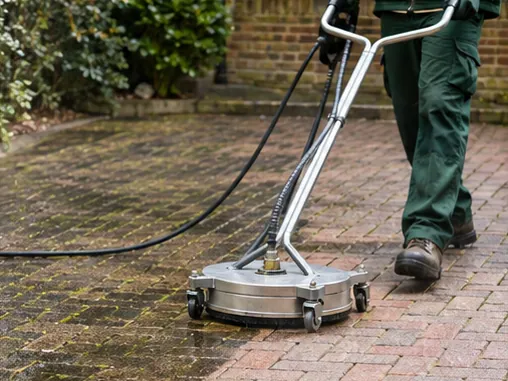
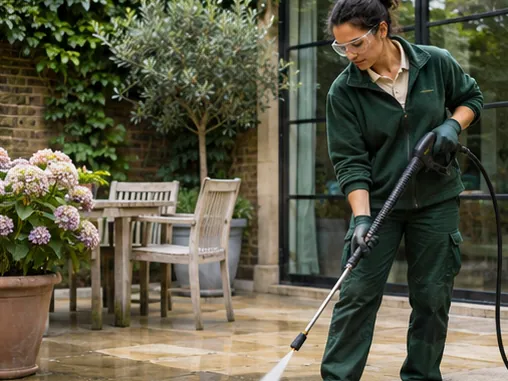
Measure the area people actually use
Estimate the width and length of the paved area or divide an irregular patio into smaller rectangles. Call out narrow paths, steps, channels and a strip beside a wall so they can be counted separately. If you share a driveway, distinguish your part of the space from the neighbour’s boundary.
Move chairs, planters and toys or tell us if they are too heavy to move. A stubborn mark under a plant pot might include rust or mineral staining. Set priorities if the visit covers more than one surface. The route to the front door may matter more than an area at the far end of the garden.
Outdoor surfaces and quote notes
| Surface | Information to supply | Condition to mention |
|---|---|---|
| Block paving | Area and joint material | Missing sand or unstable blocks |
| Concrete | Driveway dimensions and fall | Oil deposits and previous coating |
| Stone slabs | Stone type if known and close photos | Flaking, cracks or weak mortar |
| Steps | Number and width of steps | Loose edges and water collecting at the foot |
Make a plan for runoff and access
Tell us where rain normally drains and whether any gullies are already slow. A basement stairwell or a patio sloping towards a doorway needs special attention. Share the location of an outdoor tap and any access conditions. Explain if hoses would need to run through the house or across a shared driveway.
Move vehicles before the appointment and clear the path to the site. Mention nearby electrical fittings, low air bricks, recently painted walls or a neighbour’s planting. If splash or noise could affect adjoining property, agree a suitable work window and the areas to protect beforehand.
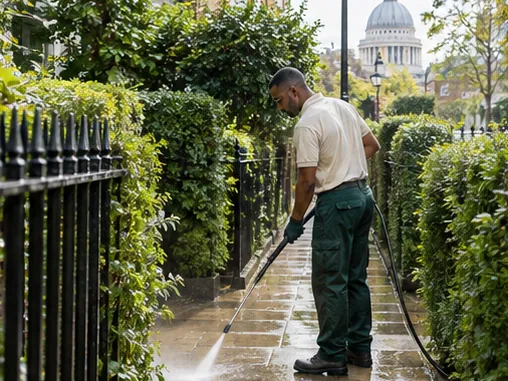
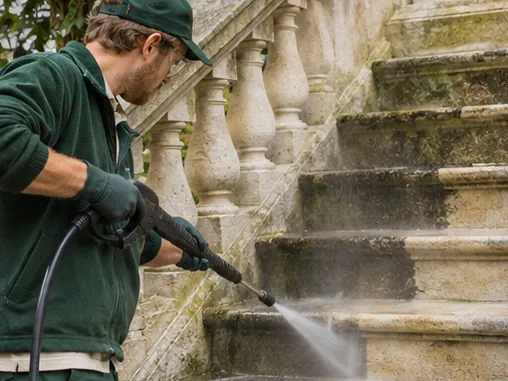
Describe deposits and damage separately
Moss on a shaded step, ingrained tyre marks and oil under a vehicle are different problems. Tell us which areas matter most and when the deposit appeared. If there is a drainage fault, water may return even after the paving is cleaned. A loose joint or cracked slab needs an assessment of condition before equipment is brought in.
Ask what can be cleaned without shifting sound jointing and how any vulnerable edge would be approached. Deep oil staining or historic rust may remain visible. Make the level of improvement an explicit part of the quote discussion if a particular mark prompted the booking.
Access and water checklist
| Detail | Confirm in advance | Why |
|---|---|---|
| Outdoor tap | Location and availability | Determines equipment setup |
| Drainage | Gullies and where water naturally runs | Helps plan runoff |
| Vehicle position | Loading access and walking distance | Equipment needs a safe route |
| Shared area | Permission, hours and boundaries | Keeps the visit within agreed space |
Choose the order for other outside jobs
If the garden is being cut back, allow space for the gardener to work first. If roofline debris is falling onto the patio, discuss gutter clearing before the path is cleaned. Consider what may leave mud or debris behind so the same area is not immediately walked over after washing.
Check who will move planters back and how long the surface needs before it can be used. Where re-sanding or treatment is being considered, ask whether it is included and what drying time it requires. Keep the paved route clear until the conditions for safe foot traffic are agreed.
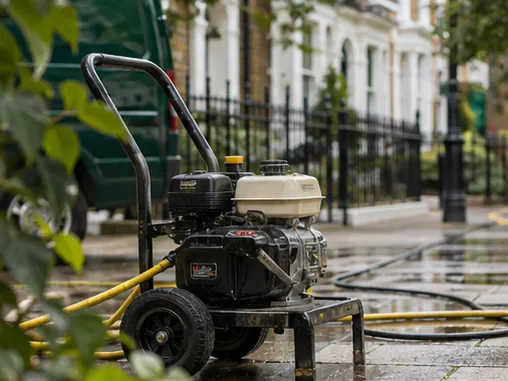
Share information from the full paving route
- Photograph the approach. Show the nearest loading point, gate and any route through a home. A narrow alley may be usable for hoses but too tight for some equipment. Mark the tap on the photograph if its position is not obvious.
- Check the joints and edges. Look at the strip next to the wall, the edge by a border and any old repairs. Use close photos to show loose surface material or missing joint fill. Ask if those areas should be avoided or treated differently.
- Say where water collects. Show a gully, channel, step or threshold. If water stands after rainfall, mention how long it usually stays. For a courtyard used by neighbours, agree who will keep access clear while the work is in progress.
A front drive has different practical constraints
Arrange to have vehicles elsewhere before the appointment and check whether someone will need the driveway again during the day. Oil may have penetrated the paving beside the usual parking spot. Tell us how long it has been there and what anyone has already used on it. A one-off wash for tyre tracks and traffic dirt should be agreed on its own merits. Stain work may require a separate judgement about how much the appearance can improve.
A sloping driveway can carry water onto the pavement or towards an attached garage. Explain the slope and any grating fitted at the bottom. Point out flaking render or a freshly painted garage door near the area. Ask how those features can be protected and whether the working area can be kept clear of pedestrians while the surface is wet.
Driveway preparation
- Move parked vehicles
- Show oil marks and drainage
- Keep access clear during washing
A rear patio next to planting
Tell us about pots that can be moved and borders that cannot. An older paved area may have a mixture of replaced slabs, soft joints and sheltered corners that stay damp. If the goal is to make a sitting area usable for guests, identify the route from the house and the part of the patio they will use. Ask first about a stone that is breaking up or an edge slab that rocks in place.
Look under large containers before making the work list. If there are rust marks, worn patches or loose pointing, show them in advance and check what can realistically be changed. Allow time for the patio to dry before deciding whether any mark has improved. If the paving needs reinstatement after washing, agree who handles it and when.
Patio beside a border
- Move loose planters
- Point out unstable slabs and joints
- Confirm what stays protected
Confirm the quote on an area basis
Ask whether steps, a winding path and the driveway shoulder are included in the measured area or priced separately. Confirm what will happen to moved items and how any change in the measurements will be agreed. Where you intend to reseal a surface later, ask which preparation and drying conditions are expected. The visit should have a defined finish point for each area and leave the access route usable within the time agreed.
Measure the agreed area
- Include steps or narrow paths
- Check adjoining finishes
- Confirm drying and re-sanding
Protect adjoining finishes and fixtures
Mention low sockets, exterior lighting, open air vents and painted panels close to the paving. If there is a basement grille or a garden cabin nearby, confirm which side runoff must avoid. Explain how people normally enter the property and ask whether an alternate entrance is needed while the work is under way. For a communal property, share the agreed working hours with occupants before the visit.
Protect nearby fixtures
- Low sockets and vents
- Painted panels and garage doors
- Shared routes and basement grilles
Ask how a shared driveway will stay usable
If somebody needs a crossing between the street and their home during the appointment, agree which section will be worked on first. Decide where parked cars can go and who needs notice of the change. A shared surface can also include a drain or gate that does not belong to the person booking. Confirm permission for the exact area and explain the boundary with a photograph. At the end of the job, check what needs to remain clear while the paving dries.
Keep a shared drive usable
- Confirm boundary with a photo
- Agree when each side is free
- Leave a clear route while it dries
Pressure Washing FAQs
Can I get a quote from photographs?
Overall photos and close-ups help. Add measurements, access details and the condition of joints to give the pictures context.
Will washing lift the jointing sand?
It can. Discuss whether any reinstatement is needed and how it will be included.
Can you tackle oil on a driveway?
Tell us the age and approximate size of the stain. Existing absorption and the paving material affect the result.
What if it rains on the day?
Ask whether the treatment and any follow-on work can go ahead in the expected conditions. Drying and access requirements may differ.
Discuss your pressure washing visit
Related services and information: Gardening Services, Gutter Cleaning.
Housekeeper London customer feedback
What our customers say
The patio had become slippery and covered in green staining. After pressure washing, the paving looked much cleaner and the garden felt more inviting.
Pressure Washing
Our driveway hadn't been properly cleaned in years. The difference was obvious once the dirt and moss were removed. The team also rinsed down the surrounding area.
Pressure Washing